
Safety
General information, not medical advice
Your prescriber and the leaflet in your pack know your situation. This page does not.
- Follow your prescriber and the leaflet
- Don't start, stop, or change a dose on your own
- Doses and warnings differ by country and product
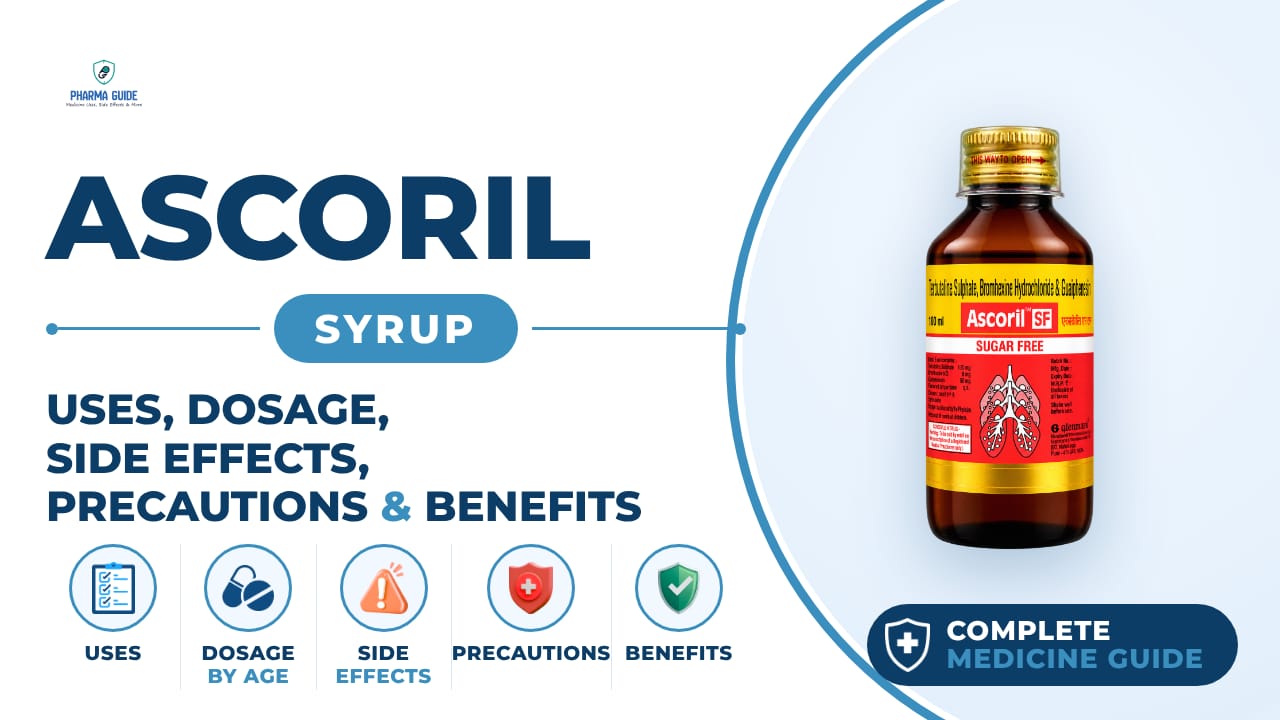
Ascoril Syrup: Uses, Dosage, Side Effects, Precautions and Alternates
| Generic name | Levosalbutamol + Ambroxol + Guaifenesin |
|---|---|
| Drug class | Mucolytic expectorant and bronchodilator combination |
| Forms | Syrup |
Quick overview
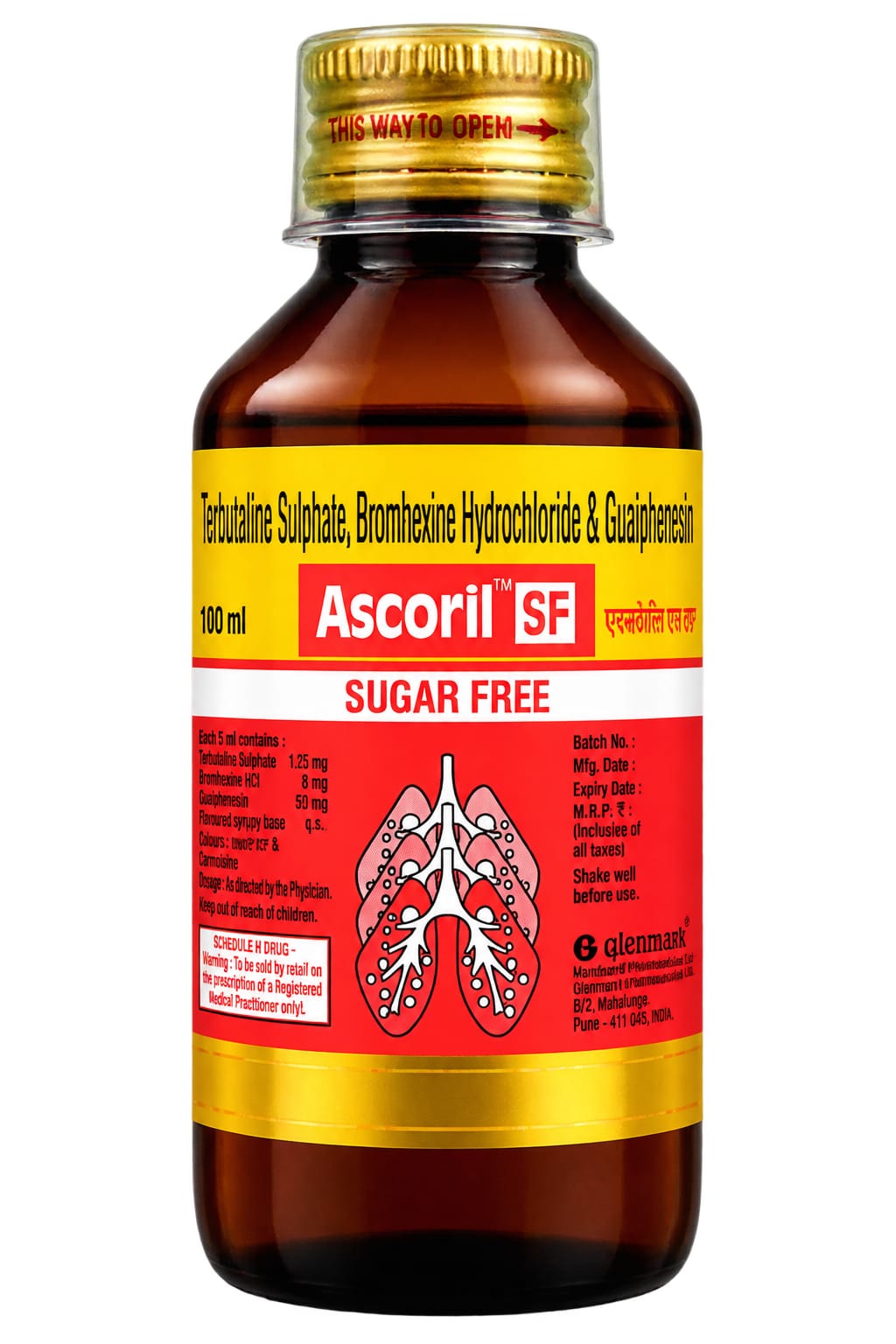
Ascoril Syrup is a combination cough medicine containing levosalbutamol, ambroxol, and guaifenesin. It belongs to the mucolytic expectorant and bronchodilator class and is used to relieve cough with mucus or phlegm. The three ingredients work together to loosen mucus, make it easier to cough out, and widen the airways to help breathing.
What is Ascoril Syrup
Ascoril LS is a combination cough medicine used to relieve cough with mucus or phlegm. It contains three active ingredients: ambroxol, guaifenesin, and levosalbutamol, which work together to loosen mucus, make it easier to cough out, and help open the airways.
Ascoril Syrup uses
- Relieves cough with mucus or phlegm
- Loosens thick or sticky mucus
- Makes phlegm easier to cough out
- Clears mucus from the airways
- Reduces chest congestion caused by mucus
- Helps breathing when mucus and airway narrowing are present
- Used for cough associated with bronchitis, bronchial asthma, COPD, emphysema, and other bronchopulmonary disorders
- Reduces allergy-type symptoms like sneezing, watery eyes, runny nose, and throat irritation
Benefits of Ascoril Syrup
- Loosens thick mucus so it can be coughed out more easily
- Widens the airways to help you breathe more comfortably
- Reduces chest congestion and coughing frequency
How Ascoril Syrup works
Ascoril LS contains three medicines that work together. Ambroxol thins and loosens mucus so it is easier to cough out. Guaifenesin increases fluid in the airways and makes mucus less sticky, helping remove it. Levosalbutamol relaxes the muscles around the airways, widening them and improving airflow.
Ascoril Syrup dosage
Take exactly as prescribed by your doctor. Shake the bottle well before use. Measure the dose using the measuring cup or dosing device provided, not by drinking straight from the bottle. Take it by mouth. It can generally be taken with or without food, as advised by your doctor. Maintain adequate fluid intake unless your doctor has told you to restrict fluids. Do not take more than the prescribed amount. If a dose is missed, take it when you remember or at the next scheduled dose, but do not double up. Try to take doses at the same time each day.
| Age group | Dose |
|---|---|
| Under 2 Years | Use only if prescribed by a healthcare professional |
| 2–6 Years | 2.5 mL 2–3 times daily (as directed) |
| 6–12 Years | 5 mL 2–3 times daily (as directed) |
| 12 Years and Above | 10 mL 2–3 times daily (as directed) |
Available forms and strengths
- Syrup
Side effects of Ascoril Syrup
Common
- Headache
- Fever
- Nausea and vomiting
- Diarrhea
- Upset stomach and constipation
- Dizziness
- Drowsiness
- Skin rash
- Stomach pain
- Sore throat and hoarseness
- Decreased appetite
- Nervousness
- Sleep disturbances
- Difficulty swallowing or speaking
Serious
- Increased heart rate
- Tremors and shaking of arms and feet
- Hypersensitivity reactions
- Hives on the skin
- Bloating and muscle cramps
- Loss of appetite
- Dry mouth
- Palpitations (abnormal heart rhythm)
- Chest pain and discomfort
- Swelling of eyelids, face, lips, or tongue
- Severe skin reactions such as Stevens-Johnson syndrome and toxic epidermal necrolysis
Warnings and precautions
- Do not use this medicine if you are allergic to ambroxol, guaifenesin, levosalbutamol, or other medicines.
- Tell your doctor if you have heart disease, an irregular heartbeat, high blood pressure, diabetes, thyroid disorders, kidney or liver problems, or a history of seizures.
- This medicine should not be used by people with uncontrolled juvenile diabetes, epilepsy, high blood pressure, heart problems, liver or kidney disease, or stomach ulcers.
- Do not give this medicine to children under 6 years old without first checking with a doctor.
- This medicine may interact with certain antibiotics, blood pressure medicines, beta-blockers, diuretics, and heart medicines like digoxin, so tell your doctor about all medicines you take.
- Women who are pregnant should strictly consult their doctor before taking this medicine. It is not recommended in the first trimester and should be used with caution in the second and third trimesters.
- There is no clear evidence on whether the medicine passes into breast milk. A breastfeeding mother should discuss with her doctor whether to continue the medicine or breastfeeding.
- People with kidney problems should talk to their doctor before taking this medicine, as the dose may need to be adjusted.
- Tell your doctor if you have liver problems before taking this medicine.
- Avoid alcohol while taking this medicine, as it can worsen drowsiness and dizziness.
- Do not drive a vehicle or operate machinery after taking this medicine, as it can cause drowsiness.
Storage
- Store in a cool and dry place away from sunlight, below 25 degrees Celsius
- Do not freeze
- Keep it out of the reach of children
- Shake well before use
When to see a doctor
- If your cough does not improve after a week of treatment, or comes with fever, rash, and headache, see a doctor right away.
- If a cough continues for a long time, keeps coming back, or comes with other concerning symptoms, see a doctor to find and treat the cause.
- Contact your doctor right away if you notice any side effects.
Alternatives
- Benadryl Expectorant
- Bromhexine Syrup
- Mucolytic Syrups
- Ambrolite Syrup
Watch the video
FAQs
What is Ascoril Syrup used for?
It is used to relieve cough with mucus or phlegm, loosen thick mucus, clear airways, and reduce chest congestion. It also helps with cough linked to bronchitis, bronchial asthma, COPD, emphysema, and other bronchopulmonary disorders.
What are the active ingredients in Ascoril Syrup?
It contains three active ingredients: ambroxol, guaifenesin, and levosalbutamol, which work together to loosen mucus, make it easier to cough out, and widen the airways.
What is the dosage of Ascoril Syrup for children?
For children 2–6 years, the dose is 2.5 mL 2–3 times daily; for 6–12 years, 5 mL 2–3 times daily; and for 12 years and above, 10 mL 2–3 times daily, as directed by a doctor. It should not be given to children under 6 years without medical advice.
What are the side effects of Ascoril Syrup?
Common side effects include headache, fever, nausea, vomiting, diarrhea, dizziness, drowsiness, skin rash, and stomach pain. Serious effects can include increased heart rate, tremors, hypersensitivity reactions, and severe skin reactions like Stevens-Johnson syndrome.
Can Ascoril Syrup be taken during pregnancy?
It is not recommended in the first trimester and should be used with caution in the second and third trimesters, so pregnant women should strictly consult their doctor before taking it.
General information, not medical advice
Your prescriber and the leaflet in your pack know your situation. This page does not.
- Follow your prescriber and the leaflet
- Don't start, stop, or change a dose on your own
- Doses and warnings differ by country and product
Sources
Video
Related medicines

Injectafer Injection: Uses, Dosage, Side Effects, Precautions and Alternates
Iron products
Injectafer (ferric carboxymaltose) treats iron deficiency anemia and heart failure-related iron deficiency via IV. Learn uses, dosage, side effects, and

Gliclazide Tablet: Uses, Dosage, Side Effects, Precautions and Alternates
Sulfonylurea (hypoglycemic/antidiabetic agent)
Gliclazide Tablet is a sulfonylurea for type 2 diabetes that boosts insulin release. Learn about dosage, side effects, warnings, and precautions.