
Safety
General information, not medical advice
Your prescriber and the leaflet in your pack know your situation. This page does not.
- Follow your prescriber and the leaflet
- Don't start, stop, or change a dose on your own
- Doses and warnings differ by country and product
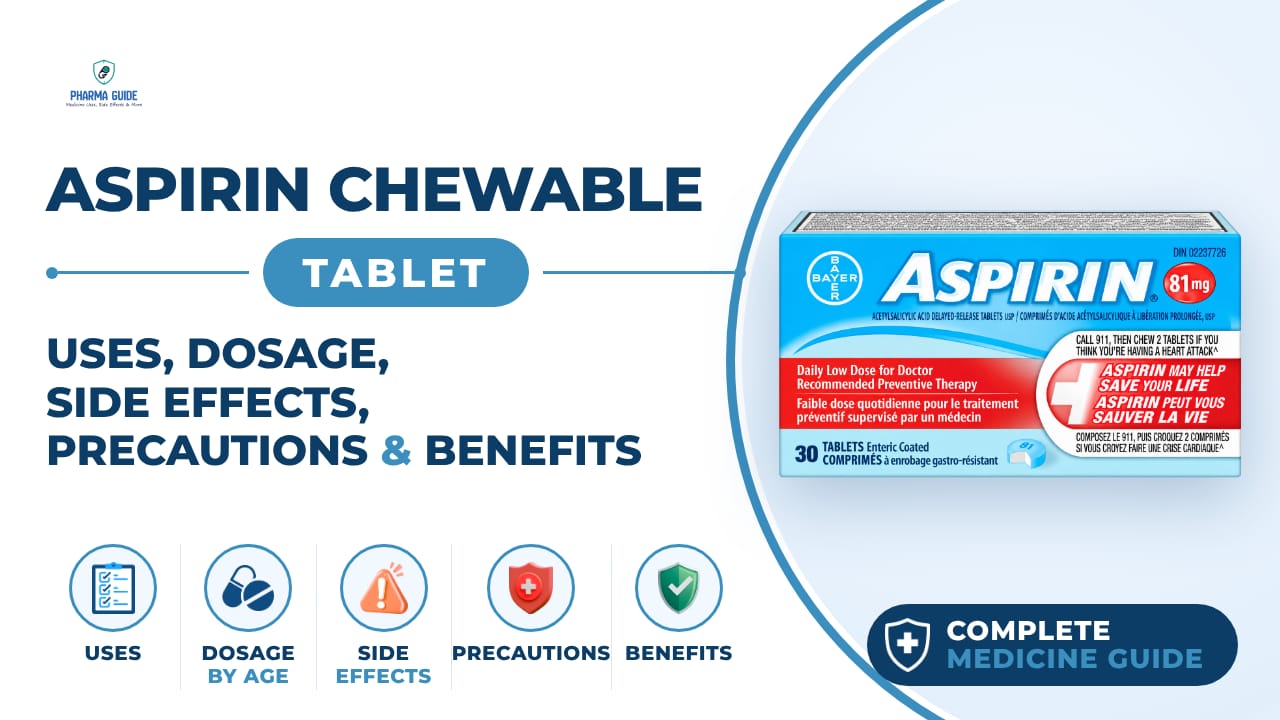
Aspirin Chewable Tablet: Uses, Dosage, Side Effects, Precautions and Alternates
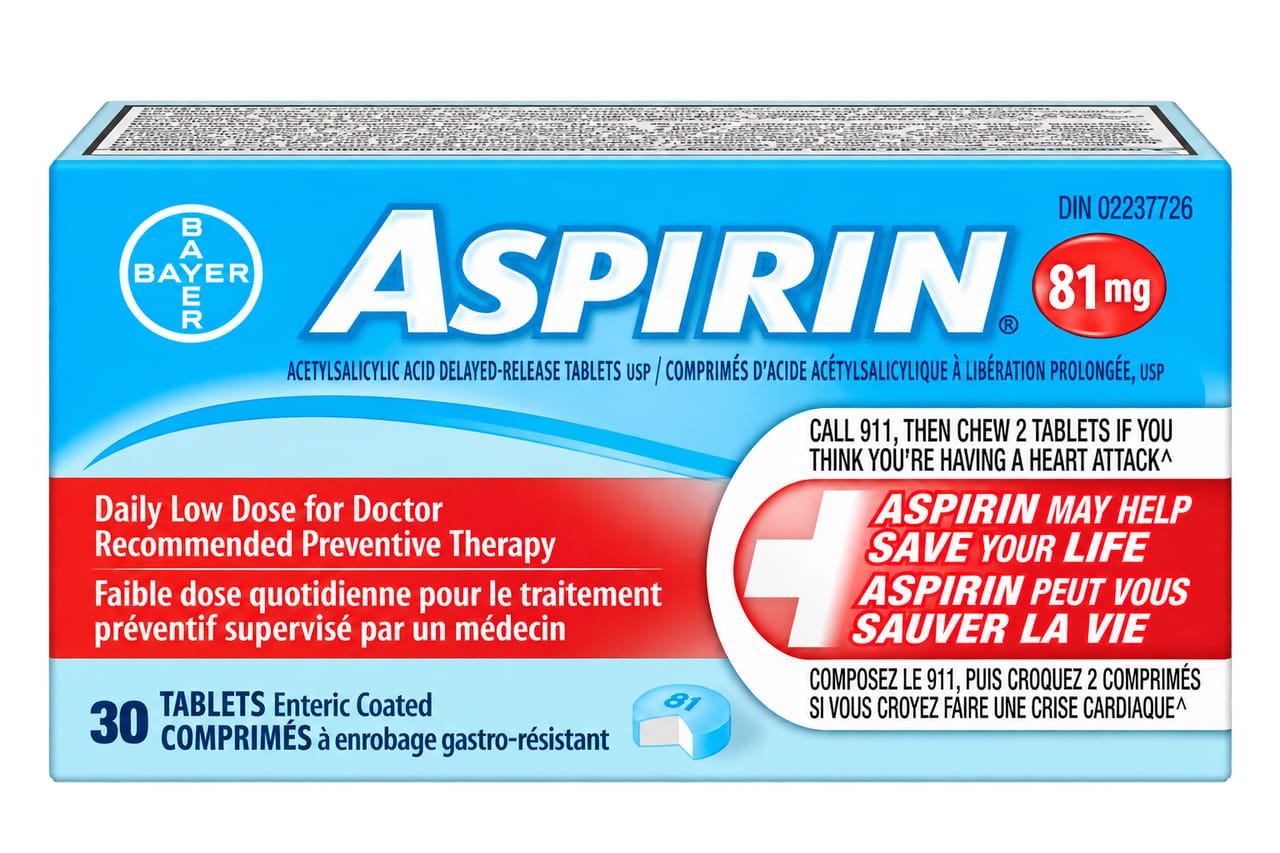
| Generic name | aspirin |
|---|---|
| Drug class | salicylate / nonsteroidal anti-inflammatory drug (NSAID), platelet aggregation inhibitor |
| Forms | Chewable tablets, Tablets, Delayed-release (enteric-coated) tablets, Film-coated tablets, Extended-release tablets, Chewing gum, Suppositories |
Quick overview
Aspirin Chewable Tablet contains aspirin, a salicylate and nonsteroidal anti-inflammatory drug (NSAID) that also acts as a platelet aggregation inhibitor. It is used to relieve pain, reduce fever, and lower inflammation, and in low doses it is used as a blood thinner to help prevent blood clots. It is available in several forms, including chewable tablets, and comes with specific warnings around children's use, bleeding risk, and pregnancy.
What is Aspirin Chewable Tablet
Aspirin is a salicylate and nonsteroidal anti-inflammatory drug (NSAID). It is used to relieve pain, reduce fever, and lower inflammation. In low doses, it is also used as a blood thinner to help prevent blood clots.
Aspirin Chewable Tablet uses
- Reduces fever
- Relieves minor to moderate pain such as muscle aches, toothaches, menstrual cramps, arthritis pain, and headaches
- Used in low doses to help prevent blood clots after surgery on clogged arteries (such as bypass surgery or carotid endarterectomy)
- Used to reduce the risk of stroke or heart attack
- Used to treat or prevent heart attacks, strokes, and chest pain (angina)
- Used for rheumatic conditions such as rheumatoid arthritis, osteoarthritis, and other inflammatory joint conditions
- Used for inflammation around the heart (pericarditis)
Benefits of Aspirin Chewable Tablet
- Relieves minor pain
- Reduces fever
- Reduces inflammation
- Has antiplatelet effects when specifically prescribed for cardiovascular conditions
How Aspirin Chewable Tablet works
Aspirin works by blocking a substance in the body that causes pain, fever, swelling, and inflammation. It also affects blood platelets, which helps prevent blood clots from forming.
Aspirin Chewable Tablet dosage
Take aspirin exactly as directed on the label or as prescribed by your doctor; do not use more or less than recommended, or for longer than recommended. Drink a full glass of water with each dose. Take with food if aspirin upsets your stomach. Chew the chewable tablet completely before swallowing it.
If you are using this medicine as needed for pain, it works best if taken as soon as symptoms start rather than waiting until pain has gotten worse. Talk to a doctor before giving this medicine to a child younger than 12. Tell your surgeon ahead of time if you are using this medicine before any surgery, since you may need to stop it for a short time.
If you miss a dose on a regular schedule, take it as soon as you remember, but skip it if it is almost time for the next dose; do not double up.
| Age group | Dose |
|---|---|
| 18–64 years | For pain/fever: 325–650 mg every 4–6 hours as needed |
| 65 years and older | Usually 325–650 mg every 4–6 hours as needed, with extra caution due to bleeding risk |
Available forms and strengths
- Chewable tablets
- Tablets
- Delayed-release (enteric-coated) tablets
- Film-coated tablets
- Extended-release tablets
- Chewing gum
- Suppositories
Side effects of Aspirin Chewable Tablet
Common
- Upset stomach
- Heartburn
- Drowsiness
- Mild headache
- Nausea
- Vomiting
- Abdominal pain with cramps
- Stomach or gut irritation
- Indigestion
Serious
- Ringing in the ears or loss of hearing, confusion, hallucinations, rapid breathing, or seizures
- Severe nausea, vomiting, or stomach pain
- Bloody or tarry stools, coughing up blood, or vomit that looks like coffee grounds
- Fever lasting longer than 3 days
- Swelling or pain lasting longer than 10 days
- Signs of allergic reaction: hives, difficulty breathing, swelling of face, lips, tongue, or throat
- Stomach or intestinal bleeding
- Kidney failure
- Bleeding in the brain or stomach
- Hemorrhagic stroke (rare, with daily low-dose use)
Warnings and precautions
- Ask a doctor before using aspirin if you are pregnant or planning to become pregnant. It is especially important not to use it at 20 weeks of pregnancy or later unless your doctor specifically tells you to, because it may cause problems for the unborn baby or complications during delivery. Ask a doctor before using aspirin if you are breastfeeding.
- Tell your doctor if you have kidney disease or liver disease before using aspirin, so they can check it is safe for you. Avoid drinking alcohol while taking aspirin, since heavy drinking can increase the risk of stomach bleeding.
- Do not give aspirin to a child or teenager who has a fever, flu symptoms, or chickenpox, because it can cause a rare but serious and sometimes fatal condition called Reye's syndrome.
- Do not use aspirin if you have a bleeding disorder such as hemophilia, a recent history of stomach or intestinal bleeding, or an allergy to aspirin or another NSAID.
- Do not use this medicine for self-treating pain for more than 10 days in adults or 5 days in children, or for fever lasting more than 3 days, without talking to a doctor.
- People who regularly use other NSAIDs (such as ibuprofen) along with aspirin may have a greater risk of stomach bleeding and should check with their doctor.
- If you take aspirin to help prevent a heart attack or stroke, avoid also taking ibuprofen, since it may make aspirin less effective at protecting your heart and blood vessels. If you must use both, ask your doctor how far apart to space the doses.
Storage
- Store in the refrigerator or in a cool place
- Do not use any aspirin product that has a strong vinegar-like smell
- Keep all medications away from children and pets
- Do not flush medications down the toilet or pour them into a drain unless instructed to do so
- Properly discard this product when it is expired or no longer needed; consult your pharmacist or local waste disposal company
- Store at room temperature away from moisture and heat
When to see a doctor
- Get emergency medical help right away if you have signs of an allergic reaction such as hives, trouble breathing, or swelling of the face, lips, tongue, or throat.
- Stop using aspirin and call your doctor right away if you have ringing in the ears, hearing loss, confusion, hallucinations, rapid breathing, or seizures; severe nausea, vomiting, or stomach pain; bloody or tarry stools; coughing up blood or vomit that looks like coffee grounds; fever lasting more than 3 days; or swelling or pain lasting more than 10 days.
- If using this medicine for a headache, get medical help right away if you also have trouble speaking, weakness on one side of the body, or sudden vision changes.
- Call your doctor right away if a child taking this medicine has changes in behavior along with nausea and vomiting, which could be signs of Reye's syndrome.
- Seek emergency medical attention if you think you have taken too much aspirin. Overdose symptoms may include stomach pain, vomiting, diarrhea, vision or hearing problems, fast or slow breathing, or confusion.
Alternatives
- Paracetamol / acetaminophen
- Ibuprofen when appropriate
- Naproxen for eligible adults
Watch the video
FAQs
What is Aspirin Chewable Tablet used for?
It is used to relieve minor to moderate pain, reduce fever, lower inflammation, and in low doses help prevent blood clots, heart attacks, and strokes. It is also used for rheumatic conditions and pericarditis.
How should I take Aspirin Chewable Tablet?
Chew the tablet completely before swallowing and drink a full glass of water with each dose. Take with food if it upsets your stomach, and take it as soon as symptoms start for best pain relief.
What is the dosage of Aspirin Chewable Tablet for adults?
For adults aged 18-64, the usual dose for pain or fever is 325-650 mg every 4-6 hours as needed. Those 65 and older typically use the same dose range but with extra caution due to bleeding risk.
Can children take Aspirin Chewable Tablet?
Talk to a doctor before giving this medicine to a child younger than 12. Aspirin should not be given to a child or teenager with fever, flu symptoms, or chickenpox because it can cause Reye's syndrome.
What are the serious side effects of Aspirin Chewable Tablet?
Serious side effects include ringing in the ears, confusion, severe nausea or stomach pain, bloody or tarry stools, coughing up blood, stomach or intestinal bleeding, kidney failure, and bleeding in the brain or stomach.
General information, not medical advice
Your prescriber and the leaflet in your pack know your situation. This page does not.
- Follow your prescriber and the leaflet
- Don't start, stop, or change a dose on your own
- Doses and warnings differ by country and product
Sources
Video
Related medicines

Injectafer Injection: Uses, Dosage, Side Effects, Precautions and Alternates
Iron products
Injectafer (ferric carboxymaltose) treats iron deficiency anemia and heart failure-related iron deficiency via IV. Learn uses, dosage, side effects, and

Gliclazide Tablet: Uses, Dosage, Side Effects, Precautions and Alternates
Sulfonylurea (hypoglycemic/antidiabetic agent)
Gliclazide Tablet is a sulfonylurea for type 2 diabetes that boosts insulin release. Learn about dosage, side effects, warnings, and precautions.