
Safety
General information, not medical advice
Your prescriber and the leaflet in your pack know your situation. This page does not.
- Follow your prescriber and the leaflet
- Don't start, stop, or change a dose on your own
- Doses and warnings differ by country and product
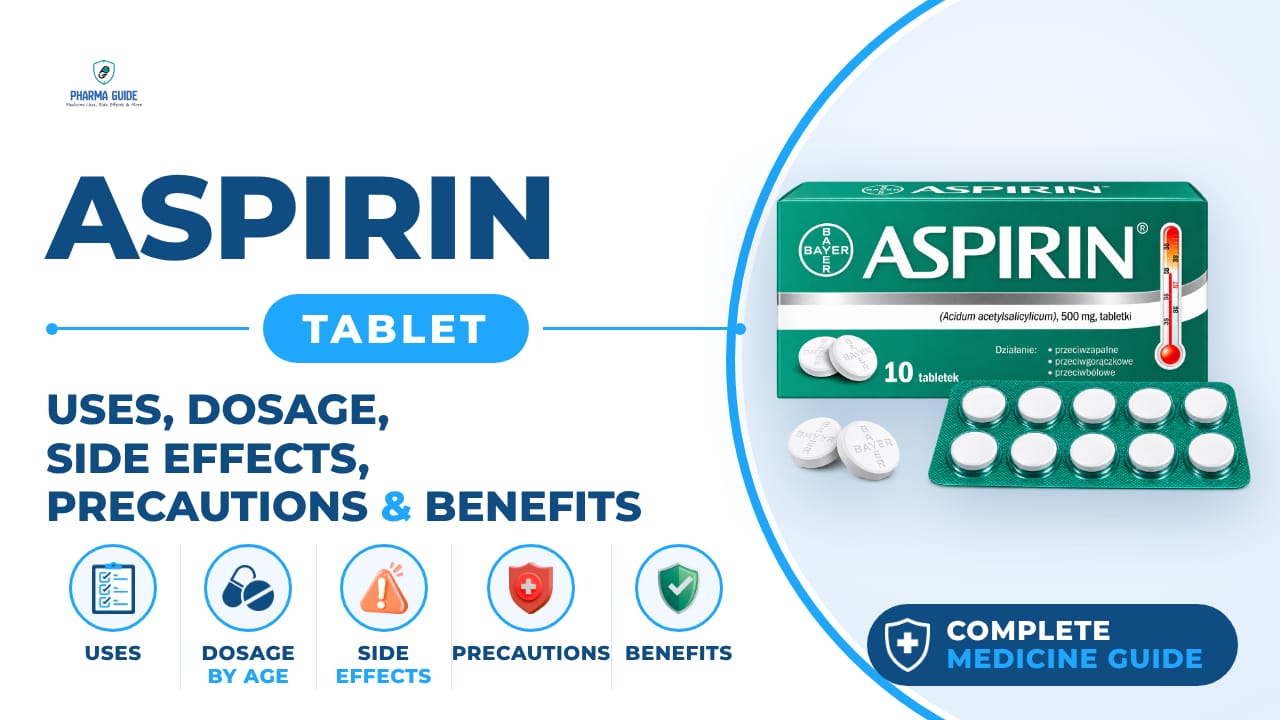
Aspirin Tablet: Uses, Dosage, Side Effects, Precautions and Alternates
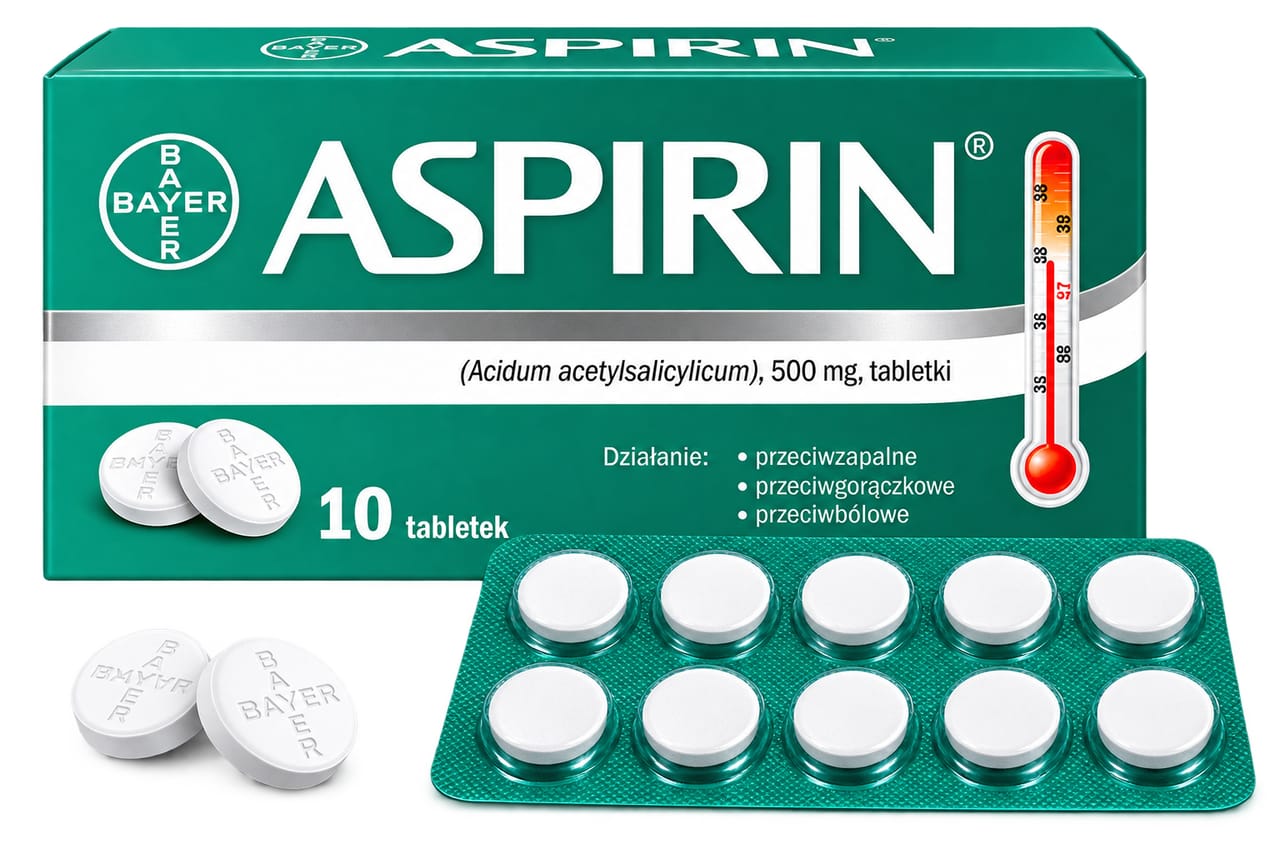
| Generic name | aspirin |
|---|---|
| Drug class | Salicylates / Nonsteroidal anti-inflammatory drug (NSAID) / Platelet aggregation inhibitor |
| Forms | Tablet, Chewable tablet, Enteric-coated tablet, Delayed-release tablet, Extended-release tablet |
Quick overview
Aspirin is a salicylate and a type of NSAID (nonsteroidal anti-inflammatory drug), also described as a platelet aggregation inhibitor. It is used to relieve pain, swelling and fever, and it can also lower the risk of heart attack, stroke or blood clots when used under a doctor's supervision. It comes in several forms, including standard, chewable, enteric-coated, delayed-release and extended-release tablets.
What is Aspirin Tablet
Aspirin is a salicylate and a type of NSAID. It is used to relieve pain, swelling and fever, and it can also lower the risk of heart attack, stroke or blood clots when used under a doctor's supervision.
Aspirin Tablet uses
- Relief of mild to moderate pain such as headaches, migraine, neuralgia, toothache and sore throat
- Period pains
- Relief of sprains, strains, rheumatic pain, sciatica, lumbago, muscle aches and fibrositis
- Joint swelling and stiffness (arthritis)
- Reducing fever (high temperature)
- Reducing inflammation
- Treating or preventing heart attacks, strokes and chest pain (angina) under a doctor's supervision
Benefits of Aspirin Tablet
- Eases pain, swelling and inflammation
- Helps bring down a high temperature
- May lower the risk of heart attack, stroke or blood clots when prescribed by a doctor
How Aspirin Tablet works
Aspirin works by reducing substances in the body that cause pain, fever and inflammation.
Aspirin Tablet dosage
Take aspirin exactly as directed on the label, or as prescribed by your doctor. Do not use more or less than recommended, or for longer than recommended. Take by mouth with a glass of water. You can take it with or without food; take it with food if it upsets your stomach. You must chew the chewable tablet before you swallow it. Do not crush, chew, break or open an enteric-coated or delayed/extended-release pill; swallow the pill whole. Do not take it more often than directed. If you miss a dose, do not take a double dose to make up for it. Do not take other medicines that contain aspirin, ibuprofen or naproxen at the same time. If you need surgery, tell the surgeon ahead of time that you are using this medicine, as you may need to stop it for a short time. Do not use aspirin if it has a strong vinegar smell, as it may no longer be effective.
| Age group | Dose |
|---|---|
| Adults: For Pain/fever | Commonly 325–650 mg every 4–6 hours as needed |
| Adults: For Heart attack or suspected acute coronary syndrome | Typically 160–325 mg chewed once |
Available forms and strengths
- Tablet
- Chewable tablet
- Enteric-coated tablet
- Delayed-release tablet
- Extended-release tablet
Side effects of Aspirin Tablet
Common
- Upset stomach
- Heartburn
- Drowsiness
- Mild headache
- Nausea
- Loss of appetite
- Increased bleeding time when you cut yourself, or bruising under the skin
- Nose bleeds
- Ringing in the ears or hearing problems
- Dizziness (vertigo) or feeling confused
Serious
- Signs of an allergic reaction: hives, difficult breathing, swelling of the face, lips, tongue or throat
- Ringing in the ears, confusion, hallucinations, rapid breathing or seizures
- Severe nausea, vomiting or stomach pain
- Bloody or tarry stools, coughing up blood, or vomit that looks like coffee grounds
- Fever lasting longer than 3 days, or swelling or pain lasting longer than 10 days
- Kidney injury: decreased urine, swelling of the ankles, hands or feet
- Liver injury: right upper belly pain, loss of appetite, nausea, light-colored stool, dark urine, yellowing skin or eyes, unusual weakness
- Serious skin reactions: rash that blisters or peels, redness with swelling of the face, lips or lymph nodes
- Bleeding on the brain, which may cause a severe headache or stroke
Warnings and precautions
- Do not give this medicine to a child or teenager with a fever, flu symptoms or chickenpox, as it can cause Reye's syndrome, a serious and sometimes fatal condition in children.
- Do not use aspirin if you have a bleeding disorder such as haemophilia, a recent history of stomach or intestinal bleeding, or if you are allergic to aspirin or an NSAID.
- This medicine can cause serious ulcers and bleeding in the stomach, which can happen with no warning. Tobacco, alcohol, older age and poor health can increase the risk.
- If you take aspirin to prevent heart attack or stroke, avoid also taking ibuprofen, as it may make aspirin less effective at protecting your heart and blood vessels.
- Do not give this medicine to children under 16 years unless your doctor tells you to, because of a possible link with Reye's syndrome.
- Do not take aspirin in the last three months of pregnancy, as taking it in late pregnancy may cause bleeding in the mother or baby during delivery. Taking it after 20 weeks may cause serious birth defects, and use after 30 weeks is not recommended. Tell your doctor if you are pregnant or plan to become pregnant.
- Aspirin can pass into breast milk and may harm a nursing baby. You should not breastfeed while using this medicine.
- Tell your doctor if you have kidney disease before using aspirin. This medicine can cause kidney injury.
- Tell your doctor if you have liver disease before using aspirin. This medicine can cause liver injury.
- Avoid drinking alcohol while taking aspirin. Heavy drinking can increase your risk of stomach bleeding.
Storage
- Store at room temperature, away from moisture and heat.
- Store between 15 and 30 degrees C (59 and 86 degrees F); do not store above 25 degrees C.
- Keep out of the reach of children and pets.
- Do not use this medicine after the expiry date printed on the packaging.
- Get rid of any unused medication after the expiration date, ideally through a medication take-back program, or as directed on the label.
- If disposing in the trash, mix the medicine with cat litter, dirt or coffee grounds, seal it in a bag or container, and put it in the trash.
When to see a doctor
- Get emergency medical help if you have signs of an allergic reaction: hives, difficult breathing, or swelling of your face, lips, tongue or throat.
- Stop using this medicine and call your doctor at once if you have ringing in your ears, confusion, hallucinations, rapid breathing, seizures, severe nausea, vomiting or stomach pain, bloody or tarry stools, coughing up blood or vomit that looks like coffee grounds, fever lasting longer than 3 days, or swelling or pain lasting longer than 10 days.
- If you think you have taken too much, seek emergency medical attention or call your local poison control center. Overdose symptoms may include stomach pain, vomiting, diarrhea, vision or hearing problems, fast or slow breathing, or confusion.
- Call your care team right away if you have stomach pain or blood in your vomit or stool.
- Contact your care team right away if you notice fevers or flu-like symptoms with a rash that may turn into blisters or peeling of the skin.
Alternatives
- Plavix (clopidogrel)
- Brilinta (ticagrelor)
- Warfarin
- Clopidogrel
Watch the video
FAQs
What is Aspirin Tablet used for?
Aspirin is used to relieve mild to moderate pain such as headaches, migraine, toothache, sore throat and period pains, as well as sprains, strains, arthritis and fever. Under a doctor's supervision, it can also help prevent heart attacks, strokes and chest pain (angina).
How should I take Aspirin Tablet?
Take it exactly as directed with a glass of water, with or without food. Chew the chewable tablet before swallowing, and swallow enteric-coated or delayed/extended-release tablets whole without crushing, chewing or breaking them. Do not take other medicines containing aspirin, ibuprofen or naproxen at the same time.
What are the common side effects of Aspirin Tablet?
Common side effects include upset stomach, heartburn, drowsiness, mild headache, nausea, loss of appetite, increased bleeding or bruising, nose bleeds, ringing in the ears, and dizziness or confusion.
Can children take Aspirin Tablet?
No, aspirin should not be given to children or teenagers with a fever, flu symptoms or chickenpox, or to children under 16 unless a doctor advises it, due to the risk of Reye's syndrome.
Is Aspirin Tablet safe during pregnancy?
Aspirin should not be taken in the last three months of pregnancy, as it may cause bleeding during delivery, and use after 20 weeks may cause serious birth defects, with use after 30 weeks not recommended. It can also pass into breast milk, so breastfeeding should be avoided while using this medicine.
General information, not medical advice
Your prescriber and the leaflet in your pack know your situation. This page does not.
- Follow your prescriber and the leaflet
- Don't start, stop, or change a dose on your own
- Doses and warnings differ by country and product
Sources
- https://www.drugs.com/aspirin.html
- https://my.clevelandclinic.org/health/drugs/20592-aspirin-tablets
- Patient Information Leaflet for Aspirin 300 mg Tablets, Aspar Pharmaceuticals Ltd
Video
Related medicines

Injectafer Injection: Uses, Dosage, Side Effects, Precautions and Alternates
Iron products
Injectafer (ferric carboxymaltose) treats iron deficiency anemia and heart failure-related iron deficiency via IV. Learn uses, dosage, side effects, and

Gliclazide Tablet: Uses, Dosage, Side Effects, Precautions and Alternates
Sulfonylurea (hypoglycemic/antidiabetic agent)
Gliclazide Tablet is a sulfonylurea for type 2 diabetes that boosts insulin release. Learn about dosage, side effects, warnings, and precautions.