
Safety
General information, not medical advice
Your prescriber and the leaflet in your pack know your situation. This page does not.
- Follow your prescriber and the leaflet
- Don't start, stop, or change a dose on your own
- Doses and warnings differ by country and product
Asthalin Inhaler: Uses, Dosage, Side Effects, Precautions and Alternates
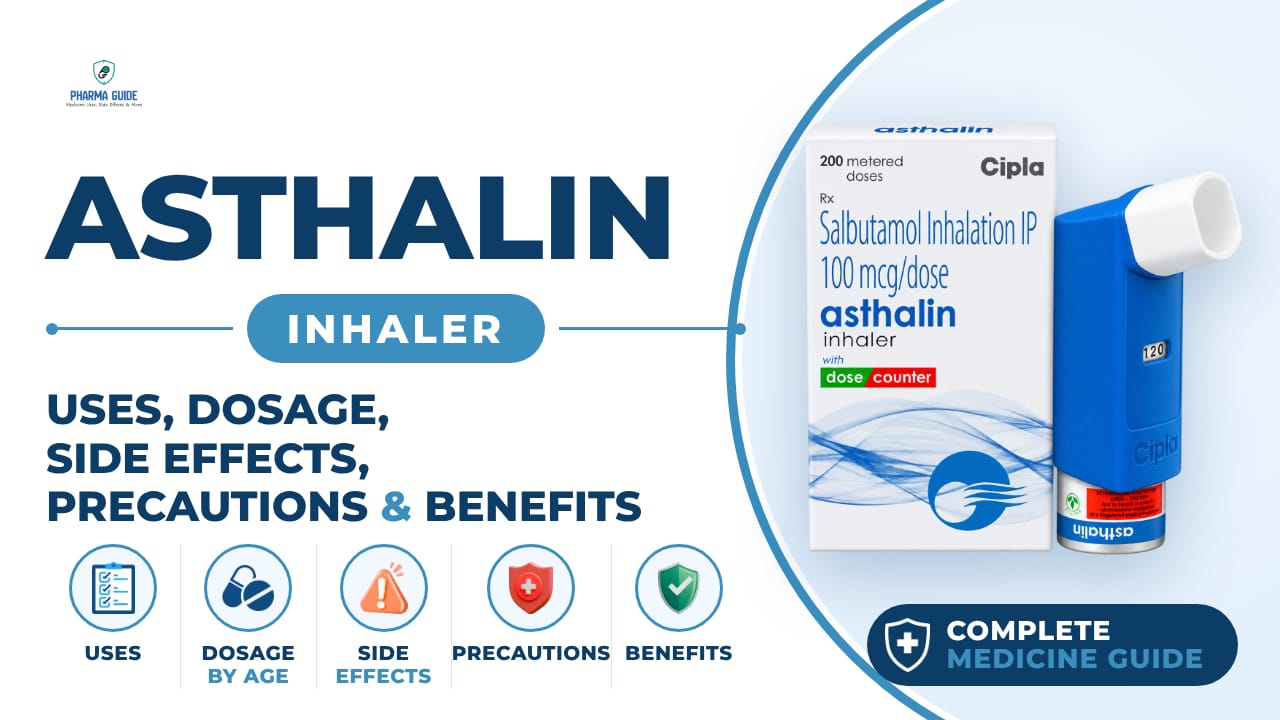
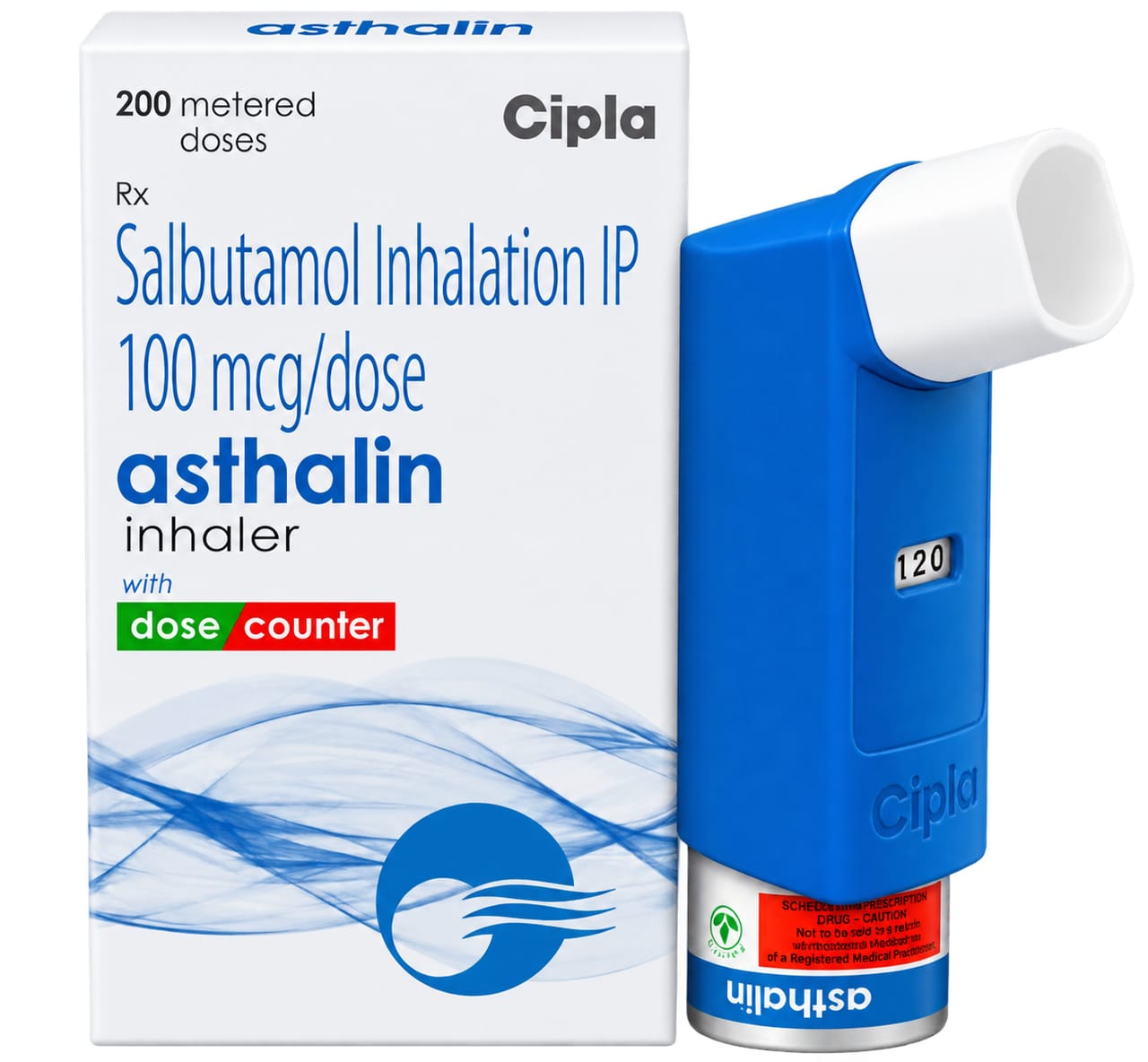
| Generic name | Salbutamol (Albuterol) |
|---|---|
| Drug class | Short-acting beta2-adrenergic agonist (bronchodilator) |
| Forms | Tablet, Syrup, Respules/nebulizer solution, Rotacap |
Quick overview
Asthalin Inhaler contains salbutamol (albuterol), a short-acting beta2-adrenergic agonist (bronchodilator). It is a fast-acting medicine used to treat and prevent breathing problems caused by asthma and chronic obstructive pulmonary disease (COPD). It works by relaxing the muscles of the airways so air can flow more easily into the lungs.
What is Asthalin Inhaler
Asthalin Inhaler is a fast-acting bronchodilator medicine used to treat and prevent breathing problems caused by asthma and chronic obstructive pulmonary disease (COPD). It contains salbutamol, which relaxes the muscles of the airways so air can flow more easily into the lungs.
Asthalin Inhaler uses
- Relief of bronchospasm (narrowing of the airways) in asthma and COPD
- Prevention of exercise-induced or allergen-induced bronchospasm
- Relief of wheezing, coughing, chest tightness, and shortness of breath
- Management of chronic obstructive pulmonary disease (COPD)
Benefits of Asthalin Inhaler
- Helps the airways in your lungs stay open so air can move in and out more easily
- Relieves chest tightness, wheezing, and coughing
- Works quickly, usually within a few minutes, with effects lasting several hours
- Helps you carry out daily activities more easily
How Asthalin Inhaler works
Asthalin works by acting on receptors in the airway muscles, causing them to relax and widen. This makes it easier for air to flow in and out of the lungs and relieves breathing difficulty.
Asthalin Inhaler dosage
This medicine is meant for inhalation through the mouth only. Shake the inhaler well before use, especially if it is new or hasn't been used for a week or more. Breathe out fully before placing the mouthpiece in your mouth and sealing your lips around it. Press the inhaler while breathing in slowly and deeply through the mouth. Hold your breath for about 10 seconds after inhaling, then breathe out slowly. If taking a second puff, wait at least 30 seconds before repeating the steps.
This medicine can be taken at any time of day, with or without food. Rinse your mouth with water after use to help prevent mouth and throat irritation or infection. Use only as directed by your doctor; do not use more or less than prescribed. Children should be supervised by an adult when using this inhaler. Do not stop using this medicine without talking to your doctor, as symptoms may return or worsen.
| Age group | Dose |
|---|---|
| 4–11 Years | 1–2 inhalations (100 mcg per puff) every 4–6 hours as needed |
| 12 Years and Above | 1–2 inhalations (100 mcg per puff) every 4–6 hours as needed |
| Adults (18–64 Years) | 1–2 inhalations (100 mcg per puff) every 4–6 hours as needed |
| Older Adults (65+ Years) | 1–2 inhalations as needed; use with medical advice |
Available forms and strengths
- Inhaler (100 mcg per puff)
- Tablet
- Syrup
- Respules/nebulizer solution
- Rotacap
Side effects of Asthalin Inhaler
Common
- Shaking or trembling (tremor), especially in the hands
- Headache
- Fast or irregular heartbeat (palpitations)
- Feeling tense or nervous
- Dizziness
- Muscle cramps
- Coughing
- Respiratory tract infections
Serious
- Irregular heartbeat or arrhythmia
- Difficulty breathing or worsening of breathing right after using the inhaler
- Swelling of the face, lips, eyelids, tongue, hands, or feet
- Skin rash or hives
- Chest pain (possible sign of heart problems)
- Severe allergic reaction with a drop in blood pressure and possible collapse
- Low blood potassium levels causing muscle weakness or abnormal heart rhythm
Warnings and precautions
- This medicine can sometimes cause the airways to tighten instead of open, which can be life-threatening. This has been known to happen especially the first time a new inhaler canister is used. If your breathing gets worse right after using it, stop and contact your doctor immediately.
- Do not use more than the amount your doctor has prescribed. Using too much can cause serious, even life-threatening problems.
- This medicine should be used carefully in people with heart or blood vessel conditions, since it can affect heart rate, blood pressure, and heart rhythm.
- If you find you need to use this inhaler more often than usual, or need more puffs than recommended, it may mean your asthma is getting worse. Contact your doctor, as you may need additional treatment.
- This medicine is not recommended for children under 2 years of age because safety has not been established in this age group.
- Older adults should use this medicine carefully, as they may be more likely to experience side effects.
- This medicine is not recommended for use during pregnancy unless your doctor decides it is necessary. Talk to your doctor if you are pregnant, think you might be pregnant, or are planning to become pregnant.
- This medicine is not recommended while breastfeeding unless your doctor decides it is necessary, since salbutamol may pass into breast milk.
- Use this medicine with caution if you have kidney problems, since it is removed from the body through the kidneys and could worsen kidney issues.
- Tell your doctor if you have liver problems before using this medicine.
- It is not known how this medicine interacts with alcohol. Ask your doctor before drinking alcohol while using it.
- This medicine may cause dizziness. If you feel dizzy, do not drive or operate machinery.
Storage
- Keep this medicine out of sight and reach of children
- Do not use after the expiry date shown on the canister and carton
- Do not store above 30°C
- Do not freeze
- Do not expose the canister to temperatures higher than 50°C
- Do not pierce the canister
- Do not throw away medicines via wastewater or household waste; ask your pharmacist how to dispose of medicines you no longer use
When to see a doctor
- Get emergency medical help if you notice signs of a serious allergic reaction, such as swelling of the lips, face, or throat, severe difficulty breathing, skin rash or hives, or a sudden drop in blood pressure that may cause collapse.
- If your asthma suddenly gets worse right after you use a puff of this inhaler, stop using it and contact your doctor immediately.
- If you accidentally use more of this medicine than you should and notice a fast heartbeat, shakiness, tension, headache, or flushed, hot skin, contact your doctor or nearest hospital right away.
- Seek emergency medical treatment if you think you have taken too much of this medicine.
Alternatives
- Ventolin Inhaler
- ProAir Inhaler
- Levosalbutamol Inhaler
Watch the video
FAQs
What is Asthalin Inhaler used for?
It is used to relieve and prevent breathing problems like bronchospasm, wheezing, coughing, chest tightness, and shortness of breath caused by asthma and COPD, including exercise-induced bronchospasm.
How does Asthalin Inhaler work?
It contains salbutamol, which acts on receptors in the airway muscles, causing them to relax and widen so air can flow more easily in and out of the lungs.
What is the dosage of Asthalin Inhaler?
For most age groups from 4 years and above, the typical dose is 1–2 inhalations (100 mcg per puff) every 4–6 hours as needed, though older adults should use it with medical advice.
What are the common side effects of Asthalin Inhaler?
Common side effects include tremor, headache, palpitations, nervousness, dizziness, muscle cramps, coughing, and respiratory tract infections.
Can Asthalin Inhaler be used during pregnancy?
It is not recommended during pregnancy unless your doctor decides it is necessary, so you should talk to your doctor if you are pregnant or planning to become pregnant.
General information, not medical advice
Your prescriber and the leaflet in your pack know your situation. This page does not.
- Follow your prescriber and the leaflet
- Don't start, stop, or change a dose on your own
- Doses and warnings differ by country and product
Sources
- https://www.ciplamed.com/product-index/asthalin-inhaler
- https://www.medicines.org.uk/emc/product/15454/smpc
- https://5.imimg.com/data5/SELLER/Doc/2024/4/414573936/KW/JH/BW/205816124/asthalin-inhaler.pdf
- https://medlineplus.gov/druginfo/meds/a607004.html
- https://pubchem.ncbi.nlm.nih.gov/compound/Salbutamol
Video
Related medicines

Injectafer Injection: Uses, Dosage, Side Effects, Precautions and Alternates
Iron products
Injectafer (ferric carboxymaltose) treats iron deficiency anemia and heart failure-related iron deficiency via IV. Learn uses, dosage, side effects, and

Gliclazide Tablet: Uses, Dosage, Side Effects, Precautions and Alternates
Sulfonylurea (hypoglycemic/antidiabetic agent)
Gliclazide Tablet is a sulfonylurea for type 2 diabetes that boosts insulin release. Learn about dosage, side effects, warnings, and precautions.