
Safety
General information, not medical advice
Your prescriber and the leaflet in your pack know your situation. This page does not.
- Follow your prescriber and the leaflet
- Don't start, stop, or change a dose on your own
- Doses and warnings differ by country and product
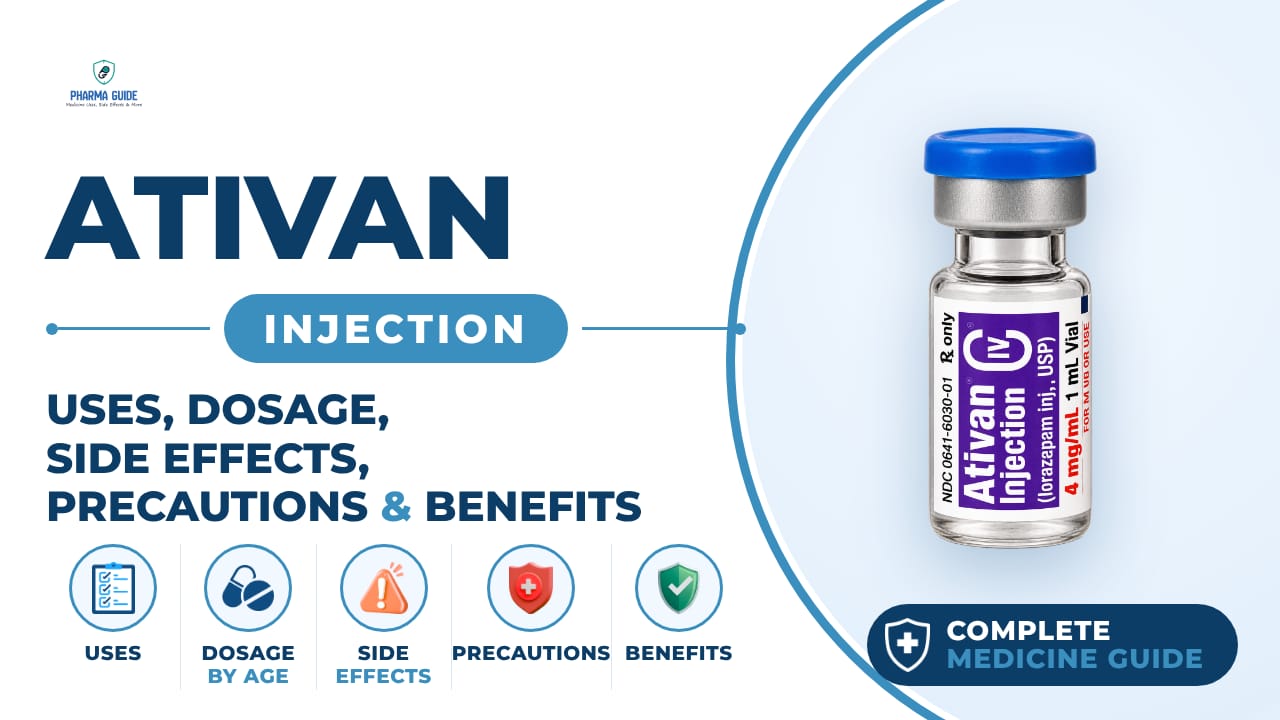
Ativan Injection: Uses, Dosage, Side Effects, Precautions and Alternates
| Generic name | lorazepam |
|---|---|
| Drug class | Benzodiazepine (Anxiolytics, Benzodiazepines) |
| Forms | Injection |
Quick overview
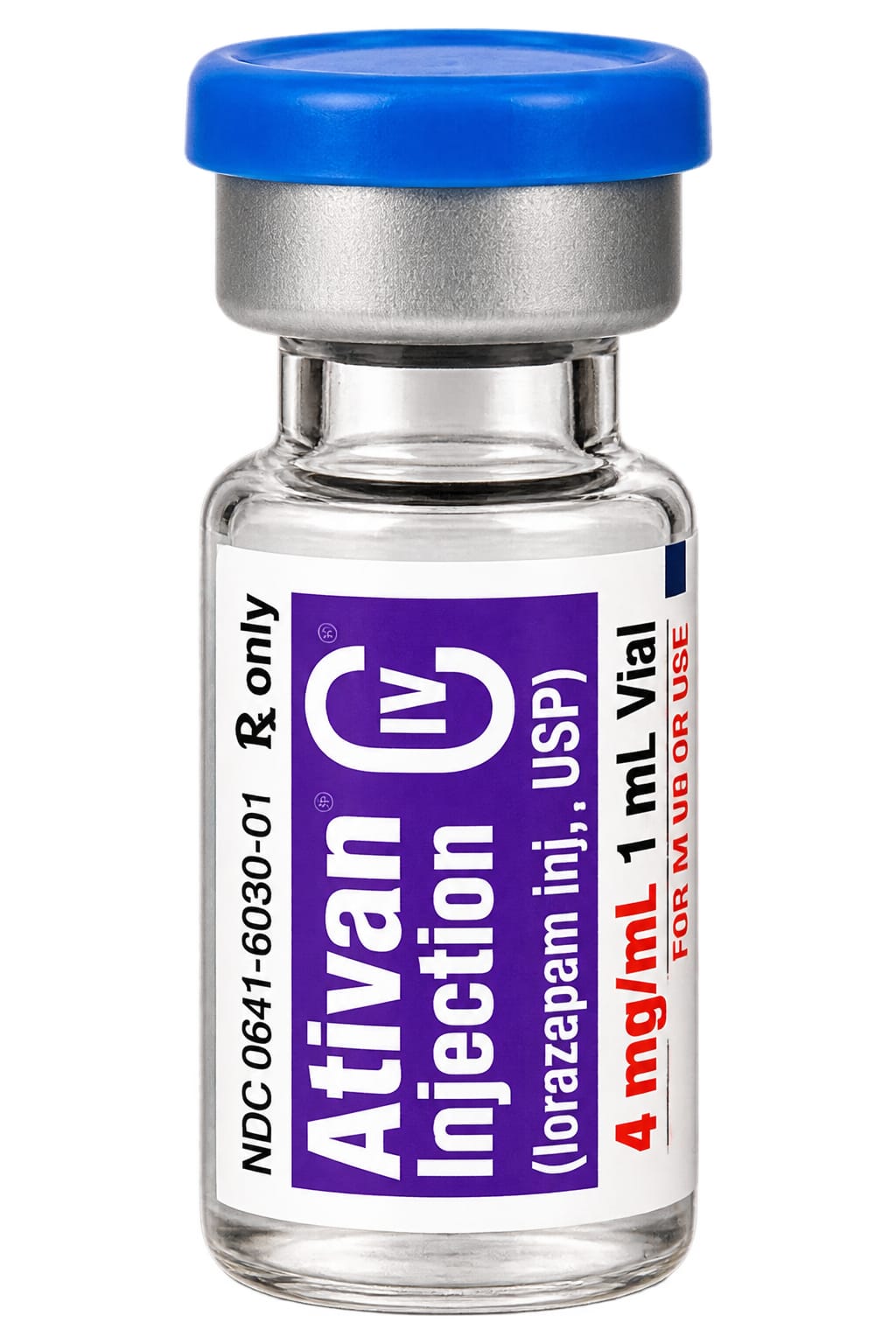
Ativan Injection contains lorazepam, a benzodiazepine medicine with antianxiety, sedative, and anticonvulsant effects. It is given as a shot into a muscle or into a vein by a healthcare professional. It is used to treat status epilepticus in adults and as a preanesthetic medication before surgery. It carries important warnings, including risks related to sedation, dependence, and withdrawal.
What is Ativan Injection
Ativan Injection is a benzodiazepine medicine with antianxiety, sedative, and anticonvulsant effects. It is given as a shot into a muscle or into a vein.
Ativan Injection uses
- Treating status epilepticus (a severe, prolonged seizure condition) in adults
- Preanesthetic medication in adults to produce sedation, relieve anxiety, and reduce memory of events on the day of surgery
Benefits of Ativan Injection
- Helps stop prolonged seizures in status epilepticus
- Produces sedation and relief of anxiety before surgery
- Reduces ability to recall events related to the day of surgery
How Ativan Injection works
Ativan works by attaching to a specific site in the brain that boosts the activity of a calming brain chemical called GABA. This produces effects like reduced anxiety, sedation, and fewer seizures.
Ativan Injection dosage
Ativan Injection is given by a healthcare professional as an injection into a muscle or into a vein; it is not a medicine you take on your own at home. When given into a muscle, it should be injected deep into the muscle. Before being given into a vein, it must first be diluted with an equal amount of a compatible solution, and the injection is given slowly.
Patients should not attempt to get out of bed unassisted for a period of time after receiving the injection because of the risk of falling. Driving or operating machinery should be avoided for a day or two after receiving the injection, until the effects of the drug have worn off.
| Age group | Dose |
|---|---|
| Children | Dose based on body weight and medical condition; only under specialist supervision |
| Adults (18–64 Years) | Usually 2–4 mg injection, adjusted according to medical condition |
| Older Adults (65+ Years) | Lower initial dose may be required; adjusted based on response |
Available forms and strengths
- Injection
Side effects of Ativan Injection
Common
- Infection
- Low blood pressure (hypotension)
- Abnormal liver function tests
- Nausea
- Vomiting
- Sleepiness
- Convulsions
- Abnormal thinking
- Hyperventilation
- Slowed breathing
- Injection site reactions (pain, burning, redness)
- Bladder inflammation
- Dizziness
- Weakness
Serious
- Hives, difficulty breathing, swelling of face, lips, tongue, or throat (allergic reaction)
- Slow breathing with long pauses, blue colored lips, being difficult to wake up
- Severe drowsiness
- Unusual changes in mood or behavior
- Sudden restless feeling or excitement
- Thoughts of self-harm
- Confusion
- Aggression
- Hallucinations
- Sleep problems
- Vision changes
- Dark urine or yellowing of the skin or eyes (jaundice)
- Fast, irregular, or pounding heartbeats, fluttering in the chest, shortness of breath, sudden dizziness or lightheadedness, or passing out
- Severe headache, confusion, slurred speech, arm or leg weakness, trouble walking, loss of coordination, feeling unsteady, very stiff muscles, high fever, profuse sweating, or tremors
- Seizures after stopping the medicine
Warnings and precautions
- Using this medicine together with opioid painkillers can cause severe sedation, slowed or stopped breathing, coma, and death.
- Using benzodiazepines like this one carries a risk of abuse, misuse, and addiction, which can lead to overdose or death.
- Using this medicine more often than prescribed can lead to physical dependence, and stopping suddenly or reducing the dose too quickly can cause life-threatening withdrawal reactions, including seizures.
- Some people who stop taking benzodiazepines develop a prolonged withdrawal syndrome with symptoms lasting from weeks to more than a year.
- Airway blockage can occur in patients who are heavily sedated, so equipment to support breathing must be available whenever this medicine is given by IV.
- This medicine should not be injected into an artery, since this may cause severe spasm of the artery leading to gangrene that could require amputation.
- This injection contains a preservative called benzyl alcohol, which has been linked to serious harm and death, particularly in premature babies and newborns, so it must not be used in premature infants.
- People with untreated depression should generally avoid this medicine, since it can worsen depression and has been linked to suicidal thoughts.
- Ativan Injection is not recommended during pregnancy because it may harm the baby, except in serious or life-threatening situations like status epilepticus where safer options are not available or do not work.
- Lorazepam passes into breast milk, so it should not be given to breastfeeding mothers because it could sedate or otherwise harm the nursing baby.
- This medicine is not generally recommended for people with kidney failure, and caution should be used in people with mild-to-moderate kidney disease, especially if frequent doses are given.
- This medicine is not generally recommended for people with liver failure, and caution should be used in people with mild-to-moderate liver disease.
- Do not drink alcohol while being treated with this medicine, since it can add to the sedative effects and cause dangerous or even fatal breathing problems.
- Do not drive, operate machinery, or do other activities that need alertness for at least a day or two after the injection, or until the drowsiness and other effects have gone away, whichever is longer.
Storage
- Store in a refrigerator.
- Protect from light.
- Use carton to protect contents from light.
When to see a doctor
- Get emergency medical help right away for signs of an allergic reaction such as hives, difficulty breathing, or swelling of the face, lips, tongue, or throat.
- A caregiver should get emergency medical help if you have slow breathing with long pauses, blue-colored lips, or are hard to wake up.
- Call your doctor right away for severe drowsiness, unusual mood or behavior changes, agitation, restlessness, seizures, depression, thoughts of suicide or self-harm, confusion, aggression, hallucinations, sleep problems, vision changes, or dark urine or yellowing of the skin or eyes.
- After stopping this medicine, get medical help right away if you notice unusual muscle movements, being unusually active or talkative, sudden severe changes in mood or behavior, confusion, hallucinations, seizures, or thoughts of suicide.
- Seek emergency care if you have symptoms of overdose such as severe drowsiness, confusion, slurred speech, restlessness, muscle weakness, loss of balance, light-headedness, slow heartbeats, weak or shallow breathing, or coma.
Alternatives
- Alprazolam
- Clonazepam
- Midazolam Injection
- Diazepam Injection
Watch the video
FAQs
What is Ativan Injection used for?
It is used to treat status epilepticus (a severe, prolonged seizure condition) in adults and as a preanesthetic medication to produce sedation, relieve anxiety, and reduce memory of events on the day of surgery.
How does Ativan Injection work?
It attaches to a specific site in the brain that boosts the activity of a calming brain chemical called GABA, producing reduced anxiety, sedation, and fewer seizures.
How is Ativan Injection given?
It is given by a healthcare professional as a shot into a muscle or into a vein; when given into a vein, it is first diluted and injected slowly. It is not self-administered at home.
Can I drive after receiving Ativan Injection?
No, you should avoid driving, operating machinery, or other activities needing alertness for at least a day or two after the injection, or until drowsiness and other effects have worn off.
What are the serious risks of Ativan Injection?
Serious risks include severe sedation and slowed or stopped breathing (especially with opioids), dependence and life-threatening withdrawal if stopped suddenly, allergic reactions, and worsening depression with suicidal thoughts.
General information, not medical advice
Your prescriber and the leaflet in your pack know your situation. This page does not.
- Follow your prescriber and the leaflet
- Don't start, stop, or change a dose on your own
- Doses and warnings differ by country and product
Sources
Video
Related medicines

Injectafer Injection: Uses, Dosage, Side Effects, Precautions and Alternates
Iron products
Injectafer (ferric carboxymaltose) treats iron deficiency anemia and heart failure-related iron deficiency via IV. Learn uses, dosage, side effects, and

Gliclazide Tablet: Uses, Dosage, Side Effects, Precautions and Alternates
Sulfonylurea (hypoglycemic/antidiabetic agent)
Gliclazide Tablet is a sulfonylurea for type 2 diabetes that boosts insulin release. Learn about dosage, side effects, warnings, and precautions.