
Safety
General information, not medical advice
Your prescriber and the leaflet in your pack know your situation. This page does not.
- Follow your prescriber and the leaflet
- Don't start, stop, or change a dose on your own
- Doses and warnings differ by country and product
Atorvastatin Tablet: Uses, Dosage, Side Effects, Precautions and Alternates
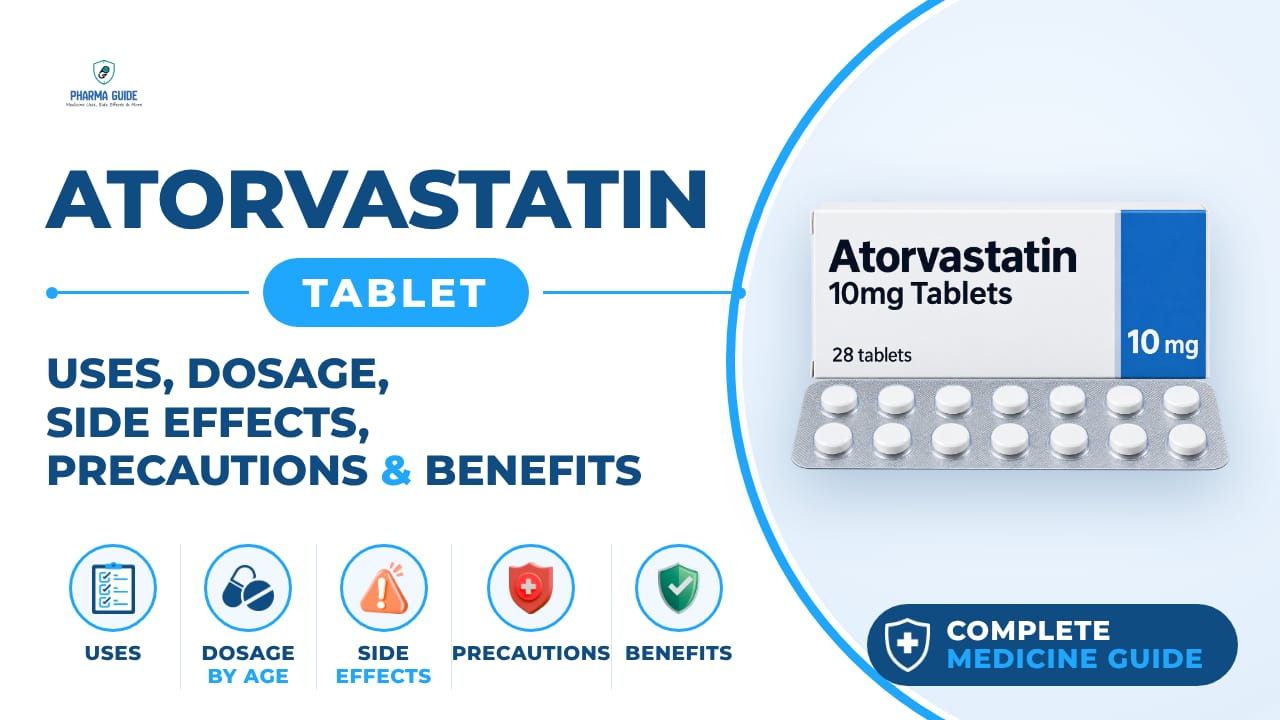
| Generic name | Atorvastatin |
|---|---|
| Drug class | Statins (HMG-CoA reductase inhibitors) |
| Forms | Oral tablet (10 mg, 20 mg, 40 mg, 80 mg), Oral suspension (20 mg/5 mL) |
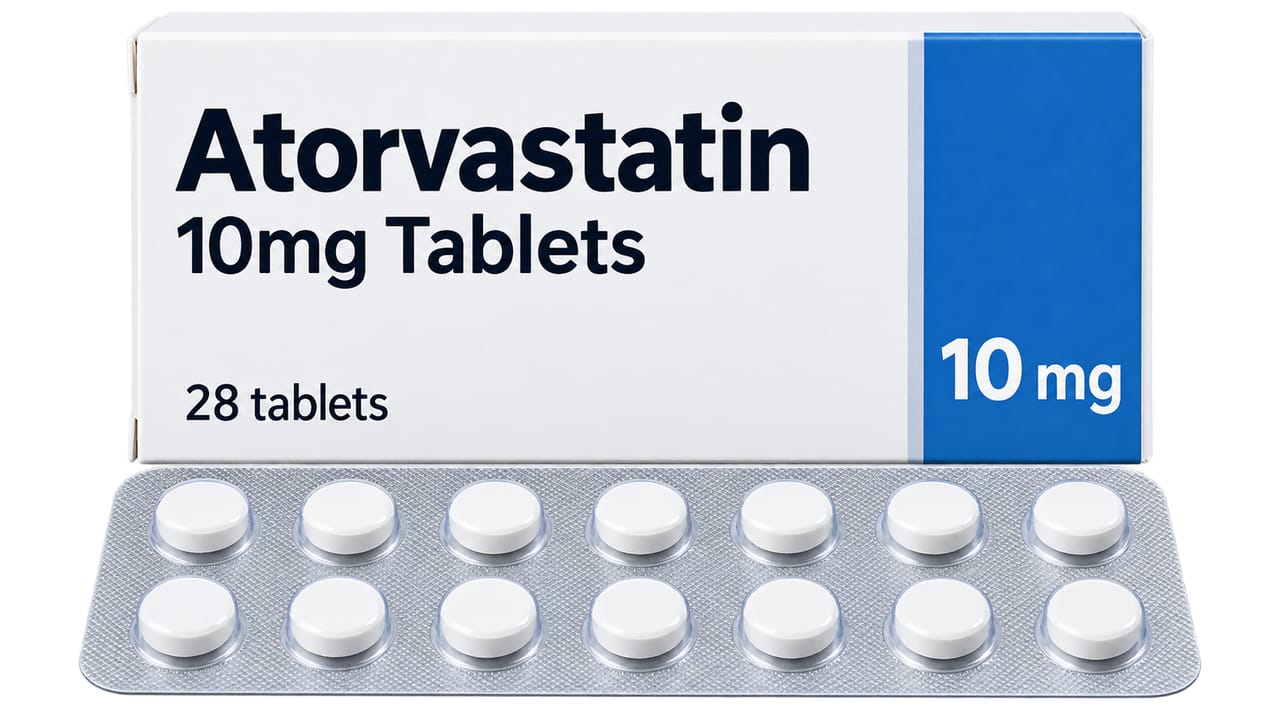
Quick overview
Atorvastatin Tablet is a prescription statin medicine used to treat high cholesterol. It helps lower LDL ("bad") cholesterol and triglycerides while raising HDL ("good") cholesterol, and it can reduce the risk of heart attack, stroke, and related heart problems. It is used alongside diet, weight loss, and exercise, and is taken once daily as directed by a doctor.
What is Atorvastatin Tablet
Atorvastatin is a prescription medicine used to treat high cholesterol. It belongs to a group of medicines called statins, which help improve cholesterol levels and lower the risk of heart attack and stroke.
Atorvastatin Tablet uses
- Treating high cholesterol and improving overall lipid levels
- Reducing the risk of heart attack, stroke, angina, and the need for heart surgery in people with heart disease or at risk of it
- Lowering LDL ('bad') cholesterol and triglycerides while raising HDL ('good') cholesterol
- Used together with diet, weight loss, and exercise to manage cholesterol
Benefits of Atorvastatin Tablet
- Helps lower LDL ('bad') cholesterol and triglyceride levels
- Increases HDL ('good') cholesterol levels
- Helps prevent buildup of cholesterol and fat in artery walls, keeping blood flowing to the heart and brain
- May help prevent heart disease, angina, stroke, and heart attacks
How Atorvastatin Tablet works
Atorvastatin blocks a liver enzyme that the body uses to make cholesterol. This lowers the amount of cholesterol the liver produces and helps the liver remove more LDL ('bad') cholesterol from the blood, which improves overall cholesterol levels.
Atorvastatin Tablet dosage
Take the tablet once daily, with or without food. Try to take it at the same time each day; it can be taken any time of day. Take the liquid form on an empty stomach, at least 1 hour before or 2 hours after a meal. Shake the oral suspension well before use and measure the dose with the device provided, not a kitchen spoon. Do not cut or crush the tablet.
Take exactly as prescribed and follow all directions on your prescription label. Do not change your dose or stop taking it without your doctor's advice. It may take up to 2 weeks before your cholesterol levels improve, and you may need regular blood tests. Your treatment may also include diet, exercise, and weight control.
| Age group | Dose |
|---|---|
| Under 10 years | Routine dosing generally not established |
| 10–17 years | Usually 10–20 mg once daily for appropriate familial hypercholesterolemia indications |
| 18–64 years | 10–80 mg once daily |
| 65+ years | Usually adult dosing; individualize according to response and tolerability |
Available forms and strengths
- Oral tablet (10 mg, 20 mg, 40 mg, 80 mg)
- Oral suspension (20 mg/5 mL)
Side effects of Atorvastatin Tablet
Common
- Pain in bones, spine, joints, or muscles
- Muscle spasms
- Upset stomach
- Trouble sleeping
- Stuffy or runny nose
- Sore throat
- Diarrhea
- Nausea
- Pain in arms or legs
- Urinary tract infection with pain or burning when urinating
- Gas
- Heartburn
- Forgetfulness or confusion
- Cold-like symptoms such as sneezing and coughing
Serious
- Allergic reaction: hives, difficulty breathing, swelling of face or throat
- Severe skin reaction: fever, sore throat, burning eyes, skin pain, red or purple rash with blistering and peeling
- Muscle breakdown (rhabdomyolysis): unexplained muscle pain, tenderness, or weakness, especially with fever, tiredness, or dark urine
- Muscle weakness in hips, shoulders, neck, or back; trouble lifting arms, climbing, or standing
- Liver problems: loss of appetite, upper right stomach pain, tiredness, itching, dark urine, clay-colored stools, yellowing of skin or eyes
- Kidney problems: swelling, urinating less, feeling tired or short of breath
- High blood sugar: increased thirst, increased urination, dry mouth, fruity breath odor
- Severe dizziness or passing out
- Fast heartbeat
- Signs of stroke: weakness on one side of the body, trouble speaking or thinking, change in balance, drooping on one side of the face, blurred eyesight
- Not able to pass urine or a change in how much urine is passed
Warnings and precautions
- Do not take atorvastatin if you have liver disease or cirrhosis.
- Atorvastatin can cause muscle tissue breakdown, which can lead to kidney failure. Call your doctor right away if you have unexplained muscle pain, tenderness, or weakness, especially with fever, tiredness, or dark urine.
- Avoid drinking large amounts of grapefruit juice, as it can increase atorvastatin levels in your blood and raise the risk of muscle problems.
- Avoid eating foods high in fat or cholesterol, since atorvastatin works best alongside a cholesterol-lowering diet.
- Tell all your healthcare providers about every medicine you take, since serious drug interactions can occur.
- People over 65 have a higher risk of serious muscle breakdown (rhabdomyolysis) while taking atorvastatin.
- Atorvastatin should not be used in children younger than 10 years.
- Atorvastatin should not be used during pregnancy because it may harm an unborn baby. If you become pregnant while taking it, stop the medicine and contact your doctor right away.
- Atorvastatin should not be used while breastfeeding. Talk to your doctor about the best way to feed your baby if you need to take this medicine.
- Kidney problems can increase the risk of serious muscle breakdown while taking atorvastatin. Your doctor may watch you more closely for muscle problems if you have kidney disease.
- You should not take atorvastatin if you have liver disease or cirrhosis, since it can raise liver test results and may indicate liver damage.
- Drinking alcohol, especially more than two drinks a day, may increase your risk of liver damage while taking this medicine.
Storage
- Store at room temperature away from moisture, heat, and light
- Store tablets at room temperature in a dry place; do not store in a bathroom
- Store the suspension in its original container at room temperature
- Throw away any unused liquid 60 days after opening the bottle
- Keep all drugs in a safe place, out of reach of children and pets
- Throw away unused or expired drugs; do not flush down a toilet or pour down a drain unless told to do so; ask your pharmacist about drug take-back programs
When to see a doctor
- Get emergency help right away for signs of a severe allergic reaction, such as swelling of the face, lips, tongue or throat, trouble breathing or swallowing, or hives.
- Call your doctor right away if you have unexplained muscle pain, tenderness, or weakness, especially with fever, tiredness, or dark urine.
- Call your doctor if you notice signs of liver problems, such as loss of appetite, upper right stomach pain, tiredness, itching, dark urine, pale stools, or yellowing of the skin or eyes.
- Call your doctor if you have signs of kidney problems, such as swelling, urinating less, or feeling tired or short of breath.
- Call your doctor if you notice signs of high blood sugar, such as increased thirst, increased urination, dry mouth, or fruity breath odor.
- If you think you have taken too much of this medicine, seek emergency medical attention or contact your local poison control center.
- If you become pregnant while taking this medicine, call your doctor right away.
Alternatives
- Evolocumab
- Bempedoic Acid
- Simvastatin
- Ezetimibe
- Rosuvastatin
Watch the video
FAQs
What is Atorvastatin Tablet used for?
It is used to treat high cholesterol, lower LDL ('bad') cholesterol and triglycerides, raise HDL ('good') cholesterol, and reduce the risk of heart attack, stroke, angina, and the need for heart surgery in people with or at risk of heart disease. It is used along with diet, weight loss, and exercise.
How should I take Atorvastatin Tablet?
Take the tablet once daily, with or without food, at the same time each day. Do not cut or crush it. The liquid form should be taken on an empty stomach, at least 1 hour before or 2 hours after a meal, and the oral suspension should be shaken well and measured with the provided device, not a kitchen spoon.
How long does it take for Atorvastatin Tablet to work?
It may take up to 2 weeks before your cholesterol levels improve, and you may need regular blood tests to monitor your response.
What are the serious side effects of Atorvastatin Tablet?
Serious side effects include muscle breakdown (rhabdomyolysis) with unexplained muscle pain, tenderness, or weakness; liver problems; kidney problems; high blood sugar; severe allergic reactions; severe skin reactions; and signs of stroke.
Can I drink grapefruit juice while taking Atorvastatin Tablet?
You should avoid drinking large amounts of grapefruit juice, as it can increase atorvastatin levels in your blood and raise the risk of muscle problems.
General information, not medical advice
Your prescriber and the leaflet in your pack know your situation. This page does not.
- Follow your prescriber and the leaflet
- Don't start, stop, or change a dose on your own
- Doses and warnings differ by country and product
Sources
Video
Related medicines

Injectafer Injection: Uses, Dosage, Side Effects, Precautions and Alternates
Iron products
Injectafer (ferric carboxymaltose) treats iron deficiency anemia and heart failure-related iron deficiency via IV. Learn uses, dosage, side effects, and

Gliclazide Tablet: Uses, Dosage, Side Effects, Precautions and Alternates
Sulfonylurea (hypoglycemic/antidiabetic agent)
Gliclazide Tablet is a sulfonylurea for type 2 diabetes that boosts insulin release. Learn about dosage, side effects, warnings, and precautions.