
Safety
General information, not medical advice
Your prescriber and the leaflet in your pack know your situation. This page does not.
- Follow your prescriber and the leaflet
- Don't start, stop, or change a dose on your own
- Doses and warnings differ by country and product
Atropine Eye Drops: Uses, Dosage, Side Effects, Precautions and Alternates
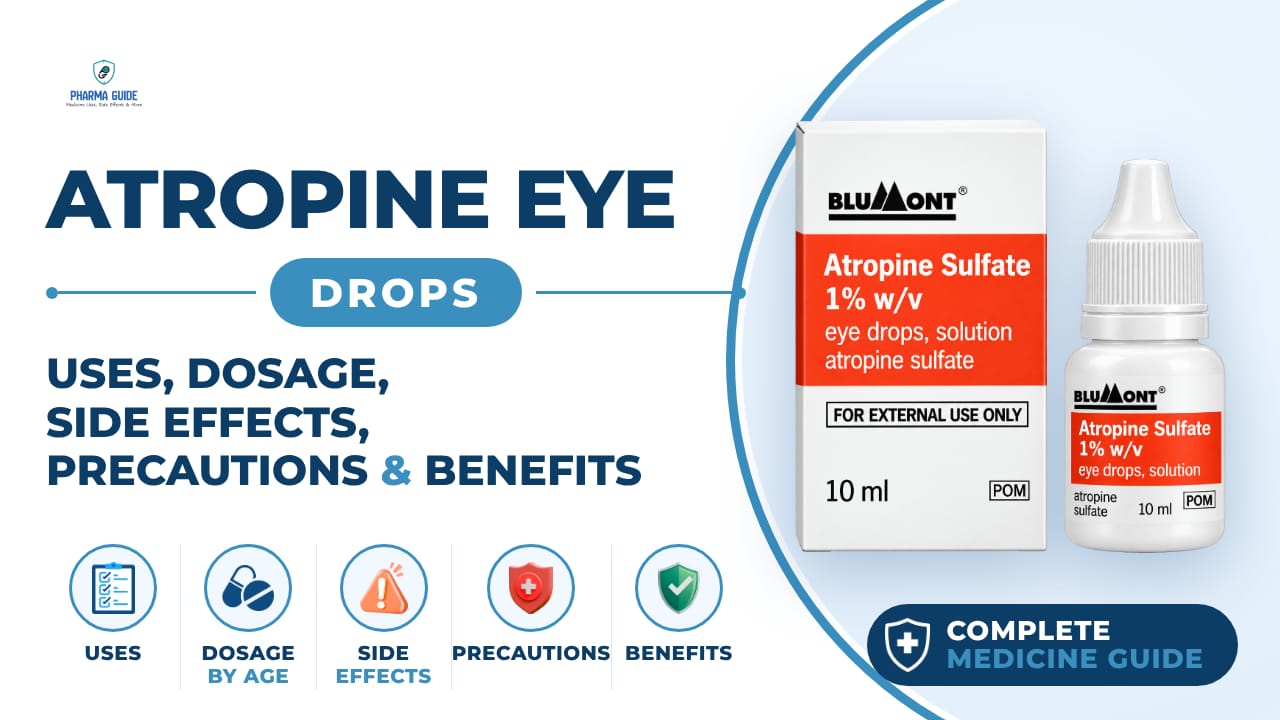
| Generic name | Atropine sulfate |
|---|---|
| Drug class | Anticholinergic (antimuscarinic agent) |
| Forms | Ophthalmic solution (eye drops) |
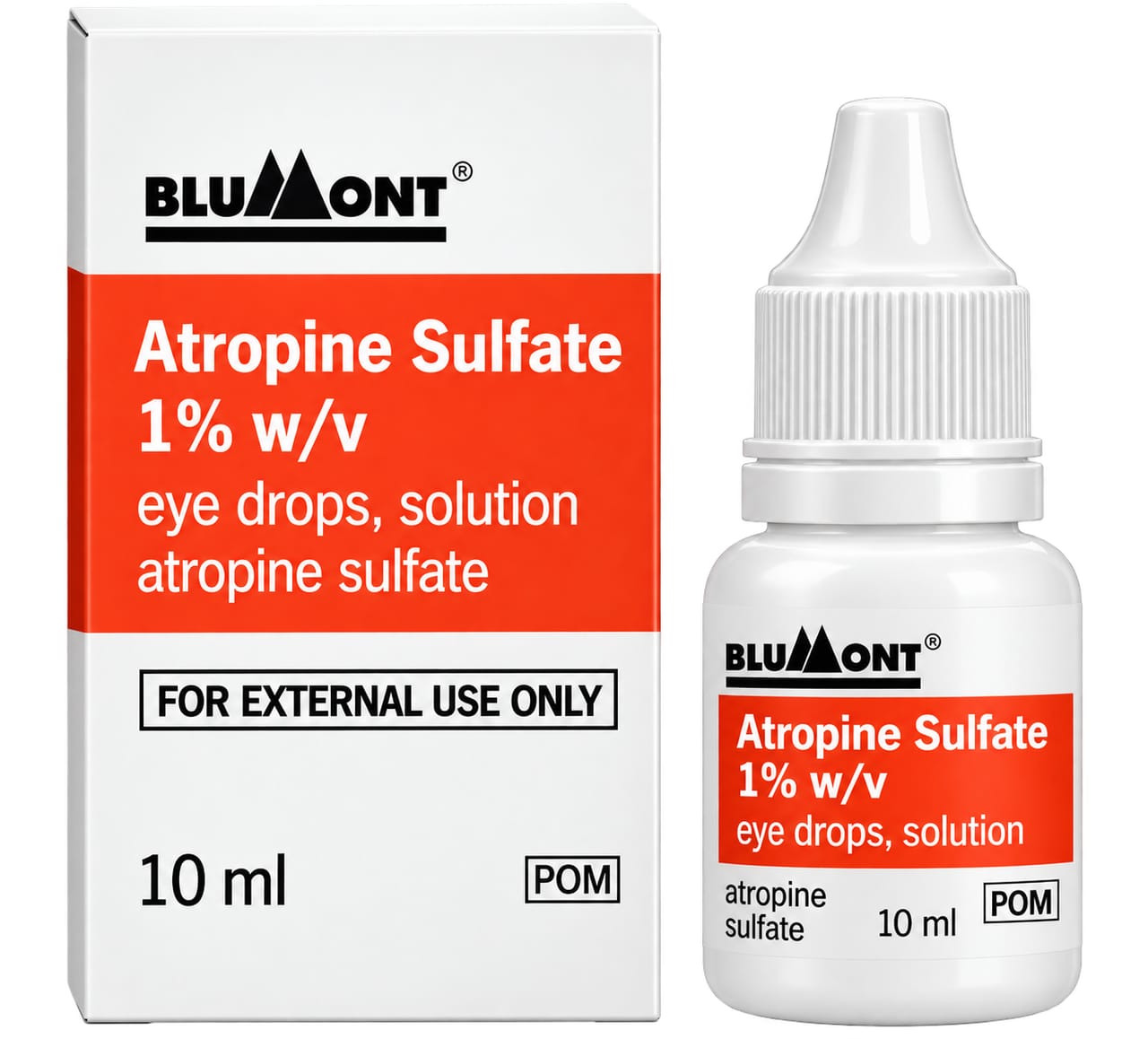
Quick overview
Atropine Eye Drops (atropine sulfate) is a prescription anticholinergic eye drop that widens the pupil and relaxes the eye's focusing muscle. It is used for eye exams, certain eye conditions, and in some cases to treat lazy eye in children. It is also used off-label under the tongue in palliative care to reduce excess saliva and respiratory secretions. Effects such as light sensitivity and blurred vision can last up to two weeks.
What is Atropine Eye Drops
Atropine sulfate ophthalmic solution is a prescription eye drop that widens (dilates) the pupil and relaxes the eye's focusing muscle. It is used for eye exams, certain eye conditions, and in some cases to treat lazy eye in children.
Atropine Eye Drops uses
- Cycloplegia (temporarily relaxing the eye's focusing muscle)
- Mydriasis (dilating the pupil)
- Penalization of the healthy eye in the treatment of amblyopia (lazy eye)
- Dilating pupils before or after an eye exam or procedure
- Treating eye inflammation
- Used in palliative care, placed under the tongue, to reduce excess saliva and respiratory secretions (an off-label use)
Benefits of Atropine Eye Drops
- Dilates the pupil to allow eye examination
- Relaxes eye muscles, which can reduce pain and swelling from inflammation
- Helps strengthen a weaker eye in lazy eye treatment by temporarily blurring vision in the stronger eye
How Atropine Eye Drops works
Atropine blocks a natural chemical called acetylcholine in the eye. This relaxes the muscle that makes the pupil smaller, so the pupil widens, and it also relaxes the eye's focusing muscle so the eye cannot focus on close objects for a while.
Atropine Eye Drops dosage
Wash your hands before and after using the drops. Tilt your head back and gently pull down your lower eyelid to form a small pouch. Place the drop into the pouch without letting the dropper tip touch your eye, eyelid, fingers, or any other surface. Close your eyes gently after applying the drop; avoid blinking, and keep eyes closed for a minute or two so the medicine is absorbed. Keep the bottle tightly closed between uses.
Do not use the drops more often than your doctor tells you to. If you miss a dose, use it as soon as you remember, but skip it if it is almost time for your next dose — do not double up. This medicine is not meant for long-term use unless your doctor says otherwise. Children younger than 3 months of age should not use this medicine unless specifically directed by a doctor.
| Age group | Dose |
|---|---|
| Under 3 months | Safety and effectiveness are not established |
| 3 months–2 years | 1 drop of 1% solution into the affected eye(s), generally about 40 minutes before the intended maximal dilation; repeat dosing is not established for this age group |
| 3–11 years | 1 drop of 1% solution into the affected eye(s); may be repeated up to twice daily as needed when prescribed |
| 12–64 years | 1 drop of 1% solution; may be repeated up to twice daily as needed |
Available forms and strengths
- Ophthalmic solution (eye drops), 1% solution
Side effects of Atropine Eye Drops
Common
- Eye pain or stinging when the drops are applied
- Blurred vision
- Sensitivity to light
- Decreased tearing
- Dry mouth, skin, or throat
- Restlessness or irritability
- Flushed skin of the face and neck
Serious
- Fast, pounding, or irregular heartbeat
- Increase in blood pressure
- Allergic reactions such as skin rash, itching, hives, or swelling of the face, lips, tongue, or throat
- Confusion, hallucinations, or unusual excitement/nervousness
- Difficulty passing urine
Warnings and precautions
- Light sensitivity and blurred vision from this medicine can last up to two weeks.
- Even at normal doses, this medicine can be absorbed into the body and raise blood pressure.
- Do not let the dropper tip touch your eye, eyelids, or any other surface, because this can contaminate the solution.
- Taking this medicine together with a type of antidepressant called an MAOI is generally not recommended because it could cause a dangerous rise in blood pressure.
- This medicine should not be used by people with glaucoma or with abnormal heart rhythms.
- If the eye drops are accidentally placed in the eyes when meant for use under the tongue, get medical advice.
- This medicine should only be used during pregnancy if your doctor decides the benefits outweigh the possible risks, since there isn't enough research in pregnant women to know the exact risk.
- It isn't known whether this medicine passes into breast milk after eye use or how it might affect a nursing baby, so you and your doctor should weigh the benefits against possible risks.
- No routine dose adjustment is generally required for ophthalmic atropine, but systemic absorption can occur. Use cautiously in significant kidney impairment, especially with repeated or high-concentration use.
- No routine hepatic dose adjustment is generally established. Significant liver disease should still be reviewed by a clinician because absorbed atropine is metabolized systemically.
- No major direct interaction is expected from standard eye-drop use, but alcohol may worsen dizziness, blurred vision, or drowsiness if systemic effects occur. Avoid alcohol if you feel impaired.
- This medicine can cause drowsiness, blurred vision, or make your eyes sensitive to light, so you should not drive or use machinery until you know how it affects you, and should not drive until your pupils are back to normal size.
Storage
- Store at 68°F to 77°F (20°C to 25°C).
- Keep the bottle tightly closed.
- Keep out of the reach of children.
- Do not freeze.
- Get rid of any unused medication after the expiration date.
- Take unused or expired medicine to a medication take-back program if available, or dispose of it according to the label or your pharmacist's instructions; do not flush it down the toilet unless told to do so.
- After opening, the 10 ml bottle should be safely thrown away 28 days after opening (for the mouth-use preparation); single-dose 0.5 ml containers may be used for up to 7 days after opening.
When to see a doctor
- Get medical help right away if you think you or someone else has taken too much of this medicine.
- Tell your care team right away about allergic reactions such as rash, itching, hives, or swelling of the face, lips, tongue, or throat, or about a rise in blood pressure.
- Check with your doctor right away if you notice blurred vision, change in color vision, difficulty seeing at night, eye pain or stinging, a fast or irregular heartbeat, or increased sensitivity to sunlight.
Alternatives
- Cyclopentolate eye drops
- Tropicamide eye drops
- Homatropine eye drops
Watch the video
FAQs
What is Atropine Eye Drops used for?
It is used to dilate the pupil, relax the eye's focusing muscle, treat eye inflammation, and as a penalizing treatment for the healthy eye in lazy eye (amblyopia). It is also used off-label under the tongue in palliative care to reduce excess saliva and respiratory secretions.
How long do the effects of Atropine Eye Drops last?
Light sensitivity and blurred vision from this medicine can last up to two weeks.
Can children use Atropine Eye Drops?
Children younger than 3 months of age should not use this medicine unless specifically directed by a doctor. For ages 3 months to 2 years, 1 drop of 1% solution is used about 40 minutes before maximal dilation is needed, while children aged 3–11 years may have 1 drop repeated up to twice daily as needed when prescribed.
What are the common side effects of Atropine Eye Drops?
Common side effects include eye pain or stinging, blurred vision, sensitivity to light, decreased tearing, dry mouth, skin, or throat, restlessness or irritability, and flushed skin of the face and neck.
Is it safe to drive after using Atropine Eye Drops?
No, this medicine can cause drowsiness, blurred vision, or light sensitivity, so you should not drive or use machinery until you know how it affects you, and should not drive until your pupils are back to normal size.
General information, not medical advice
Your prescriber and the leaflet in your pack know your situation. This page does not.
- Follow your prescriber and the leaflet
- Don't start, stop, or change a dose on your own
- Doses and warnings differ by country and product
Sources
Video
Related medicines
Atropine Sulfate Injection: Uses, Dosage, Side Effects, Precautions and Alternates
Anticholinergic (antimuscarinic agent)
Atropine Sulfate Injection is used before surgery, for slow heart rate, muscle relaxant reversal, and poisoning antidote. Learn uses, dosage, and side effects.

Injectafer Injection: Uses, Dosage, Side Effects, Precautions and Alternates
Iron products
Injectafer (ferric carboxymaltose) treats iron deficiency anemia and heart failure-related iron deficiency via IV. Learn uses, dosage, side effects, and