
Safety
General information, not medical advice
Your prescriber and the leaflet in your pack know your situation. This page does not.
- Follow your prescriber and the leaflet
- Don't start, stop, or change a dose on your own
- Doses and warnings differ by country and product
Atropine Sulfate Injection: Uses, Dosage, Side Effects, Precautions and Alternates
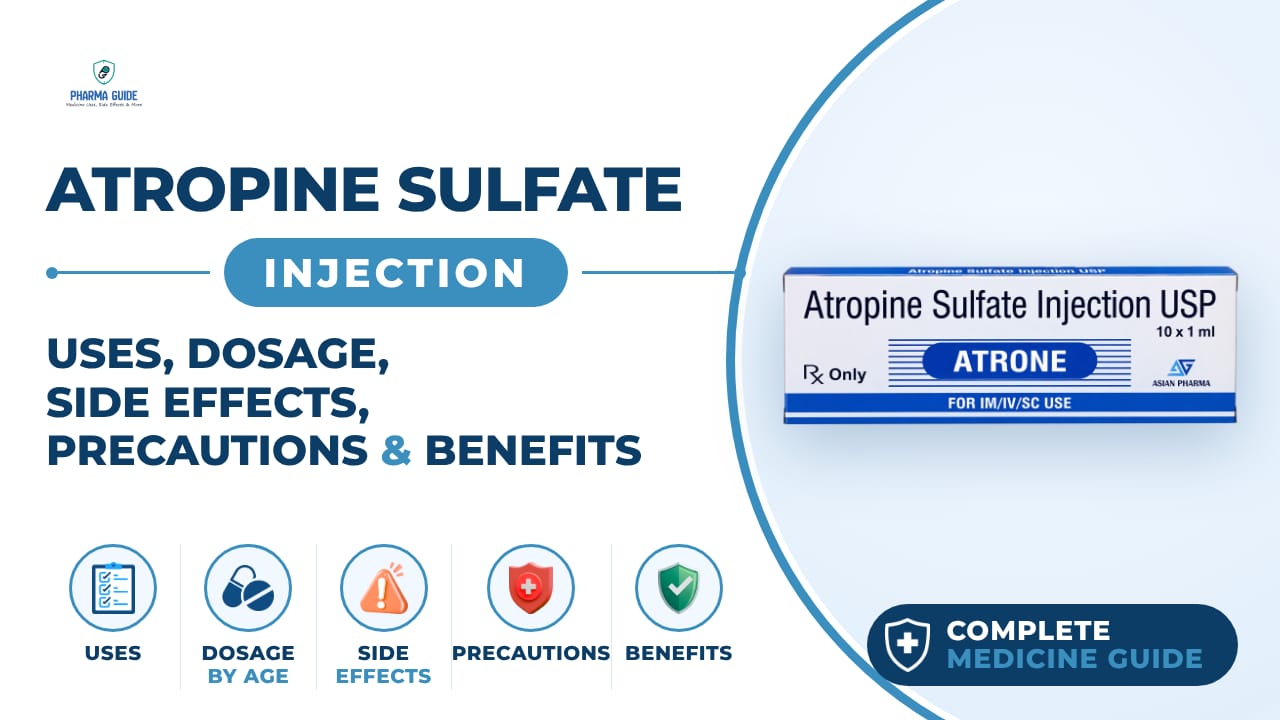
| Generic name | atropine sulfate |
|---|---|
| Drug class | Anticholinergic (antimuscarinic agent) |
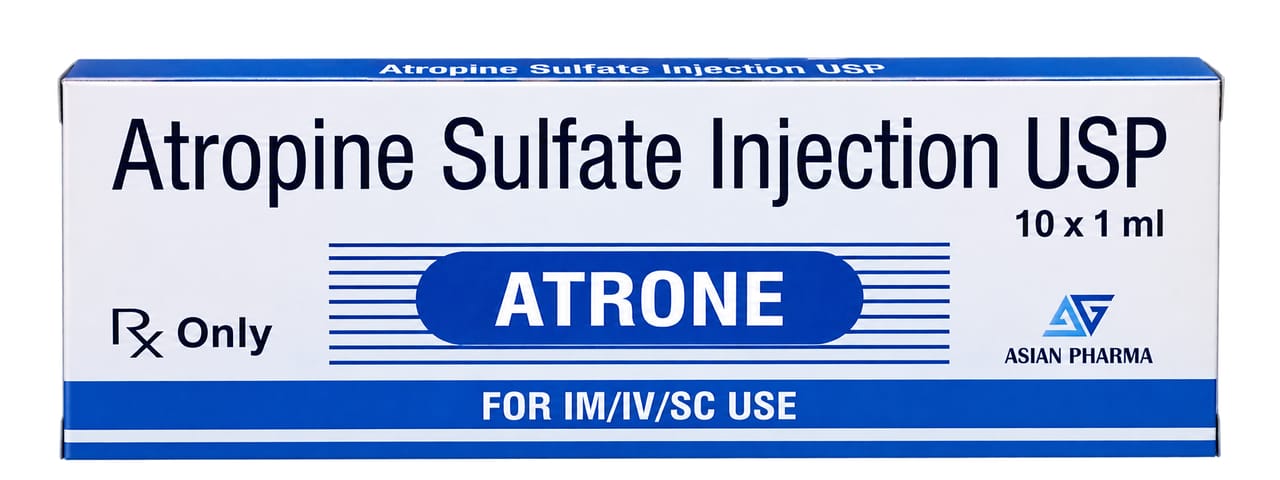
| Forms | Solution for injection, Pre-filled syringe |
Quick overview
Atropine Sulfate Injection contains atropine sulfate and belongs to the anticholinergic (antimuscarinic) drug class. It is a prescription medicine given as a shot by a healthcare professional, used before surgery, to treat slow heart rate, to reverse certain muscle relaxants, and as an antidote for specific types of poisoning. It works by blocking a natural body chemical called acetylcholine.
What is Atropine Sulfate Injection
Atropine Sulfate Injection is a prescription medicine given as a shot. It belongs to a group of medicines called anticholinergics, which block a natural body chemical called acetylcholine.
Atropine Sulfate Injection uses
- Given before surgery to reduce saliva and lung secretions and to protect the heart from slowing down too much during anaesthesia
- Used to treat a slow heart rate (bradycardia), including during a heart attack
- Used along with medicines like neostigmine to reverse the effects of muscle relaxants used during surgery
- Used as an antidote for poisoning from organophosphate pesticides, nerve agents, or anticholinesterase drugs, usually together with another medicine called pralidoxime
- Used as an antidote for poisoning by certain mushrooms containing muscarine
- Used with other medicines such as morphine to help relieve pain from kidney or gallbladder (biliary) spasms
- Used to relax the upper digestive tract and colon during certain x-ray exams
Benefits of Atropine Sulfate Injection
- Can quickly raise a dangerously slow heart rate
- Reduces unwanted saliva and airway secretions before surgery
- Works as an emergency antidote in certain types of poisoning
- Helps relieve spasms and colic pain from the gut, bile ducts, or kidneys
How Atropine Sulfate Injection works
Atropine blocks the effects of a natural body chemical called acetylcholine at certain nerve endings. This reduces saliva and airway secretions, can speed up the heart rate, and relaxes some muscles in the gut and other organs.
Atropine Sulfate Injection dosage
This medicine is given as an injection into a muscle, under the skin, or into a vein by a doctor or nurse — it is not a medicine you take home and use yourself. It is for single use only; any leftover solution after an injection should be thrown away and not reused.
When used before surgery, it is normally given some time before anaesthesia begins. When used for a slow heart rate, it may be repeated every few minutes until the desired heart rate is reached, up to a set maximum. When used as an antidote for poisoning, doses may be repeated regularly until symptoms improve, and treatment may continue for a couple of days in severe cases.
Older adults may need smaller doses and slower dose changes, as they can be more sensitive to this medicine. Children are usually given doses based on their body weight.
| Age group | Dose |
|---|---|
| Under 18 years | 0.5 mg, once/day |
| 18–60 years | 0.5–1 mg, once/day |
| 60+ years | 0.5–1 mg, once/day |
Available forms and strengths
- Solution for injection
- Pre-filled syringe
Side effects of Atropine Sulfate Injection
Common
- Dry mouth, difficulty swallowing or talking, and thirst
- Blurred vision and sensitivity to light
- Widened pupils
- Constipation and heartburn (reflux)
- Feeling bloated
- Nausea and vomiting
- Loss of taste
- Reduced sweating and dry skin
- Skin rash or hives
- Flushing
- Difficulty passing urine
- Fast or pounding heartbeat
- Headache, dizziness, drowsiness, or feeling weak
Serious
- Severe allergic reaction with facial swelling, trouble breathing or swallowing, fever, or fainting
- Fast, irregular, or pounding heartbeats, fluttering in the chest, or sudden dizziness, lightheadedness, or passing out
- Serious eye symptoms such as sudden vision loss, severe eye pain, or seeing halos around lights, which may mean high eye pressure (glaucoma)
- Severe confusion, hallucinations, unsteady walking, very stiff muscles, high fever, profuse sweating, or tremors
- Seizures
- Severe worsening of urinary retention
- Mucus plugs blocking the airway, especially in people with chronic lung disease
Warnings and precautions
- Do not use this medicine if you are allergic to atropine or similar medicines, have certain eye conditions like narrow-angle glaucoma, have urinary problems, or have certain blockages or severe conditions of the gut.
- This medicine can reduce sweating, which may cause dangerous overheating (heat stroke) in hot weather or with heavy exercise.
- Elderly patients can react strongly to even small doses, with symptoms like agitation, confusion, or drowsiness.
- Diarrhea can be an early sign of a bowel blockage, so treating diarrhea with this type of medicine can be harmful.
- This medicine should not be used in people with a history of severe allergic reaction to it, certain eye problems, serious heart rhythm problems, specific gut blockages, severe ulcerative colitis, or muscle weakness disorder called myasthenia gravis, except in life-threatening emergencies.
- Atropine crosses into the baby's blood supply and may cause the baby's heart to beat faster. There isn't enough research to be completely sure it's safe, so it should only be used in pregnancy if your doctor decides it's really needed.
- Small amounts of atropine can pass into breast milk and may affect the baby. It may also reduce how much breast milk a mother makes. It should only be given to breastfeeding mothers if truly necessary.
- This medicine should be used carefully in people with kidney disease.
- This medicine should be used carefully in people with liver disease.
- This medicine can cause confusion, dizziness, or blurred vision. Do not drive or operate machinery after getting this injection.
Storage
- Store below 25°C. Protect from light.
- Keep this medicine out of the sight and reach of children.
- Do not use this medicine after the expiry date which is stated on the carton, the syringe and blister.
- This medicinal product does not require any special storage conditions.
- Do not use this medicine if you notice visible signs of deterioration.
- Do not throw away any medicines via wastewater or household waste. Ask your pharmacist how to throw away medicines you no longer use.
- Store at controlled room temperature 15° to 30°C (59° to 86°F).
When to see a doctor
- Get medical help right away if you notice sudden vision loss, severe eye pain, or seeing halos around lights.
- Get medical help right away if you have a fast, irregular, or pounding heartbeat, fluttering in your chest, shortness of breath, or sudden dizziness or fainting.
- Get medical help right away if you have a severe headache, confusion, slurred speech, weakness in an arm or leg, trouble walking, loss of coordination, very stiff muscles, high fever, heavy sweating, or shaking.
- Tell the person giving you the injection right away if you feel your heart beating very fast, are breathing quickly, have a high temperature, feel restless or confused, have hallucinations, or lose coordination, as this could mean too much atropine was given.
- Tell your doctor immediately if you notice skin rashes, severe itching, peeling skin, swelling of the face, tight throat, or difficulty breathing or swallowing — these are serious allergic reactions that may need urgent medical attention.
Alternatives
- Adrenaline Injection
- Isoprenaline Injection
- Hyoscine Injection
Watch the video
FAQs
What is Atropine Sulfate Injection used for?
It is used before surgery to reduce saliva and secretions, to treat slow heart rate, to reverse certain muscle relaxants, as an antidote for organophosphate or mushroom poisoning, and to relieve spasms from kidney or gallbladder pain.
How is Atropine Sulfate Injection given?
It is given as an injection into a muscle, under the skin, or into a vein by a doctor or nurse. It is for single use only and is not a medicine taken home and self-administered.
What are the common side effects of Atropine Sulfate Injection?
Common side effects include dry mouth, blurred vision, widened pupils, constipation, nausea, reduced sweating, skin rash, flushing, difficulty passing urine, fast heartbeat, headache, and dizziness.
Who should not use Atropine Sulfate Injection?
It should not be used by people allergic to atropine, those with narrow-angle glaucoma, urinary problems, certain gut blockages, severe ulcerative colitis, serious heart rhythm problems, or myasthenia gravis, except in life-threatening emergencies.
Can Atropine Sulfate Injection be used during pregnancy or breastfeeding?
Atropine crosses into the baby's blood supply and may speed up the baby's heart rate, so it should only be used in pregnancy if truly needed. Small amounts can pass into breast milk and may reduce milk supply, so it should only be given to breastfeeding mothers if necessary.
General information, not medical advice
Your prescriber and the leaflet in your pack know your situation. This page does not.
- Follow your prescriber and the leaflet
- Don't start, stop, or change a dose on your own
- Doses and warnings differ by country and product
Sources
- New Zealand Data Sheet - Atropine Sulfate Injection (Medsafe), Max Health Ltd, 03 August 2021
- DailyMed - Atropine Sulfate Injection, USP (HF Acquisition Co LLC, DBA HealthFirst), Revised 2/2020
- Package leaflet: Atropine Sulfate 1 mg/5 ml solution for injection in pre-filled syringe, Laboratoire AGUETTANT, revised 12/2021
- RxList - Atropine Drug Information, Medical Editor John P. Cunha, DO, FACOEP, last updated 4/27/2023
Video
Related medicines
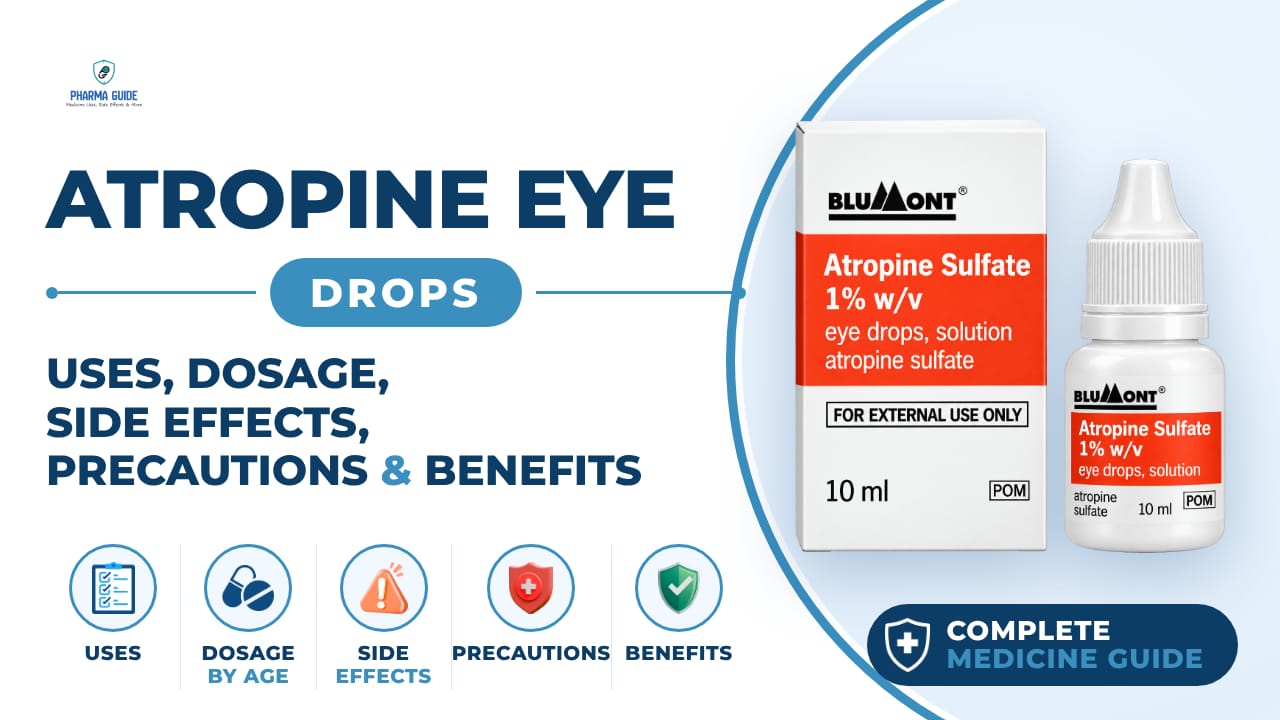
Atropine Eye Drops: Uses, Dosage, Side Effects, Precautions and Alternates
Anticholinergic (antimuscarinic agent)
Atropine Eye Drops dilate pupils and relax eye muscles for exams, inflammation, and lazy eye treatment. Learn dosage, side effects, and precautions.

Injectafer Injection: Uses, Dosage, Side Effects, Precautions and Alternates
Iron products
Injectafer (ferric carboxymaltose) treats iron deficiency anemia and heart failure-related iron deficiency via IV. Learn uses, dosage, side effects, and