
Safety
General information, not medical advice
Your prescriber and the leaflet in your pack know your situation. This page does not.
- Follow your prescriber and the leaflet
- Don't start, stop, or change a dose on your own
- Doses and warnings differ by country and product
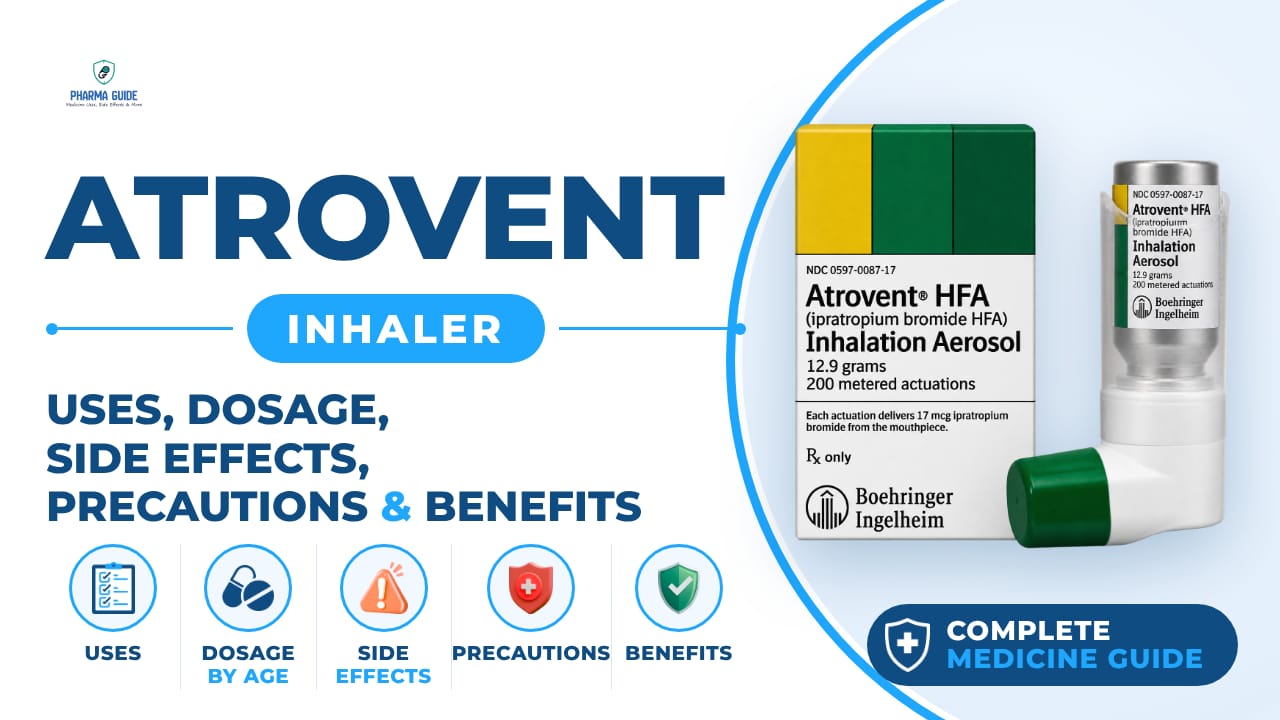
Atrovent Inhaler: Uses, Dosage, Side Effects, Precautions and Alternates
| Generic name | Ipratropium bromide |
|---|---|
| Drug class | Anticholinergic bronchodilator |
| Forms | Metered-dose aerosol inhaler, Inhalation solution (for use with a nebulizer) |
Quick overview
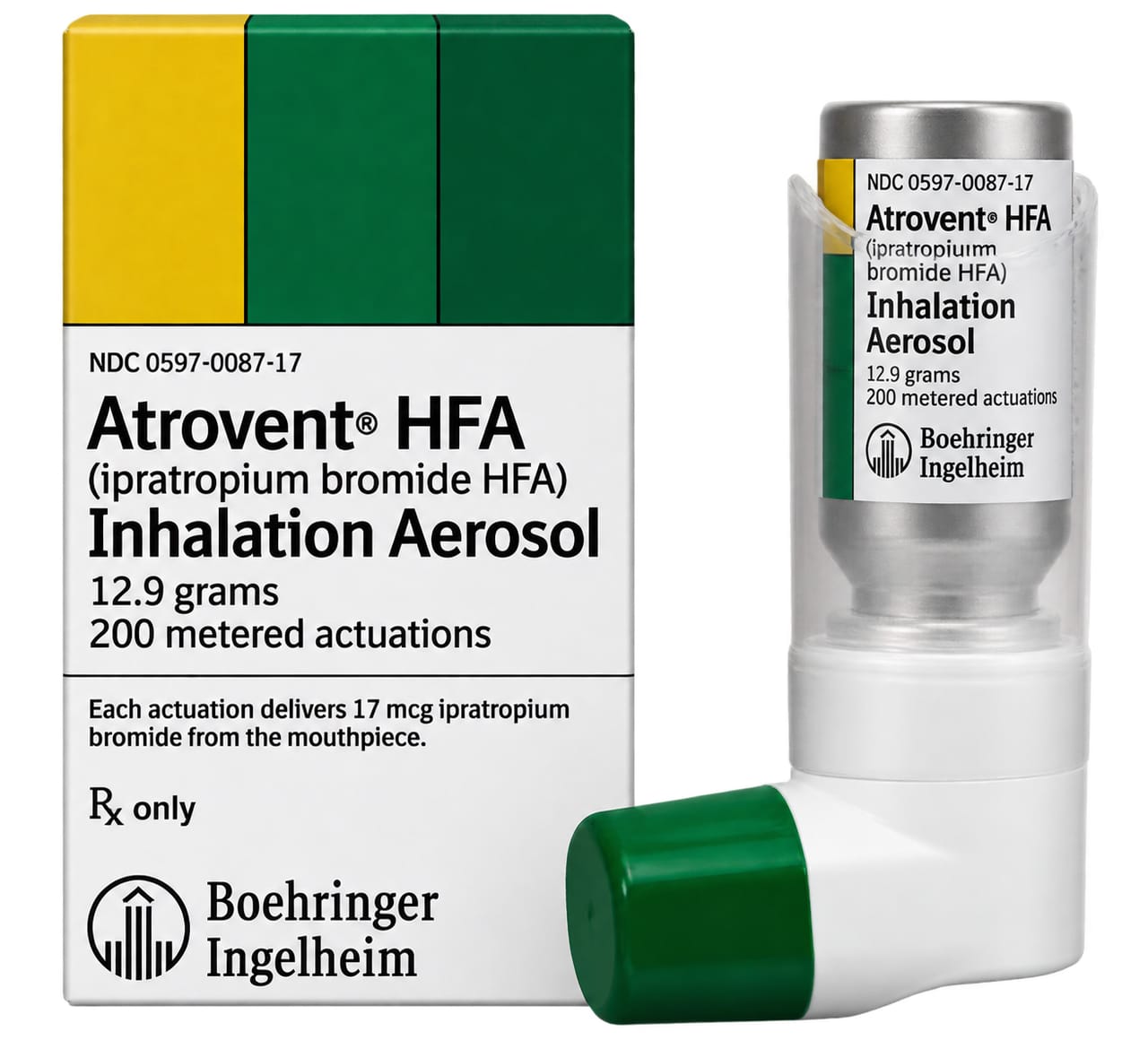
Atrovent Inhaler contains ipratropium bromide, an anticholinergic bronchodilator. It relaxes the muscles around the airways in the lungs, making it easier to breathe, and is used long-term to help control breathing problems caused by COPD. It is available as a metered-dose aerosol inhaler and as an inhalation solution for use with a nebulizer.
What is Atrovent Inhaler
Atrovent is a bronchodilator inhaler that relaxes the muscles around the airways in the lungs, making it easier to breathe. It is used long-term to help control breathing problems caused by COPD.
Atrovent Inhaler uses
- Prevents bronchospasm (narrowing of the airways) in people with COPD, including chronic bronchitis and emphysema
- May be used off-label to help control symptoms of asthma
Benefits of Atrovent Inhaler
- Helps open the airways so breathing becomes easier
- Can reduce time lost from work or school by controlling ongoing breathing symptoms
- Used long term, it helps keep airways open throughout the day
How Atrovent Inhaler works
Atrovent contains ipratropium bromide, which blocks a natural body chemical called acetylcholine that normally causes the airways to tighten. By blocking this chemical, the medicine helps the airways open and stay open, making it easier to breathe and clear mucus from the lungs.
Atrovent Inhaler dosage
Use exactly as prescribed and follow all instructions on your prescription label and any medication guides. This inhaler must be used regularly, not just when symptoms occur, to work properly for preventing symptoms. Use a fast-acting rescue inhaler for sudden wheezing or shortness of breath, since this medicine does not act fast enough for an attack that has already started.
Prime the inhaler with test sprays into the air away from your face before first use, and again if it has not been used for more than 3 days. You do not need to shake this medicine before each use. Avoid spraying the medicine into your eyes; keep your eyes closed while inhaling from the mouthpiece.
If more than one puff is prescribed, wait at least one minute between puffs, and wait at least one minute before using another inhaler. Rinse your mouth after use if dry mouth or throat irritation is a problem. Use the inhaler at about the same time each day to help you remember.
Do not increase your dose, use it more often, or stop using it without talking to your doctor first. If you miss a dose, use it as soon as you remember, but skip it if it is almost time for your next dose; do not double up.
| Age group | Dose |
|---|---|
| Under 6 Years | Use only if prescribed by a doctor |
| 6–12 Years | 1–2 inhalations (20 mcg per puff) 3–4 times daily (as prescribed) |
| 12 Years and Above | 2 inhalations (20 mcg per puff) 4 times daily (as prescribed) |
| Adults (18–64 Years) | 2 inhalations (20 mcg per puff) 4 times daily |
| Older Adults (65+ years) | 2 inhalations (20 mcg per puff) 3–4 times daily; adjusted as needed |
Available forms and strengths
- Metered-dose aerosol inhaler (20 mcg per puff)
- Inhalation solution (for use with a nebulizer)
Side effects of Atrovent Inhaler
Common
- Dry mouth
- Bitter taste
- Headache, dizziness, or tiredness
- Cold symptoms such as stuffy nose, sneezing, sore throat
- Cough with mucus, chest tightness, trouble breathing
- Nausea, upset stomach, constipation
- Back pain
- Fever, chills, body aches, flu symptoms
- Sinusitis
- Urinary tract infection
- Indigestion
Serious
- Signs of an allergic reaction: hives, rash, itching, swelling of the face, lips, tongue, or throat, difficulty breathing
- Wheezing, choking, or other breathing problems right after using this medicine (paradoxical bronchospasm)
- Little or no urination, or difficulty/pain passing urine
- Blurred vision, tunnel vision, eye pain, or seeing halos around lights
- Worsened breathing problems
- Fast or pounding/irregular heartbeat
Warnings and precautions
- Do not get this medicine in your eyes, especially if you have glaucoma, as it can worsen the condition.
- This medicine will not work fast enough to treat a sudden bronchospasm attack. It is for prevention only; use a fast-acting rescue inhaler for an attack.
- This medicine can cause a sudden, serious worsening of breathing (paradoxical bronchospasm) right after use, which can be life-threatening. Stop using it and seek medical help if this happens.
- Serious hypersensitivity reactions, including anaphylaxis, can occur. Stop using this medicine right away and get medical help if this happens.
- This medicine may increase pressure in the eye and can cause or worsen narrow-angle glaucoma, especially if it is sprayed into the eyes.
- This medicine may cause urinary retention, so caution is needed in people with prostate enlargement or bladder-neck obstruction.
- Do not use more than the maximum number of inhalations allowed in 24 hours.
- It is not known if this medicine is safe during pregnancy since it has not been well studied in pregnant women. Tell your doctor if you are pregnant or planning to become pregnant, and discuss the risks and benefits.
- It is not known if this medicine passes into breast milk. Talk to your doctor before breastfeeding.
- Use only as prescribed by your doctor if you have kidney concerns. Avoid spraying the medicine into your eyes; it may cause eye irritation or increase glaucoma risk. Inform your doctor if you have glaucoma, prostate problems, or difficulty urinating.
- Use the correct inhaler technique for proper medicine delivery. Do not stop prescribed treatment without medical advice. Keep the inhaler clean and store it properly.
- There are no known interactions between this medicine and alcohol, but drinking regularly over time may make lung infections more likely and could worsen COPD symptoms, so talk to your doctor about how much alcohol is safe for you.
- This medicine can cause dizziness and blurred vision. Do not drive, operate machinery, or do anything that needs alertness or clear vision until you know how this medicine affects you.
Storage
- Store at room temperature between 68°F and 77°F (20°C to 25°C); short-term exposure to 59°F to 86°F (15°C to 30°C) is acceptable
- Keep the protective cap on the inhaler when not in use
- Keep away from open flame or high heat; the canister may explode if it gets too hot
- Do not puncture or burn an empty inhaler canister
- Do not store in the bathroom, near a sink, in the car, or on window sills
- Clean and dry the mouthpiece at least once a week with water and allow it to air dry fully
- Throw away the inhaler canister when the dose indicator reaches 0, even if it feels like there is still medicine inside
- Keep out of reach of children and pets
- Do not flush medications down the toilet or pour them into a drain unless instructed; take unused or expired medicine to a pharmacy for safe disposal
When to see a doctor
- Get emergency medical help if you have signs of a serious allergic reaction: hives, difficulty breathing, or swelling of your face, lips, tongue, or throat.
- Call your doctor right away if you have wheezing, choking, or other breathing problems after using this medicine, or if your breathing problems get worse.
- Seek medical attention if your breathing problems get worse quickly, or if you think your medications are not working as well as before.
- Tell your doctor right away if you get eye irritation or any changes in your vision together with red eyes, as this could mean a serious eye condition has developed.
- Stop using this medicine and tell your doctor immediately if you get sudden chest tightness, coughing, wheezing, or breathlessness right after using it.
- If you think you have used too much of this medicine, seek urgent medical attention, even if you feel fine, especially if you have a fast or irregular heartbeat, dry mouth, or blurred vision.
Alternatives
- Spiriva
- Combivent
- Umeclidinium
Watch the video
FAQs
What is Atrovent Inhaler used for?
Atrovent Inhaler is used to prevent bronchospasm in people with COPD, including chronic bronchitis and emphysema, and may be used off-label to help control asthma symptoms.
How does Atrovent Inhaler work?
It contains ipratropium bromide, which blocks a natural body chemical called acetylcholine that normally causes the airways to tighten, helping the airways open and stay open.
Can Atrovent Inhaler be used for a sudden asthma or COPD attack?
No, Atrovent does not act fast enough for an attack that has already started. A fast-acting rescue inhaler should be used for sudden wheezing or shortness of breath.
What are the common side effects of Atrovent Inhaler?
Common side effects include dry mouth, bitter taste, headache, dizziness, tiredness, cold symptoms, cough with mucus, nausea, upset stomach, constipation, back pain, and sinusitis.
What is the dosage of Atrovent Inhaler for adults?
Adults aged 18–64 years typically use 2 inhalations (20 mcg per puff) 4 times daily, as prescribed by their doctor.
General information, not medical advice
Your prescriber and the leaflet in your pack know your situation. This page does not.
- Follow your prescriber and the leaflet
- Don't start, stop, or change a dose on your own
- Doses and warnings differ by country and product
Sources
Video
Related medicines

Tiotropium Inhaler: Uses, Dosage, Side Effects, Precautions and Alternates
Anticholinergic bronchodilator
Tiotropium Inhaler is a long-term bronchodilator for COPD and asthma that opens airways and reduces flare-ups. Learn dosage, side effects, and precautions.

Injectafer Injection: Uses, Dosage, Side Effects, Precautions and Alternates
Iron products
Injectafer (ferric carboxymaltose) treats iron deficiency anemia and heart failure-related iron deficiency via IV. Learn uses, dosage, side effects, and