
Safety
General information, not medical advice
Your prescriber and the leaflet in your pack know your situation. This page does not.
- Follow your prescriber and the leaflet
- Don't start, stop, or change a dose on your own
- Doses and warnings differ by country and product
Tiotropium Inhaler: Uses, Dosage, Side Effects, Precautions and Alternates

| Generic name | tiotropium bromide |
|---|---|
| Drug class | Anticholinergic bronchodilator |
| Forms | Spray (inhalation mist), Capsule (inhalation powder used with a device) |
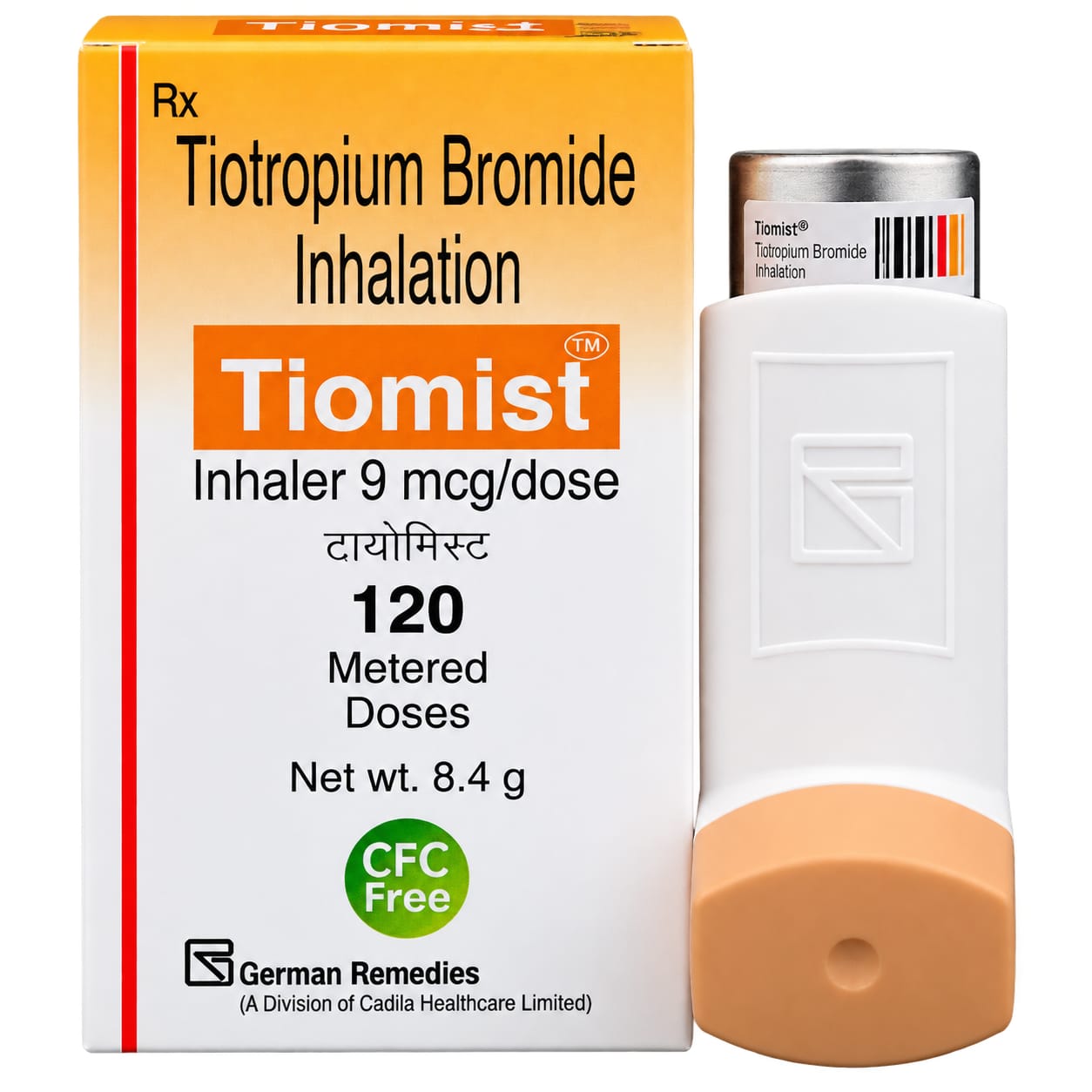
Quick overview
Tiotropium Inhaler (tiotropium bromide) is a prescription anticholinergic bronchodilator used long-term to help control breathing problems from chronic obstructive pulmonary disease (COPD) and, in some cases, asthma. It works by relaxing and opening the airways, making breathing easier and reducing the likelihood of COPD flare-ups. It is not a rescue medicine for sudden breathing attacks and should be used exactly as directed with its special inhaler device.
What is Tiotropium Inhaler
Tiotropium is a prescription inhaled medicine that belongs to a group of medicines called bronchodilators (anticholinergics). It is used long-term to help control breathing problems from chronic obstructive pulmonary disease (COPD) and, in some cases, asthma.
Tiotropium Inhaler uses
- Chronic obstructive pulmonary disease (COPD), including chronic bronchitis and emphysema
- Maintenance treatment for asthma in adults and children 6 years of age and older
- Reducing flare-ups (exacerbations) of COPD
Benefits of Tiotropium Inhaler
- Helps open up the airways so breathing is easier
- Increases airflow to the lungs
- Reduces the likelihood of COPD flare-ups and worsening symptoms
- May take a few weeks before you feel the full benefit
How Tiotropium Inhaler works
Tiotropium blocks certain nerve signals in the lungs that cause the airway muscles to tighten. By blocking these signals, it relaxes and opens the airways, making it easier to breathe.
Tiotropium Inhaler dosage
Use this medicine at the same time each day, usually once a day in the morning or evening. Do not swallow the capsules; they must only be used with the special inhaler device provided. Do not use the inhaler device to take any other medicine.
Breathe out fully before inhaling, and do not breathe into the mouthpiece. Hold your breath briefly after inhaling, then breathe normally. This medicine is not for sudden breathing problems or acute attacks; your doctor will give you a separate medicine for that.
Continue using it every day even if you feel well, and do not stop without talking to your doctor. Be careful not to get the powder in your eyes, as it may cause blurred vision or light sensitivity.
| Age group | Dose |
|---|---|
| Under 6 years | Not established |
| 6–11 years | 2 inhalations once daily (2.5 mcg/actuation) for asthma |
| 12–17 years | 2 inhalations once daily (2.5 mcg/actuation) for asthma |
| 18–64 years | 2 inhalations once daily (2.5 mcg/actuation) for asthma; 2 inhalations once daily (2.5 mcg/actuation) for COPD |
| 65+ years | 2 inhalations once daily; no routine age-based adjustment |
Available forms and strengths
- Spray (inhalation mist)
- Capsule (inhalation powder used with a device), 2.5 mcg/actuation
Side effects of Tiotropium Inhaler
Common
- Dry mouth
- Constipation
- Upset stomach or indigestion
- Vomiting
- Cold-like symptoms (stuffy nose, sneezing, sore throat)
- Nosebleed
- Muscle pain
- Headache
- Cough
- Sore throat
- Fast heartbeat
Serious
- Signs of a serious allergic reaction: hives, itching, skin rash, swelling of the face, lips, tongue, or throat, difficulty breathing or swallowing
- Sudden worsening of breathing, wheezing, or chest tightness (paradoxical bronchospasm)
- Eye pain, blurred vision, seeing halos or colored images around lights, red eyes (possible signs of narrow-angle glaucoma)
- Difficulty or pain when passing urine, or inability to urinate (possible urinary retention)
- Fast, irregular, or pounding heartbeat
- Fainting
Warnings and precautions
- This medicine will not stop a breathing attack that has already started. It is not a rescue medicine for sudden breathing problems.
- Tiotropium can cause serious allergic reactions, including swelling of the face, lips, tongue, or throat, and severe whole-body allergic reactions. This medicine can rarely cause your breathing or wheezing to suddenly get worse instead of better, which can be life-threatening.
- Do not let the powder from the capsule get into your eyes, as it can cause blurred vision and enlarged pupils. This medicine should be used with caution if you have narrow-angle glaucoma, as it may make the condition worse. It should also be used with caution if you have urinary retention, an enlarged prostate, or bladder blockage, as it may make these conditions worse.
- Tell your doctor if you are pregnant or planning to become pregnant. It is not known if this medicine could harm an unborn baby, so your doctor will decide if it is right for you.
- It is not known if tiotropium passes into breast milk. You and your doctor should weigh the benefits and risks before using it while breastfeeding.
- If you have moderate to severe kidney disease, use this medicine with caution, since your body may take longer to remove it, increasing the chance of side effects.
- Discuss with your healthcare professional the use of this medicine with alcohol, as interactions may occur.
- This medicine may cause dizziness or blurred vision. Avoid driving, using machines, or doing anything else that could be dangerous if you are dizzy or unable to see well.
Storage
- Keep out of the reach of children
- Do not keep outdated medicine or medicine no longer needed
- Ask your healthcare professional how you should dispose of any medicine you do not use
- Store the medicine in a closed container at room temperature, away from heat, moisture, and direct light
- Keep from freezing
- Leave the capsules in the blister pack until you are ready to use the medicine
- Only open one blister at a time when you are ready to remove a capsule and put it in the device
- Once you have opened a blister, use the capsule right away
- Capsules that are accidentally exposed to air and not intended for immediate use should be discarded
- Never store capsules inside the inhaler device
When to see a doctor
- Get medical help right away if you have swelling of the face, lips, tongue, or throat, hives, itching, or trouble breathing or swallowing after using this medicine
- Get medical help right away if your breathing suddenly gets worse after using this medicine
- Get medical help right away if you have eye pain, blurred vision, or see halos or colored images around lights along with red eyes
- Get medical help right away if you have difficulty or pain passing urine
- If you accidentally take more than your prescribed dose, contact your doctor or a poison control center for advice
Alternatives
- Umeclidinium
- Glycopyrronium
- Ipratropium
Watch the video
FAQs
What is Tiotropium Inhaler used for?
It is used long-term to control breathing problems from COPD (including chronic bronchitis and emphysema) and, in some cases, as maintenance treatment for asthma in adults and children 6 years and older. It also helps reduce COPD flare-ups.
Is Tiotropium Inhaler a rescue medicine for sudden breathing attacks?
No. It will not stop a breathing attack that has already started and is not meant for sudden breathing problems. Your doctor will prescribe a separate medicine for that.
How is Tiotropium Inhaler used?
It is used at the same time each day, usually once daily in the morning or evening, with its special inhaler device. The capsules must not be swallowed and should only be used with the provided device, not for any other medicine.
What are the common side effects of Tiotropium Inhaler?
Common side effects include dry mouth, constipation, upset stomach, vomiting, cold-like symptoms, nosebleed, muscle pain, headache, cough, sore throat, and fast heartbeat.
What precautions should be taken with Tiotropium Inhaler?
It should be used with caution in people with narrow-angle glaucoma, urinary retention, enlarged prostate, bladder blockage, or moderate to severe kidney disease. Avoid getting the powder in your eyes, and discuss pregnancy, breastfeeding, or alcohol use with your doctor.
General information, not medical advice
Your prescriber and the leaflet in your pack know your situation. This page does not.
- Follow your prescriber and the leaflet
- Don't start, stop, or change a dose on your own
- Doses and warnings differ by country and product
Sources
Video
Related medicines

Atrovent Inhaler: Uses, Dosage, Side Effects, Precautions and Alternates
Anticholinergic bronchodilator
Atrovent Inhaler contains ipratropium bromide, a bronchodilator used long-term to control COPD breathing problems. Learn dosage, side effects, and warnings.

Injectafer Injection: Uses, Dosage, Side Effects, Precautions and Alternates
Iron products
Injectafer (ferric carboxymaltose) treats iron deficiency anemia and heart failure-related iron deficiency via IV. Learn uses, dosage, side effects, and