
Safety
General information, not medical advice
Your prescriber and the leaflet in your pack know your situation. This page does not.
- Follow your prescriber and the leaflet
- Don't start, stop, or change a dose on your own
- Doses and warnings differ by country and product
Atrovent Nasal Spray: Uses, Dosage, Side Effects, Precautions and Alternates
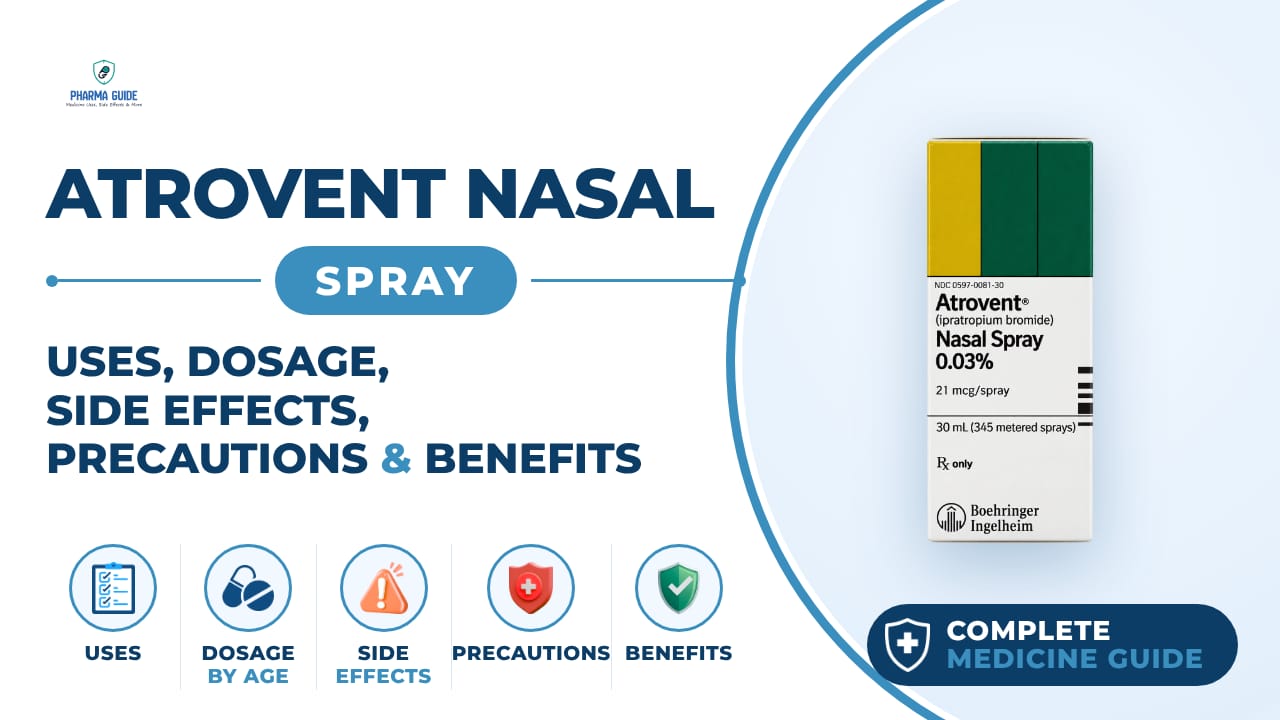
| Generic name | ipratropium bromide |
|---|---|
| Drug class | Nasal antihistamines and decongestants (topical anticholinergic) |
| Forms | Nasal spray (metered-dose pump), 0.03% and 0.06% strengths |
Quick overview
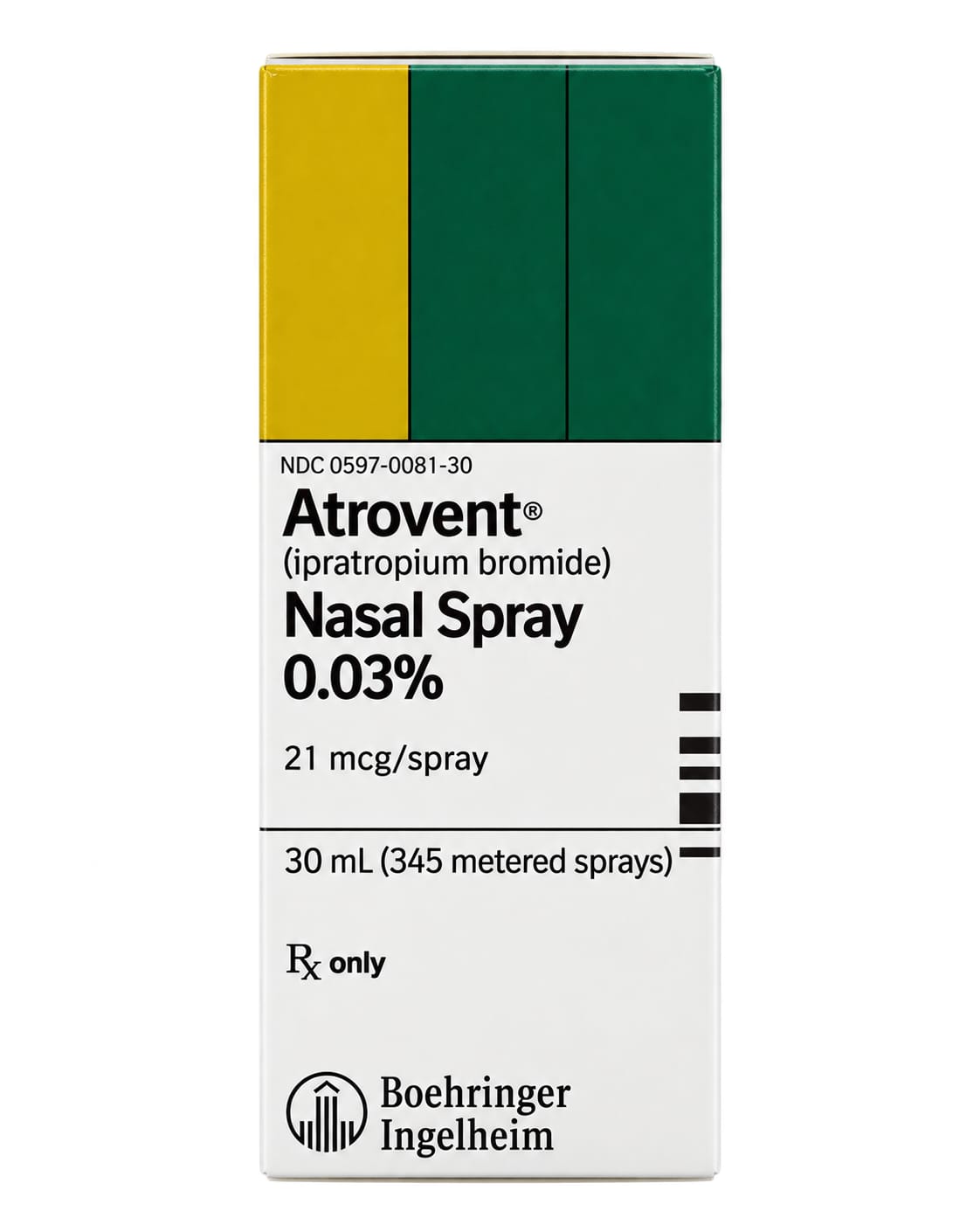
Atrovent Nasal Spray contains ipratropium bromide, a topical anticholinergic medicine used to reduce a runny nose. It is available as a 0.03% spray for allergic and nonallergic perennial rhinitis and a 0.06% spray for runny nose caused by the common cold. It works locally in the nose and does not treat stuffy nose, sneezing, or postnasal drip. It is usually used for a short period, such as several days for a cold or a few weeks for allergy symptoms.
What is Atrovent Nasal Spray
Atrovent Nasal Spray is a prescription nasal spray that contains ipratropium bromide, a medicine related to atropine. It is used to reduce a runny nose but does not treat stuffy nose, sneezing, or postnasal drip.
Atrovent Nasal Spray uses
- Relief of runny nose (rhinorrhea) caused by allergic and nonallergic perennial rhinitis in adults and children age 6 years and older (0.03% strength)
- Relief of runny nose caused by the common cold, usually for up to 4 days (0.06% strength)
- Relieves runny nose
- Treats rhinorrhea associated with perennial rhinitis
- Treats runny nose associated with the common cold
Benefits of Atrovent Nasal Spray
- Reduces the amount and duration of watery nasal discharge
- Can start working within the first full day of use, though full benefit may take up to two weeks
- Directly reduces excessive nasal secretions
- Acts locally inside the nose
- Has relatively little systemic absorption
How Atrovent Nasal Spray works
The medicine blocks certain nerve signals in the nose, which reduces fluid production from the glands lining the inside of the nose and lessens a runny nose.
Atrovent Nasal Spray dosage
Blow your nose gently to clear your nostrils before using the spray, if needed. Keep the bottle upright and close one nostril while spraying into the other. After each spray, sniff deeply and then breathe out through your mouth. Tilt your head back for a few seconds after spraying to let the medicine spread over the back of the nose.
The pump must be primed before first use, and may need repriming if not used for 24 hours or more than seven days. Do not change the size of the nasal spray opening, and avoid spraying into or around the eyes. Do not take extra doses or stop using the spray without checking with your doctor.
This medicine is usually used only for a short time, such as several days for a cold or a few weeks for allergy symptoms, depending on what it's prescribed for.
| Age group | Dose |
|---|---|
| Under 5 years | Safety and effectiveness are not established |
| 5 years | 0.06%: 2 sprays in each nostril 3 times daily for common-cold runny nose; seasonal-allergy dosing may be 2 sprays in each nostril 4 times daily |
| 6–17 years | 0.03%: 2 sprays per nostril 2–3 times daily. 0.06%: 2 sprays per nostril 3–4 times daily for common cold |
Available forms and strengths
Nasal spray (metered-dose pump), 0.03% and 0.06% strengths.
Side effects of Atrovent Nasal Spray
Common
- Headache
- Dry nose, mouth, or throat
- Minor nosebleed (epistaxis)
- Sore throat (pharyngitis)
- Blurred vision
- Unusual or unpleasant taste in the mouth
- Nasal irritation or dryness
- Nausea
Serious
- Allergic reaction: hives, rash, wheezing, difficulty breathing, swelling of face, lips, tongue, or throat
- Eye problems: blurred vision, tunnel vision, eye pain, or seeing halos around lights
- Severe nosebleeds or severe dry nose
- Painful or difficult urination
- Fast or irregular heartbeat (palpitations)
- Swelling of the throat or spasm of the voice box muscles causing choking
Warnings and precautions
- This medicine should not be used by people allergic to ipratropium, atropine, or related ingredients.
- Sudden allergic reactions can occur, including hives, swelling, rash, and severe breathing problems such as bronchospasm.
- Use this medicine carefully if you have glaucoma, an enlarged prostate, or trouble passing urine, as it can make these conditions worse.
- Do not let the spray get into your eyes. If it does, it can cause eye pain, blurred vision, or a serious eye condition called narrow-angle glaucoma.
- This medicine is not recommended for children under 12 years of age for the 0.03% product per the Canadian monograph, though other labeling allows use in children 6 and older — follow your doctor's specific instructions for your product and age group.
- Tell your doctor if you are pregnant or planning to become pregnant. The safety of this medicine during pregnancy has not been fully established, and it should only be used if your doctor decides it's clearly needed.
- Tell your doctor if you are breastfeeding. A small amount of the medicine may pass into breast milk, so your doctor will weigh the benefits against possible risks to your baby.
- This medicine has not been specifically studied in people with kidney disease, so it should be used carefully if you have kidney problems.
- This medicine has not been specifically studied in people with liver disease, so it should be used carefully if you have liver problems.
- No major direct interaction with alcohol is established.
- This medicine can cause dizziness, blurred vision, and trouble focusing your eyes. Be careful driving or using machinery until you know how it affects you.
Storage
- Store tightly closed between 59°F (15°C) and 86°F (30°C).
- Avoid freezing.
- Keep out of reach of children.
- Do not spray in the eyes.
- Keep the cap tightly closed when not in use.
When to see a doctor
- Get emergency help right away if you have signs of a serious allergic reaction, such as hives, rash, wheezing, trouble breathing, or swelling of your face, lips, tongue, or throat.
- Call your doctor right away if you have blurred vision, tunnel vision, eye pain, or see halos around lights.
- Call your doctor right away if you have nosebleeds or a very dry nose, or if you have pain or difficulty urinating.
- If you accidentally spray this medicine into your eyes, flush your eyes right away with cool tap water for several minutes, and contact your doctor if you have eye pain or blurred vision.
- If you think you or someone else may have taken too much of this medicine, get medical help immediately, even if there are no symptoms.
Alternatives
- Azelastine nasal spray
- Olopatadine nasal spray
- Fluticasone nasal spray
- Mometasone nasal spray
Watch the video
FAQs
What is Atrovent Nasal Spray used for?
It is used to relieve runny nose caused by allergic and nonallergic perennial rhinitis (0.03% strength) and runny nose caused by the common cold, usually for up to 4 days (0.06% strength). It does not treat stuffy nose, sneezing, or postnasal drip.
How does Atrovent Nasal Spray work?
It blocks certain nerve signals in the nose, which reduces fluid production from the glands lining the inside of the nose and lessens a runny nose.
How long does it take for Atrovent Nasal Spray to work?
It can start working within the first full day of use, though full benefit may take up to two weeks.
What are the common side effects of Atrovent Nasal Spray?
Common side effects include headache, dry nose, mouth, or throat, minor nosebleed, sore throat, blurred vision, unusual taste in the mouth, nasal irritation, and nausea.
Can children use Atrovent Nasal Spray?
The 0.03% strength is used in children age 6 years and older for allergic and nonallergic perennial rhinitis, and the 0.06% strength has dosing listed from age 5 for common-cold runny nose. Safety and effectiveness are not established in children under 5 years.
General information, not medical advice
Your prescriber and the leaflet in your pack know your situation. This page does not.
- Follow your prescriber and the leaflet
- Don't start, stop, or change a dose on your own
- Doses and warnings differ by country and product
Sources
Video
Related medicines

Injectafer Injection: Uses, Dosage, Side Effects, Precautions and Alternates
Iron products
Injectafer (ferric carboxymaltose) treats iron deficiency anemia and heart failure-related iron deficiency via IV. Learn uses, dosage, side effects, and

Gliclazide Tablet: Uses, Dosage, Side Effects, Precautions and Alternates
Sulfonylurea (hypoglycemic/antidiabetic agent)
Gliclazide Tablet is a sulfonylurea for type 2 diabetes that boosts insulin release. Learn about dosage, side effects, warnings, and precautions.