
Safety
General information, not medical advice
Your prescriber and the leaflet in your pack know your situation. This page does not.
- Follow your prescriber and the leaflet
- Don't start, stop, or change a dose on your own
- Doses and warnings differ by country and product
Aubagio Tablet: Uses, Dosage, Side Effects, Precautions and Alternates
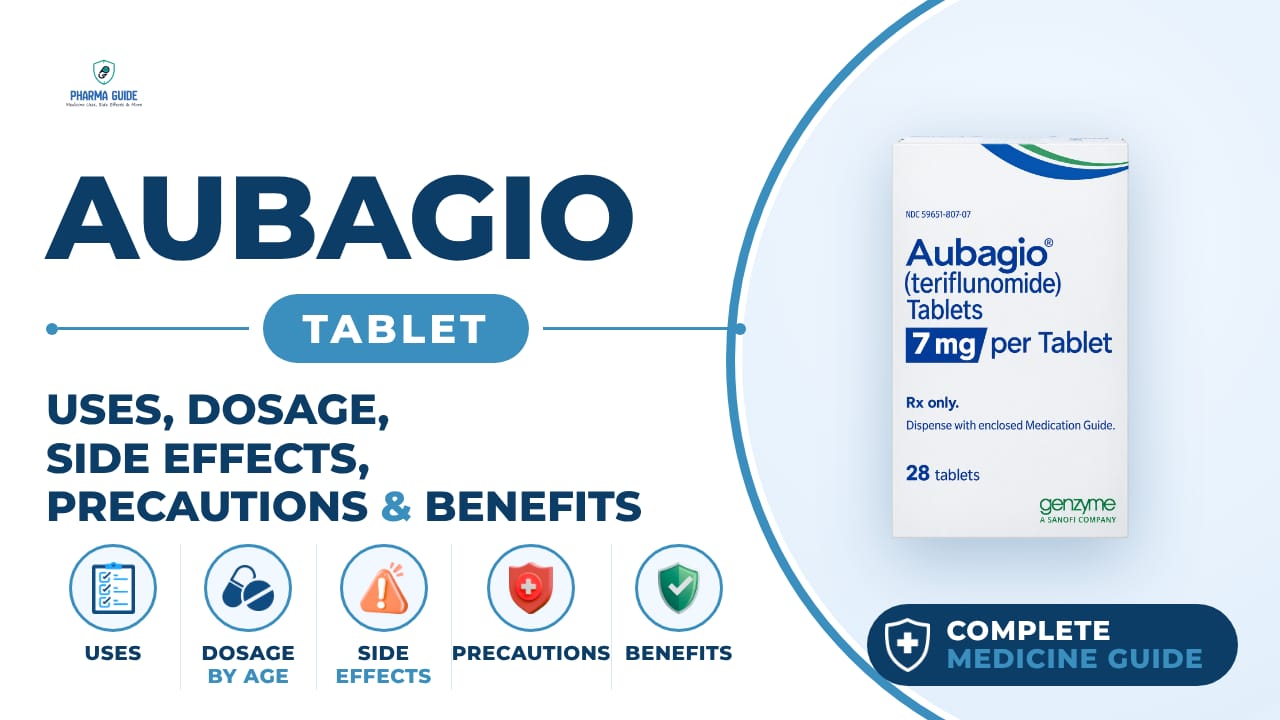
| Generic name | teriflunomide |
|---|---|
| Drug class | Disease-modifying therapy (selective immunosuppressant); pyrimidine synthesis inhibitor |
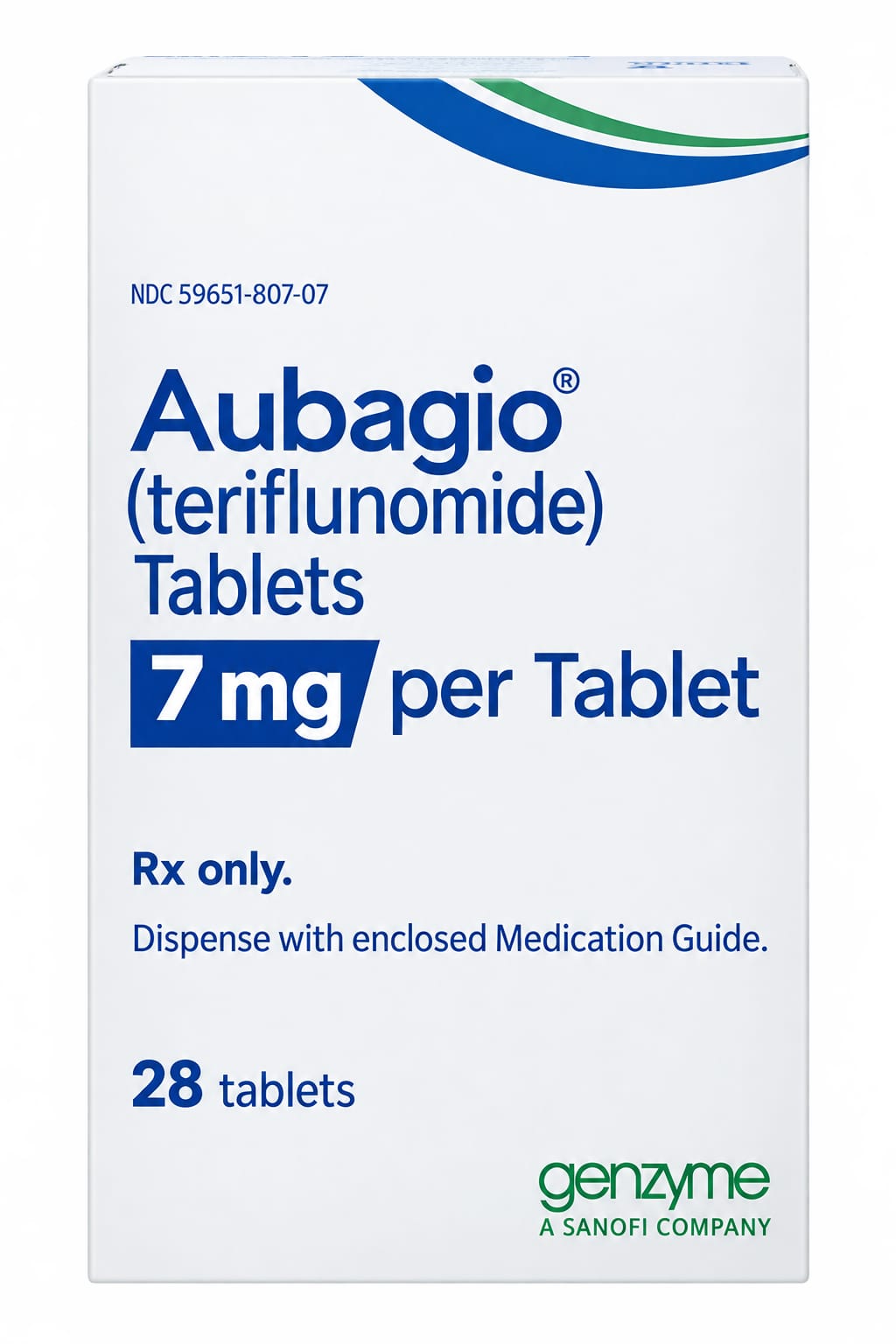
| Forms | 7 mg film-coated tablets, 14 mg film-coated tablets |
Quick overview
Aubagio Tablet (teriflunomide) is a prescription disease-modifying therapy used to treat relapsing forms of multiple sclerosis in adults. It works by affecting the immune system to help reduce inflammation and nerve damage. It is taken as a tablet once a day, with or without food. Aubagio carries important warnings, including risks to the liver and to an unborn baby during pregnancy.
What is Aubagio Tablet
Aubagio is a prescription tablet used to treat relapsing forms of multiple sclerosis (MS) in adults. It affects the immune system to help reduce inflammation and damage in the nervous system. Its generic name is teriflunomide, and it belongs to the drug class of disease-modifying therapies, acting as a selective immunosuppressant and pyrimidine synthesis inhibitor.
Aubagio Tablet uses
- Relapsing forms of multiple sclerosis (MS), including clinically isolated syndrome, relapsing-remitting disease, and active secondary progressive disease, in adults
Benefits of Aubagio Tablet
- Helps prevent MS relapses and slow MS from getting worse
- Reduces the number of relapses by about one third compared with placebo in studies
- May slow the build-up of disability associated with MS
- MRI scans showed fewer, smaller, or no new areas of active MS (lesions) in people taking it
- A tablet taken by mouth once a day
- Can be taken with or without food
How Aubagio Tablet works
Aubagio blocks an enzyme the body needs to make new immune cells. This lowers the number of certain white blood cells (lymphocytes) involved in attacking the nervous system, which helps calm the immune system and reduce nerve damage in MS. The exact way it works isn't fully understood.
Aubagio Tablet dosage
Take it exactly as your doctor tells you to take it. Take it one time each day, with or without food, and at the same time every day to help you remember. If you miss a dose, take it as soon as you can, but skip it if it's almost time for your next dose — do not take two doses at once.
| Age group | Dose |
|---|---|
| Under 18 years | Not recommended |
| 18–64 years | 7 mg, once/day |
| 65+ years | 7 mg, once/day |
Available forms and strengths
- 7 mg film-coated tablets
- 14 mg film-coated tablets
Side effects of Aubagio Tablet
Common
- Headache
- Diarrhea
- Nausea
- Hair thinning or hair loss
- Higher liver enzyme levels on blood tests
- Joint pain
- Pins and needles feeling in arms or legs
Serious
- Liver problems: nausea, vomiting, stomach pain, loss of appetite, tiredness, yellowing of skin or eyes, dark urine
- Low white blood cell count, which raises risk of infection: fever, chills, body aches, tiredness, cough, trouble breathing
- Serious allergic reaction: difficulty breathing, hives, swelling of face, lips, eyes, throat, or tongue
- Serious skin reactions: rash, redness and peeling skin, mouth sores or blisters, fever
- Numbness or tingling in hands or feet that's different from your MS symptoms
- High blood pressure
- New or worsening breathing problems, including interstitial lung disease: cough or shortness of breath, with or without fever
- Ulcers of the skin or mucous membranes and problems with wound healing
- Pancreatitis (reported more often in children, who should not normally take this medicine)
Warnings and precautions
- This medicine can cause serious, potentially life-threatening liver injury, including liver failure that may require a transplant. Your doctor will check your liver with blood tests before starting and monthly for the first six months.
- This medicine can cause serious harm to an unborn baby if taken during pregnancy, so it must not be used by anyone who is pregnant or not using effective birth control.
- The medicine leaves the body very slowly — it can take up to 2 years after stopping. If needed (for example, due to pregnancy or serious side effects), a special procedure using cholestyramine or activated charcoal can speed up removal of the drug from the body.
- This medicine can lower white blood cell counts, raising the risk of serious infections, and can cause past infections like tuberculosis to come back.
- Severe and sometimes fatal skin reactions, such as Stevens-Johnson syndrome and toxic epidermal necrolysis, can occur.
- Severe allergic reactions, including anaphylaxis and swelling of the face, can occur and can be life-threatening.
- Nerve problems such as numbness, tingling, or carpal tunnel syndrome can occur and may not go away even after stopping the medicine. Risk is higher in people over 60, those with diabetes, or those taking other nerve-affecting medicines.
- This medicine can raise blood pressure, so it should be checked before starting and regularly during treatment.
- Rare but serious lung problems, including interstitial lung disease, have occurred and can sometimes be life-threatening.
- This medicine can cause ulcers of the skin or mucous membranes and problems with wound healing; tell your doctor if you need surgery or have an unhealed wound.
- You must not take this medicine if you are pregnant or could become pregnant without using effective birth control, because it can seriously harm an unborn baby.
- You'll need a negative pregnancy test before starting, and you must keep using effective birth control during treatment and afterward until blood tests confirm the drug has left your body.
- Breastfeeding is not recommended while taking this medicine, because it's not known if it passes into breast milk and it could cause side effects in a nursing baby.
- No dose change is needed for people with kidney problems, including severe kidney impairment.
- This medicine can cause serious, sometimes life-threatening liver damage. It should not be used if you have severe liver problems, and your doctor will check your liver with blood tests before and during treatment.
- Tell your doctor about your alcohol use, since it may be a factor your doctor considers when prescribing this medicine.
Storage
- Store at room temperature between 68°F to 77°F (20°C to 25°C), with brief excursions allowed between 59°F and 86°F (15°C and 30°C)
- Keep this medicine and all medicines out of the reach of children
When to see a doctor
- Get emergency help right away for signs of a serious allergic reaction, such as difficulty breathing, hives, or swelling of the face, lips, eyes, throat, or tongue.
- Stop the medicine and call your doctor right away or get emergency care if you notice a skin rash with redness and peeling, or sores or blisters in your mouth.
- Call your doctor right away if you have nausea, vomiting, stomach pain, loss of appetite, tiredness, yellowing of your skin or eyes, or dark urine, as these can be signs of liver problems.
- Call your doctor right away or get emergency help if you have shortness of breath or a new or worsening cough, with or without fever.
- Tell your doctor if you notice numbness or tingling in your hands or feet that feels different from your usual MS symptoms.
- Tell your doctor right away if you become pregnant while taking this medicine or within 2 years after stopping it.
- Stop the medicine and call your doctor right away if you have a fever or rash along with severe muscle pain, swollen lymph glands, swelling of your face, unusual bruising or bleeding, weakness, or yellowing of the skin or eyes.
Alternatives
- Ocrevus
- Mayzent
- Teriflunomide
Watch the video
FAQs
What is Aubagio Tablet used for?
Aubagio is used to treat relapsing forms of multiple sclerosis in adults, including clinically isolated syndrome, relapsing-remitting disease, and active secondary progressive disease.
How is Aubagio Tablet taken?
It is taken as one tablet by mouth once a day, with or without food, at the same time each day. If a dose is missed, take it as soon as possible unless it's almost time for the next dose.
What are the common side effects of Aubagio Tablet?
Common side effects include headache, diarrhea, nausea, hair thinning or hair loss, higher liver enzyme levels, joint pain, and pins and needles feeling in the arms or legs.
Can Aubagio Tablet be used during pregnancy?
No, Aubagio must not be used during pregnancy because it can seriously harm an unborn baby. Effective birth control is required before, during, and after treatment, and a negative pregnancy test is needed before starting.
What warnings should I know about Aubagio Tablet?
Aubagio can cause serious liver injury, lower white blood cell counts increasing infection risk, severe skin reactions, allergic reactions, nerve problems, high blood pressure, and rare lung problems, so regular monitoring is needed.
General information, not medical advice
Your prescriber and the leaflet in your pack know your situation. This page does not.
- Follow your prescriber and the leaflet
- Don't start, stop, or change a dose on your own
- Doses and warnings differ by country and product
Sources
Video
Related medicines

Injectafer Injection: Uses, Dosage, Side Effects, Precautions and Alternates
Iron products
Injectafer (ferric carboxymaltose) treats iron deficiency anemia and heart failure-related iron deficiency via IV. Learn uses, dosage, side effects, and

Gliclazide Tablet: Uses, Dosage, Side Effects, Precautions and Alternates
Sulfonylurea (hypoglycemic/antidiabetic agent)
Gliclazide Tablet is a sulfonylurea for type 2 diabetes that boosts insulin release. Learn about dosage, side effects, warnings, and precautions.