Augmentin Syrup: Uses, Dosage, Side Effects, Precautions and Alternates
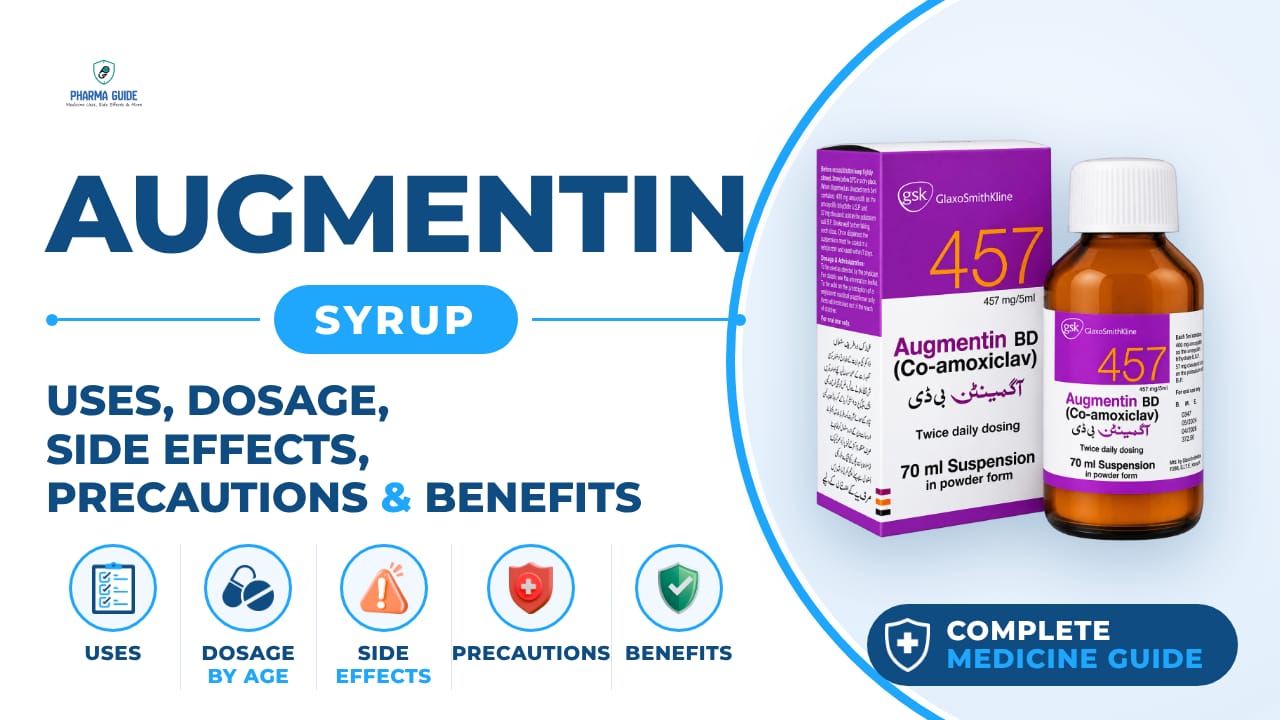
| Generic name | Amoxicillin and clavulanic acid (amoxicillin and clavulanate potassium) |
|---|---|
| Drug class | Penicillins / beta-lactamase inhibitors |
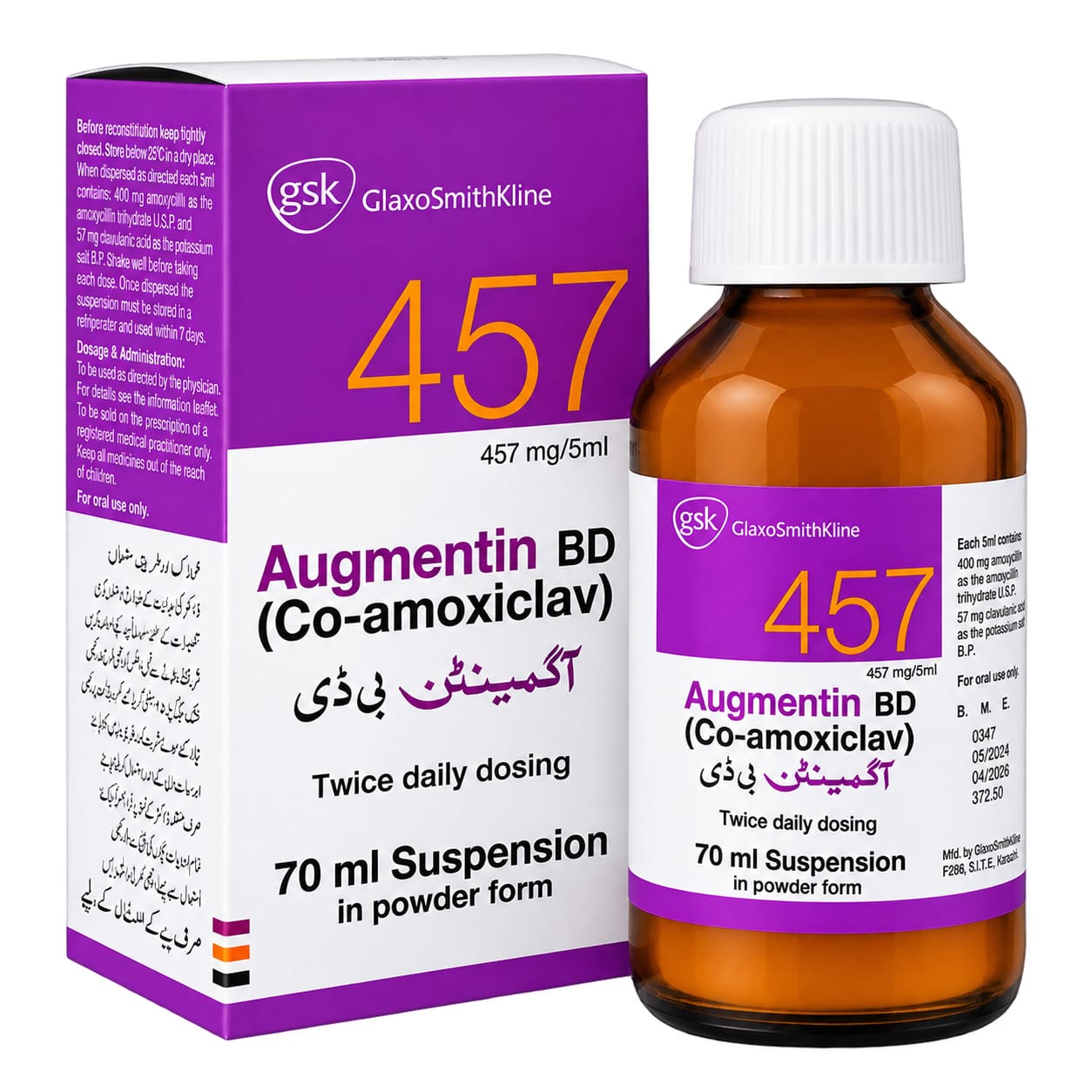
| Forms | Powder for oral suspension (liquid), Tablet, Extended-release tablet, Chewable tablet, Single-use sachets (powder for reconstitution) |
Quick overview
Augmentin Syrup is an antibiotic that contains amoxicillin and clavulanic acid. It comes as a powder that is mixed with water to make an oral liquid suspension. It is used to treat bacterial infections such as ear, sinus, respiratory tract, urinary tract, skin, dental, and bone and joint infections. Common side effects include diarrhoea and nausea, and important precautions apply for pregnancy, breastfeeding, kidney, and liver problems.
What is Augmentin Syrup
Augmentin is an antibiotic that works by killing bacteria that cause infections. It contains two different medicines called amoxicillin and clavulanic acid. It comes as a powder that is mixed with water to make an oral liquid (suspension).
Augmentin Syrup uses
- Middle ear and sinus infections
- Respiratory tract infections
- Urinary tract infections
- Skin and soft tissue infections including dental infections
- Bone and joint infections
Benefits of Augmentin Syrup
- Treats many different infections caused by bacteria
- Combines amoxicillin with clavulanic acid so the antibiotic keeps working against bacteria that would otherwise resist it
- reats certain bacterial infections in children.
- Helps treat ear infections.
- Used for sinus infections.
- Helps treat throat and respiratory tract infections caused by susceptible bacteria.
- Treats certain skin and soft-tissue infections.
- Helps treat some urinary tract infections (UTIs).
- May be used for dental infections.
- Combines amoxicillin and clavulanic acid to fight susceptible bacteria, including some that resist amoxicillin alone.
How Augmentin Syrup works
Amoxicillin is a penicillin antibiotic that kills the bacteria causing the infection. Some bacteria can make the antibiotic stop working, and the clavulanic acid blocks this so the amoxicillin can still work.
Augmentin Syrup dosage
Always use the medicine according to the doctor's instructions. Always shake the bottle well before each dose. Take or give with a meal. Space the doses evenly throughout the day, at least 4 hours apart. Do not take or give two doses in 1 hour.
Do not take or give Augmentin for more than 2 weeks. If you or your child still feel unwell, go back to see the doctor. Use a plastic measuring spoon, measuring cup or dosing syringe to give the correct dose, not a kitchen spoon. Keep taking Augmentin until the treatment is finished, even if you feel better, so all the bacteria are killed.
If you forget a dose, take it as soon as you remember, but wait about 4 hours before the next dose. Do not take a double dose.
| Age group | Dose |
|---|---|
| 3–6 months (5 kg) | 0.8–1.4 mL Every 12 hours |
| 6–12 months (8 kg) | 1.3–2.3 mL Every 12 hours |
| 1–2 years (10 kg) | 1.6–2.8 mL Every 12 hours |
| 2–4 years (15 kg) | 2.3–4.2 mL Every 12 hours |
| 4–6 years (20 kg) | 3.1–5.6 mL Every 12 hours |
| 6–9 years (25 kg) | 3.9–7.0 mL Every 12 hours |
| 9–12 years (30 kg) | 4.7–8.4 mL Every 12 hours |
Available forms and strengths
- Powder for oral suspension (liquid)
- Tablet
- Extended-release tablet
- Chewable tablet
- Single-use sachets (powder for reconstitution)
Side effects of Augmentin Syrup
Common
- Diarrhoea (very common in adults, common in children)
- Thrush (a fungal infection of the vagina, mouth or skin folds)
- Nausea, especially with high doses (take with a meal if nausea occurs)
- Vomiting
- Skin rash, itching
- Raised itchy rash (hives)
- Indigestion
- Dizziness
- Headache
- Vaginal itching or discharge
- Diaper rash
Serious
- Allergic reactions such as skin rash, swelling of the face or throat causing difficulty breathing, collapse, or chest pain
- Inflammation of blood vessels shown as red or purple raised spots on the skin
- Fever, joint pain, swollen glands in the neck, armpit or groin
- Inflammation of the large intestine causing watery diarrhoea, often with blood and mucus, stomach pain and/or fever
- Drug-induced enterocolitis syndrome, mainly in children, with repeated vomiting 1-4 hours after a dose
- Acute inflammation of the pancreas with severe ongoing stomach pain
- Serious skin reactions such as Stevens-Johnson syndrome, toxic epidermal necrolysis, DRESS, and other blistering or peeling rashes
- Inflammation of the liver (hepatitis) and jaundice (yellowing of skin and eyes)
- Inflammation of tubes in the kidney and crystals in the urine leading to acute kidney injury
- Convulsions (fits), especially with high doses or kidney problems
- Inflammation of the membrane around the brain and spinal cord (aseptic meningitis)
- Changes in blood tests such as low white blood cells, low red blood cells (haemolytic anaemia), low clotting cells, or longer clotting time
- Hyperactivity
- Black hairy-looking tongue and stained teeth in children
Warnings and precautions
- Do not use this medicine if you or your child are allergic to amoxicillin, clavulanic acid, penicillin, or any of the other ingredients, or have ever had a severe allergic reaction to another antibiotic.
- Do not use this medicine if you or your child have ever had liver problems or jaundice (yellowing of the skin) when taking an antibiotic.
- Tell your doctor before use if you or your child have glandular fever (mononucleosis), as a rash may occur.
- The liquid contains aspartame, a source of phenylalanine, which may be harmful for people with phenylketonuria (PKU).
- Augmentin can make birth control pills less effective. Ask your doctor about using a non-hormonal method of birth control such as a condom or diaphragm.
- Augmentin will not treat a viral infection such as the flu or a common cold.
- Augmentin can affect the results of certain blood and urine tests. Tell any doctor treating you that you are taking it.
- If you are pregnant, think you may be pregnant, or are planning to have a baby, ask your doctor for advice before using this medicine.
- As a rule its use should be avoided in pregnancy, especially in the first trimester, unless your doctor considers it essential.
- Ask your doctor for advice before using this medicine if you are breastfeeding. Small traces can pass into breast milk.
- One source states it may be used during breastfeeding, while another advises not to use it without telling your doctor as it may harm a nursing baby.
- Tell your doctor if you or your child have kidney problems or are not passing water properly.
- The dose may be lowered, or a different strength or medicine may be chosen.
- This suspension is not recommended for people with severe kidney problems.
- Tell your doctor if you or your child have liver problems or have ever had liver problems or jaundice when taking an antibiotic.
- Do not use the medicine if you have had liver problems or jaundice while taking amoxicillin and clavulanate.
- If you have liver problems you may need more frequent blood tests to check liver function.
- You can drink alcohol while taking Augmentin, as it will not stop the medicine from working.
- However, if you have an infection it is a good idea to avoid alcohol to give your body the best chance to fight the infection.
- Augmentin can have side effects that may make you unfit to drive.
- Do not drive or operate machinery unless you are feeling well.
Storage
- Store the dry powder in the original container to protect from moisture, below 25°C.
- After it is mixed, store the liquid suspension in a refrigerator (between 2°C and 8°C). Do not freeze.
- Use the prepared suspension within 7 days.
- Keep this and all medicines in a closed place out of the reach and sight of children and infants to avoid poisoning.
- Do not use the medicine after the expiry date on the package.
- Do not throw away medicines in wastewater or household waste. Ask the pharmacist how to dispose of medicines you no longer use.
When to see a doctor
- Contact a doctor immediately and stop taking Augmentin if you or your child have signs of an allergic reaction such as skin rash, swelling of the face or throat, difficulty breathing, collapse, or chest pain.
- Contact a doctor as soon as possible if you have severe and ongoing stomach pain, which could be a sign of pancreas inflammation.
- Contact a doctor urgently if you notice a rash that includes blisters.
- If you or a child accidentally take too much, signs may include stomach discomfort (nausea, vomiting or diarrhoea) or convulsions. See a doctor as soon as possible and take the medicine package with you. If a child has swallowed the medicine, go immediately to a doctor or hospital emergency room. You can also call your local poison control center.
- Call your doctor before using any anti-diarrhoea medicine if you have diarrhoea that is watery or bloody, even if it happens months after your last dose.
Alternatives
- Augmentin ES-600
- Amoclan
- Augmentin XR
Watch the video
FAQs
What is Augmentin Syrup used for?
It is used to treat bacterial infections such as ear, sinus, respiratory tract, urinary tract, skin, dental, and bone and joint infections.
How should Augmentin Syrup be given?
Shake the bottle well before each dose, give with a meal, and space doses at least 4 hours apart. Do not give two doses within 1 hour, and continue until the course is finished, even if symptoms improve.
What are the common side effects of Augmentin Syrup?
Common side effects include diarrhoea, nausea, vomiting, skin rash, hives, indigestion, dizziness, headache, thrush, vaginal itching or discharge, and diaper rash.
Can Augmentin Syrup be used during pregnancy or breastfeeding?
Its use should generally be avoided in pregnancy, especially in the first trimester, unless considered essential by a doctor. For breastfeeding, ask your doctor for advice, as small traces can pass into breast milk.
How long can the prepared Augmentin suspension be stored?
After mixing, store the suspension in a refrigerator between 2°C and 8°C, do not freeze, and use it within 7 days.
Sources
Video
Related medicines

Mefenamic Acid Capsule: Uses, Dosage, Side Effects, Precautions and Alternates
Nonsteroidal anti-inflammatory drug (NSAID)
Mefenamic Acid Capsule is an NSAID for mild to moderate pain and menstrual cramps. Learn uses, dosage, side effects, and important safety warnings.

Augmentin Tablet: Uses, Dosage, Side Effects, Precautions and Alternates
Penicillin antibiotic / beta-lactamase inhibitor
Augmentin Tablet combines amoxicillin and clavulanic acid to treat bacterial infections like sinus, respiratory, urinary, skin, and dental infections. Learn