Augmentin Tablet: Uses, Dosage, Side Effects, Precautions and Alternates
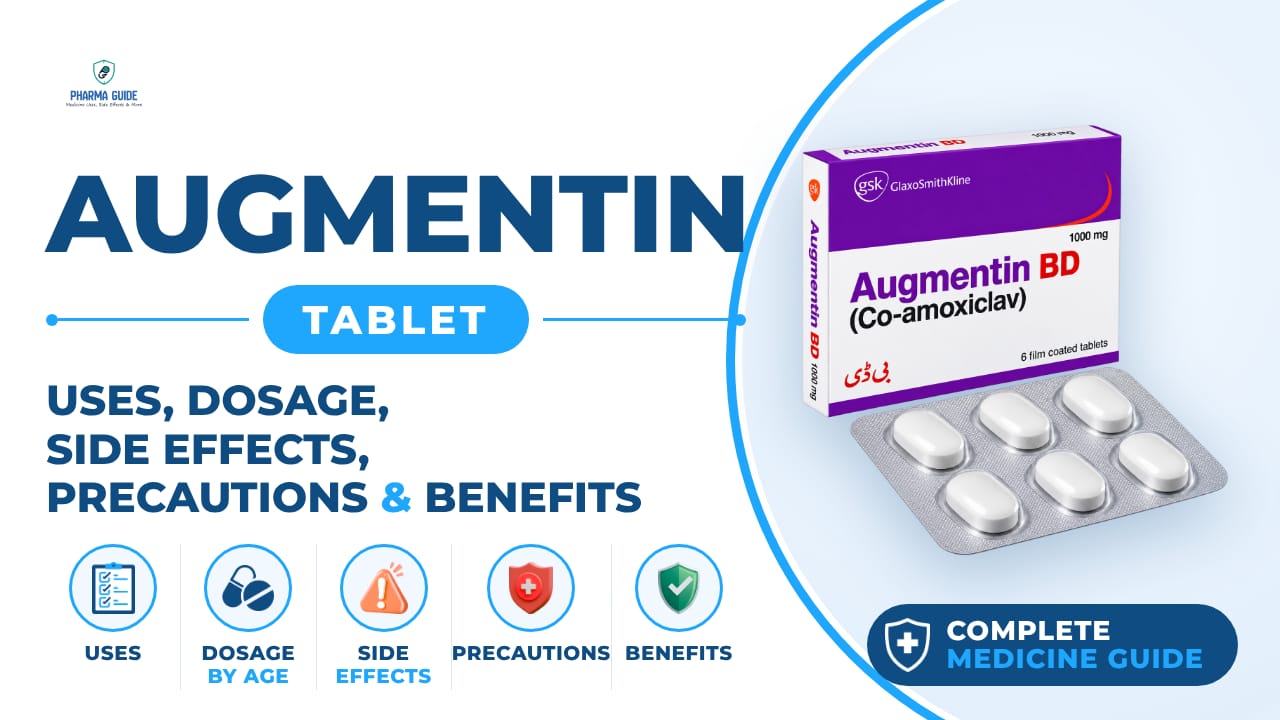
| Generic name | Amoxicillin/clavulanic acid (Co-Amoxiclav) |
|---|---|
| Drug class | Penicillin antibiotic / beta-lactamase inhibitor |
| Forms | Film-coated tablet, Oral suspension, Extended-release tablet |
Quick overview
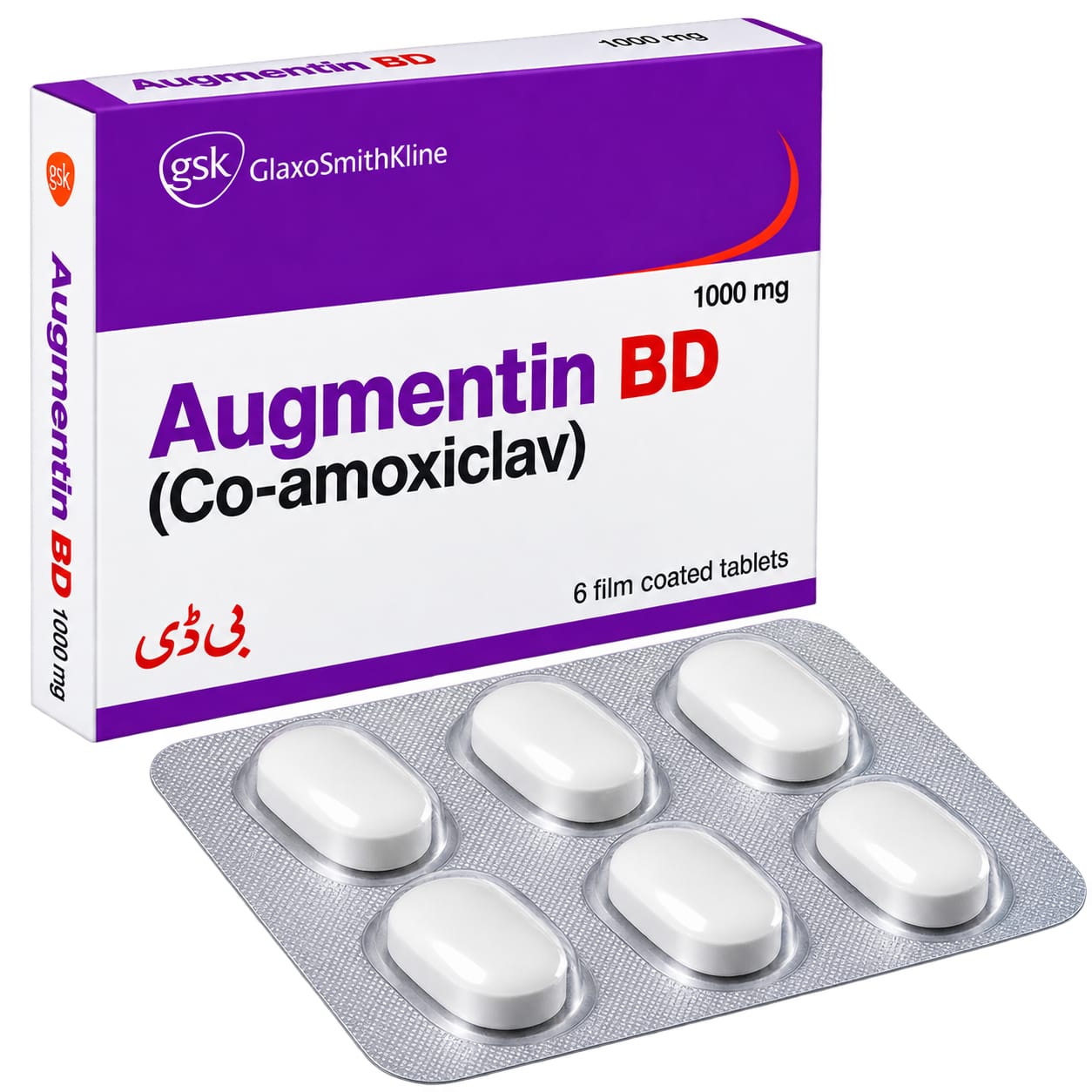
Augmentin Tablet contains amoxicillin and clavulanic acid, also known as co-amoxiclav, a penicillin antibiotic combined with a beta-lactamase inhibitor. It is used to treat a wide range of bacterial infections, including ear, sinus, respiratory, urinary, skin, dental, and bone or joint infections. The clavulanic acid component helps prevent bacteria from making the amoxicillin ineffective. It should be taken exactly as directed and the full course should be completed.
What is Augmentin Tablet
Augmentin is an antibiotic that works by killing bacteria that cause infections. It contains two medicines called amoxicillin and clavulanic acid. Amoxicillin is a penicillin, and clavulanic acid helps stop the bacteria from making the amoxicillin inactive.
Augmentin Tablet uses
- Middle ear and sinus infections
- Respiratory tract infections
- Urinary tract infections
- Skin and soft tissue infections, including dental infections
- Bone and joint infections
- Pneumonia
- Bronchitis
Benefits of Augmentin Tablet
- Treats a wide range of bacterial infections
- The clavulanic acid helps prevent certain bacteria from becoming resistant to amoxicillin
How Augmentin Tablet works
Augmentin kills the bacteria that cause infections. The amoxicillin fights the bacteria, and the clavulanic acid stops the bacteria from making the amoxicillin stop working.
Augmentin Tablet dosage
Take with a meal, at the start of a meal, to reduce stomach upset. Swallow the tablets whole with a glass of water. Do not crush or chew the tablet. Tablets can be broken along the score line to make them easier to swallow, but you must take both pieces at the same time.
Space the doses evenly during the day, at least 4 hours apart. Do not take two doses in one hour. Complete the full course even if you feel better.
Do not take Augmentin for more than 2 weeks. If you still feel unwell, go back to see the doctor.
Children aged 6 years or less should preferably be treated with Augmentin oral suspension or sachets. The tablets are not suitable for smaller children.
Avoid taking this medicine together with or just after eating a high-fat meal, as this makes it harder for your body to absorb.
| Age group | Dose |
|---|---|
| Under 12 years (Under 40 kg) | Not recommended |
| 12–17 years (40 kg or more) | 2 tablets every 12 hours |
| 18 years and older (40 kg or more) | 2 tablets every 12 hours |
Available forms and strengths
- Film-coated tablet
- Oral suspension
- Extended-release tablet
Side effects of Augmentin Tablet
Common
- Diarrhoea
- Feeling sick (nausea), especially with high doses
- Vomiting
- Stomach discomfort
- Indigestion
- Headache
- Dizziness
- Thrush (yeast infection of the vagina, mouth or skin folds)
- Skin rash or itching
- Raised itchy rash (hives)
- Vaginal itching or discharge
- Diaper rash
Serious
- Severe or watery/bloody diarrhoea (may be inflammation of the large intestine)
- Allergic reactions, including skin rash, swelling of the face or throat, and difficulty breathing
- Signs of jaundice (yellowing of the skin or eyes)
- Unusual tiredness, confusion or weakness
- Dark coloured urine
- Severe skin reactions with blistering and peeling
- Little or no urination
- Easy bruising or bleeding
- Severe and ongoing stomach pain (possible pancreatitis)
- Convulsions (fits)
- Repetitive vomiting in children (drug-induced enterocolitis syndrome)
Warnings and precautions
- If you are pregnant, think you may be pregnant, or are planning a baby, ask your doctor or pharmacist for advice before taking this medicine.
- Amoxicillin and clavulanate can pass into breast milk and may harm a nursing baby.
- Do not use this medicine without telling your doctor if you are breastfeeding.
- Tell your doctor if you have kidney problems. The dose might be changed, or a different strength or medicine may be chosen.
- You should not use Augmentin if you have severe kidney disease.
- Tell your doctor if you have liver problems. You may need more frequent blood tests to check how your liver is working.
- Do not take Augmentin if you have ever had liver problems or jaundice when taking an antibiotic.
- You can drink alcohol while taking Augmentin, as it will not stop the medicine from working.
- However, if you have an infection it is a good idea to avoid alcohol to give your body the best chance to fight it.
- Augmentin can have side effects that may make you unfit to drive.
- Do not drive or operate machinery unless you are feeling well.
- Do not take Augmentin if you are allergic to amoxicillin, clavulanic acid, penicillin, or any of the ingredients, or if you have ever had a severe allergic reaction to another antibiotic.
- Do not take Augmentin if you have ever had liver problems or jaundice when taking an antibiotic.
- You should not use Augmentin if you have severe kidney disease or if you are allergic to any penicillin or cephalosporin antibiotic.
- Augmentin can make birth control pills less effective. Ask your doctor about using a non-hormonal method of birth control to prevent pregnancy.
- Talk to your doctor before taking Augmentin if you have glandular fever, are being treated for liver or kidney problems, or are not passing water regularly.
- Augmentin can affect the results of certain blood and urine tests. Tell your doctor or nurse that you are taking it.
- Take the antibiotic only if it has been prescribed for you, and use it only for the infection it was prescribed for. Do not share it with others.
Storage
- Store at room temperature, away from moisture and heat.
- Do not store above 25°C.
- Store in the original package to protect from moisture.
- Keep out of the sight and reach of children.
- Do not use after the expiry date stated on the carton.
- Tablets supplied in pouches should be used within 30 days of opening the pouch.
- Do not use if the tablets are chipped or damaged.
- Do not throw away any medicines via wastewater or household waste. Ask your pharmacist how to throw away medicines you no longer use.
When to see a doctor
- Contact a doctor immediately and stop taking Augmentin if you get signs of an allergic reaction such as a skin rash, swelling of the face or throat, difficulty breathing, collapse, or chest pain.
- Contact your doctor as soon as possible if you have inflammation of the large intestine (watery diarrhoea, usually with blood and mucus, stomach pain and/or fever), severe ongoing stomach pain, or repetitive vomiting.
- Get emergency medical help if you have signs of an allergic reaction such as hives, difficult breathing, or swelling in your face or throat, or a severe skin reaction with blistering and peeling.
- Call your doctor at once if you have severe stomach pain, watery or bloody diarrhoea, pale or yellowed skin, dark urine, fever, confusion, weakness, little or no urination, or easy bruising or bleeding.
- If you take too much Augmentin, signs may include an upset stomach or convulsions. Talk to your doctor as soon as possible or call your local poison control center.
Alternatives
- Augmentin ES-600
- Amoclan
- Augmentine
- Clavumox
Watch the video
FAQs
What is Augmentin Tablet used for?
Augmentin is used to treat bacterial infections including middle ear and sinus infections, respiratory tract infections, urinary tract infections, skin and soft tissue infections including dental infections, bone and joint infections, pneumonia, and bronchitis.
How should Augmentin Tablet be taken?
Take Augmentin with a meal, at the start of a meal, to reduce stomach upset. Swallow the tablets whole with a glass of water without crushing or chewing them. Space doses evenly, at least 4 hours apart, and complete the full course even if you feel better. Do not take it for more than 2 weeks.
What are the common side effects of Augmentin Tablet?
Common side effects include diarrhoea, nausea, vomiting, stomach discomfort, indigestion, headache, dizziness, thrush, skin rash or itching, hives, and vaginal itching or discharge.
Can children take Augmentin Tablet?
Children aged 6 years or less should preferably be treated with Augmentin oral suspension or sachets, as the tablets are not suitable for smaller children. The tablet dose for under 12 years or under 40 kg is not recommended.
Can I drink alcohol while taking Augmentin Tablet?
You can drink alcohol while taking Augmentin, as it will not stop the medicine from working. However, if you have an infection, it is a good idea to avoid alcohol to give your body the best chance to fight it.
Sources
Video
Related medicines

Mefenamic Acid Capsule: Uses, Dosage, Side Effects, Precautions and Alternates
Nonsteroidal anti-inflammatory drug (NSAID)
Mefenamic Acid Capsule is an NSAID for mild to moderate pain and menstrual cramps. Learn uses, dosage, side effects, and important safety warnings.
Augmentin Syrup: Uses, Dosage, Side Effects, Precautions and Alternates
Penicillins / beta-lactamase inhibitors
Augmentin Syrup combines amoxicillin and clavulanic acid to treat bacterial infections. Learn about dosage, side effects, and precautions before use.