
Safety
General information, not medical advice
Your prescriber and the leaflet in your pack know your situation. This page does not.
- Follow your prescriber and the leaflet
- Don't start, stop, or change a dose on your own
- Doses and warnings differ by country and product
Austedo Tablet: Uses, Dosage, Side Effects, Precautions and Alternates
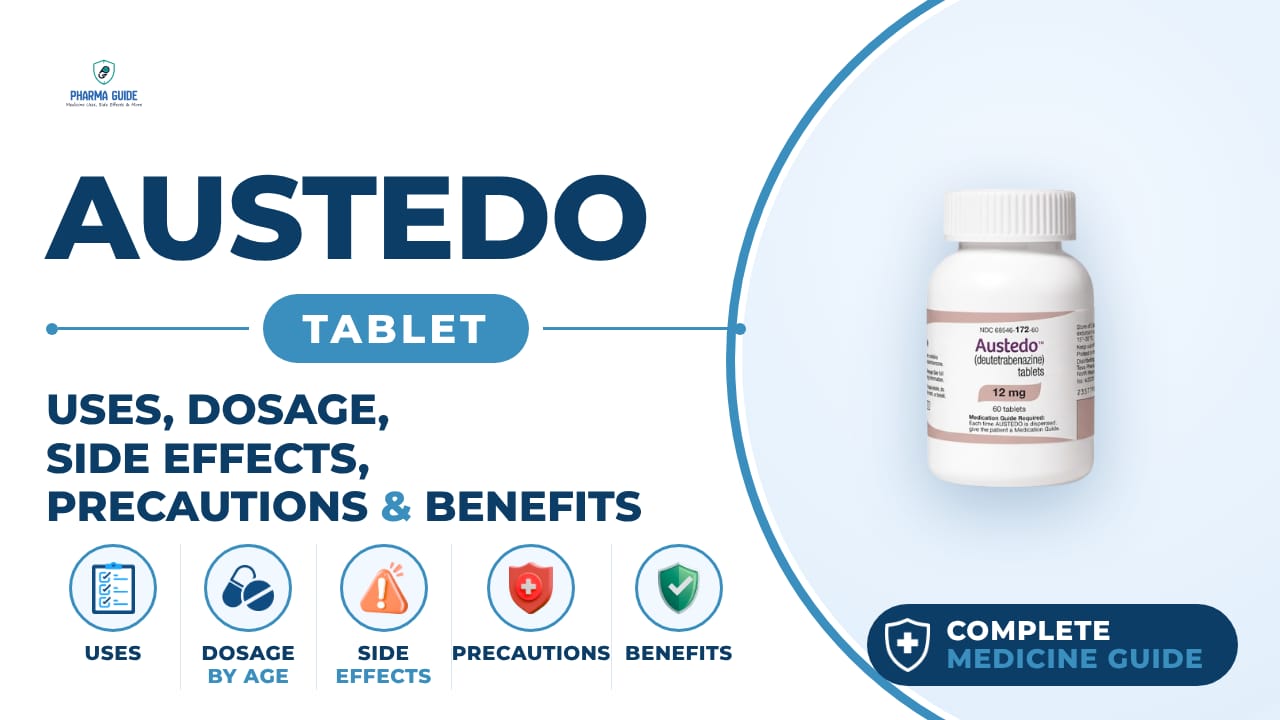
| Generic name | deutetrabenazine |
|---|---|
| Drug class | VMAT2 inhibitors (vesicular monoamine transporter 2 inhibitors) |
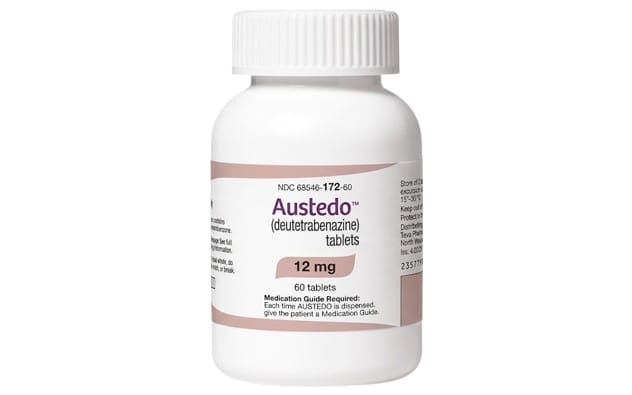
| Forms | Standard oral tablets (6 mg, 9 mg, 12 mg) |
Quick overview
Austedo Tablet (deutetrabenazine) is a prescription medicine belonging to the VMAT2 inhibitor class, used to treat certain movement disorders such as tardive dyskinesia and Huntington's disease chorea. It is available as a standard tablet taken twice daily and as an extended-release tablet (Austedo XR) taken once daily. Austedo works by lowering levels of certain brain chemicals involved in nerve signaling to help reduce uncontrolled movements. It carries a boxed warning for increased risk of depression and suicidal thoughts in people with Huntington's disease.
What is Austedo Tablet
Austedo is a prescription medicine used to treat certain movement disorders. It is available as a standard tablet taken twice daily and as an extended-release tablet (Austedo XR) taken once daily.
Austedo Tablet uses
- Tardive dyskinesia
- Huntington's disease chorea
- Involuntary body movements
- Repetitive facial movements
- Uncontrolled movements of the arms and legs
Benefits of Austedo Tablet
- Helps reduce involuntary movements.
- Treats tardive dyskinesia.
- Helps manage Huntington's disease chorea.
- May improve control of facial movements.
- Helps reduce unwanted body movements.
How Austedo Tablet works
Austedo works by lowering the levels of certain brain chemicals (neurotransmitters) that are involved in sending signals between nerve cells, which helps reduce uncontrolled movements.
Austedo Tablet dosage
The standard tablet is taken by mouth twice a day with food, at the same time each day. The extended-release tablet (Austedo XR) is taken once a day, with or without food. Swallow tablets whole with a glass of water; do not split, crush, or chew them. If you cannot swallow the tablet whole, tell your doctor, as you may need a different medicine. You may notice the extended-release tablet's outer shell in your stool; this is normal and does not mean you missed your full dose. Keep taking the medicine unless your doctor tells you to stop. If you stop taking it for more than a week, do not restart without talking to your doctor first, as you may need to start again at a lower dose. Your doctor will usually start you on a low dose and increase it gradually over several weeks to find the right dose for you.
| Age group | Dose |
|---|---|
| Under 18 years | Not recommended |
| 18–64 years | 12 mg/day |
| 65+ years | 12 mg/day |
Available forms and strengths
- Standard oral tablets (6 mg, 9 mg, 12 mg)
Side effects of Austedo Tablet
Common
- Drowsiness or sleepiness (sedation)
- Diarrhea
- Dry mouth
- Tiredness/fatigue
- Trouble sleeping (insomnia)
- Sore throat, congestion, or runny nose (common cold symptoms)
- Anxiety
- Restlessness or agitation
Serious
- Neuroleptic malignant syndrome (high fever, stiff muscles, confusion, fast or uneven heartbeat, increased sweating)
- Irregular heartbeat / QT prolongation (fast or pounding heartbeats, fluttering in chest, shortness of breath, sudden dizziness or fainting)
- Increased risk of suicidal thoughts and behaviors, and depression, especially in people with Huntington's disease
- High prolactin levels (vaginal dryness, irregular or no periods, unexpected breast milk production, erectile problems, enlarged breast size)
- Akathisia (severe restlessness or a strong urge to move)
- Parkinsonism (slight shaking, body stiffness, trouble moving, trouble with balance, falls)
- Severe allergic reaction (hives, difficulty breathing, swelling of face, lips, tongue, or throat)
Warnings and precautions
- Austedo carries a boxed warning (the FDA's most serious type of warning) for an increased risk of depression and suicidal thoughts and behavior in people with Huntington's disease. Do not start the medicine if you have untreated or poorly controlled depression or suicidal thoughts.
- Austedo can cause a heart rhythm problem called QT prolongation, which can lead to a dangerous abnormal heartbeat. It should be avoided in people with congenital long QT syndrome or a history of certain heart rhythm problems.
- Do not take Austedo with reserpine; you must wait at least 20 days after stopping reserpine before starting Austedo. Do not take Austedo with an MAOI medicine, and wait at least 14 days after stopping an MAOI before starting Austedo. Do not take Austedo together with tetrabenazine or valbenazine, which are similar medicines for movement disorders.
- Neuroleptic malignant syndrome, a potentially life-threatening nervous system reaction, has been reported with related drugs; if it occurs, treatment must be stopped right away.
- It isn't known whether Austedo is safe to take during pregnancy or what effects it may have on a developing baby. Talk with your doctor if you're pregnant or planning to become pregnant.
- It isn't known whether Austedo passes into breast milk or what effects it could have on a nursing child. Talk with your doctor if you are breastfeeding or considering it.
- Austedo should not be taken by people with liver problems, as this can cause too much of the drug to build up in the body and increase the risk of side effects.
- Drinking alcohol while taking Austedo is not recommended, since both alcohol and Austedo can cause sleepiness, and combining them may increase this effect.
- Because Austedo can cause sleepiness, avoid driving or operating machinery until you know how the medicine affects you.
Storage
- Store at room temperature between 68 and 77 degrees F (20 to 25 degrees C)
- Keep away from light, excess heat, and moisture
- Do not store in the bathroom
- Keep the container tightly closed
- Do not remove the desiccant packet inside the container as it helps keep the medication dry
- Keep out of reach of children
When to see a doctor
- Get emergency help right away if you have signs of a serious allergic reaction, such as hives, difficulty breathing, or swelling of the face, lips, tongue, or throat.
- Call your doctor right away if you notice new or worsening depression, unusual mood or behavior changes, or thoughts of suicide.
- Call your doctor right away if you have fast or pounding heartbeats, fluttering in your chest, shortness of breath, or sudden dizziness like you might pass out.
- Call your doctor right away and go to the nearest emergency room if you develop high fever, stiff muscles, problems thinking, a very fast or uneven heartbeat, or increased sweating, as these may be signs of a serious nervous system reaction.
- If you or someone you know is having thoughts of suicide or self-harm, seek support immediately, such as by contacting a crisis helpline or emergency services.
Alternatives
- Risperidone
- Haldol (Haloperidol)
- Olanzapine
Watch the video
FAQs
What is Austedo Tablet used for?
Austedo is used to treat tardive dyskinesia and Huntington's disease chorea, helping reduce involuntary body movements, repetitive facial movements, and uncontrolled movements of the arms and legs.
How is Austedo Tablet taken?
The standard tablet is taken by mouth twice a day with food, at the same time each day. The extended-release tablet (Austedo XR) is taken once a day, with or without food. Tablets should be swallowed whole and not split, crushed, or chewed.
What is the boxed warning for Austedo?
Austedo carries a boxed warning for an increased risk of depression and suicidal thoughts and behavior in people with Huntington's disease. It should not be started if someone has untreated or poorly controlled depression or suicidal thoughts.
What are the common side effects of Austedo?
Common side effects include drowsiness, diarrhea, dry mouth, fatigue, trouble sleeping, cold-like symptoms, anxiety, and restlessness or agitation.
Can Austedo be taken with other movement disorder medicines?
No, Austedo should not be taken with reserpine, MAOIs, tetrabenazine, or valbenazine. You must wait at least 20 days after stopping reserpine or 14 days after stopping an MAOI before starting Austedo.
General information, not medical advice
Your prescriber and the leaflet in your pack know your situation. This page does not.
- Follow your prescriber and the leaflet
- Don't start, stop, or change a dose on your own
- Doses and warnings differ by country and product
Sources
Video
Related medicines

Injectafer Injection: Uses, Dosage, Side Effects, Precautions and Alternates
Iron products
Injectafer (ferric carboxymaltose) treats iron deficiency anemia and heart failure-related iron deficiency via IV. Learn uses, dosage, side effects, and

Gliclazide Tablet: Uses, Dosage, Side Effects, Precautions and Alternates
Sulfonylurea (hypoglycemic/antidiabetic agent)
Gliclazide Tablet is a sulfonylurea for type 2 diabetes that boosts insulin release. Learn about dosage, side effects, warnings, and precautions.