
Safety
General information, not medical advice
Your prescriber and the leaflet in your pack know your situation. This page does not.
- Follow your prescriber and the leaflet
- Don't start, stop, or change a dose on your own
- Doses and warnings differ by country and product
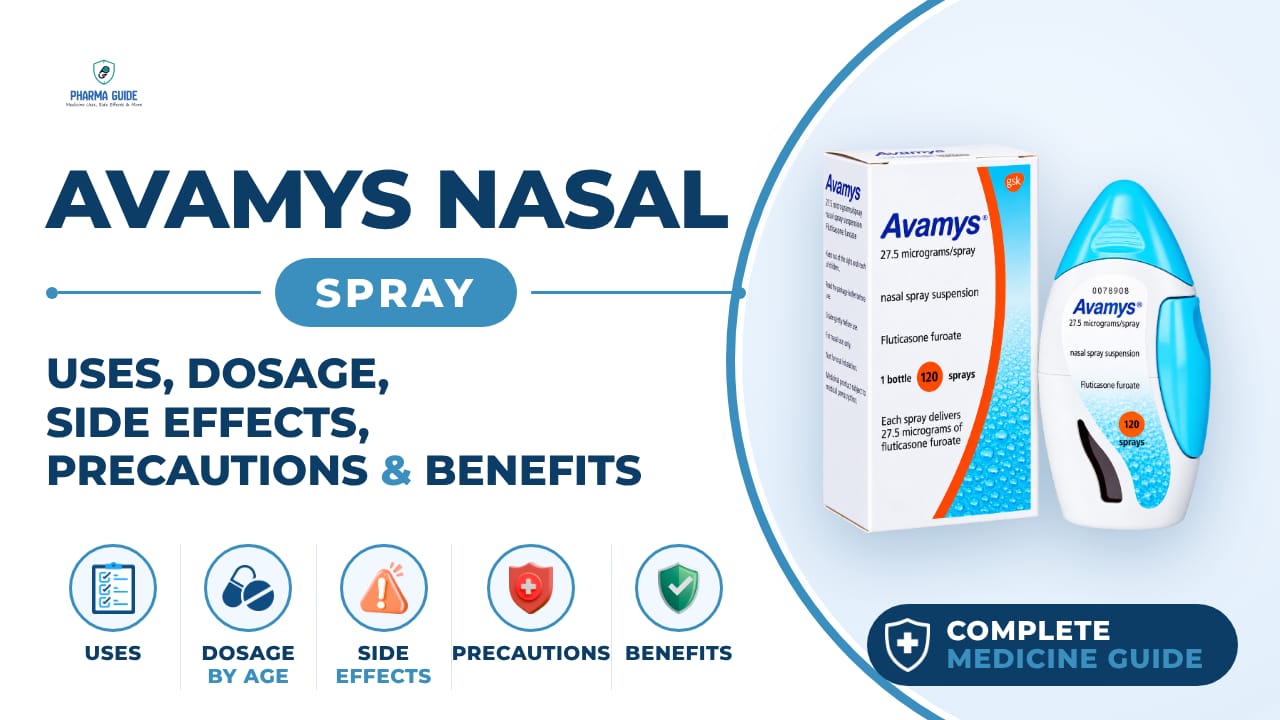
Avamys Nasal Spray: Uses, Dosage, Side Effects, Precautions and Alternates
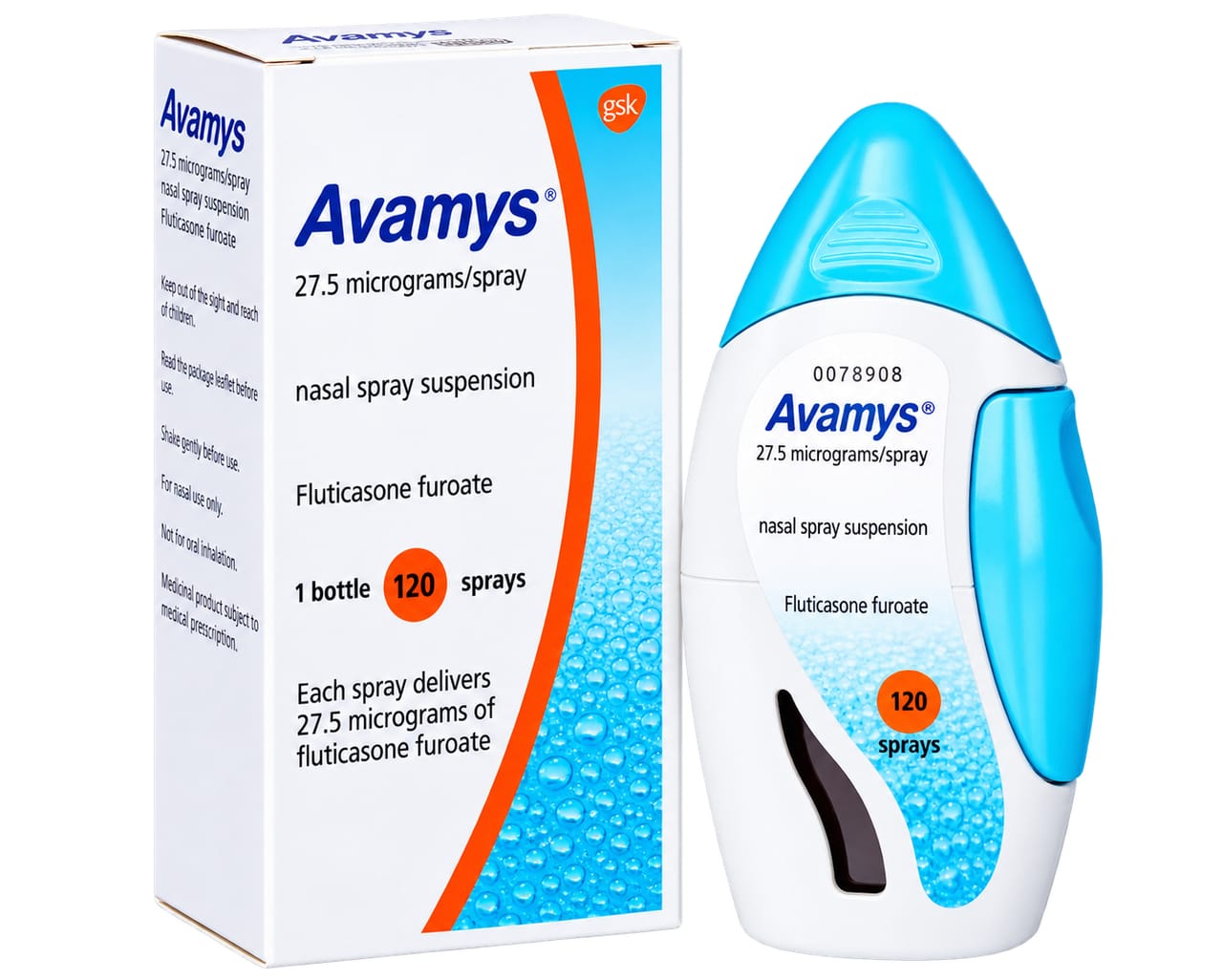
| Generic name | Fluticasone furoate |
|---|---|
| Drug class | Corticosteroid for Nasal Use (glucocorticoid) |
| Forms | Nasal spray, suspension; 27.5 mcg per metered spray |
Quick overview
Avamys Nasal Spray contains fluticasone furoate, a corticosteroid for nasal use. It is used to treat symptoms of seasonal and perennial allergic rhinitis, including nasal congestion, sneezing, runny nose, and nasal itching, and may also improve allergy-related eye symptoms. It is used once daily and should be used exactly as directed, since it is for use in the nose only.
What is Avamys Nasal Spray
Avamys is a nasal spray medicine that contains fluticasone furoate, a corticosteroid used to treat allergy symptoms in the nose and eyes.
Avamys Nasal Spray uses
- Treating symptoms of seasonal allergic rhinitis (hay fever)
- Treating symptoms of perennial (year-round) allergic rhinitis
- Treats allergic rhinitis
- Relieves nasal congestion
- Reduces sneezing
- Relieves runny nose
- Reduces nasal itching
- May improve allergy-related eye symptoms
Benefits of Avamys Nasal Spray
- Reduces stuffiness, runniness, itching, and sneezing in the nose
- Reduces eye redness, itchy eyes, and watery eyes
- Can start working within 8 to 24 hours after the first dose
- Provides once-daily dosing
- Reduces nasal inflammation
- Provides sustained allergy symptom control
- Has low systemic exposure when used intranasally
How Avamys Nasal Spray works
Avamys is a corticosteroid that reduces inflammation in the nose caused by allergies, which lessens symptoms like congestion, runniness, itching, and sneezing.
Avamys Nasal Spray dosage
Avamys is for use in the nose only — do not spray it in your eyes or mouth. Shake well before each use. You can use it at any time of day, but take it at the same time every day. Gently blow your nose to clear your nostrils before using the spray. Point the nozzle toward the outside of your nose, away from the center, while breathing in through your nose, then breathe out through your mouth after spraying.
Use it regularly every day without missing a dose for the best results. If you miss a dose by several hours, just take your next dose at the usual time — do not take an extra dose. Wipe the nozzle with a clean, dry tissue after each use and clean the inside of the cap once a week. Do not use a pin or anything sharp to clear a blocked nozzle.
Prime the spray before first use, or if it hasn't been used for 30 days or more, or if the cap has been left off for 5 days or more. Do not use more sprays than the number printed on the label, even if the bottle doesn't feel empty.
| Age group | Dose |
|---|---|
| Under 2 years | Safety and effectiveness are not established; no standard dose |
| 2–5 years | In countries where approved from age 2: 1 spray in each nostril once daily (total 55 mcg/day); may be increased to 2 sprays per nostril once daily |
| 6–17 years | 1 spray in each nostril once daily (total 55 mcg/day); if symptoms are not adequately controlled, may increase to 2 sprays per nostril once daily (110 mcg/day) |
| 18–64 years | 2 sprays in each nostril once daily; maintenance may be reduced to 1 spray per nostril once daily |
Available forms and strengths
- Nasal spray, suspension; 27.5 mcg per metered spray
Side effects of Avamys Nasal Spray
Common
- Nosebleeds
- Nasal ulcers
- Pain, burning, irritation, soreness or dryness inside the nose
- Sore throat, upper respiratory tract infection, fever, bronchitis, cough, stuffy nose
- Headache
- Nausea
- Back pain
- Dizziness
- Shortness of breath
- Feeling that your heart is racing
Serious
- Allergic reactions: rash, hives, swelling of the face, lips, tongue or throat, difficulty swallowing or breathing, wheezing
- Fungal infection in the nose
- Decreased adrenal function: tiredness, weakness, nausea and vomiting, low blood pressure
- Slowed growth in children and adolescents
- Hyperglycemia: excessive thirst, frequent urination, dry skin, blurred vision and fatigue
- High blood pressure: headaches, vision disorders, nausea and vomiting
- Nasal septum perforation (small holes in the wall between the nostrils)
- Cushing's syndrome: rapid weight gain, round moon face, excess sweating, thinning skin with easy bruising, muscle and bone weakness
- Glaucoma: increased eye pressure, eye pain, vision changes, sudden sight loss
- Cataract: clouding of the lens of the eye, blurry vision, eye pain
Warnings and precautions
- This medicine is only for use in the nose — do not spray it into your eyes or mouth.
- Corticosteroid nasal sprays like Avamys can cause eye problems such as cataracts, glaucoma, or central serous chorioretinopathy (a condition causing blurry vision).
- Long-term use in children may slow their growth, so doctors should monitor children's growth regularly.
- Do not use Avamys if you have a sore, injury, or recent surgery in your nose until it has healed, since it can slow wound healing.
- Avamys can make existing infections worse, including tuberculosis, fungal, bacterial, viral, or parasitic infections, or eye herpes infections.
- Tell your doctor if you are taking steroid tablets, injections, or creams, asthma medicines, ritonavir, cobicistat, or ketoconazole, as these can interact with Avamys.
- Do not use more than the labeled number of sprays, even if the bottle doesn't seem empty, because the dose per spray may not stay consistent afterward.
- Do not use Avamys if you are pregnant or planning to become pregnant unless your doctor tells you to, since it should only be used if the benefits outweigh potential risks to the baby.
- Do not use Avamys while breastfeeding unless your doctor tells you to.
- No dose adjustment is needed for people with kidney problems. Talk to your doctor before using Avamys if you have liver disease, although no dose change is generally needed.
- No major direct interaction with alcohol is established. Avamys is not expected to affect your ability to drive or use machines.
Storage
- Store the device between 4 and 30°C, in the upright position with the cap in place.
- Do not refrigerate or freeze.
- Keep out of reach and sight of children.
- Avamys nasal spray should be used within 2 months after first opening.
- Do not throw away any medicines via wastewater or household waste. Ask your pharmacist how to throw away medicines you no longer use.
When to see a doctor
- Get emergency medical help right away if you have signs of a serious allergic reaction, such as rash, hives, swelling of the face, lips, tongue, or throat, or difficulty breathing or swallowing.
- Contact your doctor if you notice blurry vision or other changes in your vision.
- If you think you have used too much Avamys, contact your doctor, pharmacist, a hospital emergency department, or your local poison control center right away, even if you have no symptoms.
- If your condition gets worse after 24 hours of use, contact your doctor.
- Seek medical help if you develop symptoms of decreased adrenal function, such as tiredness, weakness, nausea, vomiting, or low blood pressure.
Alternatives
- Flonase / fluticasone propionate
- Nasonex / mometasone
- Rhinocort / budesonide
- Nasacort / triamcinolone
Watch the video
FAQs
What is Avamys Nasal Spray used for?
Avamys is used to treat symptoms of seasonal and perennial allergic rhinitis, including nasal congestion, sneezing, runny nose, and nasal itching, and may also improve allergy-related eye symptoms.
How do you use Avamys Nasal Spray?
Avamys is for use in the nose only. Shake well before each use, blow your nose first, then point the nozzle toward the outside of your nose while breathing in through your nose. Use it once daily at the same time each day.
How long does Avamys take to work?
Avamys can start working within 8 to 24 hours after the first dose.
What are the common side effects of Avamys Nasal Spray?
Common side effects include nosebleeds, nasal ulcers, pain or dryness inside the nose, sore throat, headache, nausea, back pain, dizziness, shortness of breath, and a racing heart feeling.
Can children use Avamys Nasal Spray?
Safety and effectiveness are not established in children under 2 years. For ages 2 and above where approved, and for ages 6-17, the dose is typically 1 spray in each nostril once daily, which may be increased if symptoms are not controlled.
General information, not medical advice
Your prescriber and the leaflet in your pack know your situation. This page does not.
- Follow your prescriber and the leaflet
- Don't start, stop, or change a dose on your own
- Doses and warnings differ by country and product
Sources
Video
Related medicines

Injectafer Injection: Uses, Dosage, Side Effects, Precautions and Alternates
Iron products
Injectafer (ferric carboxymaltose) treats iron deficiency anemia and heart failure-related iron deficiency via IV. Learn uses, dosage, side effects, and

Gliclazide Tablet: Uses, Dosage, Side Effects, Precautions and Alternates
Sulfonylurea (hypoglycemic/antidiabetic agent)
Gliclazide Tablet is a sulfonylurea for type 2 diabetes that boosts insulin release. Learn about dosage, side effects, warnings, and precautions.