
Safety
General information, not medical advice
Your prescriber and the leaflet in your pack know your situation. This page does not.
- Follow your prescriber and the leaflet
- Don't start, stop, or change a dose on your own
- Doses and warnings differ by country and product
Avil Injection: Uses, Dosage, Side Effects, Precautions and Alternates
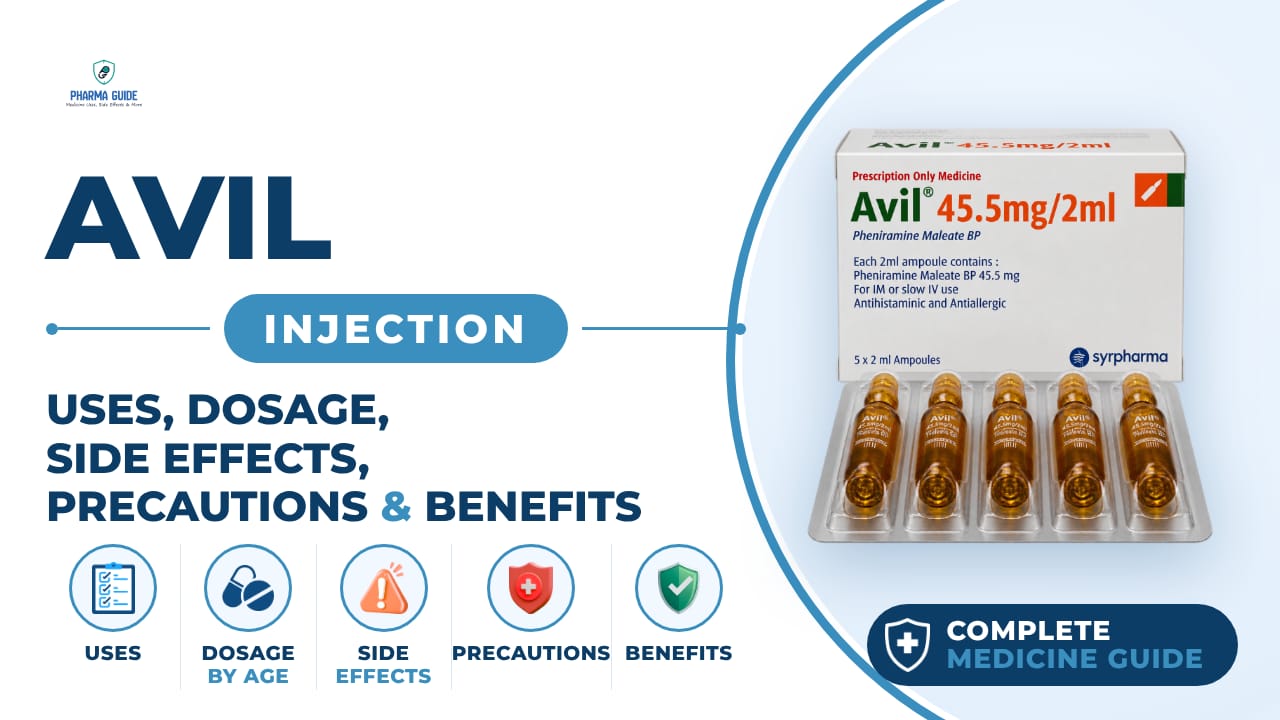
| Generic name | Pheniramine |
|---|---|
| Drug class | Antihistamine (H1 Antihistaminics - First Generation) |
| Forms | Injection |
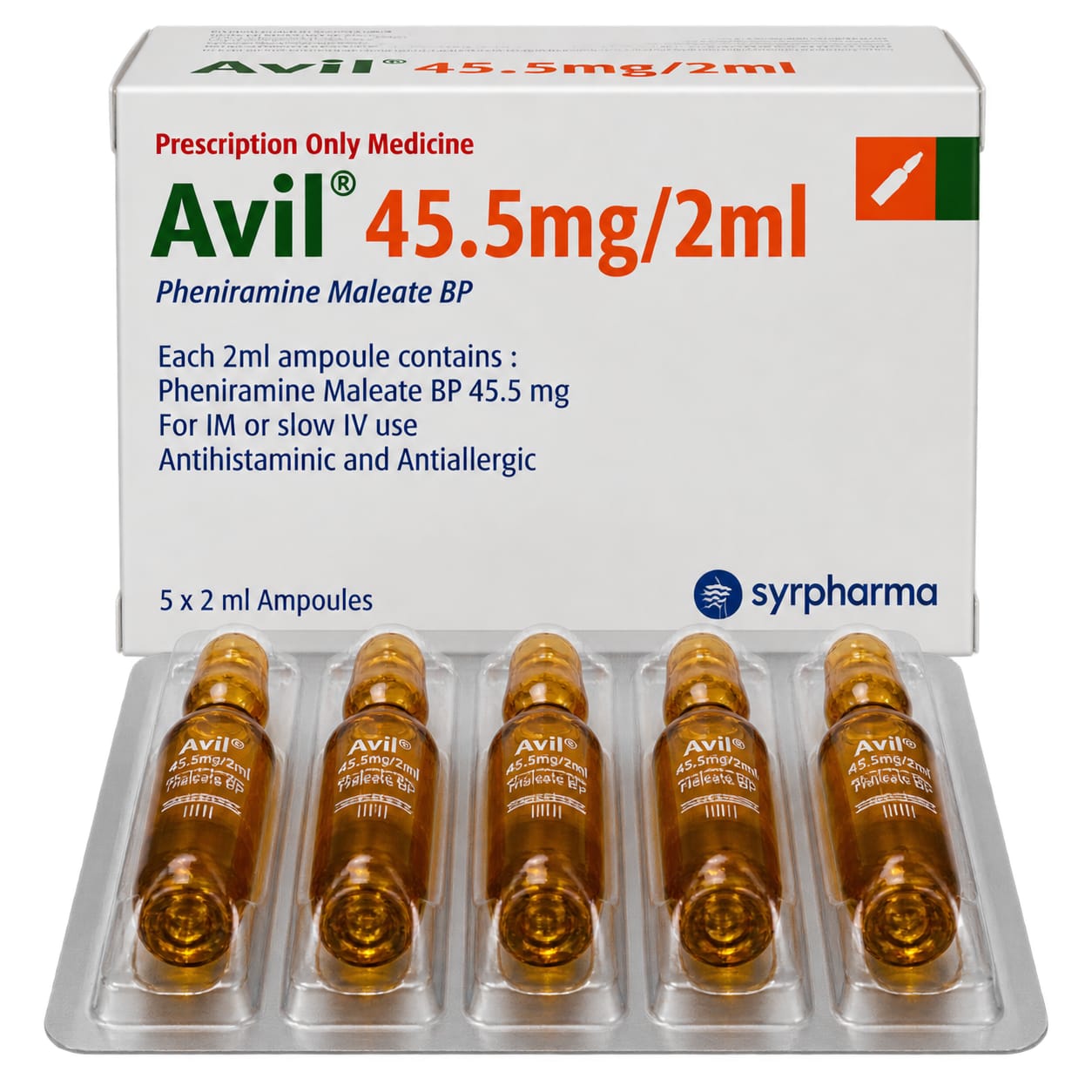
Quick overview
Avil Injection contains Pheniramine, a first-generation antihistamine with mild sedative effects. It is given by a healthcare professional as a shot into a muscle or vein to prevent or treat allergic reactions such as hay fever, hives, and other allergies caused by outside allergens. It works by blocking histamine, the chemical responsible for itching, swelling, and sneezing during allergic reactions.
What is Avil Injection
Avil Injection is an antihistamine medicine with mild sedative effects. It is given to prevent or treat allergic reactions such as hay fever, hives, and other allergies caused by outside allergens. It is given by a healthcare professional as a shot into a muscle or vein.
Avil Injection uses
- Allergic rhinitis and hay fever (sneezing, runny nose, watery eyes)
- Urticaria (hives) and skin allergy (itching, swelling, redness)
- Insect bites and allergic conjunctivitis
- Motion sickness
Benefits of Avil Injection
- Gives relief from symptoms like blocked or runny nose, sneezing, and itchy or watery eyes, making daily tasks easier
- Provides relief from allergic reactions after insect bites and symptoms of hives and eczema such as rash, swelling, itching, and irritation, improving skin condition and mood
How Avil Injection works
This medicine blocks the action of histamine, a chemical the body releases during an allergic reaction that causes itching, swelling, and sneezing. It also acts on blood vessels in the nose to relieve stuffiness.
Avil Injection dosage
This medicine is given by a doctor or nurse as an injection into a muscle or vein; do not give it to yourself. It should be given slowly, and you will be monitored closely for reactions during and after the injection. It is safe to take with food. The dose and how often you get it depends on your age, weight, medical history, and the condition being treated, as decided by your doctor.
This medicine is not recommended for children under 2 years old; older children may need a different dose and route. Older patients may be more sensitive to its effects and may need careful dose adjustment and monitoring. Do not stop the treatment unless your doctor advises you to do so.
If a dose is missed, it should be given as soon as possible, but if it is almost time for the next dose, skip the missed one and continue the regular schedule; do not double up.
| Age group | Dose |
|---|---|
| Children | Dose based on body weight and medical condition; only under medical supervision |
| Adults (18–64 Years) | Usually 22.75 mg (1 mL) by injection, dose may be repeated as directed |
| Older Adults (65+ Years) | Lower dose may be required due to increased sensitivity |
Available forms and strengths
- Injection — 22.75 mg (1 mL)
Side effects of Avil Injection
Common
- Drowsiness
- Dizziness
- Headache
- Dry mouth
- Nausea
- Vomiting
- Constipation
- Blurred vision
- Difficulty passing urine
- Skin rash
- Itching
- Irritation
- Fast heartbeat (tachycardia)
- Breathlessness
Serious
- Confusion
- Irregular heartbeat
- Urinary retention or leakage of urine
- Tinnitus (ringing in the ears)
- Hallucinations
- Trouble sleeping
Warnings and precautions
- People with a known allergy to antihistamines or pheniramine should not use this medicine, as it may cause an allergic reaction.
- This medicine can raise pressure inside the eye and make glaucoma symptoms worse.
- This medicine can change heart rate and rhythm and may raise the risk of heart attack or stroke in people with heart disease.
- This medicine should not be used in newborn babies or premature infants.
- This medicine is not recommended for children under 2 years old.
- Do not use this medicine if you have porphyria (a genetic blood disorder), heart disease, or certain eye diseases.
- Taking too much of this medicine can cause hallucinations.
- This medicine should not be used during pregnancy unless your doctor specifically prescribes it, as its safety in pregnancy has not been established.
- It is not known if this medicine passes into breast milk. Breastfeeding women should use it with caution and talk to their doctor first.
- People with kidney disease may be more likely to have side effects from this medicine because the kidneys remove the drug from the body.
- People with liver disease may be more likely to have side effects from this medicine because it is processed by the liver, so caution is needed.
- Avoid alcohol while using this medicine, as it can increase drowsiness, dizziness, and poor coordination, which can be dangerous.
- This medicine can cause drowsiness, dizziness, and poor coordination, so avoid driving or operating machinery until you know how it affects you.
Storage
- Avil injection should be stored at room temperature (15-30°C), away from direct sunlight, heat, and moisture.
- Keep Avil injection out of reach of children and pets to avoid accidental ingestion.
- Do not use Avil injection after the expiry date printed on the packaging. Expired medication may not be effective and can even be harmful.
- Always dispose of unused or expired medication as per the proper disposal guidelines to avoid any environmental harm.
When to see a doctor
- Tell your healthcare team right away if you have trouble breathing or notice swelling of the face or throat.
- If you or someone else takes too much of this medicine by accident, get medical help right away. Signs of overdose include drowsiness, stinging or burning at the injection site, nausea, vomiting, diarrhea, weakness, and dry mouth.
- If any side effect does not improve or becomes severe, talk to your doctor, but do not stop treatment unless your doctor tells you to.
Alternatives
- Levocetirizine
- Cetirizine
- Diphenhydramine Injection
- Chlorpheniramine Injection
Watch the video
FAQs
What is Avil Injection used for?
It is used to prevent or treat allergic reactions such as hay fever, hives, insect bites, allergic conjunctivitis, and motion sickness.
How is Avil Injection given?
It is given by a healthcare professional as a shot into a muscle or vein, administered slowly with monitoring during and after the injection.
What is the dose of Avil Injection for adults?
Adults aged 18–64 years usually receive 22.75 mg (1 mL) by injection, and the dose may be repeated as directed by the doctor.
What are the common side effects of Avil Injection?
Common side effects include drowsiness, dizziness, headache, dry mouth, nausea, vomiting, constipation, blurred vision, and skin rash.
Can Avil Injection be used during pregnancy?
It should not be used during pregnancy unless specifically prescribed by a doctor, as its safety in pregnancy has not been established.
General information, not medical advice
Your prescriber and the leaflet in your pack know your situation. This page does not.
- Follow your prescriber and the leaflet
- Don't start, stop, or change a dose on your own
- Doses and warnings differ by country and product
Sources
Video
Related medicines

Injectafer Injection: Uses, Dosage, Side Effects, Precautions and Alternates
Iron products
Injectafer (ferric carboxymaltose) treats iron deficiency anemia and heart failure-related iron deficiency via IV. Learn uses, dosage, side effects, and

Gliclazide Tablet: Uses, Dosage, Side Effects, Precautions and Alternates
Sulfonylurea (hypoglycemic/antidiabetic agent)
Gliclazide Tablet is a sulfonylurea for type 2 diabetes that boosts insulin release. Learn about dosage, side effects, warnings, and precautions.