
Safety
General information, not medical advice
Your prescriber and the leaflet in your pack know your situation. This page does not.
- Follow your prescriber and the leaflet
- Don't start, stop, or change a dose on your own
- Doses and warnings differ by country and product
Avita Cream: Uses, Dosage, Side Effects, Precautions and Alternates
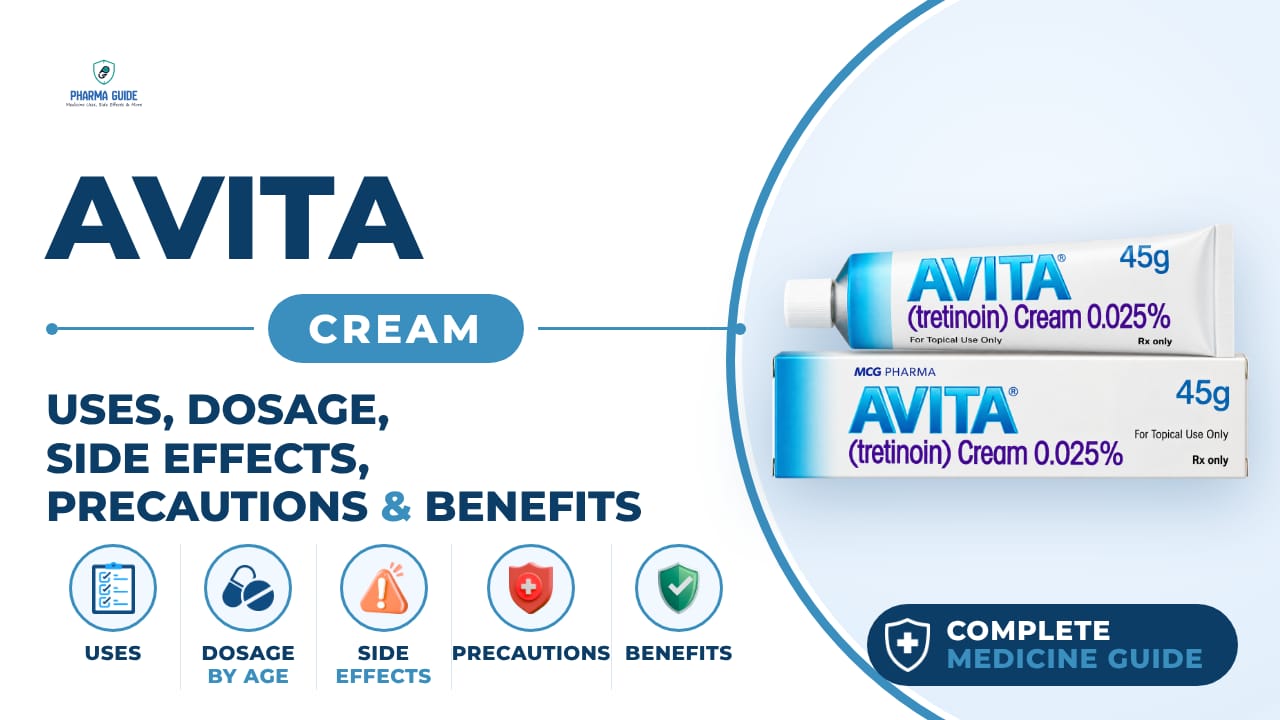
| Generic name | tretinoin |
|---|---|
| Drug class | Acne Agents, Topical |
| Forms | Cream |
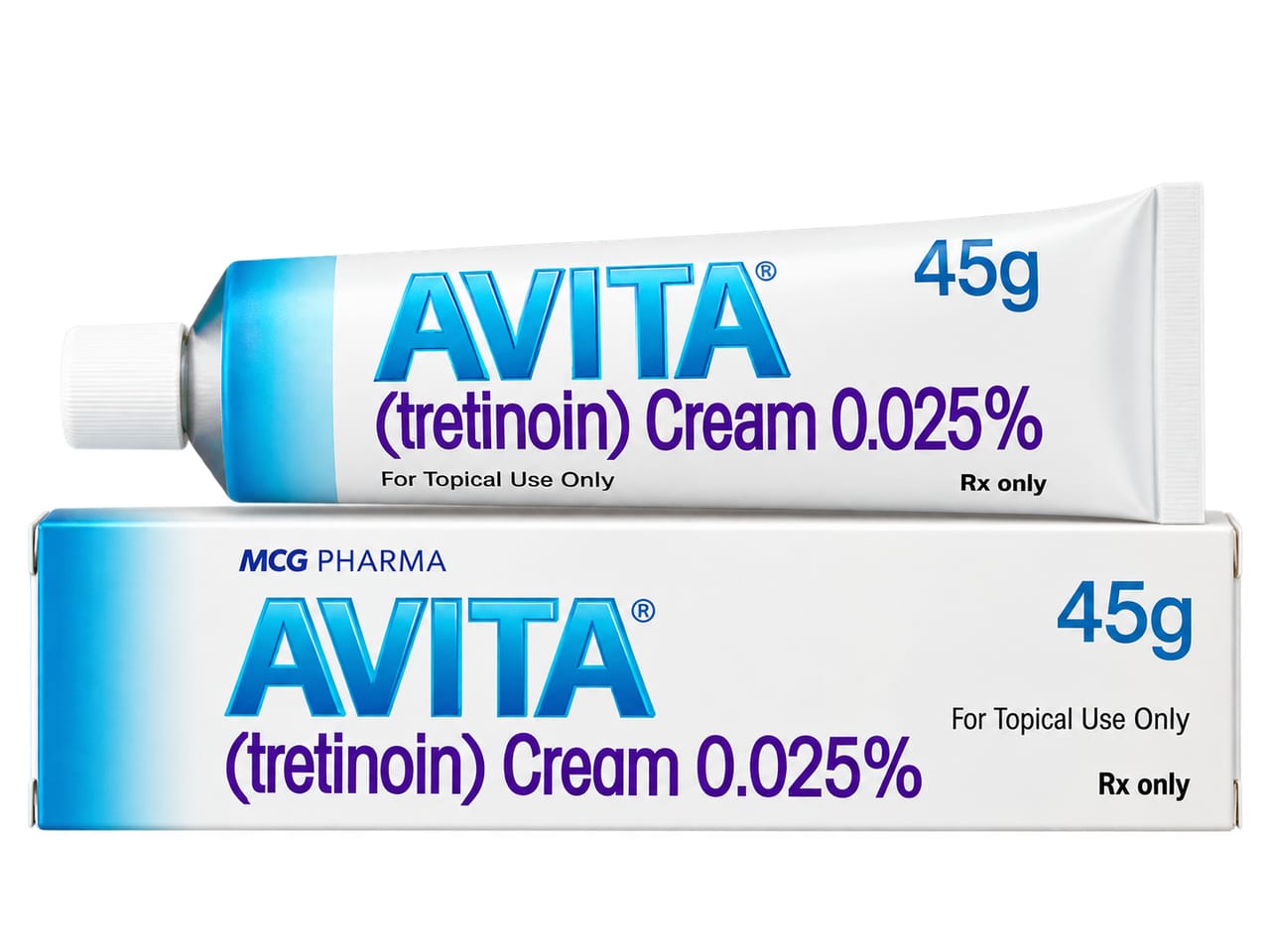
Quick overview
Avita Cream contains tretinoin, a topical retinoid from the Acne Agents, Topical class. It is applied to the skin to treat acne vulgaris, helping reduce blackheads and whiteheads and prevent new acne lesions. It is typically applied once daily in the evening, and common effects include skin redness, dryness, and peeling, especially in the first few weeks of use.
What is Avita Cream
Avita Cream is a topical retinoid medicine used on the skin to treat acne.
Avita Cream uses
- Treatment of acne vulgaris (common acne)
- Treats acne vulgaris
- Helps reduce blackheads
- Helps reduce whiteheads
- Helps prevent formation of new acne lesions
- Promotes normal shedding of skin cells
Benefits of Avita Cream
- Decreases the binding of follicular skin cells, reduces microcomedo formation, and unclogs pores by increasing skin cell turnover
- Helps reduce the appearance of fine wrinkles, rough skin, and sun-damaged areas
- Assists in fading dark spots, melasma, and post-inflammatory marks
How Avita Cream works
Although the exact way tretinoin works is not fully known, it appears to make skin cells inside hair follicles stick together less and reduces the formation of tiny clogged pores (microcomedones). It also speeds up the turnover of these skin cells, helping push out the clogged material (comedones).
Avita Cream dosage
Apply once a day, in the evening, to the skin where acne lesions appear, using enough to cover the entire affected area lightly. Wash your skin gently with a mild soap and pat dry; wait 20 to 30 minutes before applying so skin is completely dry, to help reduce irritation. Keep the medication away from the corners of the nose, mouth, eyes, and open wounds.
Squeeze a small amount onto your fingertip; the cream should become invisible on the skin almost immediately — if it's still visible, you are using too much. Dab the cream on your forehead, chin, and both cheeks, then spread it over the entire affected area and smooth gently into the skin.
You may use cosmetics, but the treated area should be cleansed thoroughly before applying the medication. You may apply a noncomedogenic moisturizer or moisturizer with sunscreen in the morning after washing.
Do not apply more often than directed — using more will not give faster or better results and may irritate the skin. Results are usually noticed after two to three weeks, but more than six weeks of treatment may be needed to see full benefits; continue using as directed even if acne seems to worsen briefly in the early weeks.
| Age group | Dose |
|---|---|
| Under 12 years | Safety and effectiveness are not well established |
| 12–17 years | Apply a thin layer once daily, usually in the evening, to acne-prone skin as prescribed |
| 18–39 years | Apply a thin layer once daily, usually at night |
| 40–64 years | Usually once daily at night, depending on skin tolerance |
Available forms and strengths
- Cream
Side effects of Avita Cream
Common
- Skin redness
- Swelling
- Blistering or crusting
- Temporary skin discoloration
- Warmth or tingling at the application site
- Dryness, scaling, peeling, or mild burning or stinging, especially in the first few weeks
- Increased sensitivity to sunlight
- Temporary worsening of acne as treatment begins
Serious
- Hives
- Difficulty breathing
- Swelling of the face, lips, tongue, or throat
- Severe burning, stinging, or irritation of treated skin
- Severe skin dryness
- Severe redness, swelling, blistering, peeling, or crusting
- Sudden vision loss, blurred vision, tunnel vision, eye pain or swelling, or seeing halos around lights
- Fast, irregular, or pounding heartbeats, fluttering in the chest, shortness of breath, sudden dizziness, lightheadedness, or passing out
- Severe headache, confusion, slurred speech, arm or leg weakness, trouble walking, loss of coordination, feeling unsteady, very stiff muscles, high fever, profuse sweating, or tremors
Warnings and precautions
- Sun exposure, including sunlamps or artificial sunlight, should be kept to a minimum while using this medicine, since it can make skin more sensitive to sunburn. If you get sunburned, stop using the cream until your skin has fully recovered.
- Use sunscreen and wear protective clothing like a hat when you must be outside, since treated skin burns more easily, even on hazy days.
- Keep the cream away from your eyes, mouth, the creases beside your nose, and other mucous membranes, as it can cause severe redness and peeling where applied.
- Wind and cold weather can dry out or irritate skin being treated with this medicine more than usual.
- This medicine should be used with extreme caution on skin affected by eczema, since it can cause severe irritation in that condition.
- Don't use other skin medications or harsh products such as certain soaps, astringents, or alcohol-based toiletries unless your doctor has approved them, since they may increase irritation.
- Do not use more cream than directed or apply it more often than prescribed — this will not speed up or improve results and may cause irritation, redness, or peeling.
- Tell your doctor if you are pregnant or planning to become pregnant before using this medicine, since it may harm an unborn baby. It should not be used during pregnancy.
- It isn't known if this medicine passes into breast milk, so talk with your doctor before breastfeeding while using it.
- No routine kidney-specific dose adjustment is required for topical tretinoin. No routine liver-specific dose adjustment is generally required.
- Avoid skin products with high concentrations of alcohol on treated skin, as they may irritate skin treated with this medicine.
- Avita does not impair driving.
Storage
- Store below 30°C (86°F)
- Avoid freezing
- Keep this and all medications out of the reach of children
When to see a doctor
- Get medical help right away if you have hives, difficulty breathing, or swelling of the face, lips, tongue, or throat.
- Get medical help right away if you have severe burning, stinging, irritation, dryness, redness, swelling, blistering, peeling, or crusting of treated skin.
- Seek medical care right away for serious eye symptoms such as sudden vision loss, blurred vision, tunnel vision, eye pain or swelling, or seeing halos around lights.
- Seek medical care right away for serious heart symptoms such as a fast, irregular, or pounding heartbeat, fluttering in the chest, shortness of breath, or sudden dizziness, lightheadedness, or passing out.
- Seek medical care right away for a severe headache, confusion, slurred speech, arm or leg weakness, trouble walking, loss of coordination, feeling unsteady, very stiff muscles, high fever, profuse sweating, or tremors.
- If you experience severe or persistent skin irritation, stop using the cream and consult your physician.
Alternatives
- Adapalene
- Tazarotene
- Azelaic acid
- Benzoyl peroxide
Watch the video
FAQs
What is Avita Cream used for?
Avita Cream is a topical retinoid used to treat acne vulgaris. It helps reduce blackheads and whiteheads and prevents the formation of new acne lesions.
How do you apply Avita Cream?
Apply once a day in the evening to the affected skin. Wash gently with mild soap, pat dry, and wait 20 to 30 minutes before applying a thin layer, keeping it away from the corners of the nose, mouth, eyes, and open wounds.
How long does it take for Avita Cream to work?
Results are usually noticed after two to three weeks, but more than six weeks of treatment may be needed to see full benefits. Acne may briefly seem to worsen in the early weeks of use.
What are the common side effects of Avita Cream?
Common side effects include skin redness, dryness, scaling, peeling, mild burning or stinging, swelling, temporary skin discoloration, increased sun sensitivity, and temporary worsening of acne when starting treatment.
Can Avita Cream be used during pregnancy?
No, Avita Cream should not be used during pregnancy as it may harm an unborn baby. Tell your doctor if you are pregnant or planning to become pregnant.
General information, not medical advice
Your prescriber and the leaflet in your pack know your situation. This page does not.
- Follow your prescriber and the leaflet
- Don't start, stop, or change a dose on your own
- Doses and warnings differ by country and product
Sources
Video
Related medicines

Injectafer Injection: Uses, Dosage, Side Effects, Precautions and Alternates
Iron products
Injectafer (ferric carboxymaltose) treats iron deficiency anemia and heart failure-related iron deficiency via IV. Learn uses, dosage, side effects, and

Gliclazide Tablet: Uses, Dosage, Side Effects, Precautions and Alternates
Sulfonylurea (hypoglycemic/antidiabetic agent)
Gliclazide Tablet is a sulfonylurea for type 2 diabetes that boosts insulin release. Learn about dosage, side effects, warnings, and precautions.