
Safety
General information, not medical advice
Your prescriber and the leaflet in your pack know your situation. This page does not.
- Follow your prescriber and the leaflet
- Don't start, stop, or change a dose on your own
- Doses and warnings differ by country and product
Avycaz Injection: Uses, Dosage, Side Effects, Precautions and Alternates
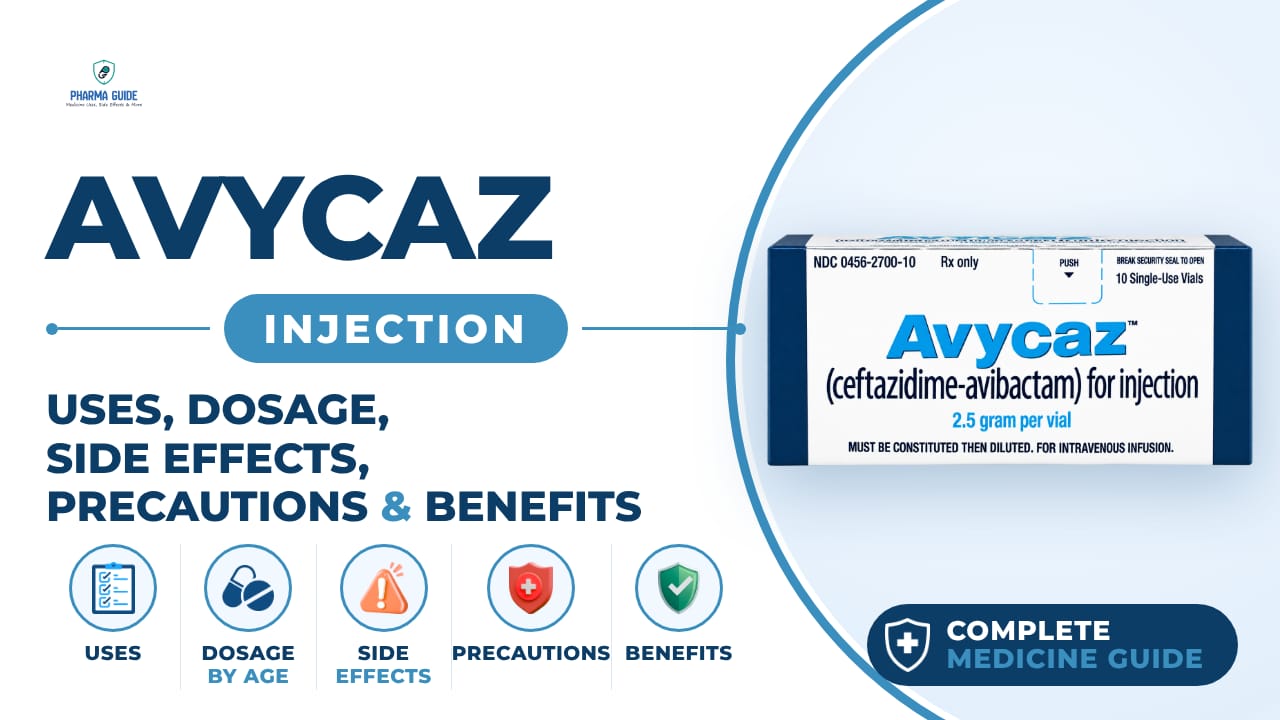
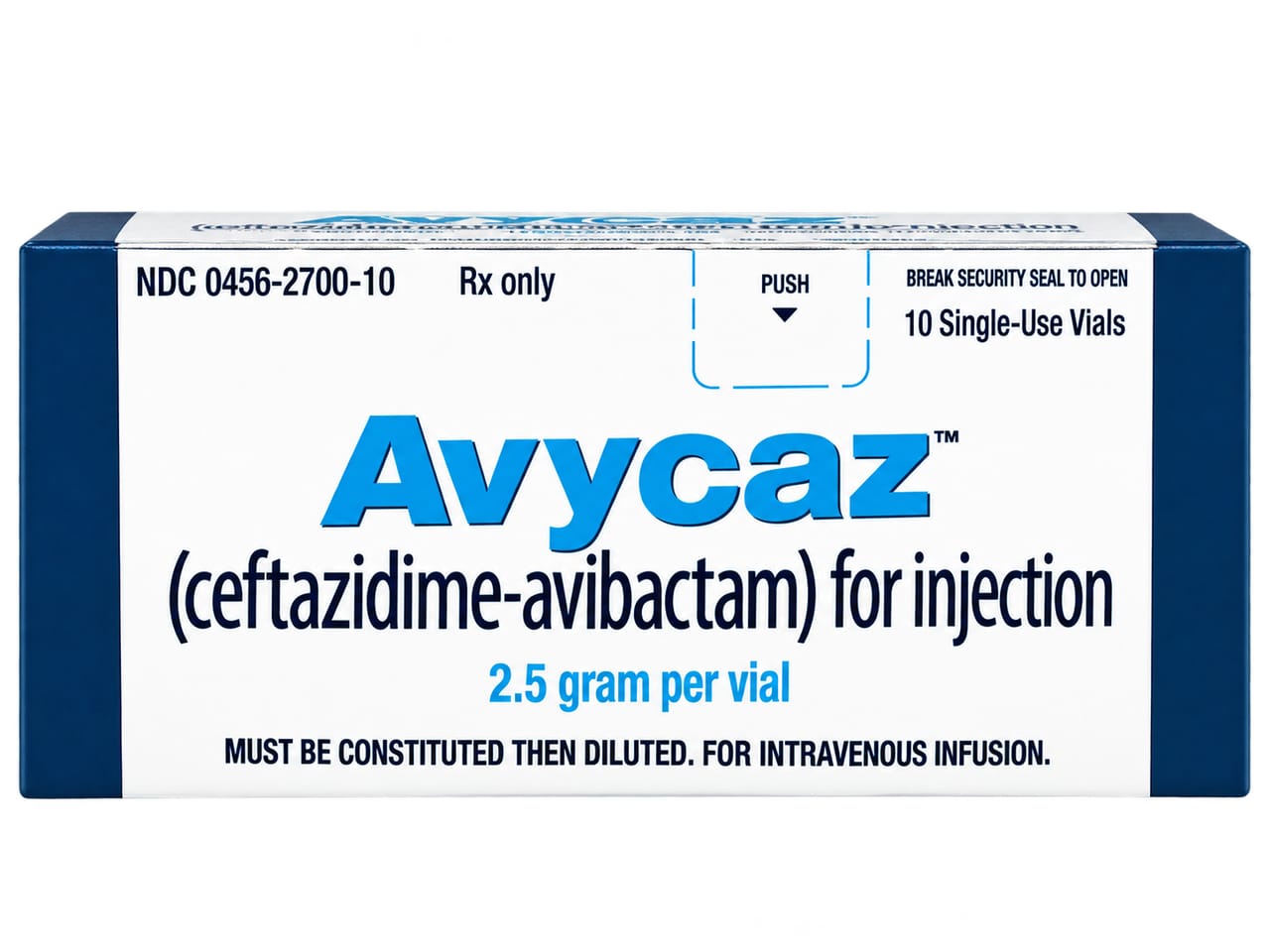
| Generic name | ceftazidime and avibactam |
|---|---|
| Drug class | Cephalosporin antibiotic combined with a beta-lactamase inhibitor |
| Forms | Powder for injection/infusion, constituted and diluted before intravenous (IV) use |
Quick overview
Avycaz Injection is a combination antibiotic containing ceftazidime and avibactam, given through a vein (IV). It is used to treat certain complicated infections, including abdominal infections (with metronidazole), complicated urinary tract infections, and certain hospital-acquired lung infections. It works by combining a cephalosporin antibiotic with a substance that protects it from being broken down by resistant bacteria. It can cause side effects and requires certain precautions, so it should be used exactly as prescribed.
What is Avycaz Injection
Avycaz is a combination antibiotic medicine given through a vein (IV). It combines ceftazidime, a cephalosporin antibiotic, with avibactam, a substance that helps protect the antibiotic from being broken down by some resistant bacteria.
Avycaz Injection uses
- Treats complicated infections in the abdomen (stomach area), used together with metronidazole
- Treats complicated urinary tract infections, including kidney infections (pyelonephritis)
- Treats certain lung infections such as pneumonia that develop in a hospital or while on a breathing machine
Benefits of Avycaz Injection
- Active against certain drug-resistant Gram-negative bacteria
- Combines a cephalosporin antibiotic with a beta-lactamase inhibitor
- Provides activity against certain resistant Pseudomonas aeruginosa
- Can be used in both eligible pediatric and adult patients
How Avycaz Injection works
Avycaz contains two medicines working together. Ceftazidime is an antibiotic that kills certain bacteria by stopping them from building their cell wall. Some bacteria make substances called beta-lactamases that can weaken antibiotics like ceftazidime. Avibactam blocks these substances so the ceftazidime can keep working.
Avycaz Injection dosage
Avycaz is given as an infusion into a vein by a healthcare provider, who may also teach you how to give it yourself. It is usually given until lab tests show the infection has cleared; keep receiving it for as long as your doctor has prescribed, even if you start feeling better. For abdominal infections, it is given along with metronidazole. Doses are based on body weight, so your dose may change if you gain or lose weight. Keep taking the full course even if symptoms improve quickly; skipping doses could make the infection resistant to treatment. This medicine will not treat a viral infection like the flu or a common cold.
| Age group | Dose |
|---|---|
| ≤28 days, gestational age ≥31 weeks | 25 mg/kg IV every 8 hours |
| >28 days to <3 months | 37.5 mg/kg IV every 8 hours |
| 3 to <6 months | 62.5 mg/kg IV every 8 hours |
Available forms and strengths
- Powder for injection/infusion, constituted and diluted before intravenous (IV) use
Side effects of Avycaz Injection
Common
- Nausea and vomiting
- Diarrhea
- Rash
- Abnormal liver function test results
- Pain, itching, swelling, redness, or bruising where the IV needle is placed
- Constipation and anxiety (seen more often in urinary tract infection studies)
- Headache and dizziness
Serious
- Severe allergic reaction (hives, difficulty breathing, swelling of face or throat)
- Severe skin reactions (fever, sore throat, burning eyes, painful skin rash with blistering and peeling, including Stevens-Johnson syndrome and toxic epidermal necrolysis)
- Severe watery or bloody diarrhea, even months after stopping the medicine, which can signal a serious gut infection (C. difficile)
- Seizures and other nervous system problems such as confusion, tremor, uncontrolled muscle movements, hallucinations, or loss of consciousness
- Kidney problems
Warnings and precautions
- This medicine may not work as well in people with moderately reduced kidney function (creatinine clearance 30–50 mL/min). Kidney function should be checked daily if it is changing, and the dose adjusted as needed.
- Serious allergic reactions, including severe skin reactions, can occur. People allergic to penicillin may also react to this medicine. Stop the medicine if an allergic reaction happens.
- Severe diarrhea caused by a gut infection (C. difficile) can occur with this medicine, sometimes months after treatment ends.
- Seizures and other nervous system problems can occur, especially in people with kidney problems. The dose should be adjusted for kidney function.
- Using this medicine when it isn't needed can lead to bacteria becoming resistant to it and other antibiotics.
- It isn't known for certain whether this medicine is safe during pregnancy. It should only be used in pregnancy if it's clearly needed. Tell your doctor if you are pregnant or planning pregnancy.
- It isn't known for certain whether this medicine passes into breast milk or affects a nursing baby. Your doctor will weigh the benefits of breastfeeding against your need for this medicine.
- People with reduced kidney function need a lower dose or less frequent dosing, and kidney function should be checked regularly, since this medicine is removed from the body mainly by the kidneys.
- No major routine hepatic dose adjustment is generally required.
- It isn't known if alcohol affects this medicine, but heavy drinking can weaken your immune system and make it harder for your body to fight the infection.
- Avoid driving if dizziness, confusion, or weakness occurs.
Storage
- Store Avycaz vials at room temperature (25°C/77°F), with brief excursions allowed between 15°C and 30°C (59°F and 86°F)
- Protect from light
- Store in the carton until time of use
- Once mixed, the constituted solution should be used within 30 minutes before further dilution
- After dilution, the solution can be used within 12 hours at room temperature, or refrigerated for up to 24 hours and then used within 12 hours after returning to room temperature
When to see a doctor
- Get emergency help right away for signs of a serious allergic reaction: hives, trouble breathing, or swelling of the face or throat.
- Call your doctor right away for severe stomach pain, or watery or bloody diarrhea, even if it happens months after your last dose.
- Call your doctor right away if you have a seizure, tremor, uncontrolled shaking, uncontrollable muscle movements, hallucinations, loss of consciousness, confusion, or any change in mental state.
- Stop the medicine and get emergency help for symptoms of a severe skin reaction such as painful red or purple skin that looks burned and peels, or blisters in the mouth, nose, or genitals.
- If you think you or someone else has received too much of this medicine, get medical help right away or contact a poison control center.
Alternatives
- Ceftolozane
- Meropenem
- Imipenem/cilastatin/relebactam
Watch the video
FAQs
What is Avycaz Injection used for?
Avycaz treats complicated abdominal infections (with metronidazole), complicated urinary tract infections including kidney infections, and certain hospital-acquired or ventilator-associated pneumonia.
How does Avycaz Injection work?
Avycaz combines ceftazidime, an antibiotic that stops bacteria from building their cell wall, with avibactam, which blocks bacterial substances called beta-lactamases that can weaken ceftazidime, helping it keep working against resistant bacteria.
What are the serious side effects of Avycaz Injection?
Serious side effects include severe allergic reactions, severe skin reactions such as Stevens-Johnson syndrome, severe watery or bloody diarrhea from a gut infection, seizures and other nervous system problems, and kidney problems.
Can people with kidney problems take Avycaz Injection?
Avycaz may not work as well in people with moderately reduced kidney function, and those with reduced kidney function need a lower dose or less frequent dosing since the medicine is removed mainly by the kidneys. Kidney function should be checked regularly.
Is Avycaz Injection safe during pregnancy?
It isn't known for certain whether Avycaz is safe during pregnancy, so it should only be used if clearly needed. Tell your doctor if you are pregnant or planning pregnancy.
General information, not medical advice
Your prescriber and the leaflet in your pack know your situation. This page does not.
- Follow your prescriber and the leaflet
- Don't start, stop, or change a dose on your own
- Doses and warnings differ by country and product
Sources
Video
Related medicines

Injectafer Injection: Uses, Dosage, Side Effects, Precautions and Alternates
Iron products
Injectafer (ferric carboxymaltose) treats iron deficiency anemia and heart failure-related iron deficiency via IV. Learn uses, dosage, side effects, and

Gliclazide Tablet: Uses, Dosage, Side Effects, Precautions and Alternates
Sulfonylurea (hypoglycemic/antidiabetic agent)
Gliclazide Tablet is a sulfonylurea for type 2 diabetes that boosts insulin release. Learn about dosage, side effects, warnings, and precautions.