
Safety
General information, not medical advice
Your prescriber and the leaflet in your pack know your situation. This page does not.
- Follow your prescriber and the leaflet
- Don't start, stop, or change a dose on your own
- Doses and warnings differ by country and product
Axitinib Tablet: Uses, Dosage, Side Effects, Precautions and Alternates
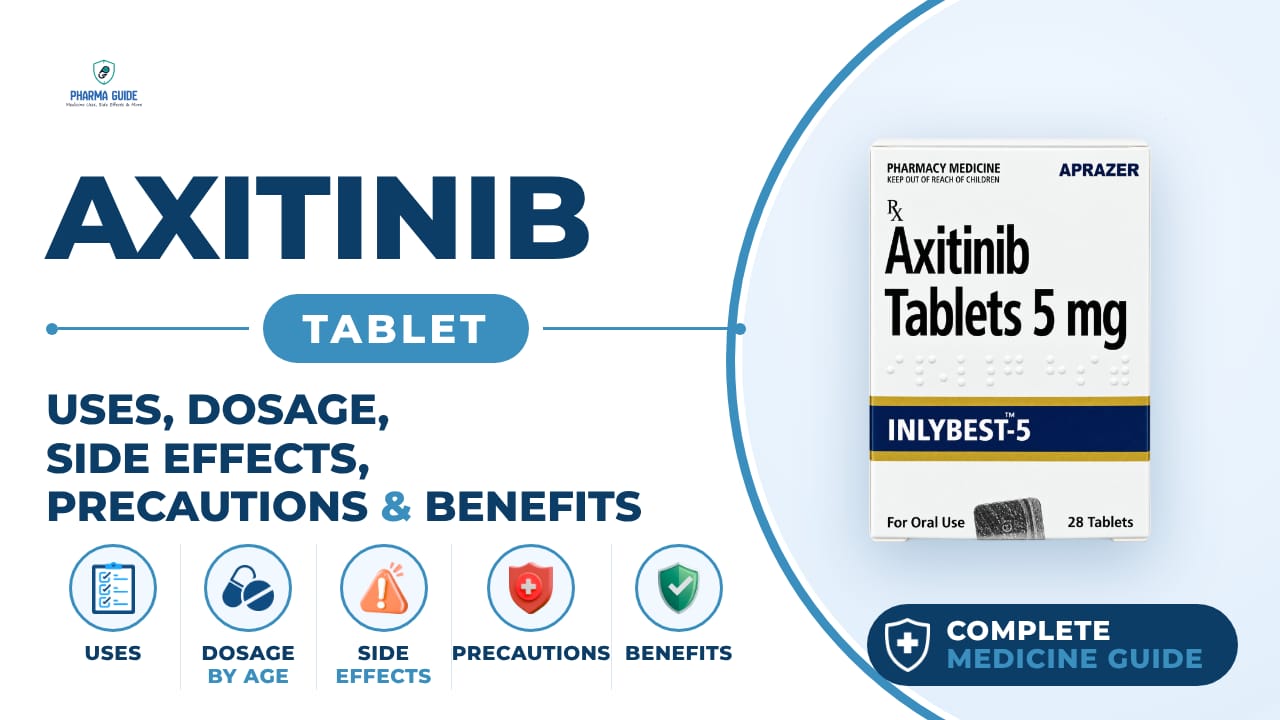
| Generic name | Axitinib |
|---|---|
| Drug class | Kinase inhibitor (VEGFR tyrosine kinase inhibitor); Antineoplastic agent, protein kinase inhibitor |
| Forms | Film-coated tablet (available in 1 mg, 3 mg, and 5 mg strengths depending on product) |
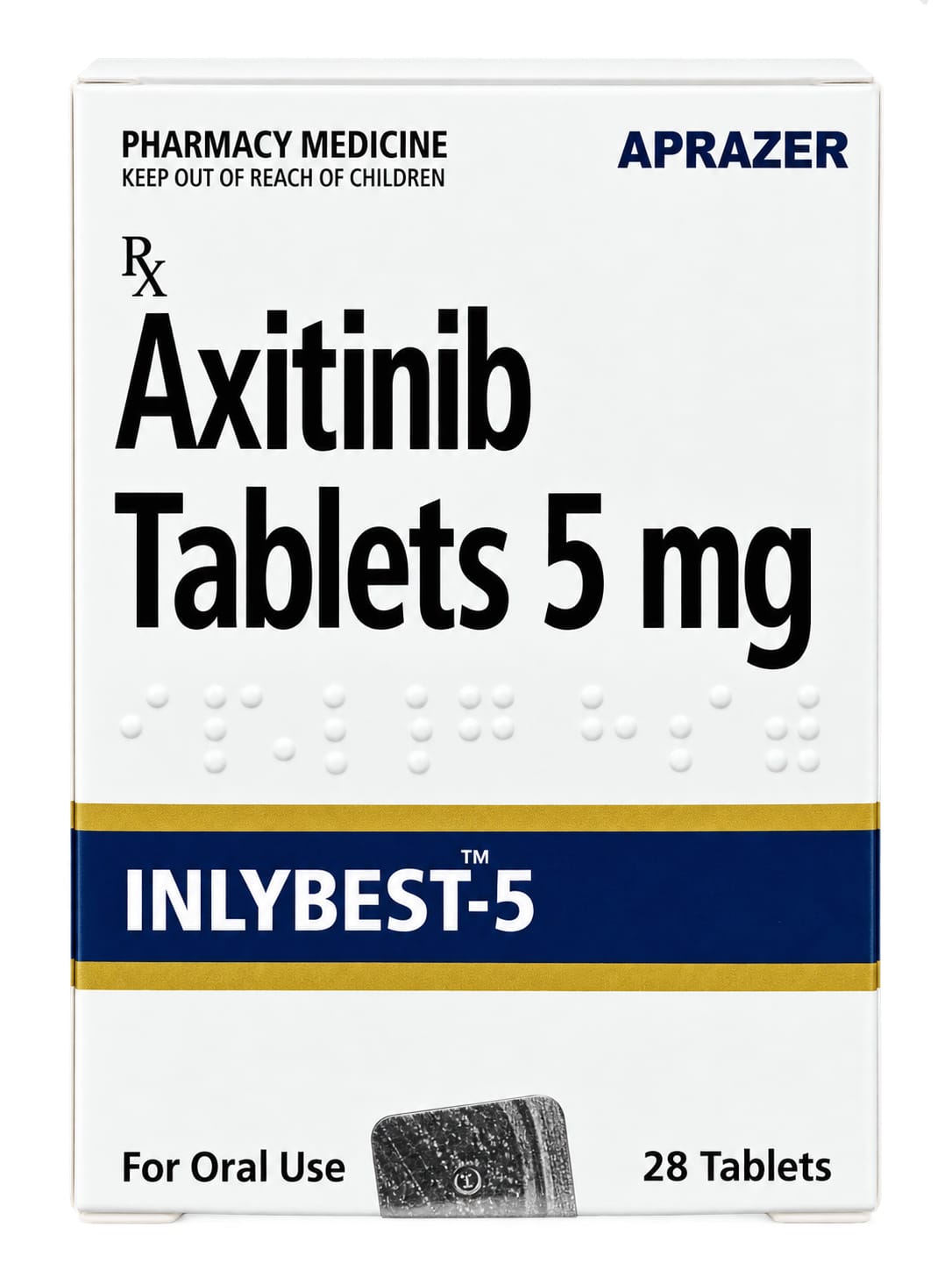
Quick overview
Axitinib Tablet (Axitinib) is a kinase inhibitor, specifically a VEGFR tyrosine kinase inhibitor and antineoplastic agent, used to treat advanced kidney cancer. It is taken by mouth and works by blocking signals that tumors use to build new blood vessels, helping slow or shrink tumor growth. It is used under the supervision of a cancer specialist, either alone or with other cancer medicines.
What is Axitinib Tablet
Axitinib is an anticancer tablet that blocks signals cancer cells use to build new blood vessels, which helps slow or shrink tumor growth. It is taken by mouth and used under the supervision of a cancer specialist.
Axitinib Tablet uses
- Treatment of advanced kidney cancer (renal cell carcinoma, RCC) after a prior systemic therapy such as sunitinib or a cytokine has stopped working
- May be used with pembrolizumab
- May be used with avelumab
- May be used alone after failure of a previous systemic treatment
Benefits of Axitinib Tablet
- Can slow down the growth and spread of advanced kidney cancer
- Shown to extend the time before the cancer gets worse (progression-free survival) compared to sorafenib
- Can slow progression of advanced kidney cancer
- Provides an oral targeted-therapy option
How Axitinib Tablet works
Axitinib blocks proteins called VEGF receptors on blood vessel cells that tumors need to grow their own blood supply. By blocking these signals, the medicine helps slow tumor growth, delay tumor spread, and can shrink tumors.
Axitinib Tablet dosage
Take the tablet by mouth twice a day, about 12 hours apart. It can be taken with or without food. Swallow the tablet whole with a glass of water; do not crush or chew it. If you vomit after taking a dose or miss a dose, do not take an extra dose — just take your next dose at the regular scheduled time. Treatment is usually continued for as long as it is helping and side effects remain manageable. This medicine is not recommended for children or teenagers under 18, as safety and effectiveness have not been established in this age group. No dose change is needed because of older age alone.
| Age group | Dose |
|---|---|
| Under 18 years | Safety and effectiveness are not established; no standard pediatric dose. |
| 18–39 years | Usual adult starting dose is 5 mg twice daily, adjusted by the oncology team based on response and tolerability. |
| 40–64 years | Usually 5 mg twice daily initially; dose adjustments are individualized. |
| 65 years and older | Usually 5 mg twice daily initially; no routine age-based dose adjustment is required. |
Available forms and strengths
Film-coated tablet, available in 1 mg, 3 mg, and 5 mg strengths depending on product.
Side effects of Axitinib Tablet
Common
- Diarrhoea
- Hypertension (high blood pressure)
- Fatigue
- Decreased appetite
- Nausea and vomiting
- Weight decreased
- Dysphonia (hoarseness/voice changes)
- Palmar-plantar erythrodysaesthesia (hand-foot syndrome)
- Hypothyroidism
- Proteinuria (protein in urine)
- Cough
- Constipation
- Headache
- Taste changes (dysgeusia)
- Joint pain (arthralgia)
- Pain in arms or legs
- Dry skin
- Rash
- Stomatitis (mouth soreness)
- Abdominal pain
- Dizziness
- Muscle pain
Serious
- Cardiac failure events (heart failure)
- Severe or persistent hypertension, including hypertensive crisis
- Arterial embolic and thrombotic events (such as heart attack, stroke, transient ischemic attack)
- Venous embolic and thrombotic events (such as pulmonary embolism, deep vein thrombosis)
- Serious bleeding (haemorrhage), including coughing up blood, black tarry stools, or bleeding in the brain or stomach
- Gastrointestinal perforation or fistula formation
- Posterior reversible encephalopathy syndrome (PRES/RPLS) — a brain condition with headache, seizures, confusion, or vision changes
- Severe proteinuria or nephrotic syndrome
- Liver function abnormalities or hepatotoxicity
- Wound healing complications after surgery
- Thyroid dysfunction (over- or under-active thyroid)
- Aneurysms and artery dissections
- Elevated haemoglobin or haematocrit (polycythaemia), increasing clot risk
Warnings and precautions
- This medicine can cause high blood pressure, including severe spikes in blood pressure. Blood pressure should be checked and controlled before and regularly during treatment.
- Blood clots can form in arteries or veins, which can be serious or life-threatening. Caution is needed in people with a history of these problems.
- This medicine can cause serious bleeding and should not be used in people with untreated brain tumors that have spread there or recent serious stomach/intestinal bleeding.
- Holes (perforations) or abnormal passages (fistulas) can form in the stomach or intestines during treatment.
- This medicine should be stopped at least 24 hours before any planned surgery because it can affect wound healing.
- A rare but serious brain condition called PRES can occur, causing headache, seizures, confusion, or vision problems.
- This medicine may cause kidney problems shown as protein in the urine, which can become severe.
- Liver problems, including abnormal liver blood tests, can occur and should be monitored before and during treatment.
- Using grapefruit or grapefruit juice while on this medicine may increase its levels in the blood and should be avoided.
- This medicine contains lactose and should not be taken by people with certain rare hereditary sugar intolerance conditions.
- This medicine is not recommended during pregnancy because it may harm an unborn baby. Women who could become pregnant should use effective birth control during treatment and for one week after the last dose.
- It is not known if this medicine passes into breast milk, but a risk to the nursing baby cannot be ruled out. Breastfeeding should not be done during treatment.
- No dose change is generally needed for kidney problems, though there is very little information on use in people with very severe kidney impairment.
- People with mild liver problems do not need a dose change, but those with moderate liver impairment need a lower starting dose. This medicine should not be used in people with severe liver impairment.
- Alcohol may worsen fatigue or liver-related problems, so medical guidance is appropriate.
- This medicine can cause dizziness and tiredness, so be careful when driving or using machines if you experience these effects.
Storage
- This medicinal product does not require any special temperature storage conditions.
- Store in the original package in order to protect from moisture (blister pack).
- Keep the bottle tightly closed to protect from moisture (bottle pack).
- Keep out of the sight and reach of children.
- Do not use after the expiry date.
- Any unused product or waste material should be disposed of in accordance with local requirements.
When to see a doctor
- Get emergency help right away if you have chest pain or pressure, pain in your arms, back, neck, or jaw, shortness of breath, numbness or weakness on one side of the body, trouble talking, sudden severe headache, vision changes, or dizziness — these can be signs of a blood clot, stroke, or heart problem.
- Contact your doctor right away if you notice any unusual bleeding, coughing up blood, black tarry stools, or confusion, as these could be signs of serious bleeding.
- Seek medical help immediately for severe or ongoing stomach pain, which could indicate a serious problem such as a hole in the stomach or intestine.
- Call your doctor immediately if you develop a headache, confusion, seizures, or vision changes, which could be a sign of a rare brain condition.
- Tell your doctor if you experience tiredness, swelling of the abdomen, legs, or ankles, shortness of breath, or bulging neck veins, which may be signs of heart failure.
- Let your doctor know right away about symptoms of thyroid problems, such as unusual tiredness, feeling cold, or voice deepening.
Alternatives
- Cabozantinib
- Sunitinib
- Pazopanib
- Lenvatinib
Watch the video
FAQs
What is Axitinib Tablet used for?
It is used to treat advanced kidney cancer (renal cell carcinoma) after a prior systemic therapy such as sunitinib or a cytokine has stopped working. It may be used alone or combined with pembrolizumab or avelumab.
How should Axitinib Tablet be taken?
Take it by mouth twice a day, about 12 hours apart, with or without food. Swallow the tablet whole with water; do not crush or chew it. If you miss a dose or vomit after taking it, do not take an extra dose—just continue with your next scheduled dose.
What are the common side effects of Axitinib Tablet?
Common side effects include diarrhoea, high blood pressure, fatigue, decreased appetite, nausea and vomiting, weight loss, hoarseness, hand-foot syndrome, hypothyroidism, protein in urine, cough, constipation, and headache.
Can Axitinib Tablet be used during pregnancy?
No, it is not recommended during pregnancy because it may harm an unborn baby. Women who could become pregnant should use effective birth control during treatment and for one week after the last dose.
Does Axitinib Tablet interact with grapefruit?
Yes, using grapefruit or grapefruit juice while on this medicine may increase its levels in the blood and should be avoided.
General information, not medical advice
Your prescriber and the leaflet in your pack know your situation. This page does not.
- Follow your prescriber and the leaflet
- Don't start, stop, or change a dose on your own
- Doses and warnings differ by country and product
Sources
Video
Related medicines

Injectafer Injection: Uses, Dosage, Side Effects, Precautions and Alternates
Iron products
Injectafer (ferric carboxymaltose) treats iron deficiency anemia and heart failure-related iron deficiency via IV. Learn uses, dosage, side effects, and

Gliclazide Tablet: Uses, Dosage, Side Effects, Precautions and Alternates
Sulfonylurea (hypoglycemic/antidiabetic agent)
Gliclazide Tablet is a sulfonylurea for type 2 diabetes that boosts insulin release. Learn about dosage, side effects, warnings, and precautions.