
Safety
General information, not medical advice
Your prescriber and the leaflet in your pack know your situation. This page does not.
- Follow your prescriber and the leaflet
- Don't start, stop, or change a dose on your own
- Doses and warnings differ by country and product
Aygestin Tablet: Uses, Dosage, Side Effects, Precautions and Alternates
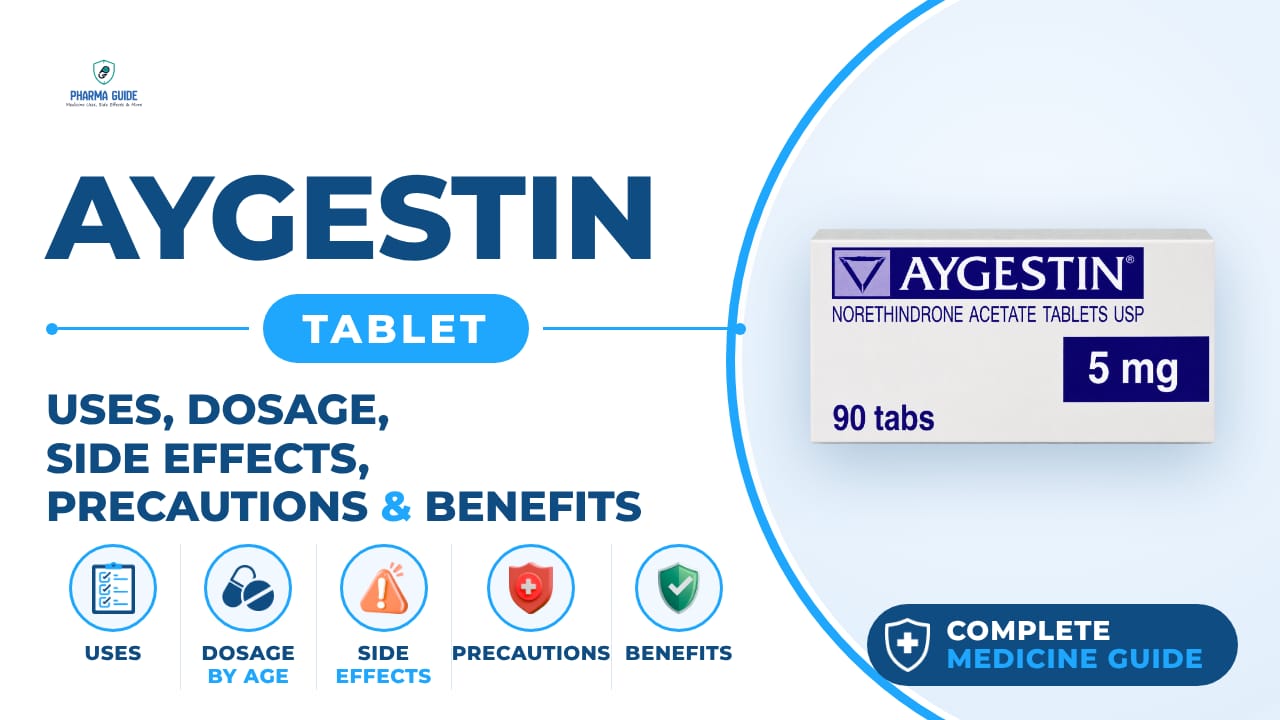
| Generic name | norethindrone acetate |
|---|---|
| Drug class | Progestins |
| Forms | Tablet |
Quick overview
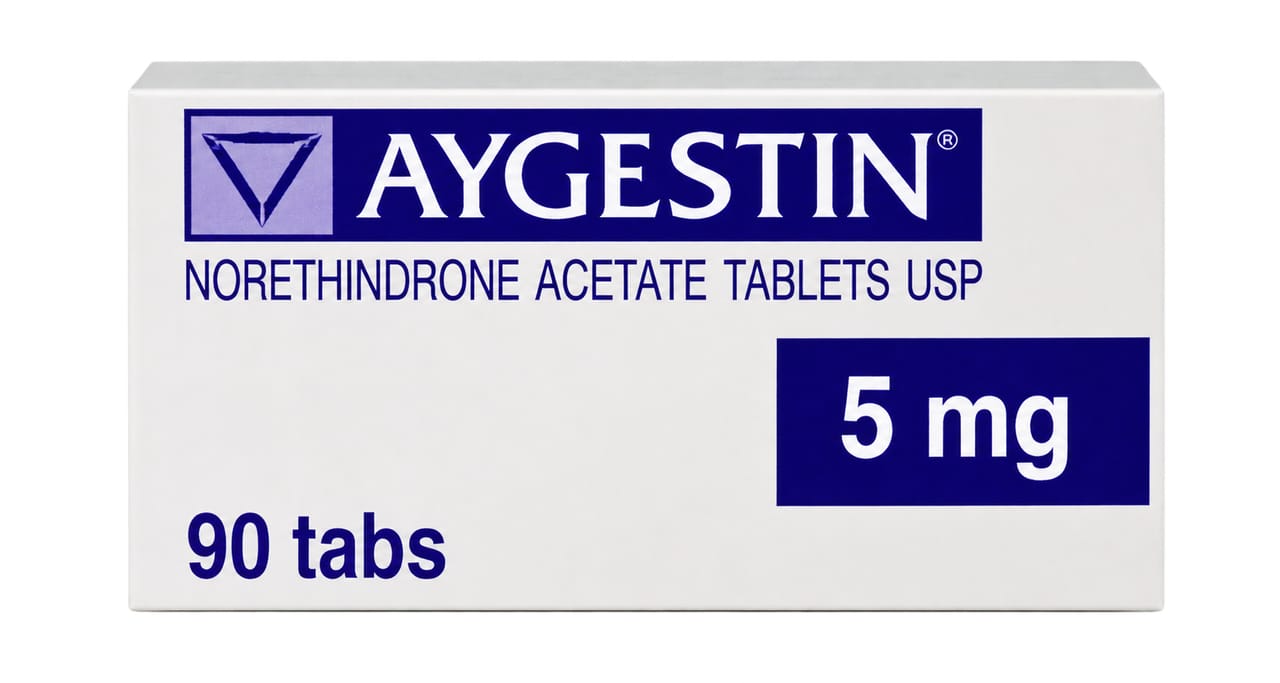
Aygestin Tablet (norethindrone acetate) is a progestin medicine, a man-made form of the hormone progesterone. It is used to treat absence of menstrual periods (secondary amenorrhea), endometriosis, and abnormal uterine bleeding caused by hormonal imbalance. It works by acting on the uterine lining to help restore more regular menstrual cycles. It is taken by mouth as prescribed and can cause side effects, so it requires certain precautions.
What is Aygestin Tablet
Aygestin is a man-made form of progesterone, a female hormone. It is used to treat abnormal uterine bleeding, absence of menstrual periods (secondary amenorrhea), and endometriosis.
Aygestin Tablet uses
- Treatment of secondary amenorrhea (absence of menstrual periods in women who are not pregnant)
- Treatment of endometriosis
- Treatment of abnormal uterine bleeding due to hormonal imbalance, when there is no other underlying cause such as fibroids or uterine cancer
Benefits of Aygestin Tablet
- Helps restore more regular menstrual cycles in women with hormone-related abnormal bleeding
- Helps produce secretory changes in the uterine lining to promote normal withdrawal bleeding
- May reduce painful and irregular periods caused by endometriosis
How Aygestin Tablet works
Norethindrone acetate acts like the natural hormone progesterone. It causes changes in the lining of the uterus that has been prepared by estrogen, and it works by stopping the normal growth of the uterus lining during the menstrual cycle and signaling hormone changes in the uterus to help restore normal periods.
Aygestin Tablet dosage
Take this medication by mouth as prescribed by your doctor. You may take it with food or after a meal to prevent stomach upset. Follow the dosing schedule carefully and ask your doctor if you have questions. For stopped periods and abnormal uterine bleeding, it is usually taken once daily for 5 to 10 days during the second half of the planned menstrual cycle. Withdrawal bleeding usually happens within 3 to 7 days after you stop taking the medication.
If you miss a dose, take it as soon as you remember; if it is almost time for the next dose, skip the missed dose and continue your regular schedule—do not double up. This medicine is not meant for use in children.
| Age group | Dose |
|---|---|
| Under 18 years | Not indicated; use only if specifically prescribed by a specialist |
| 18–64 years | Amenorrhea / abnormal uterine bleeding: 2.5–10 mg once daily for 5–10 days. Endometriosis: start 5 mg once daily, then increase by 2.5 mg every 2 weeks up to 15 mg/day. |
| 65+ years | No specific geriatric dose established; use only under medical supervision. |
Available forms and strengths
- Tablet
Side effects of Aygestin Tablet
Common
- Nausea and vomiting
- Bloating and stomach cramps
- Headache
- Dizziness
- Mood swings
- Trouble sleeping
- Weight gain or loss
- Increased acne
- Breast pain, swelling, or tenderness
- Changes in sexual interest
- Increased hair growth or hair loss
- Freckles or darkening of facial skin
- Vaginal itching or discharge
- Skin itching or rash
- Changes in menstrual periods
Serious
- Changes in vaginal bleeding (spotting, breakthrough bleeding, changes in flow, or no periods at all)
- Depression
- Swelling of the hands or feet
- Frequent, burning, or painful urination
- Yellowing of the eyes or skin
- Dark patches on the skin or face (melasma)
- Signs of blood clots such as chest, jaw, or left arm pain; weakness on one side of the body; trouble speaking; sudden vision changes; confusion; sudden or severe headache; sudden dizziness or fainting; shortness of breath; or pain, swelling, or warmth in the groin or calf
- Signs of a serious allergic reaction such as rash, swelling of the face/tongue/throat, severe dizziness, or trouble breathing
Warnings and precautions
- Aygestin should not be used during pregnancy. It may harm an unborn baby, especially if taken in the first 4 months, and has been linked to birth defects. Tell your doctor right away if you become pregnant while taking it.
- This drug passes into breast milk. Talk to your doctor before breastfeeding while taking this medicine.
- Tell your doctor if you have kidney problems, as this condition may need careful monitoring while you take this medicine.
- Aygestin should not be used if you have impaired liver function or liver disease.
- This drug may make you dizzy, and alcohol can make the dizziness worse. Limit alcoholic beverages while taking this medicine.
- This medicine may make you dizzy. Do not drive, use machinery, or do anything that needs alertness until you know how it affects you and can do so safely.
- People with risk factors for artery disease (like high blood pressure, diabetes, smoking, high cholesterol, or obesity) or blood clots (personal or family history, obesity, lupus) need to be carefully managed by their doctor while taking this medicine.
- Stop taking this medicine and see your doctor right away if you suddenly lose part or all of your vision, or if you suddenly notice bulging eyes, double vision, or a migraine. Your doctor may need to check your eyes for problems that require stopping the drug.
- This medicine should not be used if you have known or suspected pregnancy, unexplained vaginal bleeding, known or suspected breast cancer, active or past blood clots (deep vein thrombosis or pulmonary embolism), a recent stroke or heart attack, or liver disease, and it should not be used as a pregnancy test.
- Because this drug can cause fluid retention, conditions like epilepsy, migraine, or heart or kidney problems need careful monitoring while on this medicine.
- If you have a history of depression, your doctor should watch you closely, and the medicine should be stopped if depression becomes serious again.
Storage
- Store at room temperature away from light and moisture
- Do not store in the bathroom
- Keep all medications away from children and pets
- Do not flush medications down the toilet or pour them into a drain unless instructed to do so
- Properly discard this product when it is expired or no longer needed; consult your pharmacist or local waste disposal company
When to see a doctor
- Get medical help right away if you notice signs of a blood clot, such as chest, jaw, or left arm pain; weakness on one side of the body; trouble speaking; sudden vision changes; confusion; a sudden severe headache; sudden dizziness or fainting; shortness of breath; or pain, swelling, or warmth in the groin or calf.
- Call your doctor right away if you notice breast lumps, dizziness or fainting, changes in speech, severe headaches, chest pain, shortness of breath, leg pain, or vision changes.
- Stop taking this medicine and call your doctor right away if you have sudden partial or complete loss of vision, blurred vision, or sudden bulging eyes, double vision, or migraine.
- Seek medical help right away if you have symptoms of a serious allergic reaction, such as rash, swelling of the face, tongue, or throat, severe dizziness, or trouble breathing.
- If someone has overdosed and has serious symptoms such as passing out or trouble breathing, get emergency help right away. Otherwise, contact a poison control center for guidance.
Alternatives
- Medroxyprogesterone acetate
- Micronized progesterone
- Dydrogesterone
Watch the video
FAQs
What is Aygestin Tablet used for?
Aygestin is used to treat secondary amenorrhea (absence of menstrual periods), endometriosis, and abnormal uterine bleeding caused by hormonal imbalance when no other underlying cause like fibroids or cancer is present.
How does Aygestin Tablet work?
Norethindrone acetate acts like natural progesterone, causing changes in the estrogen-prepared uterine lining by stopping its normal growth during the menstrual cycle and signaling hormone changes to help restore normal periods.
What is the usual dosage of Aygestin Tablet?
For amenorrhea or abnormal uterine bleeding, adults typically take 2.5–10 mg once daily for 5–10 days during the second half of the planned menstrual cycle. For endometriosis, treatment starts at 5 mg once daily and increases by 2.5 mg every 2 weeks up to 15 mg/day.
What are the common side effects of Aygestin Tablet?
Common side effects include nausea and vomiting, bloating and stomach cramps, headache, dizziness, mood swings, trouble sleeping, weight changes, acne, breast tenderness, and changes in menstrual periods.
Can Aygestin Tablet be used during pregnancy?
No, Aygestin should not be used during pregnancy as it may harm an unborn baby, especially if taken in the first 4 months, and has been linked to birth defects. Tell your doctor right away if you become pregnant while taking it.
General information, not medical advice
Your prescriber and the leaflet in your pack know your situation. This page does not.
- Follow your prescriber and the leaflet
- Don't start, stop, or change a dose on your own
- Doses and warnings differ by country and product
Sources
- https://www.rxlist.com/aygestin-drug.htm
- https://www.accessdata.fda.gov/drugsatfda_docs/label/2007/018405s023lbl.pdf
- https://www.goodrx.com/aygestin/aygestin-side-effects
- Kaiser Permanente Drug Encyclopedia - Aygestin 5 mg tablet
Video
Related medicines

Injectafer Injection: Uses, Dosage, Side Effects, Precautions and Alternates
Iron products
Injectafer (ferric carboxymaltose) treats iron deficiency anemia and heart failure-related iron deficiency via IV. Learn uses, dosage, side effects, and

Gliclazide Tablet: Uses, Dosage, Side Effects, Precautions and Alternates
Sulfonylurea (hypoglycemic/antidiabetic agent)
Gliclazide Tablet is a sulfonylurea for type 2 diabetes that boosts insulin release. Learn about dosage, side effects, warnings, and precautions.