
Safety
General information, not medical advice
Your prescriber and the leaflet in your pack know your situation. This page does not.
- Follow your prescriber and the leaflet
- Don't start, stop, or change a dose on your own
- Doses and warnings differ by country and product
Azathioprine Tablet: Uses, Dosage, Side Effects, Precautions and Alternates
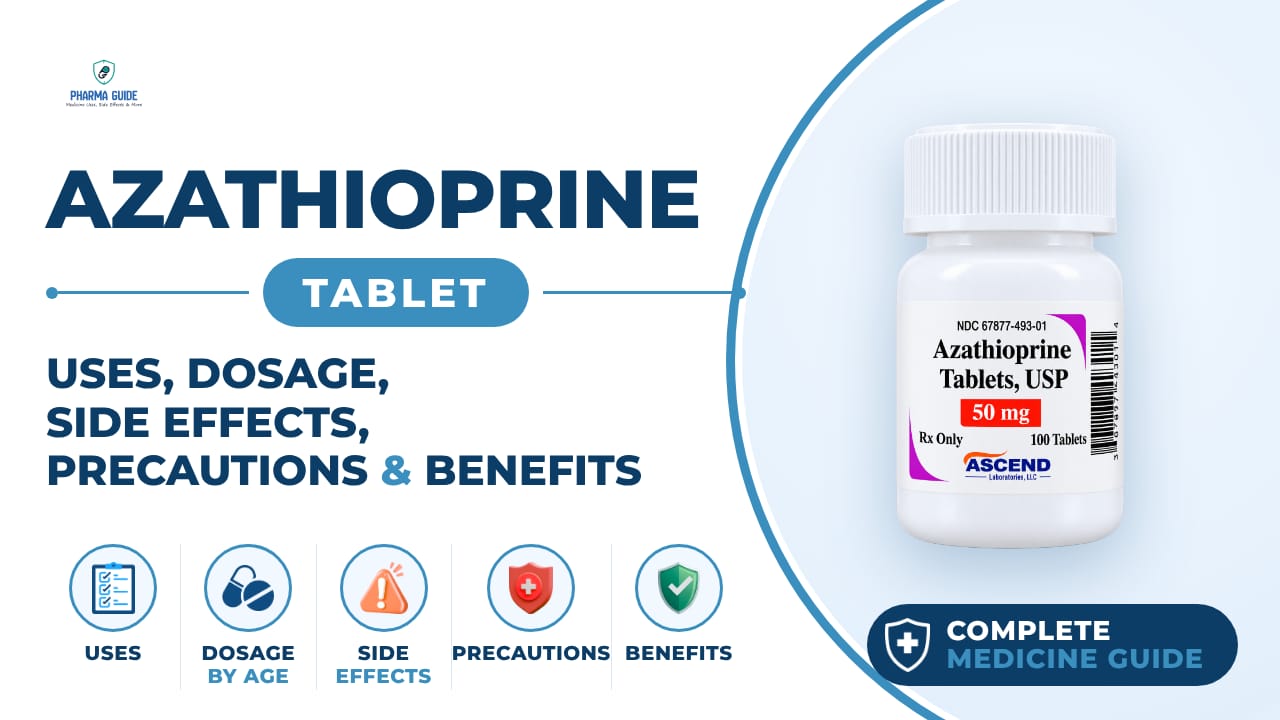
| Generic name | Azathioprine |
|---|---|
| Drug class | Immunosuppressant |
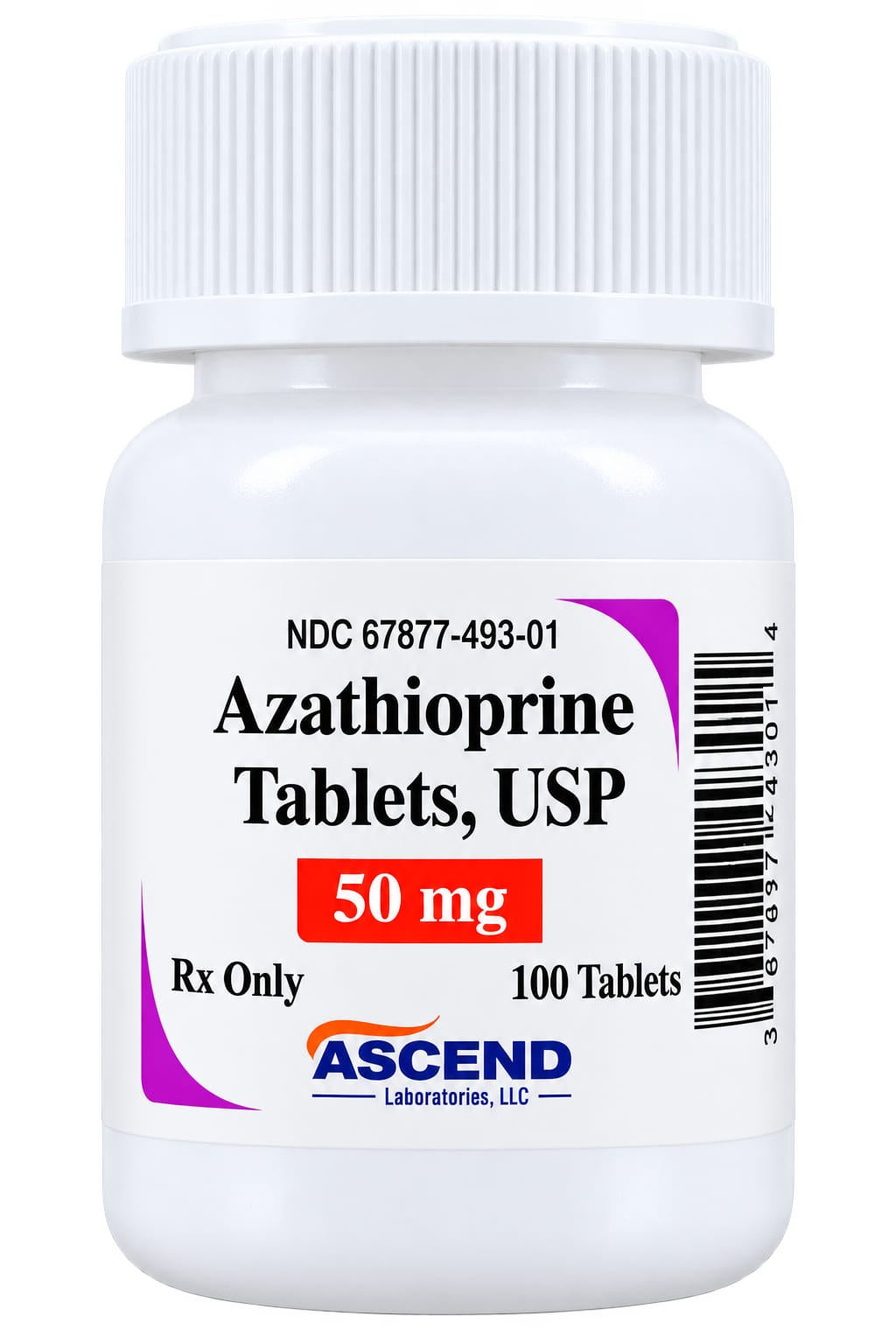
| Forms | Tablet (25 mg, 50 mg, 75 mg, 100 mg), Film-coated tablet (25 mg) |
Quick overview
Azathioprine Tablet contains azathioprine, an immunosuppressant medicine that lowers the activity of the body's immune system. It is used to help the body accept a transplanted organ and to treat conditions where the immune system attacks its own tissues. It is available as tablets in several strengths and must be taken exactly as prescribed, with regular monitoring by your doctor.
What is Azathioprine Tablet
Azathioprine is a medicine that lowers the activity of the body's immune system. It is used to help the body accept a transplanted organ and to treat conditions where the immune system attacks the body's own tissues.
Azathioprine Tablet uses
- Prevention of organ transplant rejection (such as kidney, heart, or liver transplant)
- Severe rheumatoid arthritis
- Systemic lupus erythematosus
- Dermatomyositis and polymyositis
- Autoimmune chronic active hepatitis
- Pemphigus vulgaris
- Polyarteritis nodosa
- Autoimmune haemolytic anaemia
- Chronic refractory idiopathic thrombocytopenic purpura
- Inflammatory bowel disease (Crohn's disease or ulcerative colitis)
Benefits of Azathioprine Tablet
- Helps the body accept a transplanted organ by reducing immune rejection
- Reduces inflammation caused by autoimmune conditions
- Can be used long-term as a safer alternative to high-dose steroid tablets
How Azathioprine Tablet works
Azathioprine calms down an overactive immune system. The immune system normally fights infections, but in some conditions it mistakenly attacks the body's own tissues, causing ongoing inflammation. Azathioprine reduces the activity of the immune cells involved, which helps control this inflammation.
Azathioprine Tablet dosage
This tablet can be taken with food or on an empty stomach, but try to do it the same way each day. Taking it after food may help reduce nausea when first starting treatment. Swallow tablets whole; do not chew, break, or crush them.
Do not take it with milk or other dairy products such as cheese or yoghurt; take it at least 1 hour before or 2 hours after having dairy products, since dairy can lower the amount of medicine in your body. Take the tablet with at least a glass of liquid.
If a dose is missed, take it as soon as remembered unless it is almost time for the next dose, in which case skip the missed dose; do not double up to make up for a missed dose. Do not stop taking this medicine without talking to your doctor first, as this could increase the risk of organ rejection or worsening of your condition. Elderly patients and those with kidney or liver problems may need a lower dose.
| Age group | Dose |
|---|---|
| Under 18 years | Safety and efficacy not established; doctor-directed |
| 18–64 years | 1 mg/kg/day initially; may increase to 2.5 mg/kg/day |
| 65+ years | Individualized; usually lower dose |
Available forms and strengths
- Tablet (25 mg, 50 mg, 75 mg, 100 mg)
- Film-coated tablet (25 mg)
Side effects of Azathioprine Tablet
Common
- Nausea and vomiting
- Diarrhoea
- Loss of appetite
- Stomach pain or upset stomach
- Low blood cell count
- Fever with chills
- Sore throat
- Muscle and joint pain
- Hair loss
Serious
- Severe bone marrow suppression leading to very low blood cell counts
- Serious infections, including reactivation of past infections
- Liver damage, including yellowing of skin or eyes
- Allergic reactions including rash, swelling of face/lips, or breathing difficulty
- Increased risk of lymphoma and other cancers, particularly skin cancer
- Inflammation of the lungs (pneumonitis)
- Severe skin reactions such as Stevens-Johnson syndrome or toxic epidermal necrolysis
- Progressive multifocal leukoencephalopathy (a rare brain infection)
- Pancreatitis causing severe upper stomach pain
- Hepatosplenic T-cell lymphoma, a rare and aggressive cancer
Warnings and precautions
- This medicine can increase the risk of certain cancers, including lymphoma and skin cancer, especially with long-term use.
- It can cause severe drops in blood cell counts, affecting the bone marrow, so regular blood tests are needed to monitor this. People with a genetic condition affecting certain enzymes (TPMT or NUDT15 deficiency) are at higher risk of severe, life-threatening blood toxicity from this medicine at usual doses.
- This medicine increases the risk of infections, including serious and sometimes fatal infections, because it weakens the immune system.
- Do not have live vaccines (such as MMR, chickenpox, or yellow fever) while taking this medicine unless your doctor says it is safe. Taking allopurinol or febuxostat (used for gout) together with this medicine is not recommended, or requires a significant dose reduction, because it can cause dangerous build-up of the medicine.
- Protect your skin from the sun by wearing protective clothing and using a high-factor sunscreen, since this medicine can increase sensitivity to sun-related skin cancers.
- This medicine is generally not recommended during pregnancy unless there is no safer option, because it may harm the unborn baby.
- Tell your doctor right away if you are pregnant or planning to become pregnant. Breastfeeding is generally not recommended while taking this medicine, since small amounts can pass into breast milk.
- People with kidney problems may need a lower dose, since the medicine can build up in the body if the kidneys are not working well.
- This medicine is broken down in the liver, so severe liver problems can cause it to build up and may lead to further liver damage; people with liver problems may need a lower dose.
- It isn't clearly known how alcohol interacts with this medicine, but it's best to keep alcohol to a minimum since both alcohol and this medicine can affect the liver.
- This medicine is not known to affect your ability to drive or use machines, but stop if you feel unwell from side effects.
Storage
- Store at 20°C to 25°C (68° to 77°F) in a dry place and protect from light. Dispense in tight, light-resistant container.
- This medicinal product does not require any special storage conditions.
- Do not use this medicine after the expiry date which is stated on the carton and blister after 'EXP'.
- Keep this medicine out of the sight and reach of children.
- Do not dispose of any medicines via wastewater or household waste. Ask your pharmacist how to throw away medicines you no longer use.
When to see a doctor
- Get medical help right away if you notice signs of an allergic reaction, such as rash, swelling of the face or lips, breathing difficulty, or chest pain.
- Seek urgent medical attention if you develop a high fever, severe flu-like illness, unexplained bruising or bleeding, or yellowing of the skin or eyes.
- Contact your doctor immediately if you notice signs of infection such as fever, chills, sore throat, or other flu-like symptoms.
- If you develop intense itching without a rash during pregnancy, along with nausea or loss of appetite, tell your doctor right away as this could be a liver condition affecting pregnancy.
- Report any new lumps, swellings, or skin changes that last more than two weeks to your doctor.
Alternatives
- Azoran 50 MG Tablet
- Imuran 50 MG Tablet
- Azapure 50 mg Tablet
- AZR 50 mg Tablet
Watch the video
FAQs
What is Azathioprine Tablet used for?
It is used to help the body accept a transplanted organ and to treat conditions where the immune system attacks its own tissues, such as rheumatoid arthritis, lupus, inflammatory bowel disease, and other autoimmune disorders.
How should I take Azathioprine Tablet?
Take it with food or on an empty stomach consistently each day, swallowing tablets whole without chewing, breaking, or crushing them. Avoid taking it with dairy products; take it at least 1 hour before or 2 hours after dairy, and drink at least a glass of liquid with it.
What should I avoid while taking Azathioprine Tablet?
Avoid live vaccines unless your doctor says they are safe, avoid taking allopurinol or febuxostat together with this medicine unless advised, protect your skin from the sun, and keep alcohol to a minimum.
What are the serious side effects of Azathioprine Tablet?
Serious side effects include severe bone marrow suppression, serious infections, liver damage, allergic reactions, increased risk of lymphoma and skin cancer, pneumonitis, severe skin reactions, and pancreatitis.
Can Azathioprine Tablet be taken during pregnancy?
It is generally not recommended during pregnancy unless there is no safer option, as it may harm the unborn baby, and breastfeeding is also generally not recommended while taking this medicine.
General information, not medical advice
Your prescriber and the leaflet in your pack know your situation. This page does not.
- Follow your prescriber and the leaflet
- Don't start, stop, or change a dose on your own
- Doses and warnings differ by country and product
Sources
Video
Related medicines

Injectafer Injection: Uses, Dosage, Side Effects, Precautions and Alternates
Iron products
Injectafer (ferric carboxymaltose) treats iron deficiency anemia and heart failure-related iron deficiency via IV. Learn uses, dosage, side effects, and

Gliclazide Tablet: Uses, Dosage, Side Effects, Precautions and Alternates
Sulfonylurea (hypoglycemic/antidiabetic agent)
Gliclazide Tablet is a sulfonylurea for type 2 diabetes that boosts insulin release. Learn about dosage, side effects, warnings, and precautions.