
Safety
General information, not medical advice
Your prescriber and the leaflet in your pack know your situation. This page does not.
- Follow your prescriber and the leaflet
- Don't start, stop, or change a dose on your own
- Doses and warnings differ by country and product
Azax Tablet: Uses, Dosage, Side Effects, Precautions and Alternates
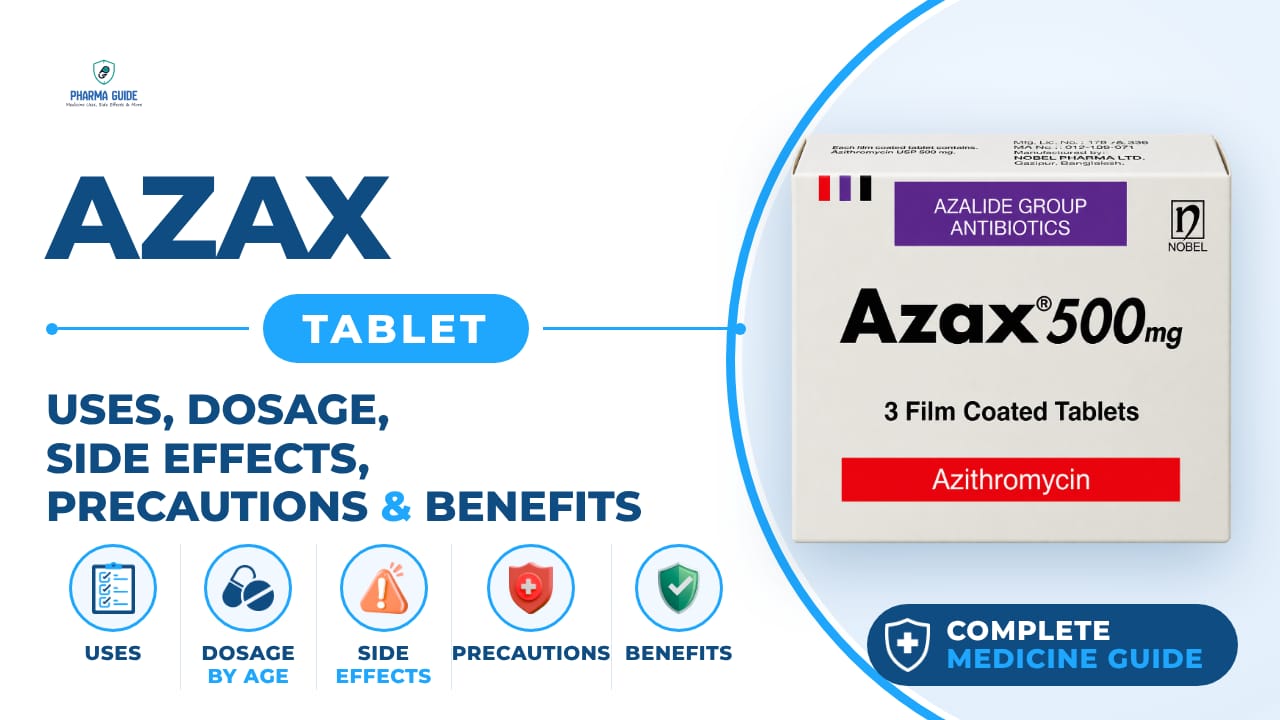
| Generic name | Azithromycin |
|---|---|
| Drug class | Macrolides, Antibiotics |
| Forms | Suspension, Tablet |
Quick overview
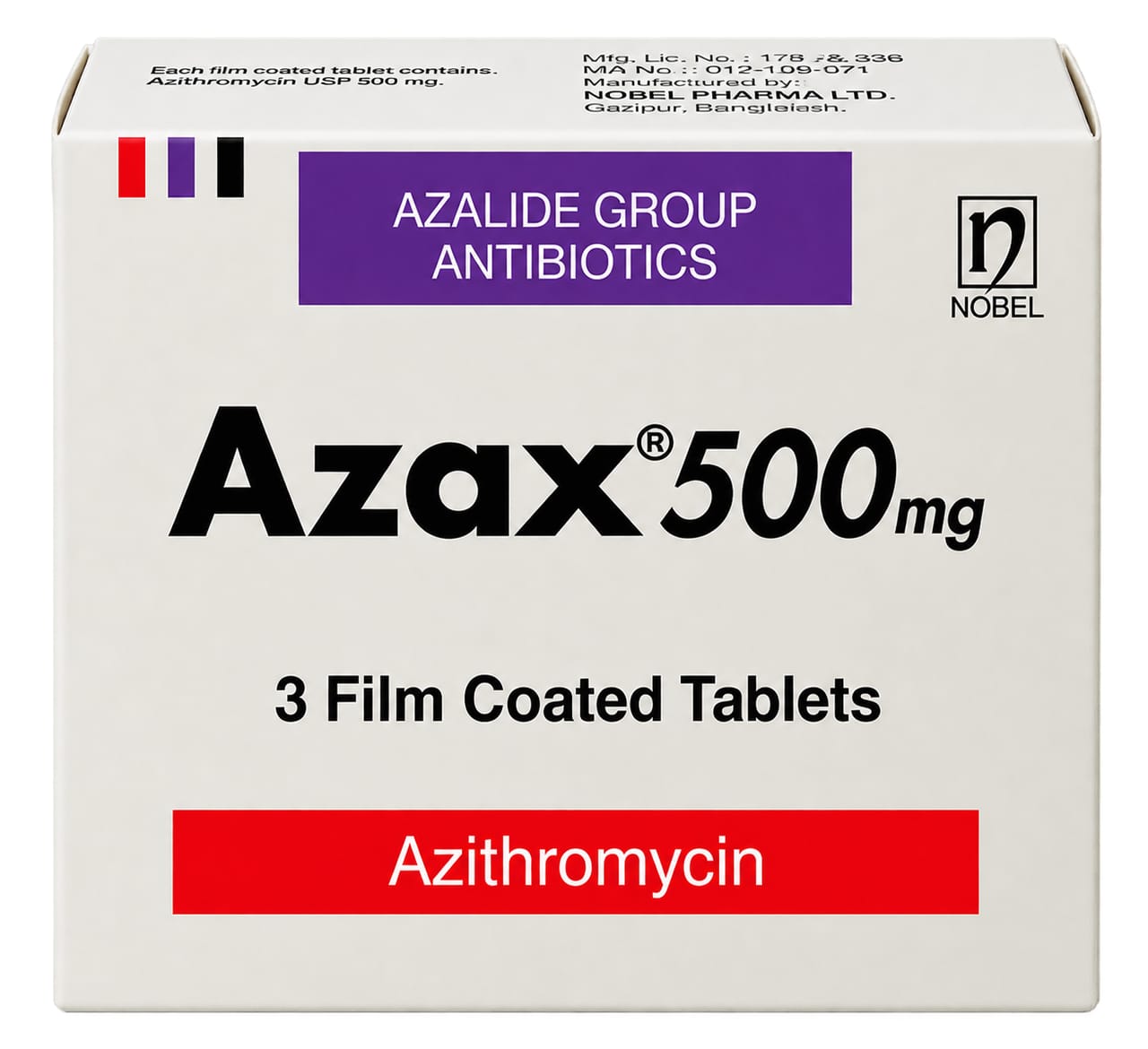
Azax Tablet contains azithromycin, an antibiotic from the macrolide class. It is used to treat bacterial infections of the nose, throat, tonsils, ears, lungs, skin, and other parts of the body. It works by stopping bacteria from making the proteins they need to grow, which helps clear the infection. It is available as a tablet and as a suspension.
What is Azax Tablet
Azax Tablet is an antibiotic used to treat bacterial infections of the nose, throat, tonsils, ears, lungs, skin, and other parts of the body.
Azax Tablet uses
- Ear Infection
- Tonsillitis
- Pneumonia
- Bronchitis
- Sexually transmitted diseases
- Bacterial Infections
- Throat Infection
- Chlamydia
- Skin Infections
- Sinusitis
- Gonorrhea
- Community-Acquired Pneumonia
- Skin and soft tissue infections
- Urethritis and Cervicitis
- Pharyngitis/Tonsilitis
- Acute Bacterial Otitis Media
Benefits of Azax Tablet
- Treats bacterial infections of the nose, throat, tonsils, ears, lungs, and skin
- Helps clear up symptoms caused by bacterial infections
- Effective only against bacteria, not viruses or fungi
How Azax Tablet works
Azax works by blocking bacteria from making the proteins they need to grow. This stops the bacteria from growing and multiplying, which helps clear the infection.
Azax Tablet dosage
Azax Tablet can be taken with or without food, as advised by your doctor. Do not break, chew, or crush the tablet. Take this medicine at the same time every day for better results. Do not give your medicine to other people even if their condition appears to be the same as yours. Complete the full course of treatment even if you start feeling better, to prevent re-infection and antibiotic resistance. Consult your doctor if you do not feel better even after completing the course of treatment.
If you miss a dose, take it as soon as you remember, but skip it if it is almost time for your next dose; do not double up.
| Age group | Dose |
|---|---|
| Under 6 Months | Use only if prescribed by a doctor |
| 6 Months–17 Years | 10 mg/kg once daily (dose depends on body weight and infection) |
| Adults (18–64 Years) | 500 mg once daily (as prescribed) |
| Older Adults (65+ Years) | 500 mg once daily; adjustment may be needed based on health condition |
Available forms and strengths
- Suspension
- Tablet
Side effects of Azax Tablet
Common
- Nausea or vomiting
- Diarrhoea
- Headache
- Stomach pain
- Dizziness
- Chest pain
- Fatigue
- Rash
- Excessive gas in the stomach
- Photosensitivity of skin
Serious
- Bronchospasm
- Angioedema
- Hearing Loss
- Severe watery or bloody diarrhoea
- Irregular heartbeat (QT prolongation)
- Severe allergic reaction with rash, swelling of face/tongue/throat, or difficulty breathing
Warnings and precautions
- Completing the full course of antibiotics is important, even if you feel better, to prevent the bacteria from becoming resistant to treatment.
- People with myasthenia gravis (a muscle weakness disorder) should use this medicine cautiously, as it may make symptoms worse.
- This medicine can cause diarrhea by killing helpful bacteria in the gut. Get emergency help if diarrhea becomes severe, watery, or bloody, and check with your doctor before taking anti-diarrheal medicine.
- This medicine is not recommended if you have a history of liver damage or jaundice caused by using it before.
- People with heart conditions should be cautious, as this medicine may increase the risk of an irregular heartbeat.
- Avoid this medicine if you have liver disease, jaundice, ulcerative colitis, heart disease, coronary artery disease, calcium deficiency, or potassium deficiency, unless your doctor tells you otherwise.
- This medicine may be safe to use during pregnancy based on animal studies, but there isn't enough human data, so talk to your doctor before taking it if you are pregnant.
- Small amounts of this medicine can pass into breast milk, so talk to your doctor about the risks and benefits before taking it while breastfeeding.
- If you have severe kidney problems, use this medicine with caution, as it may build up in your body and increase the risk of side effects. Your doctor may need to adjust your dose.
- Use this medicine with caution if you have liver problems, as it may increase the risk of liver damage. Your doctor may need to adjust your dose. It is not recommended if you have had jaundice or liver damage from using this medicine before.
- It's not clear how this medicine interacts with alcohol, so it's best to ask your doctor before drinking.
- This medicine may cause dizziness in some people. Avoid driving or operating machinery if you feel dizzy after taking it.
Storage
- Store at room temperature (below 25°C).
- Keep the tablets in the original packaging until use.
- Protect from moisture, heat, and direct sunlight.
- Keep away from children and pets.
- Do not use tablets after the expiry date printed on the package.
When to see a doctor
- Get emergency medical help right away if you have signs of a serious allergic reaction, such as skin rash, itching or swelling of the face, tongue, or throat, severe dizziness, or trouble breathing.
- Seek emergency medical help if you experience severe watery or bloody diarrhea.
- Seek emergency medical help if you take more than the prescribed dose.
Alternatives
- Clarithromycin
- Erythromycin
Watch the video
FAQs
What is Azax Tablet used for?
Azax Tablet is used to treat bacterial infections of the nose, throat, tonsils, ears, lungs, skin, and other parts of the body, including conditions like pneumonia, bronchitis, tonsillitis, and sexually transmitted diseases.
How does Azax Tablet work?
Azax works by blocking bacteria from making the proteins they need to grow, which stops the bacteria from multiplying and helps clear the infection.
What is the dosage of Azax Tablet for adults?
Adults aged 18–64 years are generally prescribed 500 mg once daily, as advised by the doctor.
What are the common side effects of Azax Tablet?
Common side effects include nausea or vomiting, diarrhoea, headache, stomach pain, dizziness, chest pain, fatigue, rash, excessive gas, and photosensitivity of skin.
Can Azax Tablet be taken during pregnancy?
Azax Tablet may be safe during pregnancy based on animal studies, but there isn't enough human data, so you should talk to your doctor before taking it if you are pregnant.
General information, not medical advice
Your prescriber and the leaflet in your pack know your situation. This page does not.
- Follow your prescriber and the leaflet
- Don't start, stop, or change a dose on your own
- Doses and warnings differ by country and product
Sources
- US Food and Drug Administration (FDA) - Package leaflet information for the user; Zithromax (azithromycin)
- KD Tripathi. Seventh Edition. New Delhi, India: Jaypee Brothers Medical Publishers; 2013: Page No 754
- MedlinePlus Drug Information - Azithromycin
- U.S. FDA drug label documentation
- Medicines.org.uk - Azithromycin 500mg Tablets Summary of Product Characteristics (SmPC)
- Mayo Clinic - Azithromycin (Oral Route) Description and Brand Names
- Cleveland Clinic - Azithromycin tablets
Video
Related medicines
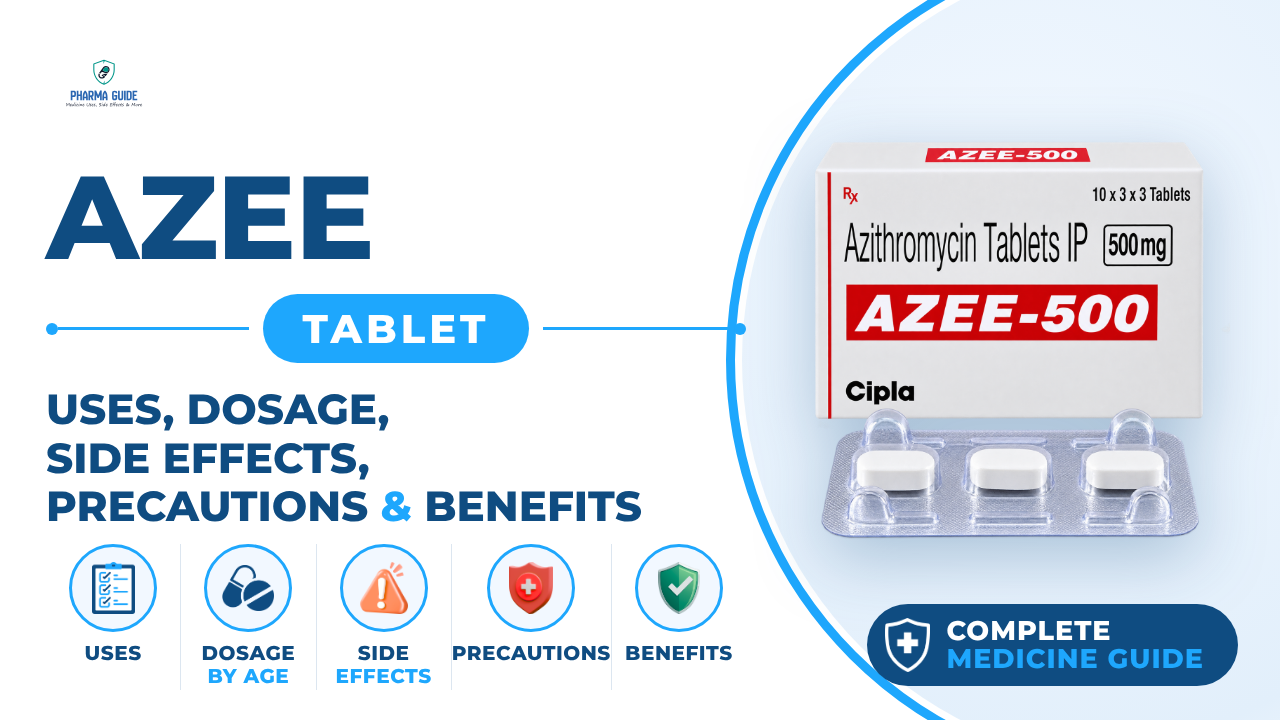
Azee Tablet: Uses, Dosage, Side Effects, Precautions and Alternates
Macrolides, Antibiotics
Azee Tablet contains azithromycin, an antibiotic for bacterial infections of the nose, throat, ears, lungs, skin, typhoid, and eye infections.

Injectafer Injection: Uses, Dosage, Side Effects, Precautions and Alternates
Iron products
Injectafer (ferric carboxymaltose) treats iron deficiency anemia and heart failure-related iron deficiency via IV. Learn uses, dosage, side effects, and