Azee Tablet: Uses, Dosage, Side Effects, Precautions and Alternates
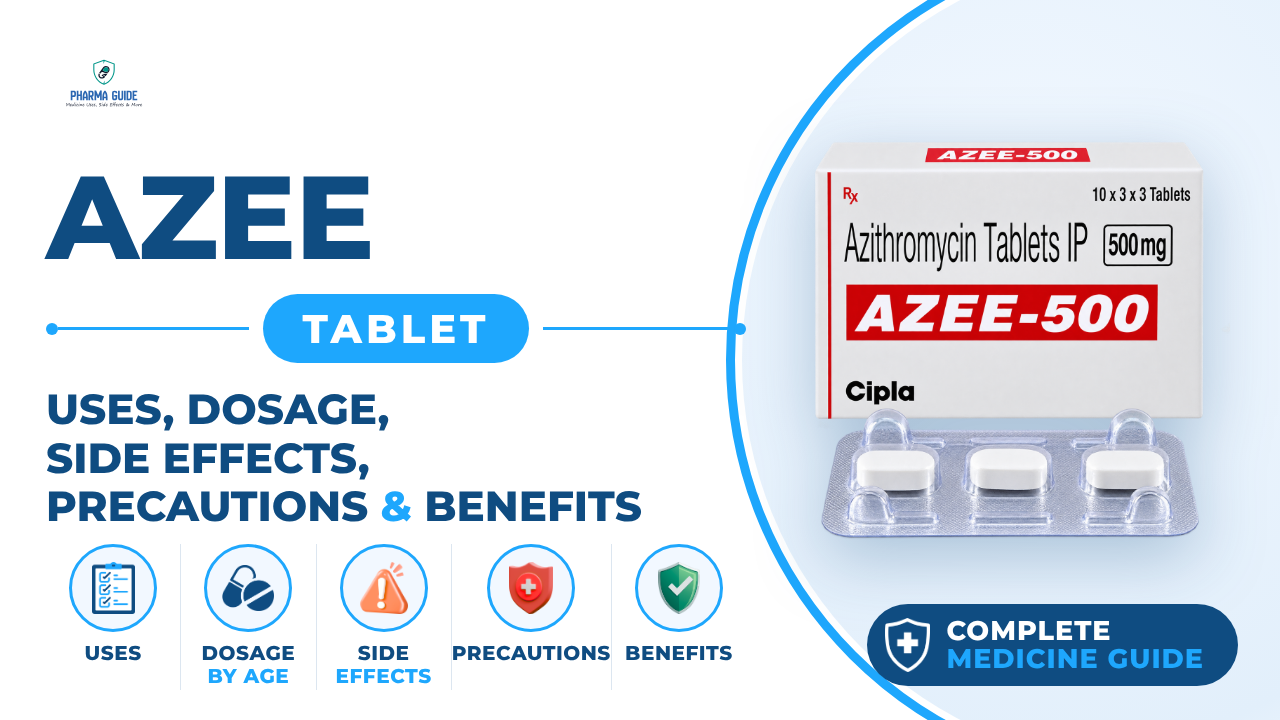
| Generic name | Azithromycin |
|---|---|
| Drug class | Macrolides, Antibiotics |
| Forms | Tablet, Tablet DT, Dry syrup, Injection, Eye drops |
Quick overview
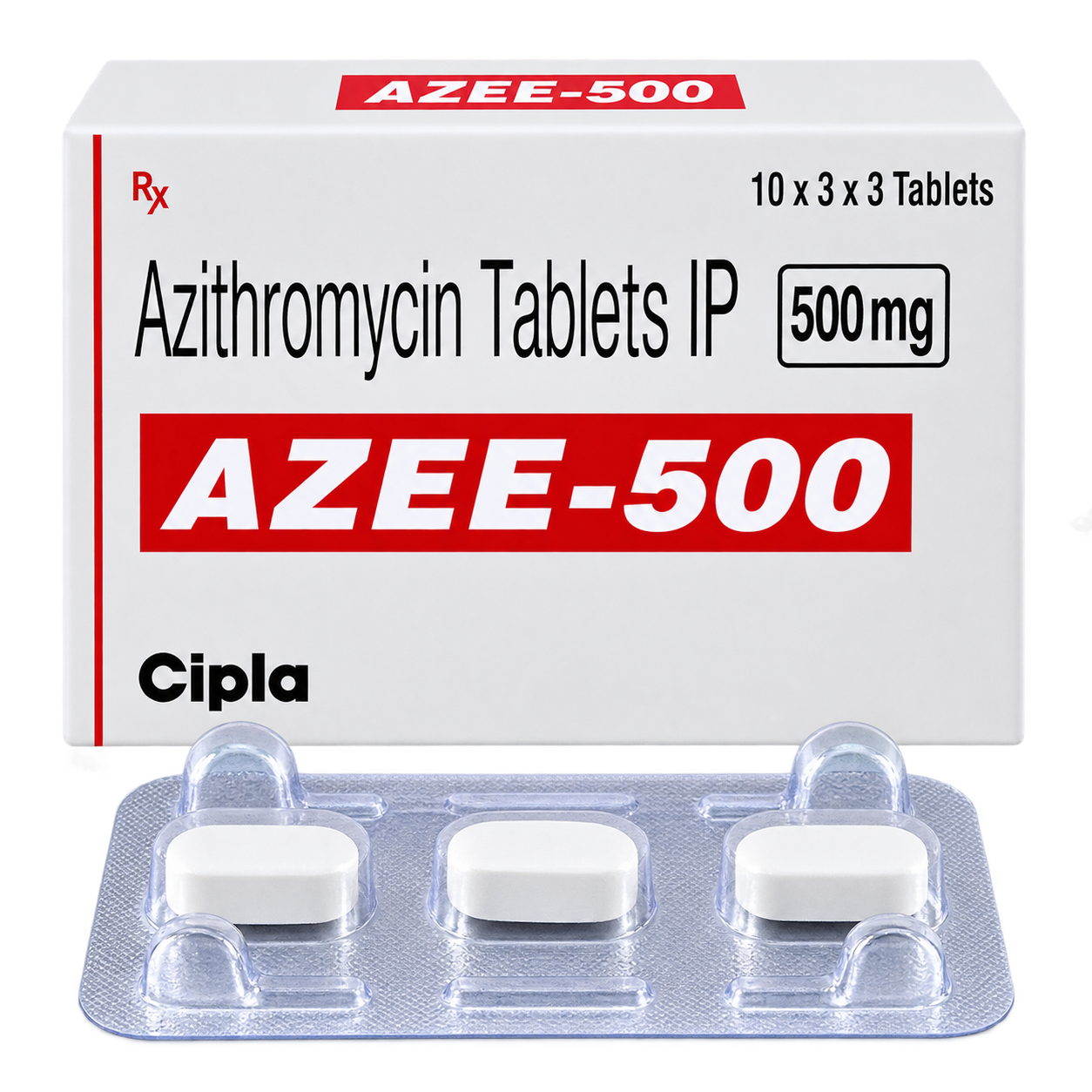
Azee Tablet contains azithromycin, an antibiotic belonging to the macrolide class. It is used to treat bacterial infections of the nose, throat, tonsils, ears, lungs, skin, and other areas, as well as typhoid fever and certain eye infections. It works by stopping the growth of bacteria and is effective only against bacterial, not viral or fungal, infections. It should always be used exactly as prescribed, with the full course completed.
What is Azee Tablet
Azee Tablet is an antibiotic used to treat bacterial infections of the nose, throat, tonsils, ears, lungs, skin, and other areas. It contains azithromycin and works by stopping the growth of bacteria. It is also used for typhoid fever and certain eye infections. It works only against bacteria, not viruses or fungi.
Azee Tablet uses
- Community-acquired pneumonia
- Skin and soft tissue infections
- Urethritis and cervicitis (certain sexually transmitted infections)
- Pharyngitis/tonsillitis
- Sinusitis
- Bronchitis
- Acute bacterial otitis media (ear infection)
- Typhoid fever
- Certain bacterial eye infections
Benefits of Azee Tablet
- Helps clear a range of bacterial infections when the full course is completed
- Can be taken with or without food, making it convenient to use
How Azee Tablet works
This medicine works by stopping the growth of bacteria. It blocks the making of proteins that bacteria need to grow and multiply, which helps clear the infection.
Azee Tablet dosage
Swallow the tablet whole with a glass of water. Do not break, chew, or crush it. It can be taken with or without food, as advised by your doctor, though some sources advise taking it on an empty stomach unless your doctor says otherwise.
Take this medicine at the same time every day for better results. Complete the full course of treatment even if you feel better, to prevent the infection returning or becoming resistant. Do not give your medicine to other people even if their condition seems the same as yours.
Staying well hydrated and eating light, easily digestible meals can help reduce stomach discomfort. Consult your doctor if you do not feel better even after completing the course.
| Age group | Dose |
|---|---|
| Under 6 months | Use only when specifically prescribed by a doctor |
| 6 months–11 years | Usually 10 mg/kg once daily for some infections; exact dose and duration depend on the infection |
| 12–17 years | Often 500 mg once daily for adults-sized patients, depending on the infection and weight |
| 18–64 years | Common regimens include 500 mg once daily for 3 days or 500 mg on day 1, followed by 250 mg once daily on days 2–5, depending on the infection |
| 65+ years | Generally the same adult regimen, with medical assessment when appropriate |
Available forms and strengths
- Tablet
- Tablet DT
- Dry syrup
- Injection
- Eye drops
Side effects of Azee Tablet
Common
- Nausea and vomiting
- Stomach pain
- Diarrhoea
- Headache
- Dizziness
- Fatigue
- Rash
- Excessive gas in the stomach
- Photosensitivity of skin
- Loss of appetite
- Chest pain
- Rarely, changes in hearing
Serious
- Skin rash
- Itching or swelling of the face, tongue, or throat
- Severe dizziness
- Difficulty breathing
- Severe watery or bloody diarrhoea
- Yellowing of the skin or eyes
- Fast or irregular heartbeat
Warnings and precautions
- This medicine may be safe during pregnancy based on animal studies, but human data is lacking. One source says it is not recommended in pregnancy unless clearly needed. Talk to your doctor before taking it if you are pregnant.
- This medicine passes into breast milk in small amounts. If you are breastfeeding, talk to your doctor about the benefits and risks before taking it.
- Use with caution if you have kidney problems, especially severe kidney impairment, as the medicine may build up in the body and raise the risk of side effects. Your doctor may adjust your dose.
- Use with caution if you have liver problems, as it may increase the risk of liver damage. It is not recommended if you have a history of cholestatic jaundice or liver damage from prior use of this medicine. Your doctor may adjust your dose.
- One source says the interaction with alcohol is unknown and advises consulting your doctor before drinking. Another source says it should not be taken with alcohol as this can cause serious side effects.
- This medicine may cause dizziness or drowsiness in some people. Avoid driving or operating machines if you feel dizzy after taking it.
- Always complete the entire course of treatment, even if you feel better after a few doses, to avoid antibiotic resistance.
- Use with caution if you have myasthenia gravis, a disorder causing muscle weakness, as this medicine may worsen the condition.
- This medicine can cause diarrhoea because it may also kill helpful bacteria in your gut. Consult your doctor before taking any anti-diarrhoeal medication.
- Use with caution if you have heart problems, as it may increase the risk of an irregular heartbeat and a rhythm problem called QT prolongation. Tell your doctor about any heart conditions before starting.
- Do not use if you are allergic to azithromycin or any macrolide antibiotics.
- This medicine is not recommended for use in children below ten years of age.
Storage
- Store at room temperature below 25 ºC, away from moisture and heat.
- Do not store in the bathroom or other damp areas, as moisture can affect the medicine.
- Keep the tablets in their original packaging until you are ready to take them.
- Keep out of the reach of children and pets.
- Do not use it after the expiry date on the packaging.
When to see a doctor
Seek immediate medical attention if you notice a skin rash, itching or swelling (especially of the face, tongue, or throat), severe dizziness, or difficulty breathing.
Get emergency medical help if you experience severe watery or bloody diarrhoea.
Seek emergency medical help in case of an overdose. Overdose symptoms may include diarrhoea, nausea, and hearing loss.
Tell your doctor if you notice yellowing of the skin or eyes, severe stomach pain, or a fast or irregular heartbeat.
Alternatives
- Clarithromycin
- Erythromycin
- Doxycycline
- Amoxicillin
- Amoxicillin-Clavulanate
- Cefuroxime
- Cefixime
Watch the video
FAQs
What is Azee Tablet used for?
Azee Tablet is used to treat bacterial infections of the nose, throat, tonsils, ears, lungs, and skin, as well as typhoid fever, certain sexually transmitted infections like urethritis and cervicitis, and certain bacterial eye infections.
How should Azee Tablet be taken?
Swallow the tablet whole with a glass of water without breaking, chewing, or crushing it. It can be taken with or without food, though some sources advise taking it on an empty stomach unless your doctor says otherwise. Take it at the same time daily and complete the full course even if you feel better.
What are the common side effects of Azee Tablet?
Common side effects include nausea, vomiting, stomach pain, diarrhoea, headache, dizziness, fatigue, rash, excessive gas, photosensitivity of skin, loss of appetite, chest pain, and rarely, changes in hearing.
Can Azee Tablet be taken during pregnancy or breastfeeding?
It may be safe during pregnancy based on animal studies, but human data is lacking, and one source says it is not recommended unless clearly needed. It passes into breast milk in small amounts, so breastfeeding mothers should consult their doctor before use.
Is Azee Tablet safe for people with heart or liver problems?
It should be used with caution in people with heart problems, as it may increase the risk of irregular heartbeat and QT prolongation. It should also be used with caution in liver problems, as it may raise the risk of liver damage, and is not recommended if there is a history of cholestatic jaundice.
Sources
- MedlinePlus, Azithromycin drug information
- FDA prescribing information for azithromycin
- Electronic Medicines Compendium (emc), Azithromycin 500mg Tablets Summary of Product Characteristics
- Mayo Clinic, Azithromycin (Oral Route)
- Cleveland Clinic, Azithromycin tablets
- KD Tripathi, Essentials of Medical Pharmacology, Seventh edition, 2013
- Parnham MJ et al., Azithromycin: mechanisms of action and their relevance for clinical applications, 2014
- CiplaMed, AZEE Tablets/DT/Dry Syrup
- PubChem, Azithromycin
Video
Related medicines
Ampicillin Injection: Uses, Dosage, Side Effects, Precautions and Alternates
Penicillin antibiotic (aminopenicillin)
Ampicillin Injection is a penicillin antibiotic used for meningitis, pneumonia, septicemia, and more. Learn dosage, side effects, and warnings.
Azithromycin Tablet: Uses, Dosage, Side Effects, Precautions and Alternates
Macrolide antibiotic (azalide subclass)
Azithromycin Tablet is a macrolide antibiotic used for bacterial infections like Chlamydia and MAC. Learn its uses, dosage, side effects, and precautions.