
Safety
General information, not medical advice
Your prescriber and the leaflet in your pack know your situation. This page does not.
- Follow your prescriber and the leaflet
- Don't start, stop, or change a dose on your own
- Doses and warnings differ by country and product
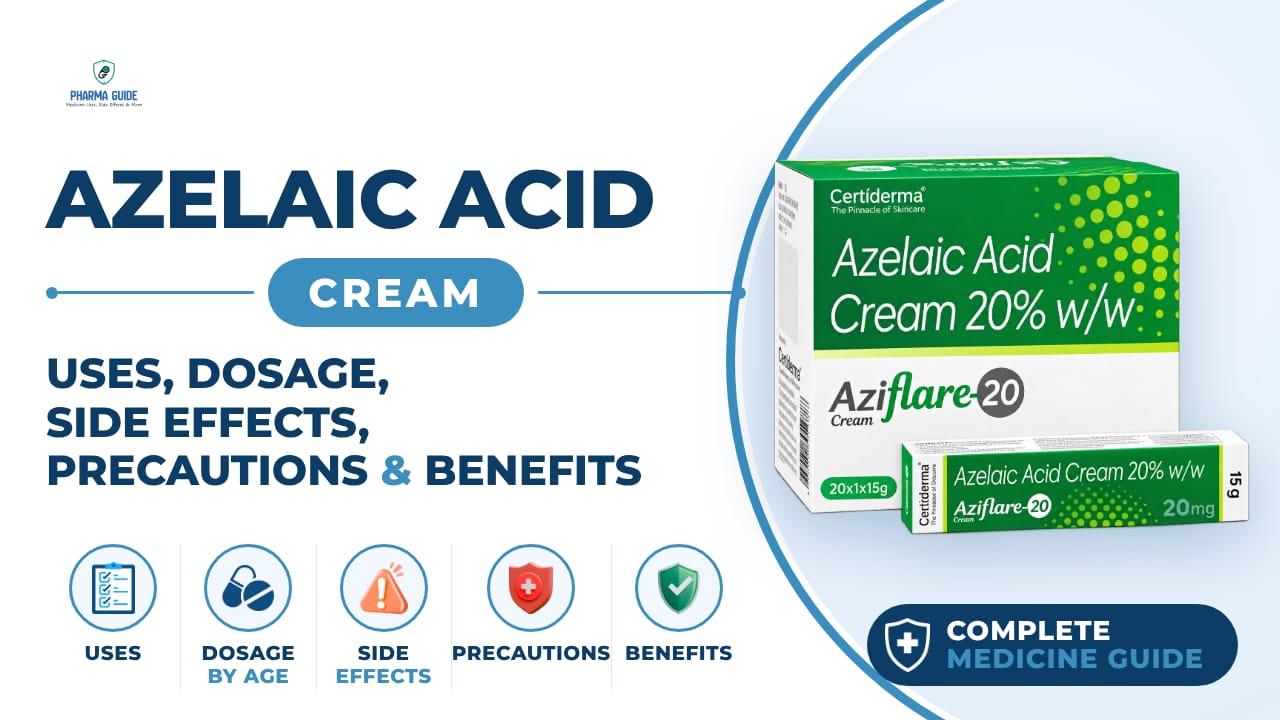
Azelaic Acid Cream: Uses, Dosage, Side Effects, Precautions and Alternates
| Generic name | Azelaic acid |
|---|---|
| Forms | Cream, Gel, Lotion, Foam |
Quick overview
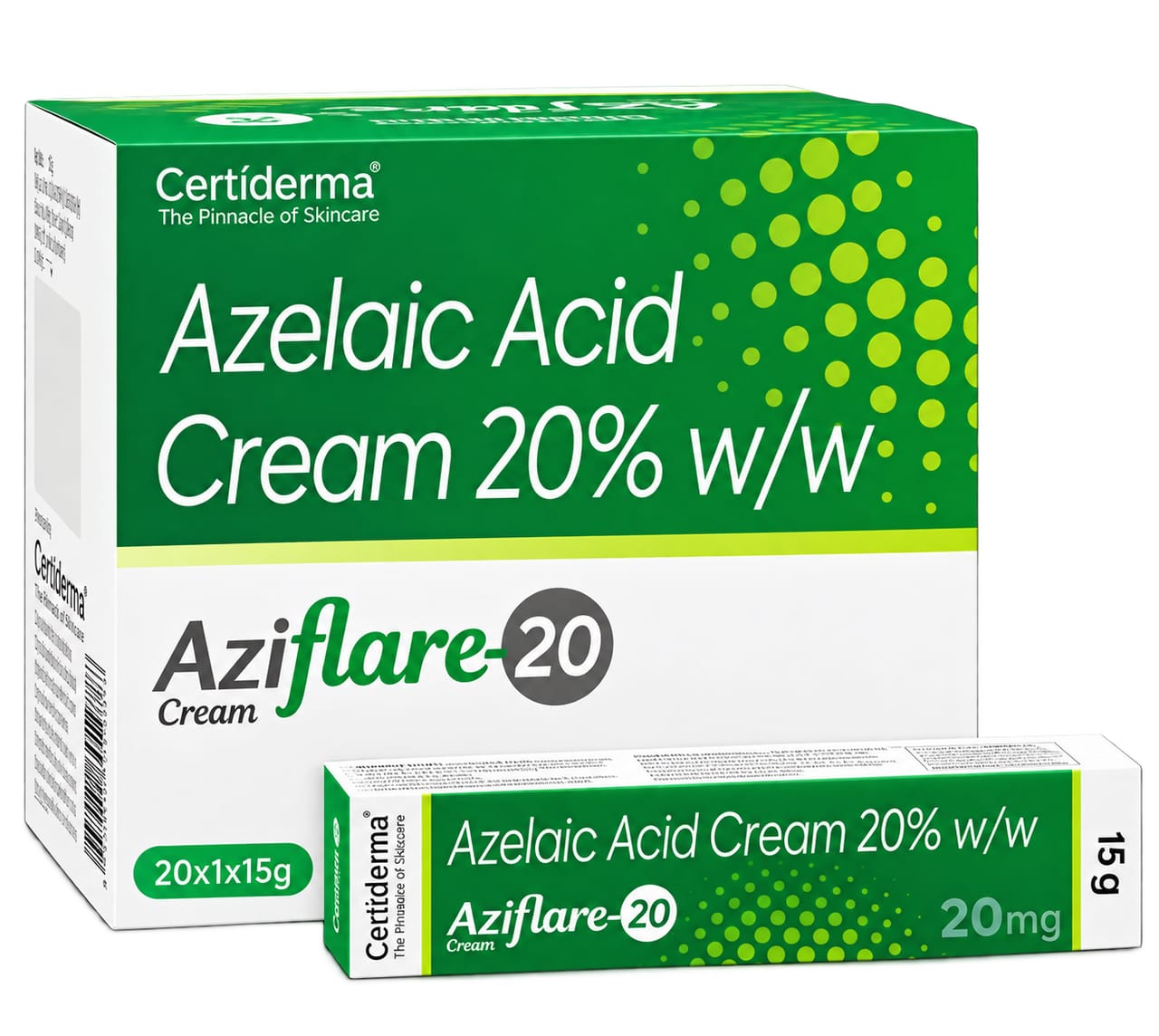
Azelaic Acid Cream (azelaic acid) is a topical treatment made from a naturally occurring acid found in grains like barley, wheat, and rye. It has antibacterial, anti-inflammatory, and skin-lightening properties and is used to treat acne and other skin conditions. It is applied directly to the skin as a cream, gel, foam, or lotion.
What is Azelaic Acid Cream
Azelaic acid is a naturally occurring acid found in grains like barley, wheat, and rye. It has antibacterial, anti-inflammatory, and skin-lightening properties, and is applied to the skin as a cream, gel, or foam to treat acne and other skin conditions.
Azelaic Acid Cream uses
- Mild to moderate acne vulgaris (both comedonal and inflammatory types)
- Papulopustular rosacea
- Hyperpigmentation and dark spots left after acne (post-inflammatory pigmentation)
- Melasma
- Periocular dermatitis
- Periorificial dermatitis
- Rhinophyma
- Acne scarring
- Skin lightening in areas with uneven pigmentation
Benefits of Azelaic Acid Cream
- Has anti-inflammatory properties and helps with uneven skin tone
- Exfoliates the skin and helps unclog pores
- Milder side effects compared to more potent acne therapies
- Does not cause bacterial resistance to antibiotics
- Does not reduce sebum production
- Does not cause photosensitivity (easy sunburn)
- Does not stain skin or clothing
- Does not bleach normal skin or clothing
- Well tolerated by most skin types, including sensitive skin
How Azelaic Acid Cream works
The medicine fights the bacteria that cause acne, calms inflammation in the skin, and gently speeds up skin cell turnover, which helps reduce scarring. It also blocks an enzyme involved in making skin pigment, which helps even out skin tone.
Azelaic Acid Cream dosage
Wash the affected area thoroughly with warm water and pat dry, using a cleanser or mild soap to make sure the area is clean. Wash your hands before applying the medication. Apply a small amount to the affected area, rub it in, and let it dry completely. Once the medication has dried, you can apply cosmetics; there is no need to cover or bandage the skin. Avoid using astringents or deep-cleansing cleansers while using this medicine.
Apply to clean, dry skin before your moisturizer. For sensitive skin, introduce the product gradually, starting with an application every other day for the first two weeks, then increasing frequency as tolerated. Start with once-daily application, then build up to twice daily after cleansing the skin, if tolerated. It can be used in the morning and evening since it does not increase sun sensitivity.
Acne responds slowly; some improvement may be seen after about one month, with further improvement over several months of continued use.
| Age group | Dose |
|---|---|
| Under 12 years | Safety and effectiveness of 20% azelaic acid cream are not established |
| 12–17 years | Apply a thin layer to affected skin twice daily, usually morning and evening |
| 18–39 years | Apply a thin layer twice daily, morning and evening |
| 65–74 years | Generally follows adult application; no specific age-based adjustment is established |
Available forms and strengths
- Cream
- Gel
- Lotion
- Foam
Side effects of Azelaic Acid Cream
Common
- Burning or tingling on the skin
- Peeling skin at the site of application
- Skin dryness or redness
- Temporary redness or slight flaking, especially at higher concentrations
Serious
- Blistering or flaking skin
- Irritation and swelling
- Tightness or pain in your joints
- Hives and itching
- Fever
- Difficulty breathing
- Worsening of asthma
Warnings and precautions
- Do not use if you are allergic to azelaic acid or to any of the ingredients in the cream, such as propylene glycol.
- Do not apply to broken or irritated skin, and avoid contact with eyes and mucous membranes.
- People with very sensitive skin or eczema may find it irritating, which can cause mild irritant contact dermatitis.
- This medicine may cause skin lightening (hypopigmentation), which is more noticeable in darker skin tones.
- Azelaic acid is one of the few dermatological ingredients considered compatible with pregnancy, but you should still check with your doctor or dermatologist before using it. It is also considered one of the few dermatological ingredients compatible with breastfeeding, but check with your doctor or dermatologist before use.
- No routine liver-specific adjustment is established.
- No important direct interaction is expected with alcohol when using topical azelaic acid. This medicine does not normally affect driving.
When to see a doctor
- Stop using the cream and get medical advice if you develop severe redness, scaling, itching, or burning.
- See a doctor if your asthma gets worse while using this medicine.
- Stop using the product and see a doctor if you experience side effects such as blistering, swelling, joint pain, hives, fever, or difficulty breathing.
Alternatives
- Adapalene
- Benzoyl peroxide
- Clindamycin topical
- Tretinoin
Watch the video
FAQs
What is Azelaic Acid Cream used for?
It is used for mild to moderate acne, papulopustular rosacea, hyperpigmentation and dark spots after acne, melasma, periocular and periorificial dermatitis, rhinophyma, acne scarring, and uneven pigmentation.
How does Azelaic Acid Cream work?
It fights acne-causing bacteria, calms skin inflammation, speeds up skin cell turnover to reduce scarring, and blocks an enzyme involved in pigment production to even out skin tone.
How long does it take to see results from Azelaic Acid Cream?
Acne responds slowly, with some improvement seen after about one month and further improvement over several months of continued use.
What are the common side effects of Azelaic Acid Cream?
Common side effects include burning or tingling, peeling skin, dryness or redness, and temporary redness or slight flaking, especially at higher concentrations.
Is Azelaic Acid Cream safe to use during pregnancy?
Azelaic acid is considered one of the few dermatological ingredients compatible with pregnancy and breastfeeding, but you should check with your doctor or dermatologist before using it.
General information, not medical advice
Your prescriber and the leaflet in your pack know your situation. This page does not.
- Follow your prescriber and the leaflet
- Don't start, stop, or change a dose on your own
- Doses and warnings differ by country and product
Sources
Video
Related medicines

Injectafer Injection: Uses, Dosage, Side Effects, Precautions and Alternates
Iron products
Injectafer (ferric carboxymaltose) treats iron deficiency anemia and heart failure-related iron deficiency via IV. Learn uses, dosage, side effects, and

Gliclazide Tablet: Uses, Dosage, Side Effects, Precautions and Alternates
Sulfonylurea (hypoglycemic/antidiabetic agent)
Gliclazide Tablet is a sulfonylurea for type 2 diabetes that boosts insulin release. Learn about dosage, side effects, warnings, and precautions.