
Safety
General information, not medical advice
Your prescriber and the leaflet in your pack know your situation. This page does not.
- Follow your prescriber and the leaflet
- Don't start, stop, or change a dose on your own
- Doses and warnings differ by country and product
Azelaic Acid Gel: Uses, Dosage, Side Effects, Precautions and Alternates
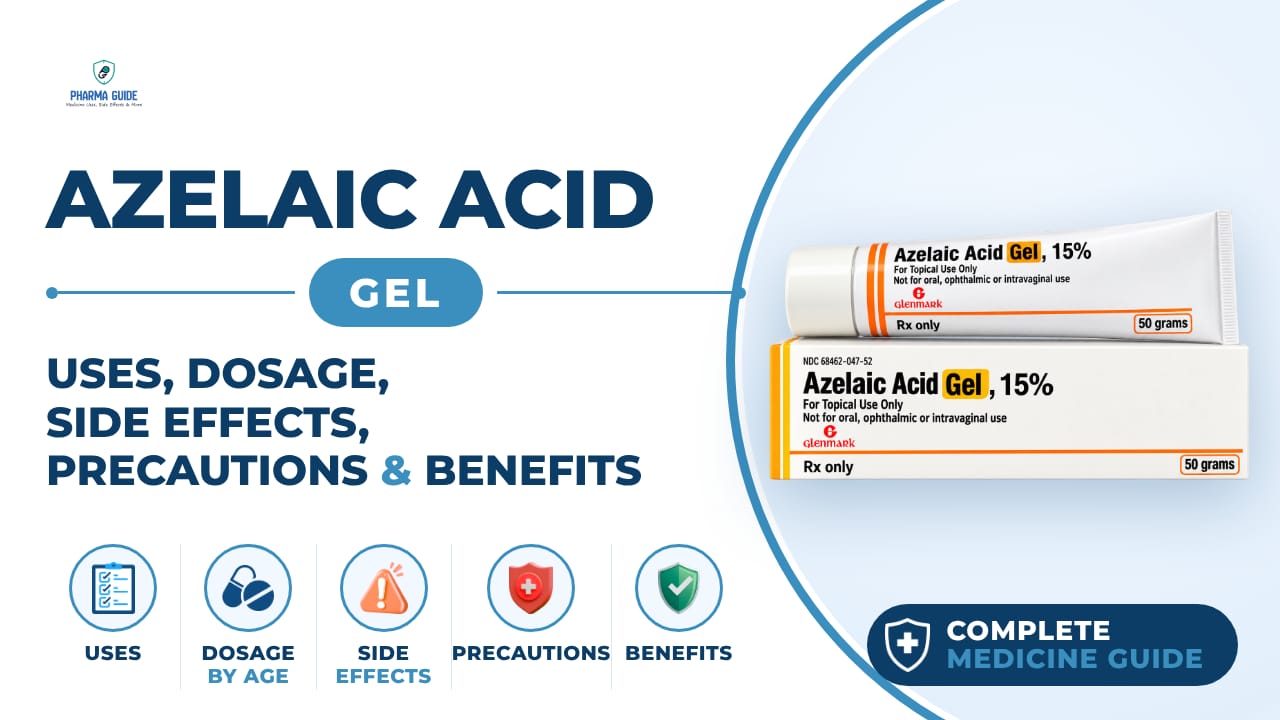
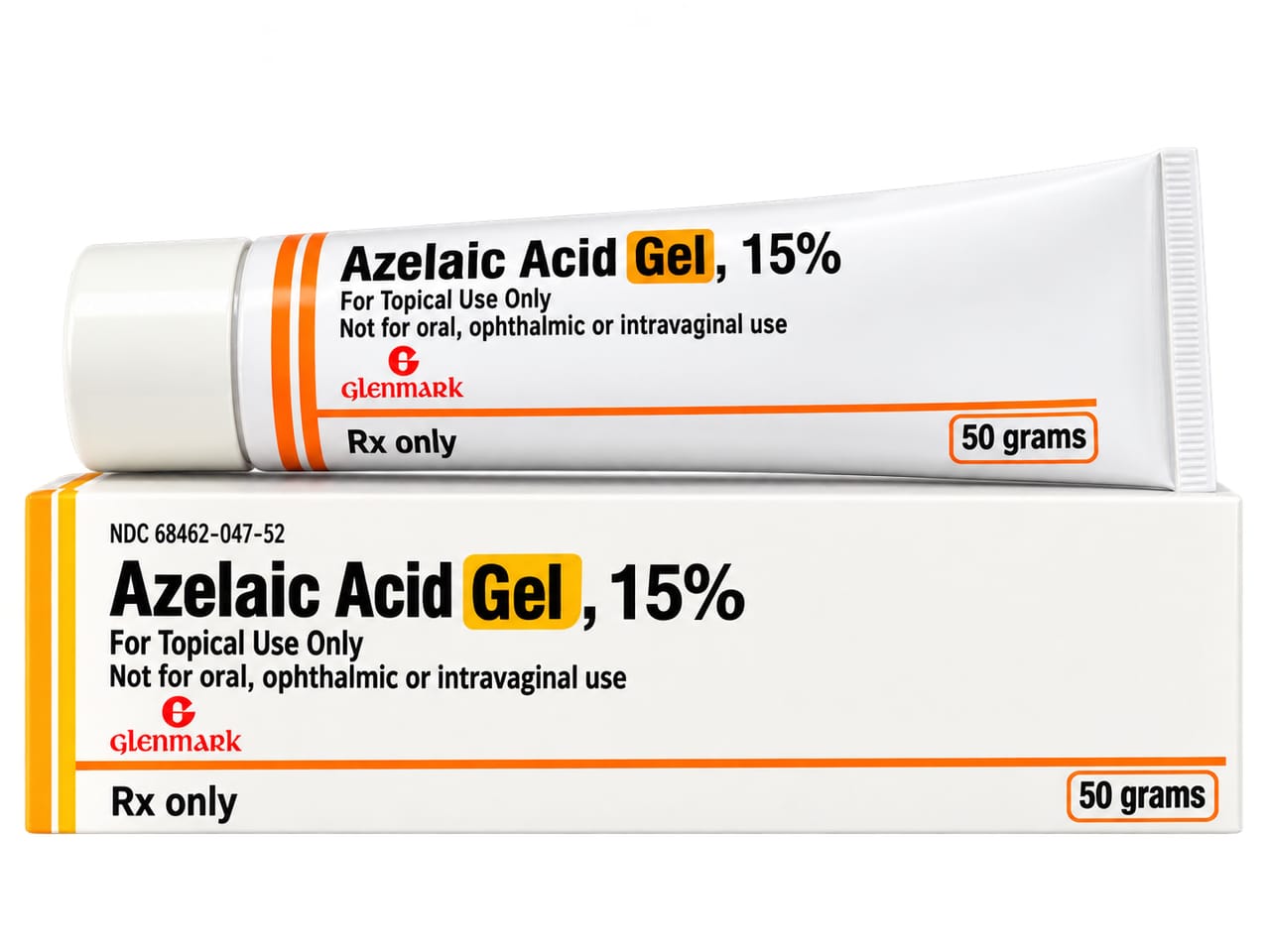
| Generic name | Azelaic acid |
|---|---|
| Drug class | Topical anti-rosacea agent / Topical acne agent |
| Forms | Gel, 15% w/w |
Quick overview
Azelaic Acid Gel is a topical medicine made from a naturally occurring acid, used mainly to treat rosacea and also used for acne. It works by calming skin inflammation, fighting bacteria, and reducing oxygen-related compounds that damage skin. Common side effects include burning, stinging, itching, and dryness at the application site, while rare serious reactions can include allergic responses. It is typically applied as a thin layer to clean, dry skin, usually twice daily.
What is Azelaic Acid Gel
Azelaic acid gel is a topical medicine made from a naturally occurring acid. It is applied to the skin to treat rosacea and is also used for acne.
Azelaic Acid Gel uses
- Topical treatment of inflammatory papules and pustules and redness (erythema) of mild to moderate rosacea
- Used to treat rosacea
- Treats acne vulgaris
- Helps reduce inflammatory pimples
- Helps unclog pores
- Treats inflammatory lesions of rosacea with certain formulations
Benefits of Azelaic Acid Gel
- Has anti-inflammatory and antimicrobial effects
- Helps reduce the number of inflammatory bumps and pustules linked to rosacea
- May improve overall facial redness
- Reduces acne-causing follicular blockage
- Has anti-inflammatory activity
- May help improve uneven pigmentation after acne
- Does not contain a topical steroid
How Azelaic Acid Gel works
The medicine seems to calm inflammation in the skin by lowering certain substances that cause irritation and redness, and it also fights bacteria and reduces the oxygen-related compounds that damage skin.
Azelaic Acid Gel dosage
Wash and pat the skin dry with a soft towel before applying. Use only very mild soaps or soap-free cleansing lotions on the face. Apply a thin layer to the entire affected area and gently massage it in. Do not use bandages or dressings over the treated skin unless your doctor tells you to. Wash your hands before and after applying. Keep away from the eyes, mouth, nose, and other mucous membranes; if it gets in these areas, rinse with plenty of water.
Makeup or non-medicated cosmetics can be applied once the gel has dried on the skin. Keep using it as directed even if your symptoms improve, as it may take several weeks to see the full effect. Avoid alcohol, hot foods and drinks, and spicy foods while using this medicine, as they may worsen rosacea.
If you miss an application, apply it as soon as you remember, but if it is almost time for your next dose, skip the missed one and go back to your normal schedule. Do not apply two doses at once.
| Age group | Dose |
|---|---|
| Under 12 years | Safety and effectiveness depend on the specific product; use only if prescribed |
| 17–39 years | Usually apply a thin layer twice daily to clean, dry affected skin |
| 40–64 years | Same usual topical regimen: twice daily, unless the specific product label directs otherwise |
| 65 years and older | No routine age-based dose adjustment; use a thin layer as directed and monitor for irritation |
Available forms and strengths
- Gel, 15% w/w
Side effects of Azelaic Acid Gel
Common
- Skin burning, stinging, or tingling
- Itching
- Dry skin, scaling, or flaking
- Redness or irritation at the application site
- Mild swelling (edema)
Serious
- Signs of an allergic reaction, such as rash, hives, itching, swollen or blistered skin, wheezing, chest or throat tightness, trouble breathing or swallowing, or swelling of the mouth, face, lips, or tongue
- Change in skin color
- Shortness of breath or worsening asthma
Warnings and precautions
- There isn't enough well-controlled research in pregnant women, so this medicine should only be used during pregnancy if the possible benefit is thought to outweigh the possible risk to the baby.
- Talk to your doctor before use. A small amount of the medicine may pass into breast milk, so caution is advised if you are breastfeeding while using this gel.
- Topical absorption is low, so no routine renal dose adjustment is generally required. No routine hepatic dose adjustment is generally required. Avoid alcohol while using this medicine, since it may make rosacea symptoms worse.
- This medicine is not expected to affect your ability to drive or use machinery.
- This medicine is for use on the skin only - do not swallow it, and keep it away from your eyes, mouth, and nose, as it may cause burning.
- If you have asthma, use this medicine carefully, since some people have had their asthma get worse while using it. Contact your doctor right away if this happens.
- Using other skin products at the same time as this gel may cause more irritation. Check with your doctor before using other products on your skin.
- There have been rare reports of lighter patches of skin (hypopigmentation) after using azelaic acid. People with darker skin should watch for early signs of this.
- If the skin becomes very irritated, use the medicine less often or stop for a few days until the irritation settles.
Storage
- Store at room temperature. Do not freeze.
- Store in a dry place. Do not store in a bathroom.
- If using the pump product, throw away any part not used 8 weeks after opening.
- Keep all drugs out of the reach of children and pets.
- Throw away unused or expired drugs; do not flush down a toilet or pour down a drain unless told to do so. Check with your pharmacist about take-back programs.
- Store at room temperature (between 15ºC and 30ºC).
When to see a doctor
- Get medical help right away if you notice signs of a serious allergic reaction, such as rash, hives, itching, swollen or blistered skin with or without fever, wheezing, tight chest or throat, or trouble breathing, swallowing, or talking.
- Seek medical attention if you notice a change in your skin color after using this medicine.
- Get help right away if you experience shortness of breath while using this medicine.
- If you think you or someone else may have taken too much of this medicine, contact your local poison control center or get medical help right away.
Alternatives
- Adapalene
- Benzoyl peroxide
- Topical clindamycin
- Metronidazole gel
Watch the video
FAQs
What is Azelaic Acid Gel used for?
It is used to treat inflammatory papules, pustules, and redness of mild to moderate rosacea, and it also treats acne vulgaris by reducing inflammatory pimples and helping unclog pores.
How should I apply Azelaic Acid Gel?
Wash and pat the skin dry, then apply a thin layer to the entire affected area and gently massage it in, usually twice daily. Wash your hands before and after, and avoid the eyes, mouth, nose, and other mucous membranes.
What are the common side effects of Azelaic Acid Gel?
Common side effects include skin burning, stinging, or tingling, itching, dry skin, scaling or flaking, redness or irritation at the application site, and mild swelling.
Can I use Azelaic Acid Gel while pregnant or breastfeeding?
There isn't enough well-controlled research in pregnant women, so it should only be used if the benefit outweighs the risk, and a small amount may pass into breast milk, so caution is advised while breastfeeding.
What should I avoid while using Azelaic Acid Gel?
Avoid alcohol, hot foods and drinks, and spicy foods, as they may worsen rosacea, and be cautious using other skin products at the same time since this may cause more irritation.
General information, not medical advice
Your prescriber and the leaflet in your pack know your situation. This page does not.
- Follow your prescriber and the leaflet
- Don't start, stop, or change a dose on your own
- Doses and warnings differ by country and product
Sources
Video
Related medicines

Injectafer Injection: Uses, Dosage, Side Effects, Precautions and Alternates
Iron products
Injectafer (ferric carboxymaltose) treats iron deficiency anemia and heart failure-related iron deficiency via IV. Learn uses, dosage, side effects, and

Gliclazide Tablet: Uses, Dosage, Side Effects, Precautions and Alternates
Sulfonylurea (hypoglycemic/antidiabetic agent)
Gliclazide Tablet is a sulfonylurea for type 2 diabetes that boosts insulin release. Learn about dosage, side effects, warnings, and precautions.