
Safety
General information, not medical advice
Your prescriber and the leaflet in your pack know your situation. This page does not.
- Follow your prescriber and the leaflet
- Don't start, stop, or change a dose on your own
- Doses and warnings differ by country and product
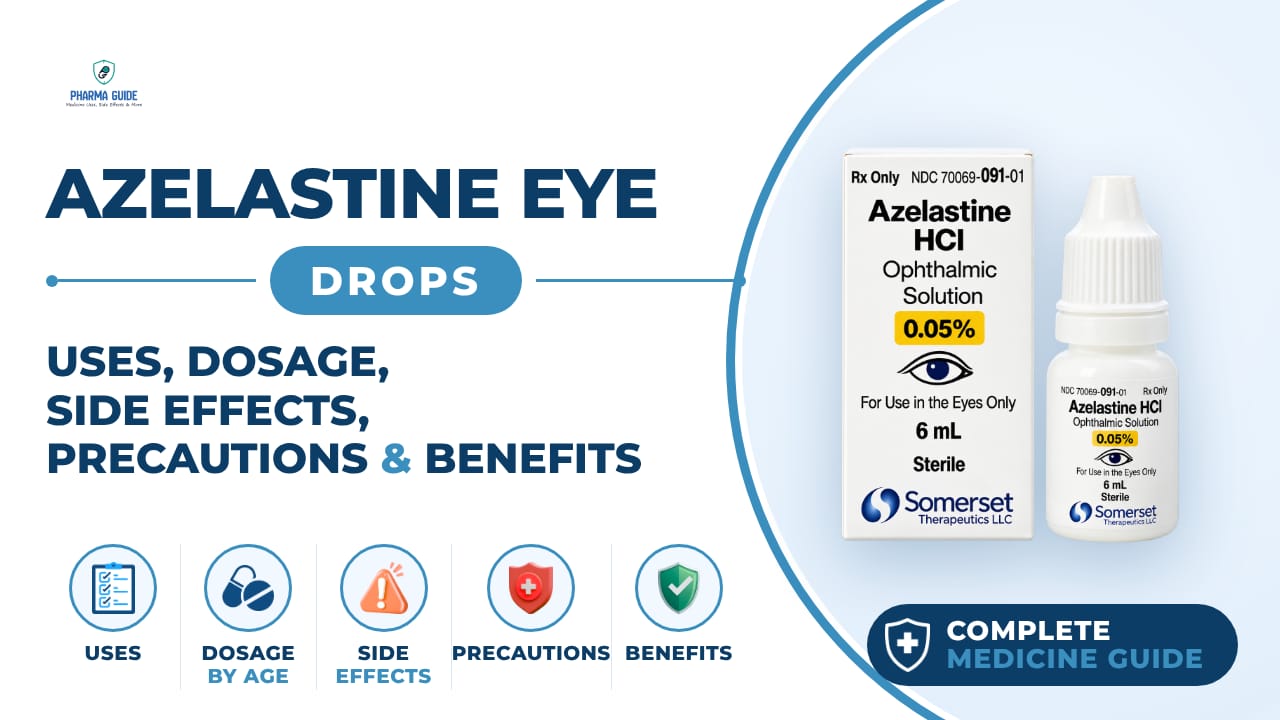
Azelastine Eye Drops: Uses, Dosage, Side Effects, Precautions and Alternates
| Generic name | Azelastine hydrochloride |
|---|---|
| Drug class | Antihistamine (antiallergic) eye drops |
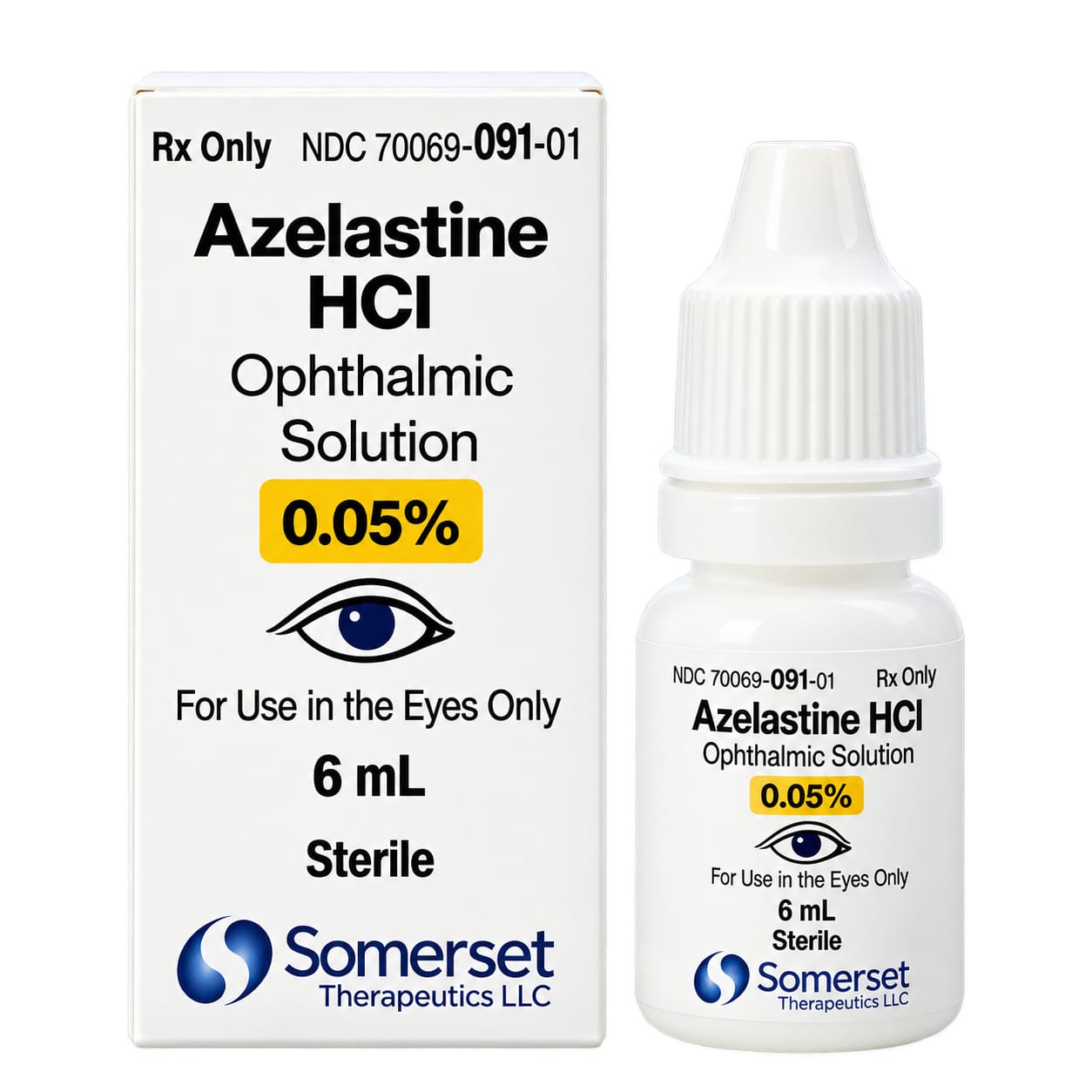
| Forms | Eye drops, solution |
Quick overview
Azelastine Eye Drops contain azelastine hydrochloride, an antihistamine medicine applied directly to the eyes to treat allergy symptoms. They are used to treat and prevent eye itching, redness, and watering caused by seasonal and perennial allergic conjunctivitis. The drops work by blocking histamine in the eye and are typically used twice daily. They are not suitable for treating eye infections.
What is Azelastine Eye Drops
Azelastine eye drops contain azelastine hydrochloride, an antihistamine medicine that is applied directly to the eyes to treat allergy symptoms.
Azelastine Eye Drops uses
- Treats and prevents eye symptoms of seasonal allergic conjunctivitis (hay fever) in adults and children aged 4 years and above
- Treats and prevents eye symptoms of perennial allergic conjunctivitis (allergy to house dust mites, animal dander, etc.) in adults and children aged 12 years and above
- Relieves itching of the eye associated with allergic conjunctivitis
- Not suitable for treating eye infections
Benefits of Azelastine Eye Drops
- Reduces eye itching, redness, watering, and irritation caused by allergies
- Can be used as a preventive measure before expected contact with pollen
- Helps reduce inflammation of the eye
- Provides direct antihistamine action in the eyes
- Helps relieve allergy-related itching
- Requires only twice-daily dosing
How Azelastine Eye Drops works
Azelastine is an antihistamine that blocks the effects of histamine and other substances released by the body during an allergic reaction, which reduces eye inflammation, itching, redness, and watering.
Azelastine Eye Drops dosage
Only use this medicine in the eyes; do not swallow it. Wash your hands before applying the drops, and avoid letting the dropper tip touch your eye, fingers, or any surface to prevent contamination.
Remove soft contact lenses before use and wait at least 15 minutes before putting them back in. If you use other eye drops, space them out from this medicine.
You may use the drops before going outside if you expect contact with pollen. Use regularly until symptoms go away, as stopping early may cause symptoms to return.
If you forget a dose, use it as soon as you remember, then continue at the usual time; do not double up. Talk to a doctor if you do not feel better, or feel worse, after 2 days. Do not use for longer than 6 weeks unless your doctor tells you to.
| Age group | Dose |
|---|---|
| Under 3 years | Safety and effectiveness are not established |
| 3–11 years | 1 drop in each affected eye twice daily |
| 12–17 years | 1 drop in each affected eye twice daily |
| 65–74 years | 1 drop in each affected eye twice daily; no routine age-based adjustment |
Available forms and strengths
- Eye drops, solution
Side effects of Azelastine Eye Drops
Common
- Slight irritation (burning, itching, watering) in the eyes after putting in the drops, which should not last long
- A bitter taste in the mouth, which usually disappears quickly, especially after a soft drink
- Temporary blurred vision
- Headaches
Serious
- Allergic reaction such as rash and itching (very rare)
- Severe allergic reaction with difficulty breathing or swelling of the face, lips, or throat
Warnings and precautions
- Do not use this medicine for more than 6 weeks.
- Only apply this medicine to the eyes; do not drink or swallow it.
- This medicine is not recommended for use while wearing contact lenses, since it contains a preservative that can discolor soft contact lenses. Remove lenses before use and wait at least 15 minutes before putting them back in.
- This medicine is not meant for treating eye infections.
- Do not let the dropper tip touch your eye or any surface, as this could contaminate it with bacteria and cause serious eye infections, including loss of vision.
- If you are pregnant, trying to become pregnant, or breastfeeding, ask your doctor or pharmacist for advice before using this medicine.
- You may have brief blurred vision after using the drops. Wait until your vision clears before driving or using machinery.
Storage
- Keep this medicine out of the sight and reach of children
- Do not use after the expiry date shown on the bottle label and carton
- Once opened, do not use the bottle for longer than 4 weeks (some versions state 12 weeks - check your product's leaflet) even if medicine remains
- This medicine does not require any special storage conditions (one product leaflet also advises not to store above 30°C)
- Do not throw away medicines via wastewater or household waste; ask your pharmacist how to dispose of medicines you no longer need
When to see a doctor
- Talk to your doctor if you're not sure your eye symptoms are from allergy, especially if only one eye is affected, your vision is impaired, or your eye hurts without nose symptoms, as this could mean an infection rather than an allergy.
- Talk to your doctor if your symptoms get worse or last longer than 48 hours without clear improvement despite using this medicine.
- If you accidentally swallow this medicine, contact your doctor or the nearest hospital casualty department as soon as possible.
- If you notice a rash around your eyes, or any swelling or increased itching, stop using the drops and contact a doctor for advice.
- See a doctor if your symptoms do not improve within 2 days or get worse.
Alternatives
- Olopatadine eye drops
- Ketotifen eye drops
- Epinastine eye drops
- Bepotastine eye drops
Watch the video
FAQs
What is Azelastine Eye Drops used for?
It treats and prevents eye itching, redness, and watering caused by seasonal and perennial allergic conjunctivitis. It is not suitable for treating eye infections.
How often should Azelastine Eye Drops be used?
The drops are typically used twice daily, with 1 drop in each affected eye.
Can I wear contact lenses while using Azelastine Eye Drops?
The drops are not recommended for use while wearing contact lenses, as they contain a preservative that can discolor soft lenses. Remove lenses before use and wait at least 15 minutes before putting them back in.
How long can I use Azelastine Eye Drops?
Do not use this medicine for more than 6 weeks unless your doctor tells you to. Talk to a doctor if you do not feel better, or feel worse, after 2 days.
What are the common side effects of Azelastine Eye Drops?
Common side effects include slight eye irritation after application, a bitter taste in the mouth, temporary blurred vision, and headaches.
General information, not medical advice
Your prescriber and the leaflet in your pack know your situation. This page does not.
- Follow your prescriber and the leaflet
- Don't start, stop, or change a dose on your own
- Doses and warnings differ by country and product
Sources
- https://assets.hpra.ie/products/Human/28925/2086137.PA1648_003_001.b038dd0d-c627-49ba-9023-e60edd94835c.000001ProductLeafletApproved.130322.pdf
- https://assets.hpra.ie/products/Human/25812/b17f99de-7fab-4666-8572-111bef31cba7.pdf
- https://patient.info/medicine/azelastine-eye-drops-for-allergies-optilast
Video
Related medicines

Injectafer Injection: Uses, Dosage, Side Effects, Precautions and Alternates
Iron products
Injectafer (ferric carboxymaltose) treats iron deficiency anemia and heart failure-related iron deficiency via IV. Learn uses, dosage, side effects, and

Gliclazide Tablet: Uses, Dosage, Side Effects, Precautions and Alternates
Sulfonylurea (hypoglycemic/antidiabetic agent)
Gliclazide Tablet is a sulfonylurea for type 2 diabetes that boosts insulin release. Learn about dosage, side effects, warnings, and precautions.