
Safety
General information, not medical advice
Your prescriber and the leaflet in your pack know your situation. This page does not.
- Follow your prescriber and the leaflet
- Don't start, stop, or change a dose on your own
- Doses and warnings differ by country and product
Azilect Tablet: Uses, Dosage, Side Effects, Precautions and Alternates
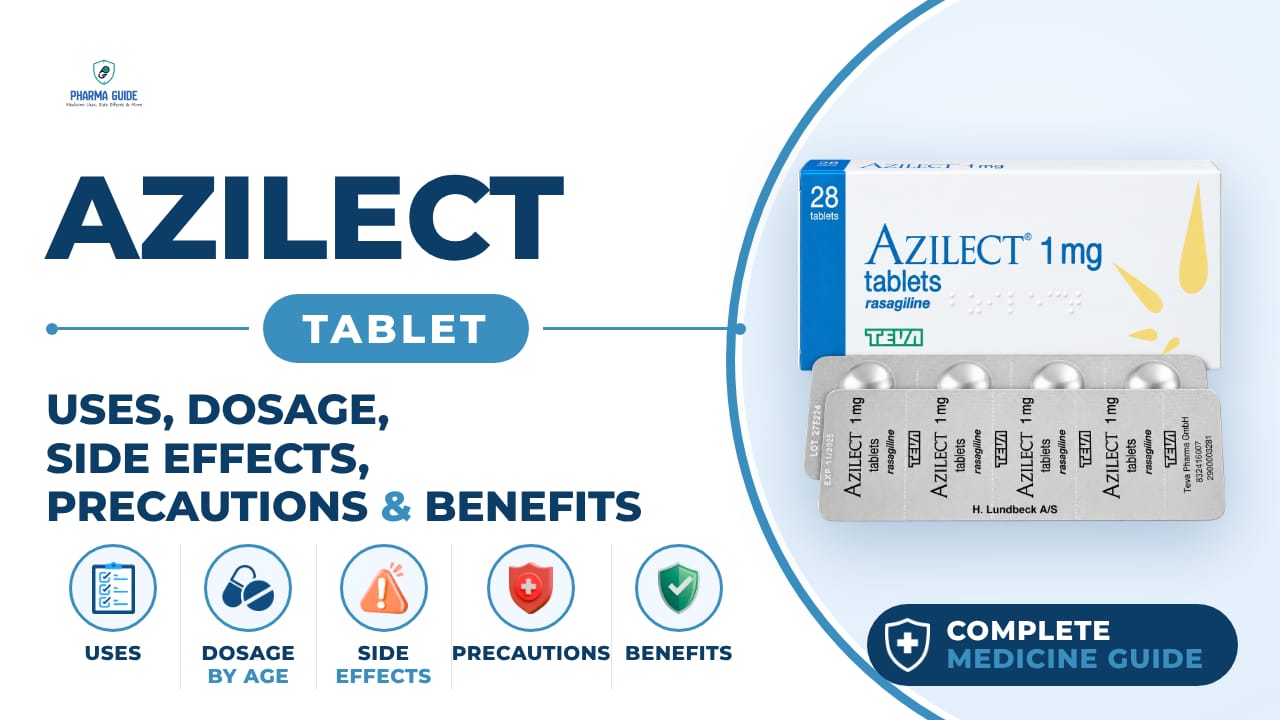
| Generic name | rasagiline |
|---|---|
| Drug class | Monoamine oxidase-B inhibitor (MAOI), a type of dopaminergic antiparkinsonism agent |
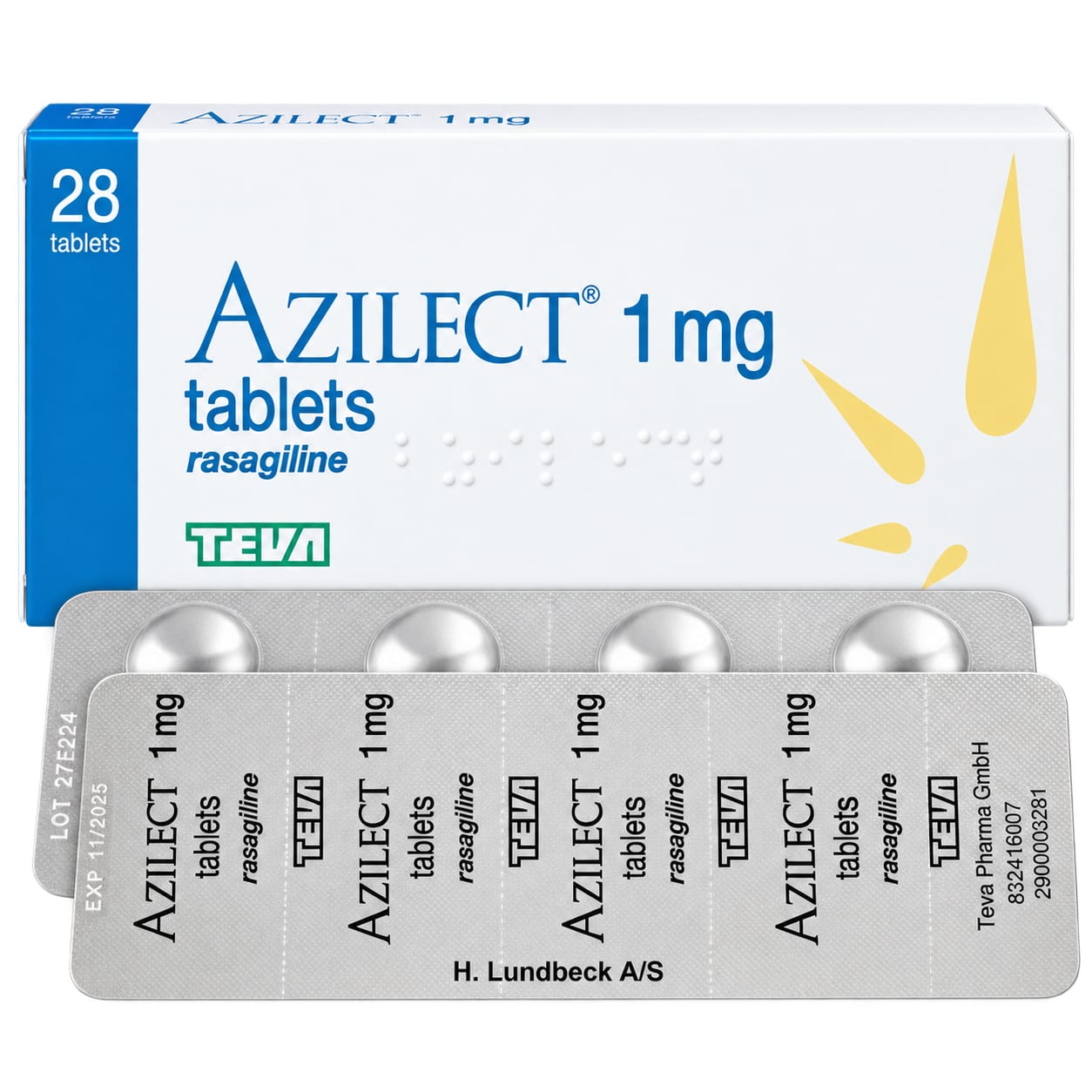
| Forms | Tablet (0.5 mg and 1 mg strengths) |
Quick overview
Azilect Tablet (rasagiline) is a prescription monoamine oxidase-B inhibitor used to treat Parkinson's disease, a condition affecting the nervous system that causes tremors, stiffness, and spasms. It can be used alone or together with levodopa, and works by raising dopamine levels in the brain. Common doses are 1 mg once daily for adults, with specific warnings about diet, other medicines, and sudden stopping.
What is Azilect Tablet
Azilect is a prescription tablet used to treat Parkinson's disease, a condition that affects the nervous system and causes muscle movements you can't control, such as tremors, stiffness, and spasms. Its generic name is rasagiline, and it belongs to the monoamine oxidase-B inhibitor (MAOI) class, a type of dopaminergic antiparkinsonism agent.
Azilect Tablet uses
- Treats symptoms of Parkinson's disease such as stiffness, tremors, spasms, and poor muscle control
- Can be used alone or together with another Parkinson's medicine called levodopa
Benefits of Azilect Tablet
- Improves movement symptoms like stiffness and slowness
- Can reduce the amount of time spent in the 'off' state (when levodopa isn't working well) when added to levodopa treatment
How Azilect Tablet works
In Parkinson's disease, brain cells that make a chemical called dopamine start to die, which lowers dopamine levels and causes movement problems. Azilect blocks an enzyme that breaks down dopamine, so dopamine levels rise, which helps ease symptoms like stiffness and slow movement.
Azilect Tablet dosage
Take exactly as prescribed and follow all directions on your prescription label. Your dose may be different depending on whether you take it alone or with other Parkinson's medicines. It can be taken with or without food. Take your dose at about the same time each day to help you remember, and swallow the tablets whole with a full glass of water. Follow any special diet plan your doctor or nutrition counselor gives you, including avoiding certain high-tyramine foods. Do not stop taking this medicine suddenly without talking to your doctor, as this can cause withdrawal symptoms. If you miss a dose, skip it and take your next dose at the regular time; do not take two doses at once.
| Age group | Dose |
|---|---|
| Under 18 years | Not recommended |
| 18–64 years | 1 mg once daily |
| 65+ years | 1 mg once daily |
Available forms and strengths
- Tablet (0.5 mg and 1 mg strengths)
Side effects of Azilect Tablet
Common
- Depressed mood
- Sleep problems (insomnia), strange dreams
- Involuntary muscle movements
- Loss of appetite, weight loss
- Indigestion, stomach pain, nausea, vomiting, constipation
- Joint pain or stiffness
- Rash
- Cough or other flu symptoms
- Dry mouth
- Swelling in hands or feet
- Headache
- Flu-like symptoms such as chills or body aches
- Dizziness (vertigo)
- Skin bruising
- Tingling or prickling feelings
Serious
- Signs of allergic reaction: hives, difficulty breathing, swelling of face, lips, tongue, or throat
- Severe headache, blurred vision, pounding in neck or ears
- Extreme drowsiness or suddenly falling asleep
- Unusual changes in mood or behavior
- Hallucinations
- Light-headed feeling like you might pass out
- Worsening Parkinson's symptoms, especially uncontrolled muscle movements
- Symptoms of serotonin syndrome: agitation, fever, sweating, shivering, fast heart rate, muscle stiffness, twitching, loss of coordination, nausea, vomiting, diarrhea
- Low blood pressure, including a sudden drop when standing up (orthostatic hypotension)
- Falling
- Increased sexual urges, urges to gamble, or other intense impulses
- Daytime sleepiness, including suddenly falling asleep during activities like driving
Warnings and precautions
- It isn't known whether Azilect is safe during pregnancy. Animal studies showed harmful effects, but this doesn't always predict what happens in humans. Tell your doctor if you are pregnant or planning to become pregnant. It isn't known if Azilect is safe while breastfeeding; talk to your doctor about the risks and benefits.
- Do not take Azilect if you have severe liver problems. Tell your doctor about any liver disease before starting treatment, as your dose may need to be adjusted.
- Drinking alcohol is not recommended while taking Azilect. Alcohol can worsen side effects like sleepiness, dizziness, and falling, and some alcoholic drinks contain substances that can cause a dangerous rise in blood pressure.
- Be careful driving or using machines until you know how this medicine affects you. Azilect can cause dizziness, drowsiness, or sudden sleep onset, which can lead to accidents.
- Do not use Azilect if you have taken an MAO inhibitor (such as isocarboxazid, linezolid, methylene blue injection, phenelzine, selegiline, or tranylcypromine) in the past 14 days — this can cause a dangerous drug interaction.
- While taking Azilect and for 2 weeks after stopping, you may need to avoid certain cheeses and other foods high in tyramine, as combining them with this medicine can cause a dangerously high rise in blood pressure.
- Do not stop taking Azilect suddenly, as this can cause serious withdrawal symptoms including very high fever, muscle stiffness, and confusion.
- Taking certain medicines together with Azilect, such as dextromethorphan (in some cough medicines), meperidine, methadone, tramadol, cyclobenzaprine, or St. John's wort, can cause dangerous reactions including serotonin syndrome.
- People with Parkinson's disease may have a higher risk of skin cancer (melanoma). Ask your doctor about skin changes to watch for.
- Some people taking Azilect have developed intense urges such as gambling, binge eating, uncontrolled spending, or increased sexual urges. Tell your doctor if this happens.
Storage
- Store at room temperature away from moisture and heat
- Store Azilect tablets at room temperature (77°F/25°C) in a tightly sealed container away from light; can be kept at 59°F to 86°F (15°C to 30°C) for short periods
- Store below 25°C and keep in the blister pack until it is time to take it
- Do not store in the bathroom or near a sink, or in the car or on window sills
- Keep out of reach and sight of children
- Do not use after the expiry date
- Do not throw away medicines via wastewater or household waste; ask your pharmacist how to dispose of medicines you no longer use
When to see a doctor
- Get emergency medical help if you have signs of an allergic reaction: hives, difficulty breathing, or swelling of your face, lips, tongue, or throat.
- Seek medical attention right away if you have symptoms of serotonin syndrome, such as agitation, hallucinations, fever, sweating, shivering, fast heart rate, muscle stiffness, twitching, loss of coordination, nausea, vomiting, or diarrhea.
- Call your doctor right away if you have severe headache, blurred vision, pounding in your neck or ears, extreme drowsiness or sudden sleepiness, unusual mood or behavior changes, hallucinations, a light-headed feeling like you might pass out, or worsening Parkinson's symptoms.
- If you think you've taken too much Azilect, seek emergency medical attention right away, as an overdose can be fatal.
- Contact your doctor if you notice any unusual or changing skin lumps or moles, since there may be an increased risk of skin cancer with this medicine.
Alternatives
- Selegiline
- Pramipexole
- Rotigotine
Watch the video
FAQs
What is Azilect Tablet used for?
Azilect is used to treat symptoms of Parkinson's disease such as stiffness, tremors, spasms, and poor muscle control. It can be used alone or together with levodopa.
How does Azilect Tablet work?
Azilect blocks an enzyme that breaks down dopamine, so dopamine levels rise in the brain, which helps ease symptoms like stiffness and slow movement caused by Parkinson's disease.
What is the usual dose of Azilect Tablet?
The usual dose for adults aged 18 to 64 and for those 65 and older is 1 mg once daily, taken exactly as prescribed with or without food.
Can I drink alcohol while taking Azilect Tablet?
Drinking alcohol is not recommended while taking Azilect, as it can worsen side effects like sleepiness, dizziness, and falling, and some alcoholic drinks can cause a dangerous rise in blood pressure.
What foods should I avoid while taking Azilect Tablet?
While taking Azilect and for 2 weeks after stopping, you may need to avoid certain cheeses and other foods high in tyramine, as combining them with this medicine can cause a dangerously high rise in blood pressure.
General information, not medical advice
Your prescriber and the leaflet in your pack know your situation. This page does not.
- Follow your prescriber and the leaflet
- Don't start, stop, or change a dose on your own
- Doses and warnings differ by country and product
Sources
Video
Related medicines

Injectafer Injection: Uses, Dosage, Side Effects, Precautions and Alternates
Iron products
Injectafer (ferric carboxymaltose) treats iron deficiency anemia and heart failure-related iron deficiency via IV. Learn uses, dosage, side effects, and

Gliclazide Tablet: Uses, Dosage, Side Effects, Precautions and Alternates
Sulfonylurea (hypoglycemic/antidiabetic agent)
Gliclazide Tablet is a sulfonylurea for type 2 diabetes that boosts insulin release. Learn about dosage, side effects, warnings, and precautions.