
Safety
General information, not medical advice
Your prescriber and the leaflet in your pack know your situation. This page does not.
- Follow your prescriber and the leaflet
- Don't start, stop, or change a dose on your own
- Doses and warnings differ by country and product
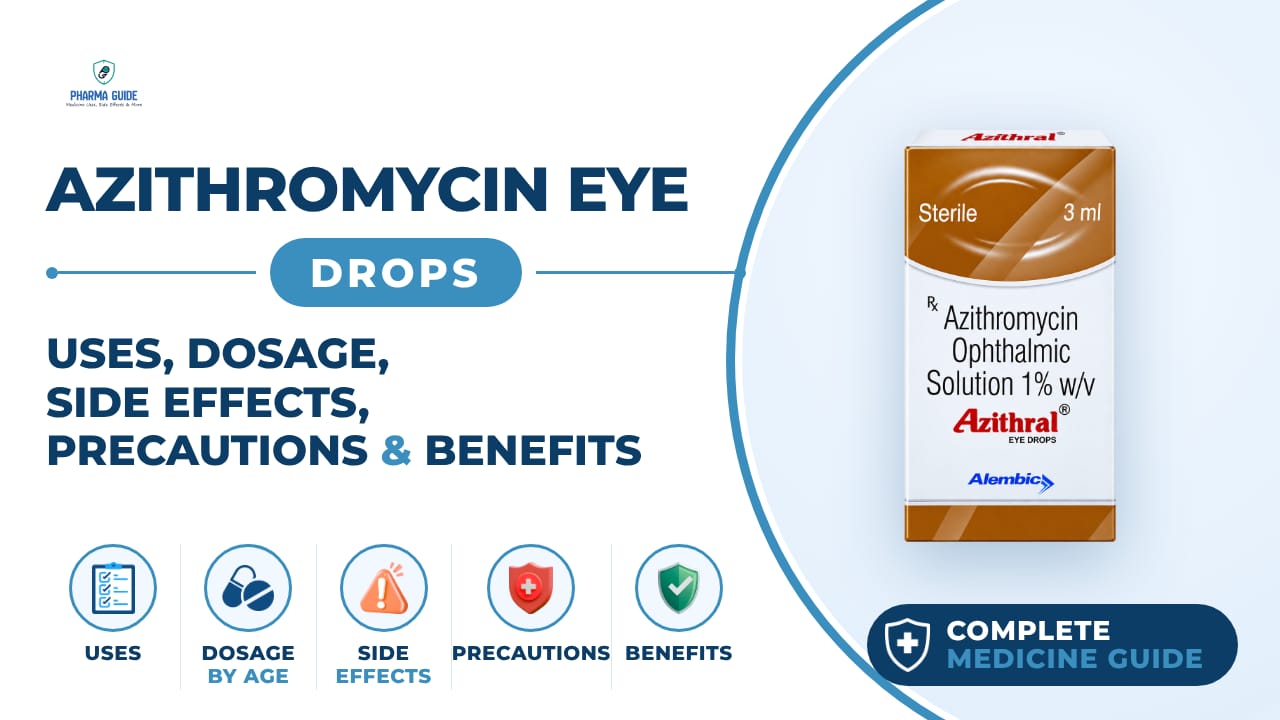
Azithromycin Eye Drops: Uses, Dosage, Side Effects, Precautions and Alternates
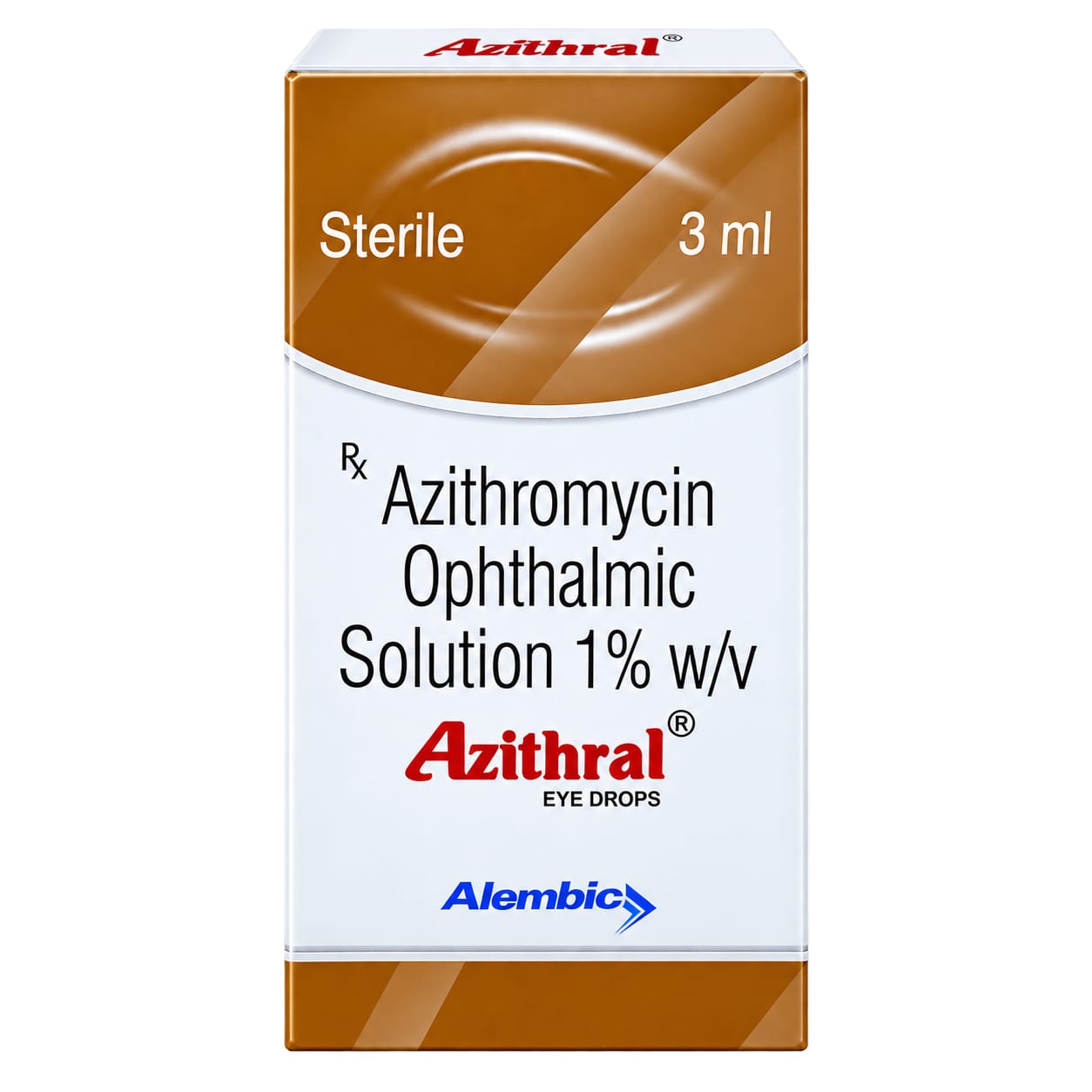
| Generic name | azithromycin ophthalmic |
|---|---|
| Drug class | Ophthalmic anti-infectives (Macrolides) |
| Forms | Ophthalmic solution (eye drops), 1% |
Quick overview
Azithromycin Eye Drops (azithromycin ophthalmic) are a macrolide antibiotic eye drop used to treat bacterial eye infections, including bacterial conjunctivitis. They work by stopping bacteria from growing, helping clear the infection with a relatively short 7-day treatment course. Common effects include eye irritation and dryness, while serious reactions such as allergic responses or severe skin reactions require prompt medical attention.
What is Azithromycin Eye Drops
Azithromycin is a macrolide antibiotic that fights bacteria. The eye drop form is used to treat eye infections caused by bacteria.
Azithromycin Eye Drops uses
- Treats eye infections caused by bacteria, including bacterial conjunctivitis (pink eye)
- Treats bacterial conjunctivitis
- Reduces bacterial growth in the eye
- Helps improve bacterial eye redness
- Helps reduce bacterial eye discharge
Benefits of Azithromycin Eye Drops
- Fights bacteria that cause eye infections
- Delivers the antibiotic directly to the eye, which may reduce side effects that happen with antibiotics taken by mouth
- Requires a relatively short 7-day treatment course
- Provides direct antibiotic treatment to the affected eye
- Has very low expected systemic exposure after ophthalmic use
- Effective against several common bacterial causes of conjunctivitis
How Azithromycin Eye Drops works
Azithromycin works by attaching to a part of the bacteria's machinery that makes proteins, which stops the bacteria from growing and helps clear the infection.
Azithromycin Eye Drops dosage
Follow all directions on your prescription label and read all medication guides or instruction sheets, and use the medicine exactly as directed. Do not wear soft contact lenses while using this medicine; a preservative in the drops could permanently stain the lenses, so put in contact lenses at least 15 minutes after using the drops. Wash your hands before using the eye medication. Turn the bottle upside down and shake it once just before each use.
To apply: tilt your head back slightly, pull down your lower eyelid to make a small pocket, hold the dropper above the eye and let a drop fall into the pocket, then close your eyes for 1 to 2 minutes. If more than one drop is needed, wait about 5 minutes between drops. Wait at least 10 minutes before using any other eye drops your doctor has prescribed.
Do not touch the dropper tip to your eye, fingers, or any surface, since a contaminated dropper can infect your eye. Do not use the drops if the liquid has changed color or has particles in it; ask your pharmacist for new medicine. Use the full course of treatment as prescribed, even if your symptoms improve quickly, since skipping doses can increase the risk of an infection that resists treatment. Do not wear contact lenses while you still have active symptoms of the eye infection, such as redness, irritation, or drainage. This medicine should not be used in a child younger than 1 year old.
| Age group | Dose |
|---|---|
| Children | 1 drop in the affected eye(s) twice daily for the first 2 days, then 1 drop once daily for the next 5 days |
| 12–17 years | 1 drop twice daily for 2 days, then 1 drop once daily for 5 days |
| 18–64 years | 1 drop twice daily for 2 days, then 1 drop once daily for 5 days |
| 65–74 years | Same standard regimen; no routine age-based adjustment |
Available forms and strengths
- Ophthalmic solution (eye drops), 1%
Side effects of Azithromycin Eye Drops
Common
- Eye irritation
- Dry or itchy eyes
- Blurred vision
- Stuffy nose
- Changes in your sense of taste
Serious
- Drainage or crusting of the eye
- Severe burning, stinging, itching, or other irritation after using the eye drops
- Feeling like something is in your eye
- Changes to the surface of your eye
- Eye pain or swelling
- Eyelid irritation
- Any signs of a new infection
- Hives, difficult breathing, swelling in your face or throat (signs of allergic reaction)
- Fever, sore throat, burning eyes, skin pain, red or purple skin rash with blistering and peeling (signs of severe skin reaction)
Warnings and precautions
- Stop using this medicine and get emergency help right away if you notice signs of a severe skin reaction, such as fever, sore throat, burning eyes, skin pain, or a red or purple skin rash with blistering and peeling.
- Do not use this medicine if you are allergic to azithromycin.
- This medicine should not be used in children younger than 1 year old.
- Do not touch the dropper tip to your eye or any surface — a contaminated dropper can infect your eye and could lead to serious vision problems.
- Serious allergic reactions, including severe swelling, life-threatening allergic shock, and serious skin reactions, have been reported; although rare, deaths have occurred.
- Tell your doctor if you are pregnant. The drug may be acceptable to use during pregnancy, but check with your doctor.
- Tell your doctor if you are breastfeeding. It is not known if this medicine passes into breast milk, so it should be used with caution.
- No routine renal dose adjustment is generally required for ophthalmic use.
- No routine liver-specific adjustment is generally required because systemic exposure is minimal.
- No significant direct alcohol interaction is expected with topical ophthalmic azithromycin.
- Temporary blurred vision or irritation after application can affect driving; wait until vision is clear.
Storage
- Store an unopened bottle in the refrigerator. Do not freeze.
- After opening the bottle, store at room temperature for up to 14 days. Keep the bottle tightly closed when not in use.
When to see a doctor
- Stop using the drops and get emergency medical help if you have signs of an allergic reaction such as hives, trouble breathing, or swelling of your face or throat.
- Call your doctor right away if you have drainage or crusting of the eye, severe burning, stinging, itching, or other irritation, a feeling of something in your eye, changes to the surface of your eye, eye pain or swelling, eyelid irritation, or any signs of a new infection.
- Seek medical help right away for serious nerve symptoms like severe headache, confusion, slurred speech, limb weakness, trouble walking, loss of coordination, very stiff muscles, high fever, heavy sweating, or tremors; serious eye symptoms such as sudden vision loss, blurred vision, tunnel vision, eye pain or swelling, or seeing halos around lights; or serious heart symptoms such as fast, irregular, or pounding heartbeat, chest fluttering, shortness of breath, or sudden dizziness or fainting.
- If you think you have used too much of this medicine, seek emergency medical attention or contact a poison control center right away.
Alternatives
- Erythromycin ophthalmic ointment
- Tobramycin eye drops
- Ofloxacin eye drops
- Ciprofloxacin eye drops
Watch the video
FAQs
How is Azithromycin Eye Drops dosed for bacterial conjunctivitis?
Typically 1 drop in the affected eye(s) twice daily for the first 2 days, then 1 drop once daily for the next 5 days, following the full prescribed 7-day course.
Can I wear contact lenses while using azithromycin eye drops?
No, soft contact lenses should not be worn during treatment because a preservative in the drops could permanently stain them, and lenses should not be reinserted until at least 15 minutes after using the drops and until active infection symptoms have resolved.
What are the common side effects of azithromycin eye drops?
Common effects include eye irritation, dry or itchy eyes, blurred vision, stuffy nose, and changes in taste.
How should azithromycin eye drops be stored after opening?
An unopened bottle should be refrigerated and not frozen, while after opening it should be stored at room temperature for up to 14 days with the cap kept tightly closed.
Can azithromycin eye drops be used in young children?
This medicine should not be used in a child younger than 1 year old.
General information, not medical advice
Your prescriber and the leaflet in your pack know your situation. This page does not.
- Follow your prescriber and the leaflet
- Don't start, stop, or change a dose on your own
- Doses and warnings differ by country and product
Sources
Video
Related medicines

Injectafer Injection: Uses, Dosage, Side Effects, Precautions and Alternates
Iron products
Injectafer (ferric carboxymaltose) treats iron deficiency anemia and heart failure-related iron deficiency via IV. Learn uses, dosage, side effects, and

Gliclazide Tablet: Uses, Dosage, Side Effects, Precautions and Alternates
Sulfonylurea (hypoglycemic/antidiabetic agent)
Gliclazide Tablet is a sulfonylurea for type 2 diabetes that boosts insulin release. Learn about dosage, side effects, warnings, and precautions.