
Safety
General information, not medical advice
Your prescriber and the leaflet in your pack know your situation. This page does not.
- Follow your prescriber and the leaflet
- Don't start, stop, or change a dose on your own
- Doses and warnings differ by country and product
Azopt Eye Drops: Uses, Dosage, Side Effects, Precautions and Alternates
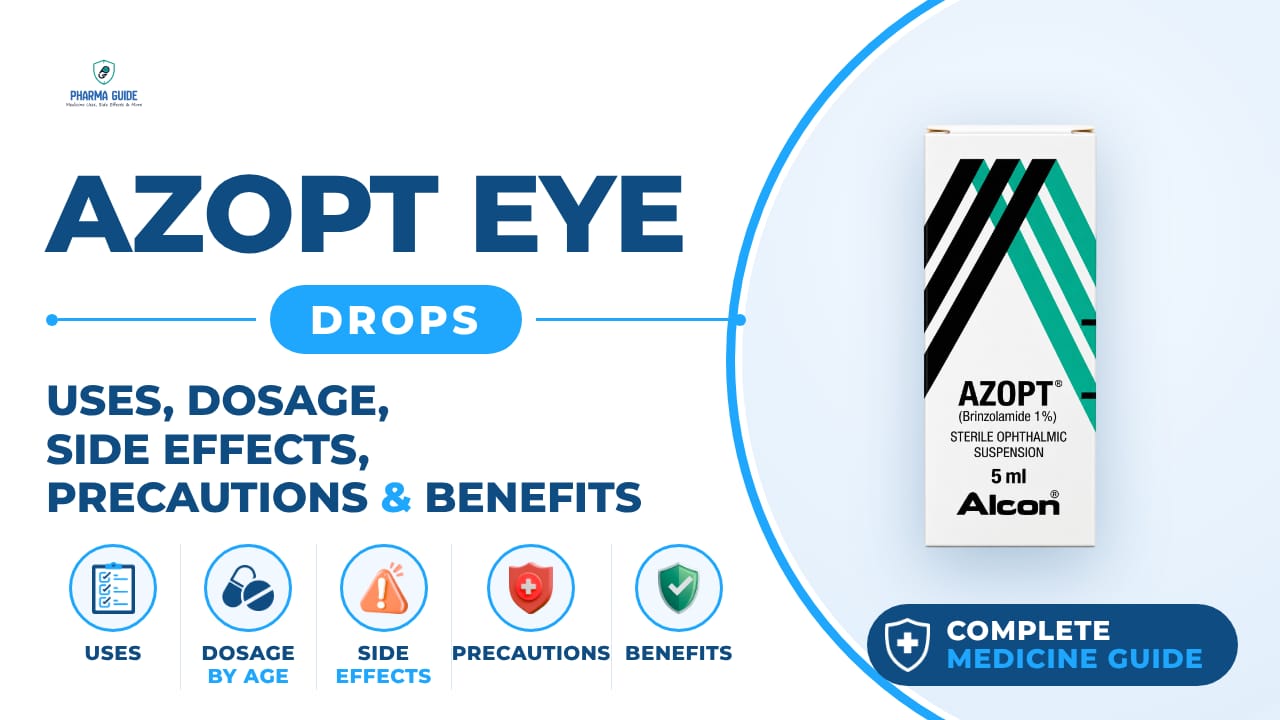
| Generic name | Brinzolamide |
|---|---|
| Drug class | Carbonic anhydrase inhibitor |
| Forms | Eye drops (suspension) |
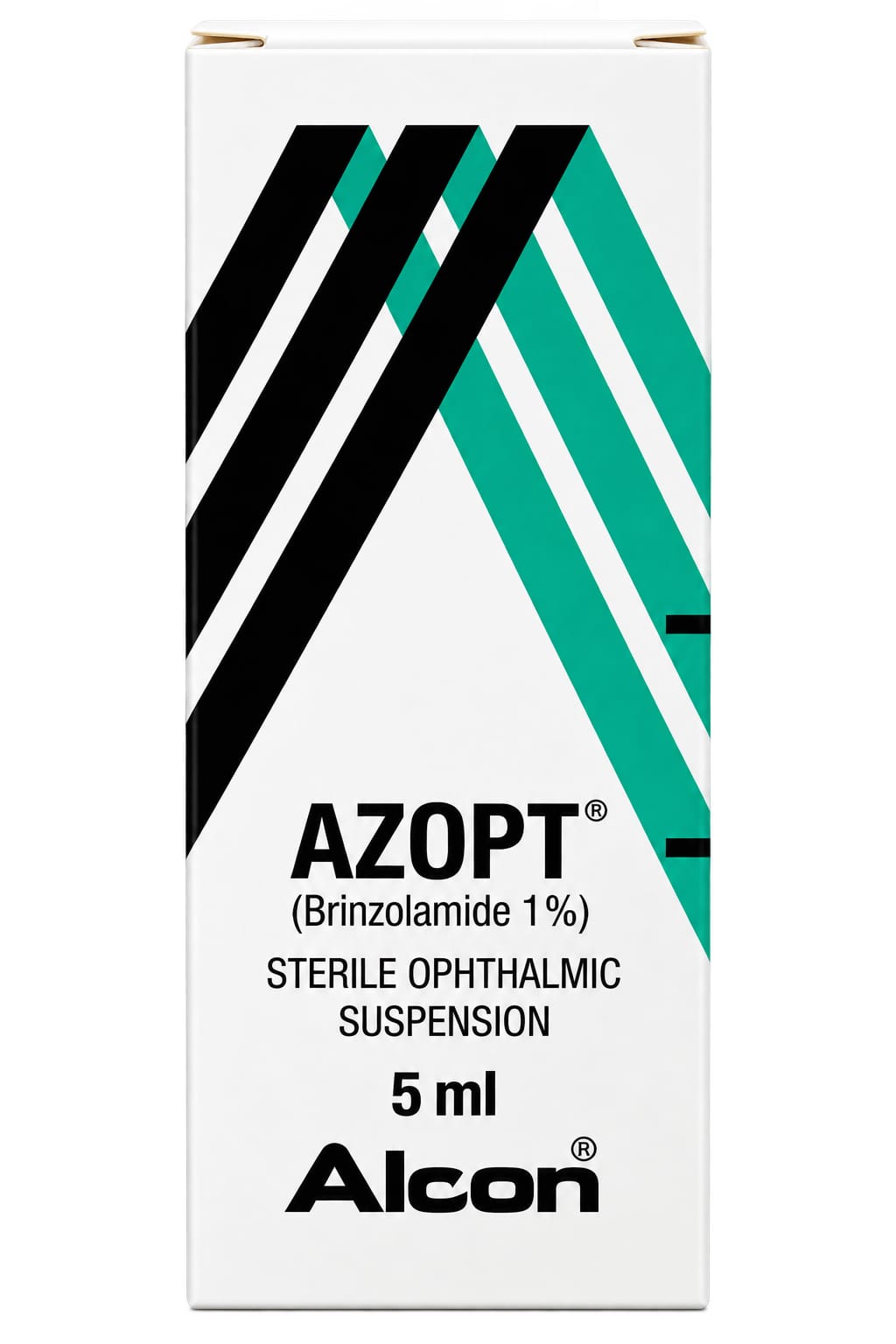
Quick overview
Azopt Eye Drops contain brinzolamide, a carbonic anhydrase inhibitor. They are a prescription eye drop medicine used to lower high pressure inside the eye caused by ocular hypertension or open-angle glaucoma. Azopt works by reducing the amount of fluid the eye produces, and it can be used alone or alongside other eye drops or medicines.
What is Azopt Eye Drops
Azopt is a prescription eye drop medicine that contains brinzolamide. It is used to lower high pressure inside the eye caused by ocular hypertension or open-angle glaucoma.
Azopt Eye Drops uses
- Ocular hypertension (high pressure in the eye)
- Open-angle glaucoma, an eye disorder that damages the optic nerve
Benefits of Azopt Eye Drops
- Can be used alone or together with other eye drops or medicines
- Helps prevent further damage to the optic nerve and vision loss over time
How Azopt Eye Drops works
Azopt blocks an enzyme called carbonic anhydrase in the eye. This enzyme helps make the fluid inside the eye. By blocking it, Azopt reduces how much fluid the eye makes, which lowers the pressure inside the eye.
Azopt Eye Drops dosage
Shake the bottle well before use. Wash your hands before and after using the drops. Remove contact lenses before putting in the drops and wait at least 15 minutes before putting them back in. Do not touch the dropper tip to your eye or any other surface to avoid contamination.
Tilt your head back and pull down the lower eyelid to form a small pocket, then release a drop into the pocket. Close your eye without blinking or rubbing it, and press gently on the inside corner of the eye near the nose for about two minutes to reduce side effects and taste disturbance.
If using other eye drops, wait at least five minutes between products, and use eye ointments last. Use the drops regularly at the same time each day.
If you miss a dose, use it as soon as you remember, but skip it if it is almost time for the next dose - do not double up. Do not stop using this medicine suddenly without talking to your doctor. Discard the bottle four weeks after opening, even if some medicine remains.
| Age group | Dose |
|---|---|
| Under 4 weeks | Not recommended; pediatric safety/efficacy not established |
| 4 weeks–5 years | Specialist-directed only; the studied twice-daily regimen did not demonstrate effective IOP lowering |
| 6–17 years | 1 drop in affected eye(s) 3 times daily, only under ophthalmologist supervision |
| 18–64 years | 1 drop in affected eye(s) 3 times daily |
| 65 years and older | 1 drop in affected eye(s) 3 times daily |
Available forms and strengths
- Eye drops (suspension)
Side effects of Azopt Eye Drops
Common
- Blurred vision
- Double vision
- Dry or itchy eyes
- Discomfort in the eye
- Discharge from the eyes
- Hives
- Headache
- Nervousness
- Keratitis (an eye disease of the cornea)
- Unusual or bitter taste in the mouth
- Foreign body sensation in the eye
- Dry mouth
- Indigestion
- Dizziness
- Fatigue
- Decreased appetite
- Joint pain
- Diarrhoea
- Sore throat, irritation, or coughing
- Runny or blocked nose, sneezing, facial pain (rhinitis)
- Shortness of breath
- Nosebleed
Serious
- Signs of allergic reaction such as skin rash, red or blistering skin, swelling of lips, eyes, or mouth, and fever
- Stevens-Johnson syndrome and toxic epidermal necrolysis (severe skin reactions)
- Reduced vision or visual acuity
- Swelling around the eyes (periorbital oedema)
- Swollen eyelid (blepharitis)
- Swelling of the cornea
- Corneal erosion
- Chest pain
- Kidney pain
- Impotence
- Tingling or numbness of the hands or feet
- Depression
- Loss of memory
- Ringing in the ears (tinnitus)
- Persisting eye discomfort after using the drops
- Eye infection, eye injury, or after eye surgery
Warnings and precautions
- Do not use Azopt if you are allergic to brinzolamide, sulfonamide medicines, or any of its ingredients.
- Do not put Azopt in your eyes while wearing contact lenses, as it may irritate the eyes and discolor soft contact lenses. Take out lenses first and wait at least 15 minutes before putting them back in.
- Do not stop using Azopt suddenly, and do not use it for other problems unless your doctor tells you to.
- Serious skin reactions such as Stevens-Johnson syndrome and toxic epidermal necrolysis have occurred with this medicine. Stop using it and get medical help right away if you notice blistering or peeling skin, mouth sores, or a widespread rash with fever.
- Azopt is not recommended for use in infants, children, or adolescents because its safety and effectiveness have not been established in this age group.
- It is not known if Azopt is safe to use during pregnancy. Talk to your doctor if you are pregnant or planning to become pregnant, so they can weigh the possible risks and benefits.
- It is not known if Azopt passes into breast milk. Talk to your doctor if you are breastfeeding or planning to breastfeed before using this medicine.
- Azopt should not be used by people with severe kidney problems or a condition called hyperchloraemic acidosis. Tell your doctor if you have any kidney disease.
- Tell your doctor if you have liver disease, as caution is needed when using Azopt in people with liver problems.
- There is no known direct interaction between Azopt and alcohol, but drinking alcohol every day may raise eye pressure. Ask your doctor for advice if you drink alcohol.
- Azopt can cause blurred vision or other visual disturbances after you put the drops in. Wait until your vision is clear before driving or using machinery, and be careful since the medicine may also cause nervous system effects.
Storage
- Store below 25°C
- Do not freeze the eye drops
- Store in a cool dry place away from moisture, heat, or sunlight
- Do not store in the bathroom, near a sink, in the car, or on window sills
- Keep out of the sight and reach of children
- Do not use the eye drops after 4 weeks from opening
- Take unused or expired medicine to a pharmacy for safe disposal
When to see a doctor
- Call your doctor right away if you notice signs of an allergic reaction, such as skin rash, redness of the skin, blistering of the lips, eyes or mouth, or fever.
- Call your doctor right away if you have ongoing eye discomfort after using the drops, become pregnant while using Azopt, or develop an eye infection, eye injury, or need eye surgery.
- If you think you have used too much Azopt, seek urgent medical attention right away, even if you feel fine, as this could still cause harm.
- Get medical help immediately if you notice a widespread rash with blisters, skin peeling, or sores in the mouth, eyes, nose, or genitals, which may come with fever or flu-like symptoms.
Alternatives
- Trusopt
- Dorzolamide ophthalmic
- Timolol ophthalmic
Watch the video
FAQs
What is Azopt Eye Drops used for?
Azopt is a prescription eye drop containing brinzolamide, used to lower high pressure inside the eye caused by ocular hypertension or open-angle glaucoma.
How does Azopt Eye Drops work?
Azopt blocks an enzyme called carbonic anhydrase in the eye that helps make eye fluid. By blocking it, Azopt reduces how much fluid the eye makes, lowering eye pressure.
What is the usual dosage for Azopt Eye Drops?
For adults aged 18 to 64 and those 65 and older, the usual dose is 1 drop in the affected eye(s) 3 times daily. It is not recommended for children under 4 weeks, and use in children 4 weeks to 17 years requires specialist direction.
Can I wear contact lenses while using Azopt Eye Drops?
No, you should remove contact lenses before using Azopt, as it may irritate the eyes and discolor soft contact lenses. Wait at least 15 minutes before putting lenses back in.
How long can I use Azopt Eye Drops after opening the bottle?
You should discard the bottle four weeks after opening, even if some medicine remains.
General information, not medical advice
Your prescriber and the leaflet in your pack know your situation. This page does not.
- Follow your prescriber and the leaflet
- Don't start, stop, or change a dose on your own
- Doses and warnings differ by country and product
Sources
Video
Related medicines
Diamox Sequels Capsule: Uses, Dosage, Side Effects, Precautions and Alternates
Carbonic anhydrase inhibitor
Diamox Sequels Capsule (acetazolamide) treats glaucoma, seizures, heart failure fluid retention, and altitude sickness. Learn dosage, side effects, and
Brinzolamide Eye Drops: Uses, Dosage, Side Effects, Precautions and Alternates
Carbonic anhydrase inhibitor
Brinzolamide Eye Drops lower high eye pressure in ocular hypertension and open-angle glaucoma by reducing fluid production. Learn dosage, side effects, and