
Safety
General information, not medical advice
Your prescriber and the leaflet in your pack know your situation. This page does not.
- Follow your prescriber and the leaflet
- Don't start, stop, or change a dose on your own
- Doses and warnings differ by country and product
Azulfidine Tablet: Uses, Dosage, Side Effects, Precautions and Alternates
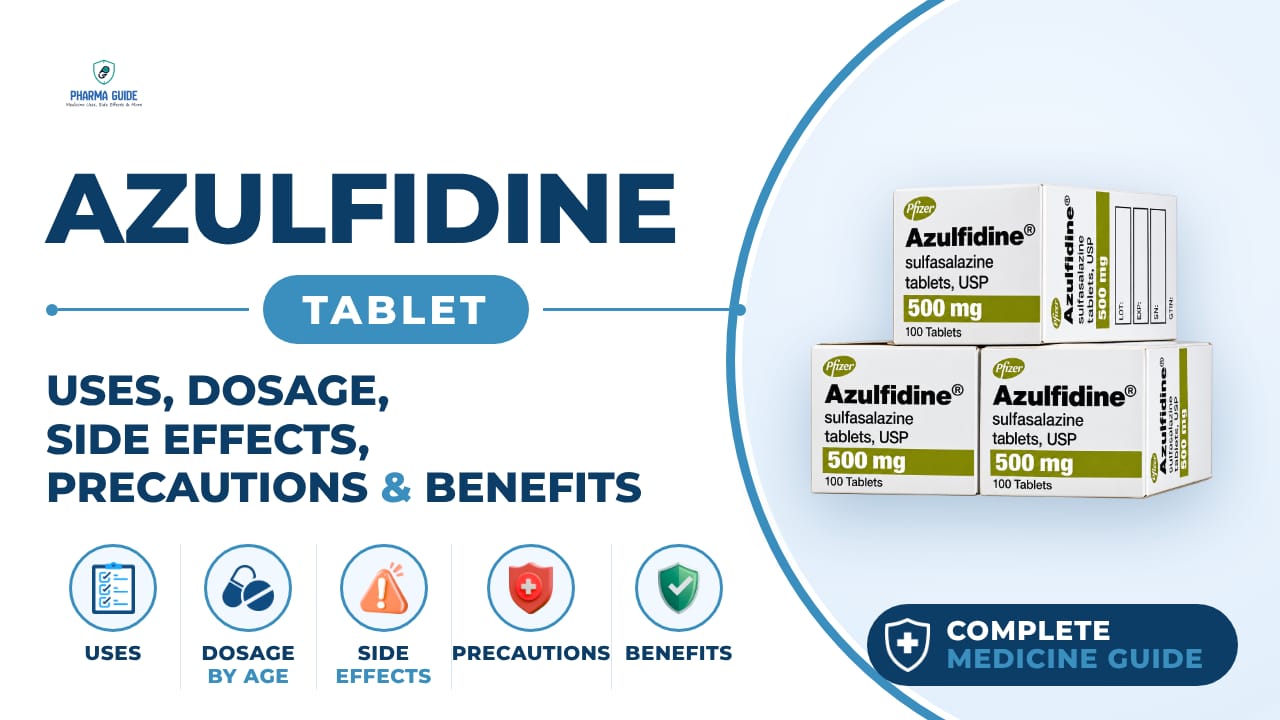
| Generic name | sulfasalazine |
|---|---|
| Drug class | Anti-inflammatory agent and/or immunomodulatory agent (5-aminosalicylate) |
| Forms | Delayed-release (enteric-coated) tablets, 500 mg, Regular (uncoated) tablets, 500 mg |
Quick overview
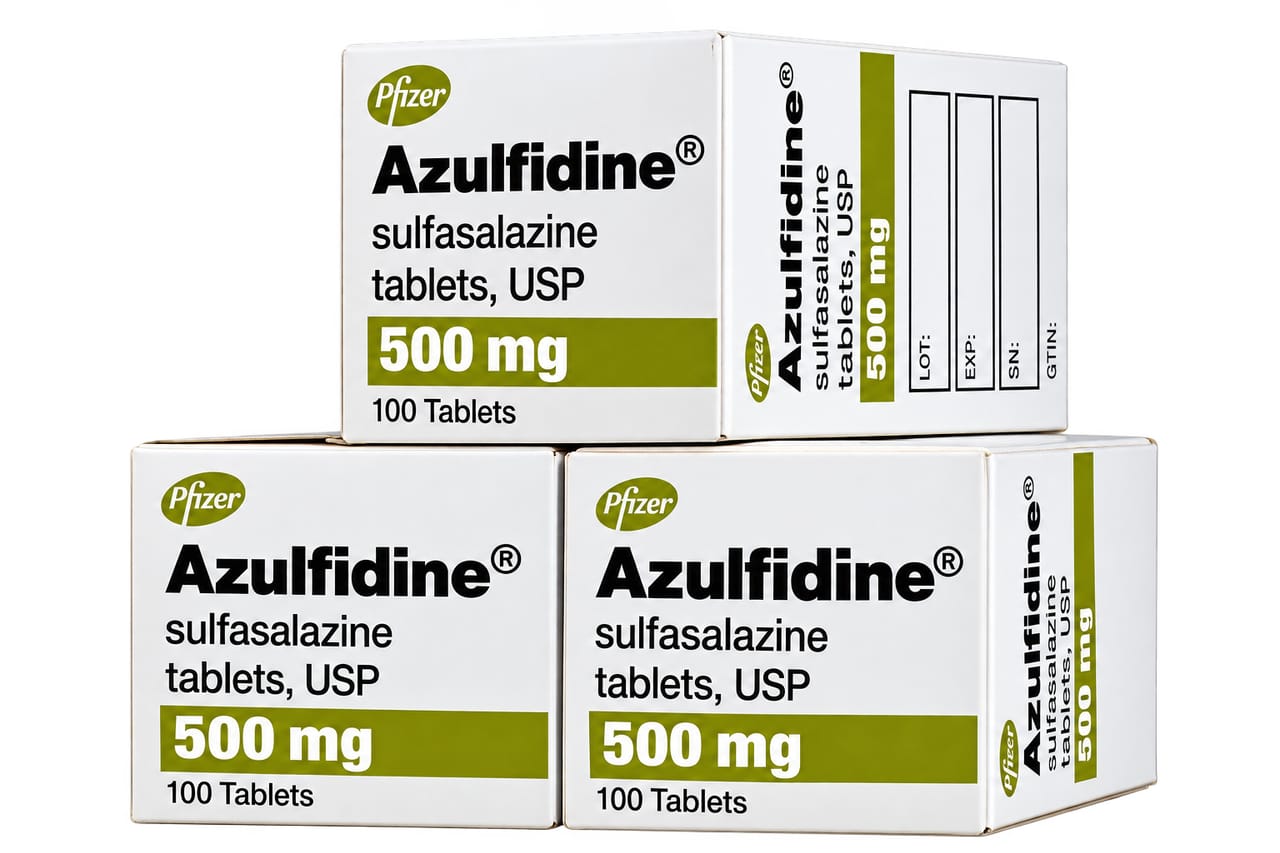
Azulfidine Tablet contains sulfasalazine, an anti-inflammatory and immunomodulatory agent from the 5-aminosalicylate class. It is used to reduce inflammation in ulcerative colitis and rheumatoid arthritis, and it comes as a regular tablet or as an enteric-coated (EN-tabs) delayed-release tablet. Common side effects include nausea and headache, while serious risks involve allergic reactions, blood disorders, and liver or kidney problems.
What is Azulfidine Tablet
Azulfidine is a prescription tablet containing sulfasalazine. It is used to reduce inflammation in conditions like ulcerative colitis and rheumatoid arthritis. It comes as a regular tablet or as an enteric-coated (EN-tabs) delayed-release tablet.
Azulfidine Tablet uses
- Treating mild to moderate ulcerative colitis, and as an add-on treatment in severe ulcerative colitis
- Lengthening the time between ulcerative colitis flare-ups
- Treating rheumatoid arthritis in adults who have not responded well enough to other arthritis medicines
- Treating juvenile rheumatoid arthritis (polyarticular-course) in children who have not responded well enough to other arthritis medicines
Benefits of Azulfidine Tablet
- Can reduce the number of ulcerative colitis attacks you have
- Can help reduce joint inflammation in rheumatoid arthritis
How Azulfidine Tablet works
Sulfasalazine works by lowering inflammation in the body. In the gut, it is broken down into two substances, and one of them is thought to be the main one responsible for its effect in ulcerative colitis.
Azulfidine Tablet dosage
Take after a meal, in evenly spaced doses. Swallow tablets whole; do not crush, chew, or break them. Drink plenty of liquids while taking this medicine to help prevent kidney stones. If you miss a dose, take it as soon as you remember, but skip it if it is almost time for your next dose — do not take two doses at once. This medicine may turn your urine or skin an orange-yellow color, which is usually not harmful. Keep taking your other arthritis medicines until your doctor tells you to stop, since this medicine may take time to start working.
| Age group | Dose |
|---|---|
| Under 6 years | Safety and effectiveness are not established for standard labeled use |
| 6–11 years | Initial: 40–60 mg/kg/day, divided into 3–6 doses; maintenance: 30 mg/kg/day, divided into 4 doses |
| 18–64 years | Initial: 3–4 g/day in evenly divided doses; some patients may start at 1–2 g/day for better tolerance |
| 65–74 years | No separate standard age-based dose; dosing is individualized with closer monitoring |
Available forms and strengths
- Delayed-release (enteric-coated) tablets, 500 mg
- Regular (uncoated) tablets, 500 mg
Side effects of Azulfidine Tablet
Common
- Nausea, vomiting, upset stomach, loss of appetite
- Headache
- Skin rash
- Low sperm count in men
Serious
- Signs of allergic reaction: hives, trouble breathing, swelling of face or throat
- Severe skin reactions: fever, sore throat, burning eyes, skin pain, red or purple rash with blistering and peeling
- Signs of a serious whole-body drug reaction: rash, fever, swollen glands, muscle aches, severe weakness, unusual bruising, yellowing of skin or eyes
- Signs of infection: fever, chills, sore throat, mouth sores, red or swollen gums, pale skin, easy bruising or bleeding, chest discomfort, wheezing, dry cough, rapid weight loss
- Fever with headache, rash, and vomiting
- Little or no urination, or foamy-looking urine
- Puffy eyes, swelling in ankles or feet, weight gain
- Liver problems: loss of appetite, upper right stomach pain, dark urine, yellowing of skin or eyes (jaundice)
- Kidney stones: severe pain in side or back, or pink/red/brown-colored urine
- Inflammation of the heart muscle: chest pain, shortness of breath, trouble breathing
Warnings and precautions
This medicine should only be given with caution to people with liver or kidney damage or blood disorders. Deaths have been linked to serious allergic reactions, blood disorders, liver and kidney damage, nerve and brain/spinal cord problems, and lung scarring. Watch for sore throat, fever, pale skin, unusual bruising, or yellowing of skin, as these can signal serious blood or liver problems.
This medicine can cause low sperm count and infertility in men, but this usually reverses after stopping the medicine.
You should not take this medicine if you have a blockage in your intestines or bladder, have porphyria, or are allergic to sulfasalazine, sulfa drugs, or aspirin-like medicines (salicylates).
This medicine can cause severe skin reactions that can be life-threatening. Stop taking it and get help right away if you notice a rash, painful red or purple skin that looks burned, or blisters in the mouth, nose, or genitals.
This medicine can make your skin more sensitive to sunlight, increasing the risk of severe sunburn. Use sunscreen and protective clothing if you need to be in the sun.
People age 65 and older may have a greater risk of certain side effects and should keep all follow-up appointments and lab tests.
It is not fully known how this medicine affects pregnancy. It should only be used during pregnancy if clearly needed, and it may reduce your body's ability to absorb folic acid, so you may need folic acid supplements. Tell your doctor if you are or may become pregnant.
This medicine passes into breast milk and may cause diarrhea or bloody stools in a nursing baby. Tell your doctor if you are breastfeeding, and watch your baby for diarrhea or bloody stools.
This medicine can cause kidney damage or kidney stones. Drink plenty of fluids and tell your doctor right away if you have reduced urination, swelling in your legs, or other signs of kidney problems.
This medicine can cause liver damage. Tell your doctor right away if you have nausea, stomach pain, fever, loss of appetite, dark urine, or yellowing of your skin or eyes.
It is not known whether drinking alcohol affects this medicine.
Usually does not directly impair driving, but dizziness can occur.
Storage
- Store at room temperature, between 68°F and 77°F (20°C and 25°C)
- Can be exposed to temperatures between 59°F and 86°F (15°C and 30°C) for shorter periods, such as during transport
- Store in a cool, dry place away from moisture and heat
When to see a doctor
- Get emergency help right away for signs of a serious allergic reaction: hives, difficulty breathing, or swelling of the face or throat.
- Call your doctor right away if you notice signs of infection, such as fever, chills, sore throat, mouth sores, pale skin, easy bruising, unusual bleeding, chest discomfort, wheezing, or rapid weight loss.
- Call your doctor right away if you have little or no urination, foamy urine, puffy eyes, swelling in your ankles or feet, or weight gain.
- Call your doctor right away if you have signs of liver problems, such as loss of appetite, upper right belly pain, dark urine, or yellowing of your skin or eyes.
- If you think you have taken too much of this medicine, get emergency medical help or contact a poison control center right away.
Alternatives
- Mesalamine
- Balsalazide
- Olsalazine
- Hydroxychloroquine
Watch the video
FAQs
What is Azulfidine Tablet used for?
Azulfidine Tablet is used to treat mild to moderate ulcerative colitis, lengthen the time between flare-ups, and treat rheumatoid arthritis (including juvenile rheumatoid arthritis) in patients who have not responded well enough to other arthritis medicines.
How should I take Azulfidine Tablet?
Take it after a meal in evenly spaced doses, and swallow the tablets whole without crushing, chewing, or breaking them. Drink plenty of liquids while taking this medicine to help prevent kidney stones.
What are the common side effects of Azulfidine Tablet?
Common side effects include nausea, vomiting, upset stomach, loss of appetite, headache, skin rash, and low sperm count in men.
Can Azulfidine Tablet change the color of urine or skin?
Yes, this medicine may turn your urine or skin an orange-yellow color, which is usually not harmful.
Who should not take Azulfidine Tablet?
You should not take this medicine if you have a blockage in your intestines or bladder, have porphyria, or are allergic to sulfasalazine, sulfa drugs, or aspirin-like medicines (salicylates).
General information, not medical advice
Your prescriber and the leaflet in your pack know your situation. This page does not.
- Follow your prescriber and the leaflet
- Don't start, stop, or change a dose on your own
- Doses and warnings differ by country and product
Sources
Video
Related medicines

Injectafer Injection: Uses, Dosage, Side Effects, Precautions and Alternates
Iron products
Injectafer (ferric carboxymaltose) treats iron deficiency anemia and heart failure-related iron deficiency via IV. Learn uses, dosage, side effects, and

Gliclazide Tablet: Uses, Dosage, Side Effects, Precautions and Alternates
Sulfonylurea (hypoglycemic/antidiabetic agent)
Gliclazide Tablet is a sulfonylurea for type 2 diabetes that boosts insulin release. Learn about dosage, side effects, warnings, and precautions.