
Safety
General information, not medical advice
Your prescriber and the leaflet in your pack know your situation. This page does not.
- Follow your prescriber and the leaflet
- Don't start, stop, or change a dose on your own
- Doses and warnings differ by country and product
Bacitracin Ointment: Uses, Dosage, Side Effects, Precautions and Alternates

| Generic name | Bacitracin (bacitracin zinc topical) |
|---|---|
| Drug class | Topical antibiotic |
| Forms | Topical ointment (500 units/gram), Ophthalmic (eye) ointment form also exists but is a separate product |
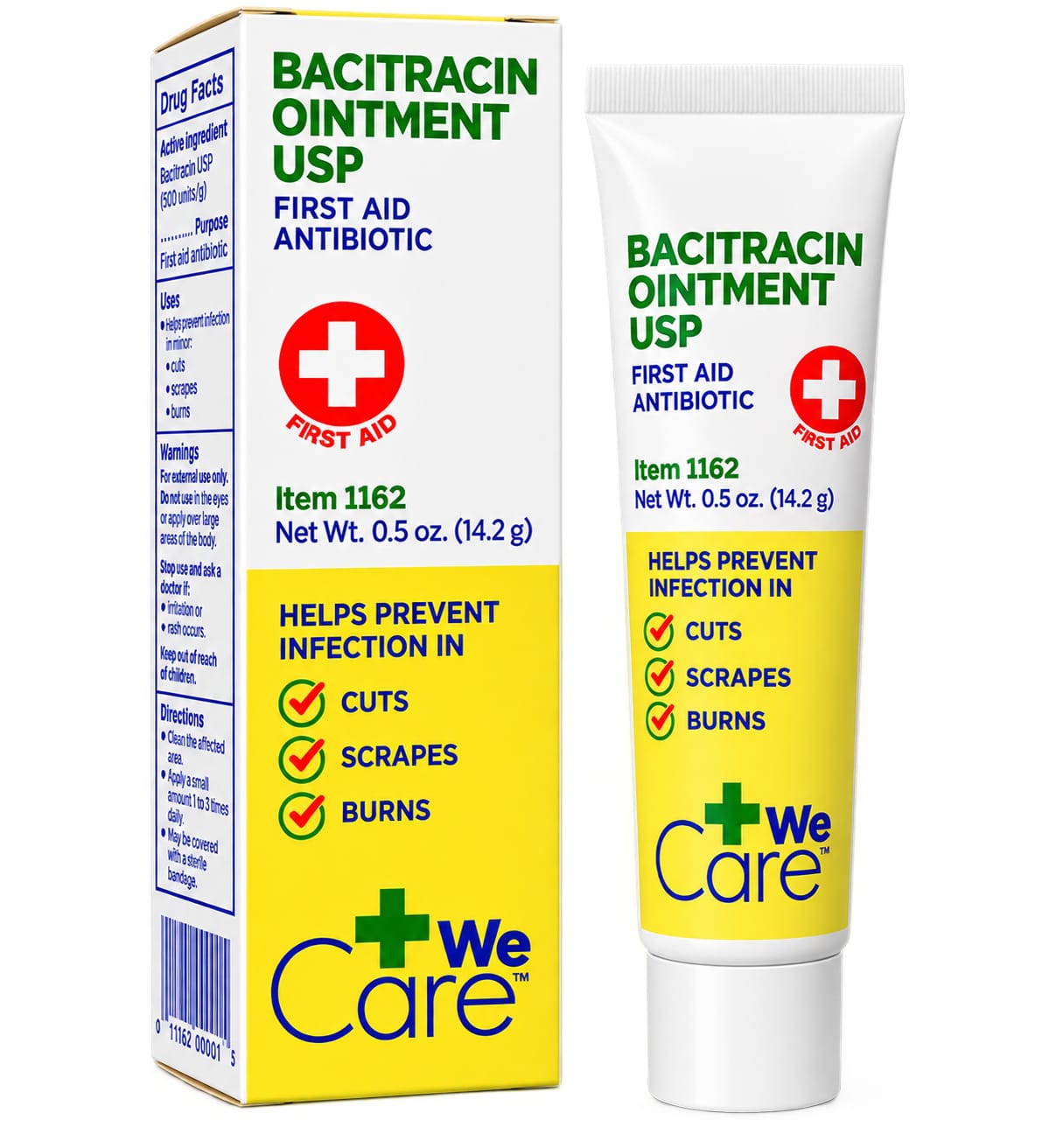
Quick overview
Bacitracin Ointment is an over-the-counter topical antibiotic used on the skin to help prevent and treat minor bacterial skin infections from cuts, scrapes, or burns. It does not treat infections caused by viruses or yeast. It works by stopping certain bacteria from building their cell walls, which stops them from growing and multiplying. It is generally well tolerated, though mild skin irritation can occur.
What is Bacitracin Ointment
Bacitracin is a topical antibiotic, available over the counter, used on the skin to prevent and treat infections from minor cuts, scrapes, or burns. It does not treat infections caused by viruses or yeast.
Bacitracin Ointment uses
- Preventing minor cuts, scrapes, or burns from becoming infected
- Treating minor skin infections caused by bacteria
Benefits of Bacitracin Ointment
- Helps stop bacteria from growing in minor wounds so they can heal without infection
- Available without a prescription and generally well tolerated
How Bacitracin Ointment works
Bacitracin works by stopping certain bacteria from building their cell walls, which the bacteria need to survive, grow, and multiply. Without a cell wall, the bacteria cannot cause an infection.
Bacitracin Ointment dosage
This medicine is for use on the skin only — do not swallow it or get it in your eyes. Wash your hands before and after applying it, unless you are treating your hands, in which case wash before only. Clean the affected area before applying the ointment, then apply a thin film of the ointment to the affected area. You can cover the area with a sterile gauze bandage, but avoid airtight or plastic-covered bandages.
Do not use it more often or for longer than directed on the label. Unless your health care provider tells you otherwise, do not use it for more than about one week. If you get it in your eyes, rinse them with plenty of cool tap water. Ask your care team about use in children, since special care may be needed. If you miss a dose, use it as soon as you remember, but do not double up doses.
| Age group | Dose |
|---|---|
| Under 2 years | Use only if recommended by a healthcare professional |
| 2–11 years | Apply a thin layer 1–3 times daily |
| 12–64 years | Apply a thin layer 1–3 times daily |
| 65+ years | Same adult application; use the smallest amount needed |
Available forms and strengths
- Topical ointment (500 units/gram)
- Ophthalmic (eye) ointment form also exists but is a separate product
Side effects of Bacitracin Ointment
Common
- Mild skin irritation, redness, or dryness
Serious
- Breathing problems or wheezing
- Racing heart
- Fever or general ill feeling
- Swollen lymph nodes
- Swelling of the face, lips, mouth, tongue, or throat
- Trouble swallowing or throat tightness
- Itching or skin rash
- Hives (skin bumps that can be red, pink, white, or brown depending on skin tone)
- Nausea or vomiting
- Dizziness, feeling lightheaded, or fainting
- Stomach cramps
- Joint pain
Warnings and precautions
- Do not use bacitracin if you are allergic to it or to any of its ingredients.
- Check with your health care provider before using this medicine on a deep puncture wound, an animal bite, or a serious burn.
- This medicine is for use on the skin only. Do not swallow it or get it in your eyes, and avoid using it on large areas of the body.
- Do not use this medicine for more than about a week unless your health care provider tells you to, since long-term use of antibiotics can lead to resistance, meaning the antibiotic may stop working as well.
- Keep this medicine out of the reach of children.
- Do not use other skin products on the same area of skin without talking to your care team first.
- It is not known if or how this medicine could affect pregnancy or harm a fetus. Tell your health care provider if you are pregnant or planning to become pregnant so they can advise whether you should use it.
- It is not known if this medicine passes into breast milk. Tell your health care provider if you are breastfeeding or planning to breastfeed so they can advise you.
- It is not known whether drinking alcohol affects this medicine.
Storage
- Store topical bacitracin according to the instructions on the label.
- Most topical bacitracin products should be stored at room temperature, between 59 F and 77 F (15 C and 25 C).
- Store at room temperature between 20 and 25 degrees C (68 and 77 degrees F). Get rid of any unused medication after the expiration date.
- Keep out of the reach of children and pets.
- Take the medication to a medication take-back program, or ask your pharmacist or care team how to get rid of it safely if you cannot return it.
When to see a doctor
- Stop using this medicine and contact your health care provider if the treated area does not improve, gets worse, or you notice itching, burning, or a rash where you applied it.
- Stop using this medicine and get help right away if you have symptoms of a serious allergic reaction, such as trouble breathing, wheezing, a racing heart, fever, swelling of the face, lips, mouth, tongue or throat, trouble swallowing, hives, dizziness or fainting, or stomach cramps.
- Get medical help right away or contact a poison control center if you or someone else uses too much of this medicine.
- Tell your care team if your symptoms do not start to improve within about a week or if they get worse.
Alternatives
- Bacitracin combined with neomycin and polymyxin B (triple-antibiotic ointment)
- Mupirocin Ointment
- Fusidic Acid Ointment
- Neomycin Ointment
- Polymyxin B Ointment
- Bacitracin + Polymyxin B
Watch the video
FAQs
What is Bacitracin Ointment used for?
It is used to help prevent minor cuts, scrapes, or burns from becoming infected and to treat minor skin infections caused by bacteria. It does not treat infections caused by viruses or yeast.
How does Bacitracin Ointment work?
It works by stopping certain bacteria from building their cell walls, which they need to survive, grow, and multiply. Without a cell wall, the bacteria cannot cause an infection.
How long can I use Bacitracin Ointment?
Unless your health care provider tells you otherwise, you should not use it for more than about one week, since long-term use of antibiotics can lead to resistance.
What are the common side effects of Bacitracin Ointment?
The most common side effect is mild skin irritation, redness, or dryness at the application site.
Can Bacitracin Ointment be used in children?
For children 2 to 11 years, a thin layer can be applied 1 to 3 times daily, but use in children under 2 years should only occur if recommended by a healthcare professional.
General information, not medical advice
Your prescriber and the leaflet in your pack know your situation. This page does not.
- Follow your prescriber and the leaflet
- Don't start, stop, or change a dose on your own
- Doses and warnings differ by country and product
Sources
Video
Related medicines

Bactroban Nasal Ointment: Uses, Dosage, Side Effects, Precautions and Alternates
Topical antibiotic
Bactroban Nasal Ointment contains mupirocin to clear MRSA and staph bacteria from the nose. Learn about its uses, dosage, side effects, and precautions.

Bactroban Ointment: Uses, Dosage, Side Effects, Precautions and Alternates
Topical antibiotic
Bactroban Ointment (mupirocin) treats mild impetigo and bacterial skin infections. Learn dosage, side effects, warnings, and storage tips before use.