
Safety
General information, not medical advice
Your prescriber and the leaflet in your pack know your situation. This page does not.
- Follow your prescriber and the leaflet
- Don't start, stop, or change a dose on your own
- Doses and warnings differ by country and product
Bactroban Nasal Ointment: Uses, Dosage, Side Effects, Precautions and Alternates
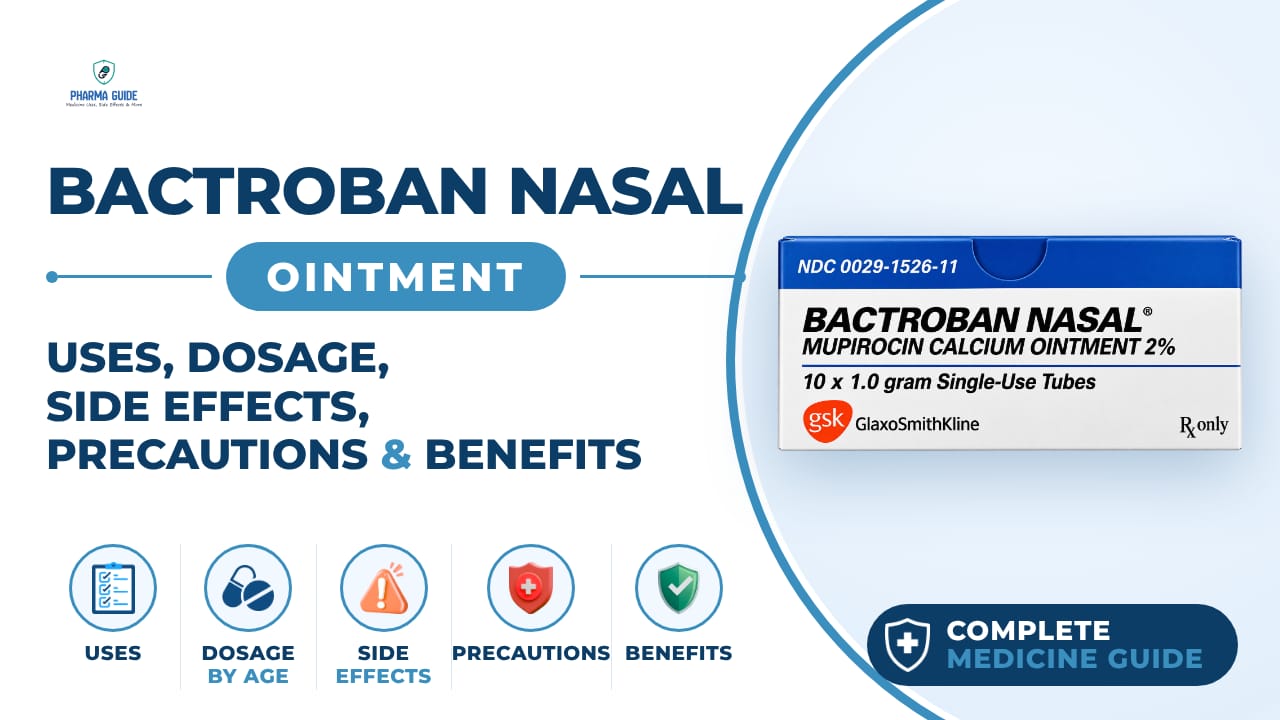
| Generic name | Mupirocin calcium |
|---|---|
| Drug class | Topical antibiotic |
| Forms | Nasal ointment |
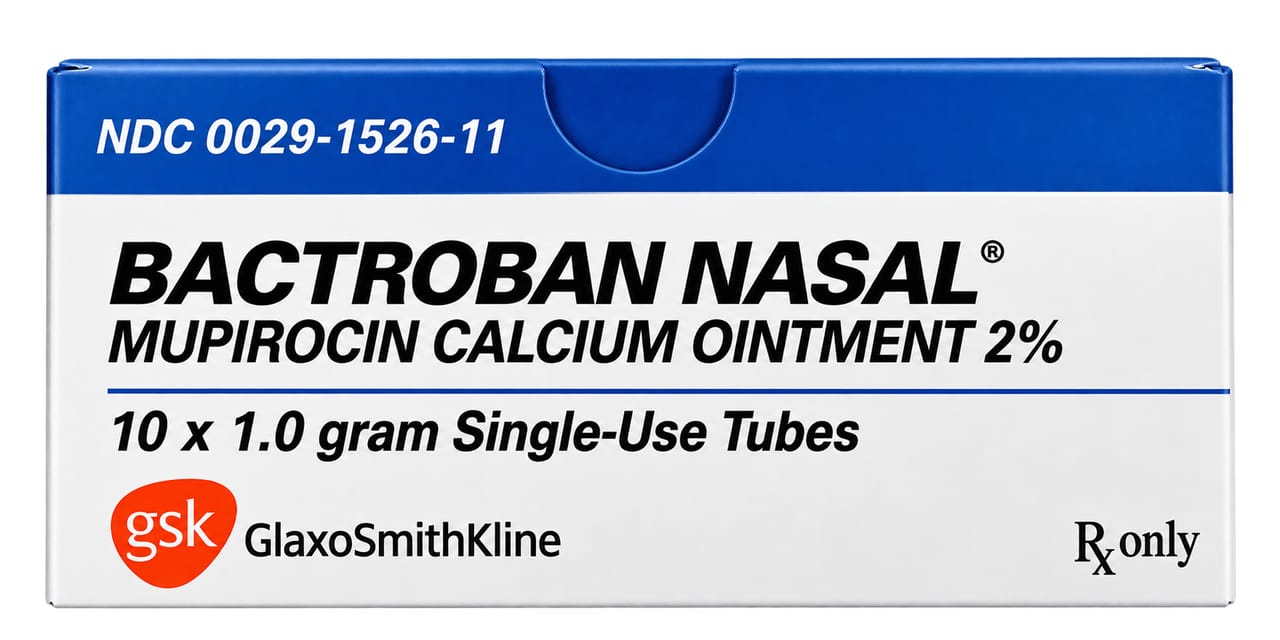
Quick overview
Bactroban Nasal Ointment contains mupirocin calcium, a topical antibiotic applied inside the nose. It is used to eliminate nasal carriage of staphylococci, including MRSA, and is typically used as part of a 5-day treatment course. Common effects include mild itching, redness, burning, tingling, or stinging of the nose, while serious reactions are rare. It should be used exactly as prescribed, applied only inside the nose.
What is Bactroban Nasal Ointment
Bactroban Nasal Ointment is a prescription antibiotic ointment used inside the nose to kill bacteria called staphylococci, including methicillin-resistant Staphylococcus aureus (MRSA).
Bactroban Nasal Ointment uses
- Eliminates nasal carriage of staphylococci, including methicillin-resistant Staphylococcus aureus (MRSA)
- Eliminates nasal Staphylococcus aureus colonization
- Used for MRSA nasal decolonization in appropriate patients
- Reduces susceptible bacteria carried inside the nostrils
Benefits of Bactroban Nasal Ointment
- Clears staph bacteria, including MRSA, from the inside of the nose within about 5 to 7 days of starting treatment
- Provides localized antibacterial treatment
- Has minimal systemic absorption in adults
- Uses a short 5-day treatment course
How Bactroban Nasal Ointment works
Mupirocin works by blocking a process bacteria need to build proteins, which stops the bacteria from growing.
Bactroban Nasal Ointment dosage
This ointment is for use in the nose only. Apply it using a cotton-tipped applicator. After applying, press the sides of the nose together several times to spread the ointment. Do not mix it with other preparations, as this can dilute the ointment and reduce its effectiveness. Use it for the full length of time your doctor tells you, even if symptoms improve, so the bacteria are fully cleared.
| Age group | Dose |
|---|---|
| Under 12 years | Safety and effectiveness are not established |
| 12–17 years | Approximately 0.25 g into each nostril twice daily for 5 days |
| 18–64 years | Approximately 0.25 g into each nostril twice daily for 5 days |
Available forms and strengths
- Nasal ointment
Side effects of Bactroban Nasal Ointment
Common
- Itching, redness, burning, tingling or stinging of the nose
Serious
- Severe allergic reactions (raised itchy rash, swelling of the face or mouth, difficulty breathing, collapse or loss of consciousness)
- Inflammation of the colon with diarrhea, usually with blood and mucus, stomach pain, and fever
Warnings and precautions
- This ointment is only meant for use inside the nose and should not be used in the eyes. If it gets into the eyes by accident, rinse thoroughly with water right away.
- Using this medicine for a long time may allow germs that aren't killed by it, including fungi, to grow out of control.
- If you get severe or ongoing diarrhea or stomach cramps while using this medicine or after stopping it, this could be a sign of a serious bowel condition and treatment should be stopped right away so you can be checked by a doctor.
- If you develop a skin reaction, severe irritation, or signs of sensitivity to the medicine, stop use and wipe off the product, then contact your doctor for other treatment.
- There isn't enough human research on using this medicine during pregnancy. Studies in animals showed no evidence of harm to the unborn baby, but you should only use it in pregnancy if your doctor feels it's clearly needed.
- It isn't known whether this medicine passes into breast milk, so talk to your doctor or pharmacist before using it while breastfeeding.
- No special dose changes are needed for people with kidney problems when using the nasal ointment as directed.
- No special dose changes are needed for people with liver problems when using the nasal ointment as directed.
- No significant direct alcohol interaction is established.
- This medicine is not expected to affect your ability to drive or use machines.
Storage
- Any ointment remaining at the end of the treatment should be discarded.
When to see a doctor
- Get medical help immediately if you notice signs of a severe allergic reaction, such as a raised and itchy rash, swelling of the face or mouth with difficulty breathing, or if you collapse or lose consciousness.
- Tell your doctor as soon as possible if you develop diarrhea with blood and mucus, stomach pain, and fever, as this could be a sign of bowel inflammation.
Alternatives
- Decolonization
- Intranasal antiseptic
- Chlorhexidine body wash
Watch the video
FAQs
What is Bactroban Nasal Ointment used for?
It is used to eliminate nasal carriage of staphylococci, including MRSA, and for nasal Staphylococcus aureus decolonization.
How long does it take for Bactroban Nasal Ointment to work?
It typically clears staph bacteria, including MRSA, from inside the nose within about 5 to 7 days of starting treatment, using a 5-day treatment course.
How is Bactroban Nasal Ointment applied?
It is applied inside the nose only using a cotton-tipped applicator, with about 0.25 g into each nostril twice daily for 5 days, followed by pressing the sides of the nose together to spread the ointment.
What are the common side effects of Bactroban Nasal Ointment?
Common side effects include itching, redness, burning, tingling, or stinging of the nose.
Can Bactroban Nasal Ointment be used during pregnancy?
There isn't enough human research on its use during pregnancy, and animal studies showed no evidence of harm, but it should only be used if a doctor feels it's clearly needed.
General information, not medical advice
Your prescriber and the leaflet in your pack know your situation. This page does not.
- Follow your prescriber and the leaflet
- Don't start, stop, or change a dose on your own
- Doses and warnings differ by country and product
Sources
Video
Related medicines
Bacitracin Ointment: Uses, Dosage, Side Effects, Precautions and Alternates
Topical antibiotic
Bacitracin Ointment is an OTC topical antibiotic that helps prevent and treat minor skin infections from cuts, scrapes, or burns. Learn dosage and side effects.
Bactroban Ointment: Uses, Dosage, Side Effects, Precautions and Alternates
Topical antibiotic
Bactroban Ointment (mupirocin) treats mild impetigo and bacterial skin infections. Learn dosage, side effects, warnings, and storage tips before use.