
Safety
General information, not medical advice
Your prescriber and the leaflet in your pack know your situation. This page does not.
- Follow your prescriber and the leaflet
- Don't start, stop, or change a dose on your own
- Doses and warnings differ by country and product
Bactroban Ointment: Uses, Dosage, Side Effects, Precautions and Alternates
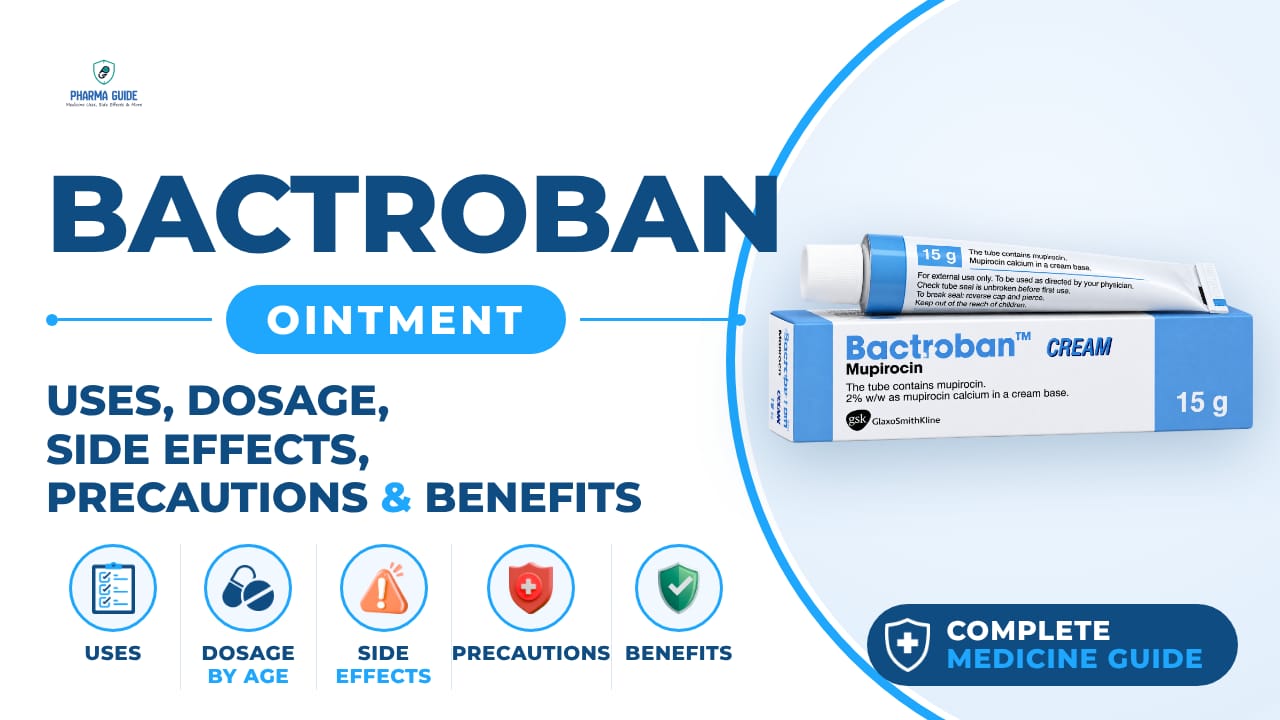
| Generic name | Mupirocin (mupirocin calcium) |
|---|---|
| Drug class | Topical antibiotic |
| Forms | Ointment |
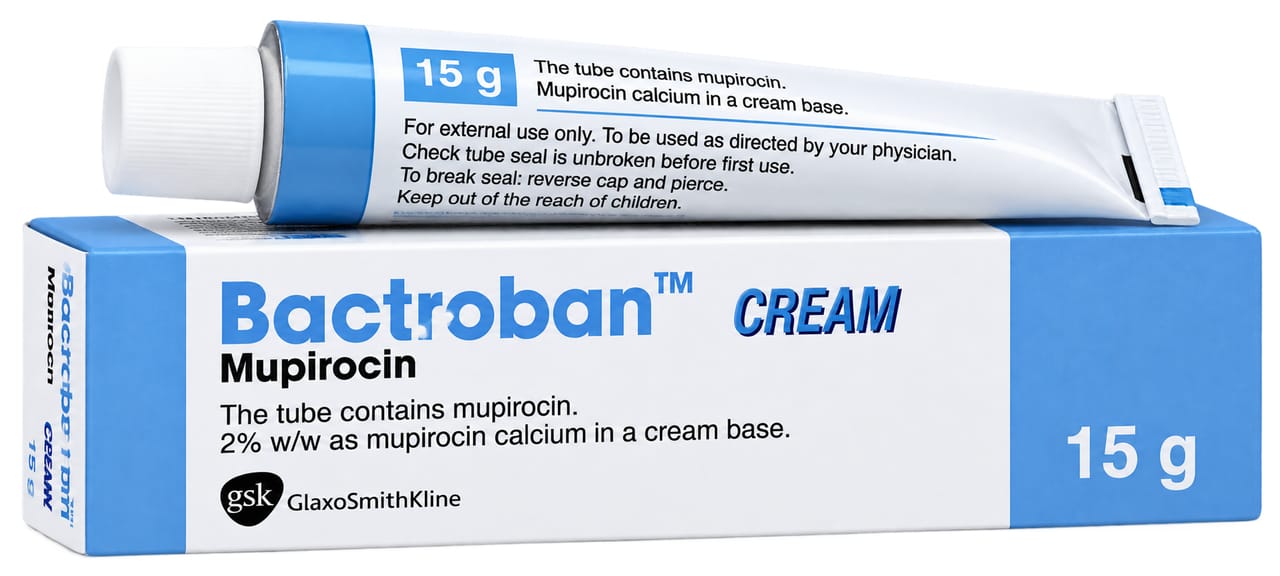
Quick overview
Bactroban Ointment contains mupirocin calcium, a topical antibiotic. It is applied to the skin to treat mild impetigo (school sores) and other bacterial skin infections such as Staph infections. It works by killing the bacteria responsible for the infection. It is for use on the skin only and is not recommended for children under two years of age.
What is Bactroban Ointment
Bactroban Ointment contains the antibiotic mupirocin calcium. It is applied to the skin to treat mild impetigo (school sores) and other bacterial skin infections such as Staph infections.
Bactroban Ointment uses
- Treatment of mild impetigo (school sores)
- Treatment of skin infections such as impetigo or a Staph infection of the skin
Benefits of Bactroban Ointment
- Kills the bacteria causing the skin infection
- Applied directly to the skin, targeting the infected area
How Bactroban Ointment works
Mupirocin is an antibiotic that works by killing the bacteria that cause the skin infection.
Bactroban Ointment dosage
Use exactly as directed by your doctor and follow all directions on the prescription label; do not use more, less, or for longer than recommended. Do not take by mouth; this medicine is for use only on the skin. If it gets into your eyes, nose, or mouth, rinse with water. Wash your hands before and after applying the ointment. Clean and dry the affected skin area before applying.
Use a cotton swab, cotton wool, or gauze pad to apply a small amount of ointment to the affected area. Do not spread the ointment over large areas of skin. After applying, you may cover the treated area with a sterile bandage or gauze dressing unless your doctor says to leave it uncovered; do not use a bandage, plastic wrap, or covering that stops air from circulating. Do not mix this ointment with any other product on the treated skin unless your doctor tells you to.
Use the medicine for the full length of time your doctor prescribes, even if your symptoms improve before the infection is fully healed. If you forget to apply a dose, apply it as soon as you remember, then continue as before; do not apply a double amount to make up for a missed dose. Watch for improvement within 3 to 5 days; call your doctor if your condition does not improve or gets worse. Not recommended for use in children under two years of age.
| Age group | Dose |
|---|---|
| Under 2 months | Safety/effectiveness not established; medical advice required |
| 2 months–11 years | Apply a small amount 3 times daily |
| 12–64 years | Apply a small amount 3 times daily |
| 65+ years | Same adult application when appropriate |
Available forms and strengths
- Ointment
Side effects of Bactroban Ointment
Common
- Burning, stinging
- Itching
- Pain
- Dryness
- Redness
- Swelling
Serious
- Signs of an allergic reaction: hives, dizziness, fast or pounding heartbeats, wheezing, difficult breathing, swelling of the face, lips, tongue, or throat
- Severe stomach pain, diarrhea that is watery or bloody
- Severe itching, rash, or other irritation of treated skin
- Unusual skin blistering or peeling
- Any signs of a new skin infection
- Inflammation of the colon (large intestine), with diarrhoea usually with blood and mucus, stomach pain, and fever
- Hayfever-like symptoms or fainting as part of an allergic reaction
Warnings and precautions
- It is not known whether this medicine will harm an unborn baby. Tell your doctor if you are pregnant or plan to become pregnant, and check with your doctor before use.
- It is not known if the medicine passes into breast milk. Tell your doctor if you are breastfeeding. If applying to the breast or nipple, wash the area well before nursing.
- Tell your doctor if you have kidney disease. Avoid use on large areas of broken or damaged skin, especially if you have reduced kidney function, because an ingredient in the ointment can be absorbed through damaged skin and is removed from the body by the kidneys.
- Use the ointment for the full prescribed time even if you start to feel better, since the infection may not be completely healed yet.
- Avoid getting the ointment in your eyes, nose, mouth, and lips; if it gets into these areas, wash with water.
- Do not use on a child without medical advice; the cream should not be used in children younger than 3 months, and the ointment should not be used in children under two years of age.
- Do not use the ointment on skin near tubes inserted into the body for delivering or removing fluids (cannulae).
- Do not use this medicine to treat infections in or near the eyes, nostrils, or mouth unless your doctor tells you to.
- Do not give this medicine to anyone else, even if they have similar symptoms.
- Antibiotic medicines can cause diarrhea, which may be a sign of a new infection; don't use anti-diarrhea medicine unless your doctor tells you to.
Storage
- Store BACTROBAN ointment in the original packaging below 25°C
- Do not leave in a car, on a window sill, or in the bathroom
- Do not freeze the ointment
- Keep the medicine tube tightly closed when not in use
- Keep it where young children cannot reach it; a locked cupboard at least one-and-a-half metres above the ground is a good place to store medicines
- If you no longer need to use this medicine, it has expired, or is damaged, take it to any pharmacy for safe disposal
- Do not use this medicine after the expiry date or if the packaging is torn or shows signs of tampering
When to see a doctor
- Get emergency medical help right away if you have signs of a serious allergic reaction, such as hives, dizziness, fast or pounding heartbeat, wheezing, difficulty breathing, or swelling of the face, lips, tongue, or throat.
- Call your doctor right away if you have severe stomach pain, watery or bloody diarrhea, severe itching, rash, other skin irritation, unusual blistering or peeling of the skin, or any signs of a new skin infection.
- Stop using the ointment and tell your doctor right away if you develop an allergic reaction, such as a rash, local pain, or swelling.
- Call your doctor straight away, or go to the nearest hospital emergency department, if you notice wheezing, swelling of the lips or mouth, difficulty breathing, hayfever-like symptoms, hives, or fainting, or signs of colon inflammation like bloody diarrhea, stomach pain, and fever.
- If you think you have used too much ointment or swallowed it accidentally, get urgent medical attention right away, even if you feel fine.
- Call your doctor if your symptoms do not improve within 3 to 5 days, or if your skin condition gets worse.
Alternatives
- Fusidic Acid
- Retapamulin
- Ozenoxacin
- Bacitracin
- Gentamicin Ointment
Watch the video
FAQs
What is Bactroban Ointment used for?
It is used to treat mild impetigo (school sores) and other bacterial skin infections such as Staph infections by killing the bacteria responsible.
How is Bactroban Ointment applied?
Clean and dry the affected area, then use a cotton swab, cotton wool, or gauze pad to apply a small amount of ointment directly to the infected skin, 3 times daily, without spreading it over large areas.
Can Bactroban Ointment be used in children?
It is not recommended for children under two years of age. For children aged 2 months to 11 years, a small amount can be applied 3 times daily as directed.
What are the common side effects of Bactroban Ointment?
Common side effects include burning, stinging, itching, pain, dryness, redness, and swelling at the application site.
How should Bactroban Ointment be stored?
Store it in the original packaging below 25°C, away from heat sources like cars or window sills, keep the tube tightly closed, avoid freezing, and keep it out of children's reach.
General information, not medical advice
Your prescriber and the leaflet in your pack know your situation. This page does not.
- Follow your prescriber and the leaflet
- Don't start, stop, or change a dose on your own
- Doses and warnings differ by country and product
Sources
- https://www.drugs.com/bactroban.html
- https://www.safetyandquality.gov.au/medicine-finder/bactroban-ointment
- file:///C:/Users/usama/Downloads/Bactroban_Ointment_CMI.pdf
Video
Related medicines
Bactroban Nasal Ointment: Uses, Dosage, Side Effects, Precautions and Alternates
Topical antibiotic
Bactroban Nasal Ointment contains mupirocin to clear MRSA and staph bacteria from the nose. Learn about its uses, dosage, side effects, and precautions.
Bacitracin Ointment: Uses, Dosage, Side Effects, Precautions and Alternates
Topical antibiotic
Bacitracin Ointment is an OTC topical antibiotic that helps prevent and treat minor skin infections from cuts, scrapes, or burns. Learn dosage and side effects.