
Safety
General information, not medical advice
Your prescriber and the leaflet in your pack know your situation. This page does not.
- Follow your prescriber and the leaflet
- Don't start, stop, or change a dose on your own
- Doses and warnings differ by country and product
Banzel Tablet: Uses, Dosage, Side Effects, Precautions and Alternates
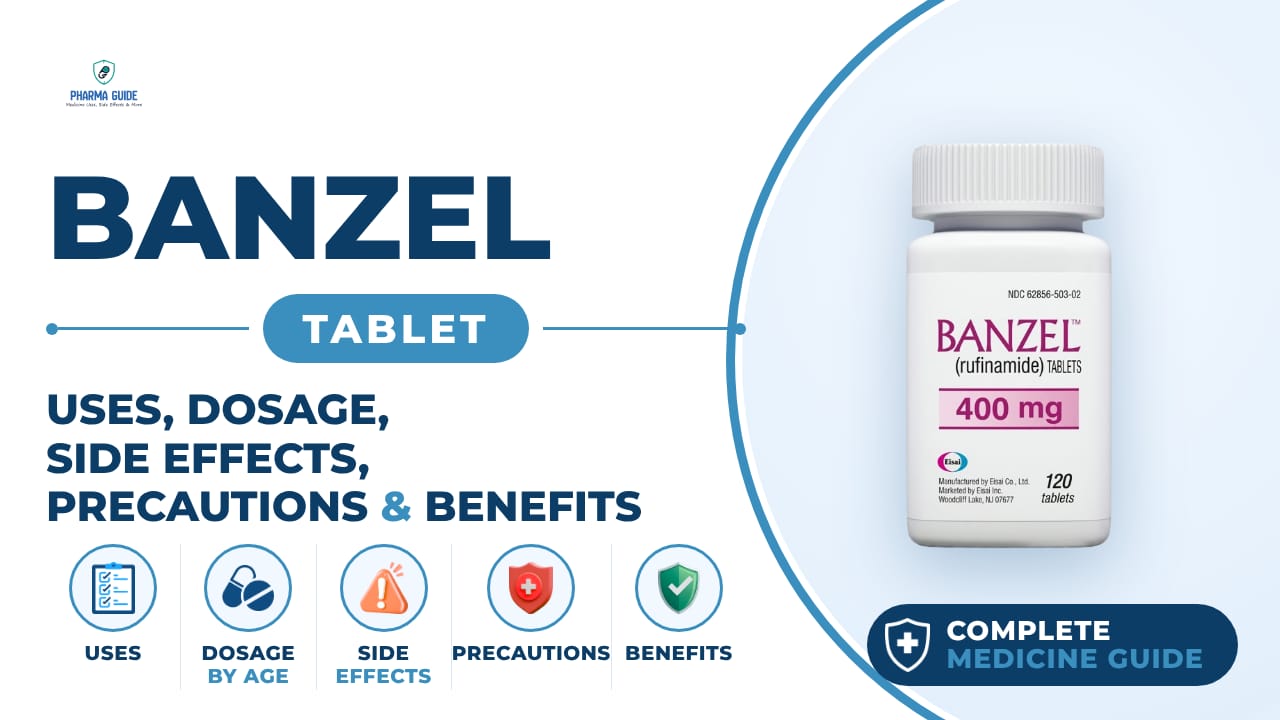
| Generic name | rufinamide |
|---|---|
| Drug class | antiepileptic drug (AED) / anticonvulsant |
| Forms | 400 mg film-coated tablets, 40 mg/mL oral suspension (liquid) |

Quick overview
Banzel Tablet (rufinamide) is a prescription antiepileptic drug used alongside other medicines to help control seizures associated with Lennox-Gastaut syndrome in adults and children 1 year and older. It works by acting on sodium channels in brain cells to help reduce the number of seizures. Common side effects include headache, dizziness, and fatigue, while serious risks include mood changes and allergic reactions. It should be taken exactly as prescribed and not stopped suddenly.
What is Banzel Tablet
Banzel is a brand-name prescription medicine used to help control seizures. It is approved for people with Lennox-Gastaut syndrome (LGS), a form of epilepsy that usually starts in childhood and causes repeated seizures along with learning problems. Its generic name is rufinamide, and it belongs to the antiepileptic drug (AED) / anticonvulsant class.
Banzel Tablet uses
- Treats seizures linked to Lennox-Gastaut syndrome (LGS) in adults and children 1 year and older, used together with other seizure medicines
- Sometimes used off-label for partial (focal) seizures not related to LGS, though it is not approved for this use
Benefits of Banzel Tablet
- Helps control seizures associated with Lennox–Gastaut syndrome
- May reduce seizure frequency
- May help improve seizure control alongside other medicines
- May reduce disruptions to daily activities caused by seizures
- Supports ongoing epilepsy management
How Banzel Tablet works
Banzel is believed to work by acting on sodium channels in brain cells, which brain cells use to send electrical signals. The medicine slows these channels down, which may stop the brain from sending signals too quickly during a seizure, helping to lower the number of seizures.
Banzel Tablet dosage
Take Banzel by mouth with food. Tablets can be swallowed whole, cut in half, or crushed if you have trouble swallowing them. The liquid form should be shaken well before each use and measured with the adapter and dosing syringe provided, not a household spoon. It is usually taken twice a day, once in the morning and once in the evening, spaced evenly apart.
If you miss a dose, contact your doctor or pharmacist for advice; some guidance suggests taking it as soon as you remember unless it is almost time for the next dose, but never double up to make up for a missed dose. Do not stop taking this medicine suddenly without talking to your doctor, since stopping abruptly can increase the risk of seizures or a dangerous prolonged seizure.
| Age group | Dose |
|---|---|
| Under 18 years | Not recommended |
| 18–64 years | 400–800 mg/day |
| 65+ years | 400–800 mg/day |
Available forms and strengths
- 400 mg film-coated tablets
- 40 mg/mL oral suspension (liquid)
Side effects of Banzel Tablet
Common
- Headache
- Dizziness
- Fatigue (low energy)
- Drowsiness/sleepiness
- Nausea
- Vomiting
Serious
- Depression or other mood changes, including feeling sad, hopeless, or anxious
- Suicidal thoughts or behaviors
- Status epilepticus (seizures lasting at least 5 minutes) — a medical emergency
- Leukopenia (low white blood cell count), which can cause fever, chills, or infections that won't go away
- Severe allergic reaction, including swelling of the face, lips, tongue, or throat, and trouble breathing
- DRESS reaction (a severe allergic reaction with rash, fever, and organ swelling)
- Convulsions (a type of seizure)
- Problems with balance, coordination, or walking
- Heart rhythm changes (QT shortening), especially risky in people with familial short QT syndrome
Warnings and precautions
- Banzel is not safe for people with familial short QT syndrome, a genetic heart rhythm condition, because it can shorten heart rhythm intervals further and increase risk of sudden death or irregular heartbeat.
- Like other seizure medicines, Banzel can increase the risk of suicidal thoughts or actions. Watch for new or worsening depression, anxiety, or unusual mood or behavior changes.
- Banzel can cause a rare but serious multi-organ allergic reaction (sometimes called DRESS) with rash, fever, and swelling that can be life-threatening. All patients who develop a rash should be watched closely.
- Stopping Banzel suddenly can cause seizures to return or worsen, including a dangerous prolonged seizure called status epilepticus. The dose should be lowered gradually under a doctor's guidance.
- Banzel can reduce white blood cell counts (leukopenia), which may increase the risk of infections.
- Banzel may make hormonal birth control (pills, patches, rings, injections) less effective. A non-hormonal backup method should be used.
- It is not known if Banzel is safe during pregnancy. Animal studies showed harm to the fetus, though this doesn't always predict effects in humans. Talk to your doctor before taking Banzel if you are pregnant or planning to become pregnant.
- It is not known if Banzel passes into breast milk or what effect it might have on a breastfed baby. Talk to your doctor before breastfeeding while taking this medicine.
- Banzel has been studied in people with severe kidney impairment and was found to work similarly to those with normal kidney function, but your doctor may need to adjust your dose if you are on dialysis.
- Banzel has not been well studied in people with liver problems and is not recommended for those with severe liver impairment. Caution is needed in people with mild to moderate liver problems.
- Avoid drinking alcohol while taking Banzel, especially when you first start, since it can make sleepiness and dizziness worse.
- Do not drive or operate machinery until you know how Banzel affects you, since it can cause sleepiness, dizziness, and slowed thinking or coordination.
Storage
- Store tablets and oral suspension at room temperature (77°F/25°C); short-term exposure between 59°F and 86°F (15°C to 30°C) is allowed, such as during travel
- Keep in a tightly sealed container away from light and moisture
- Avoid storing tablets in damp places such as bathrooms
- Keep the oral suspension bottle standing upright
- Use the oral suspension within 90 days of first opening the bottle, then discard any remainder
- Keep out of the reach of children
- Dispose of unused medicine safely; ask a pharmacist for guidance on how to do this
When to see a doctor
- Get emergency help right away if you have signs of a severe allergic reaction, such as swelling of the face, lips, tongue, or throat, trouble breathing, or a widespread rash with fever.
- Call your doctor right away if you have thoughts of suicide, new or worsening depression, anxiety, agitation, or unusual changes in mood or behavior.
- Seek medical care immediately if your seizures become more frequent or worse, or if you have a seizure lasting 5 minutes or longer, which can be a medical emergency.
- Call your doctor if you notice signs of low white blood cells, such as fever, chills, sore throat, or infections that won't go away.
- If you think you've taken too much Banzel, contact your doctor or a poison control center right away, or seek emergency care if symptoms are severe.
Alternatives
- Topiramate
- Lamotrigine
- Clobazam
Watch the video
FAQs
What is Banzel Tablet used for?
Banzel Tablet is used to help control seizures associated with Lennox-Gastaut syndrome in adults and children 1 year and older, taken together with other seizure medicines.
How should Banzel Tablet be taken?
Banzel should be taken by mouth with food, usually twice a day (once in the morning and once in the evening, spaced evenly apart). Tablets can be swallowed whole, cut in half, or crushed if needed.
What are the common side effects of Banzel Tablet?
Common side effects include headache, dizziness, fatigue, drowsiness, nausea, and vomiting.
Can I stop taking Banzel Tablet suddenly?
No, Banzel should not be stopped suddenly without talking to your doctor, as this can increase the risk of seizures returning or worsening, including a dangerous prolonged seizure called status epilepticus.
Does Banzel Tablet affect birth control?
Yes, Banzel may make hormonal birth control methods like pills, patches, rings, or injections less effective, so a non-hormonal backup method should be used.
General information, not medical advice
Your prescriber and the leaflet in your pack know your situation. This page does not.
- Follow your prescriber and the leaflet
- Don't start, stop, or change a dose on your own
- Doses and warnings differ by country and product
Sources
Video
Related medicines

Injectafer Injection: Uses, Dosage, Side Effects, Precautions and Alternates
Iron products
Injectafer (ferric carboxymaltose) treats iron deficiency anemia and heart failure-related iron deficiency via IV. Learn uses, dosage, side effects, and

Gliclazide Tablet: Uses, Dosage, Side Effects, Precautions and Alternates
Sulfonylurea (hypoglycemic/antidiabetic agent)
Gliclazide Tablet is a sulfonylurea for type 2 diabetes that boosts insulin release. Learn about dosage, side effects, warnings, and precautions.