
Safety
General information, not medical advice
Your prescriber and the leaflet in your pack know your situation. This page does not.
- Follow your prescriber and the leaflet
- Don't start, stop, or change a dose on your own
- Doses and warnings differ by country and product
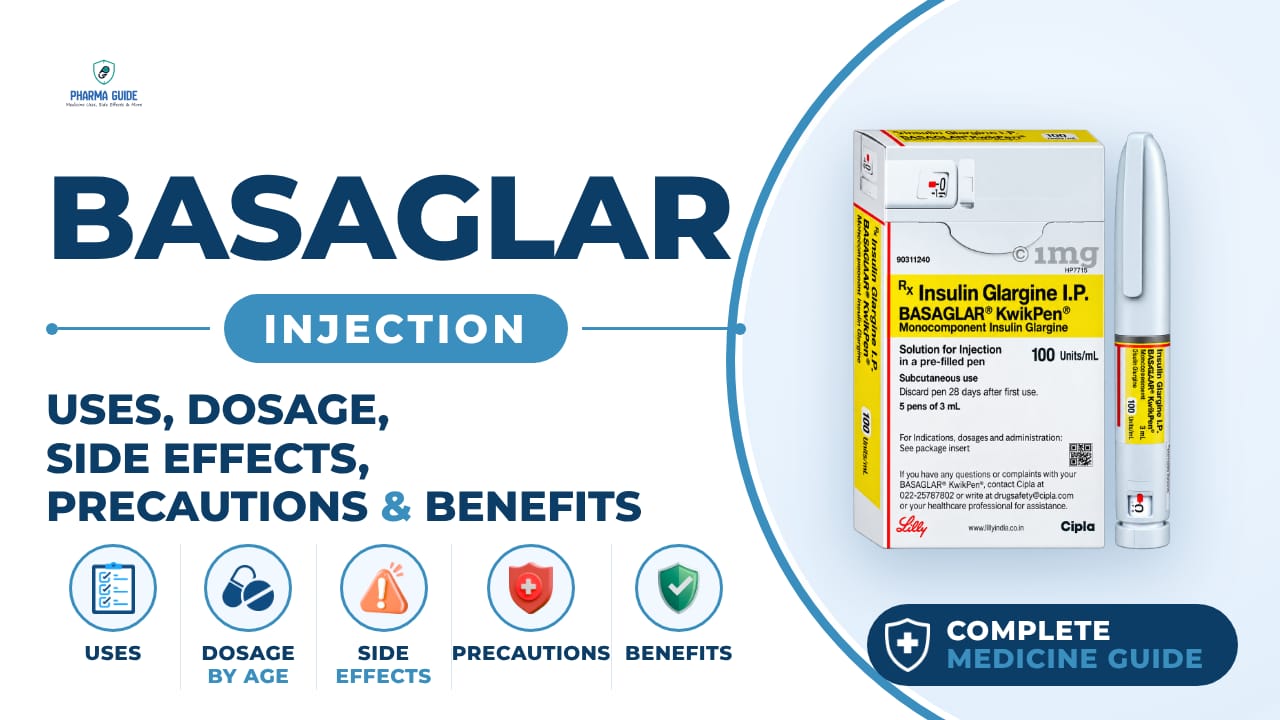
Basaglar Injection: Uses, Dosage, Side Effects, Precautions and Alternates
| Generic name | insulin glargine |
|---|---|
| Drug class | Insulin (long-acting recombinant human insulin analogue) |
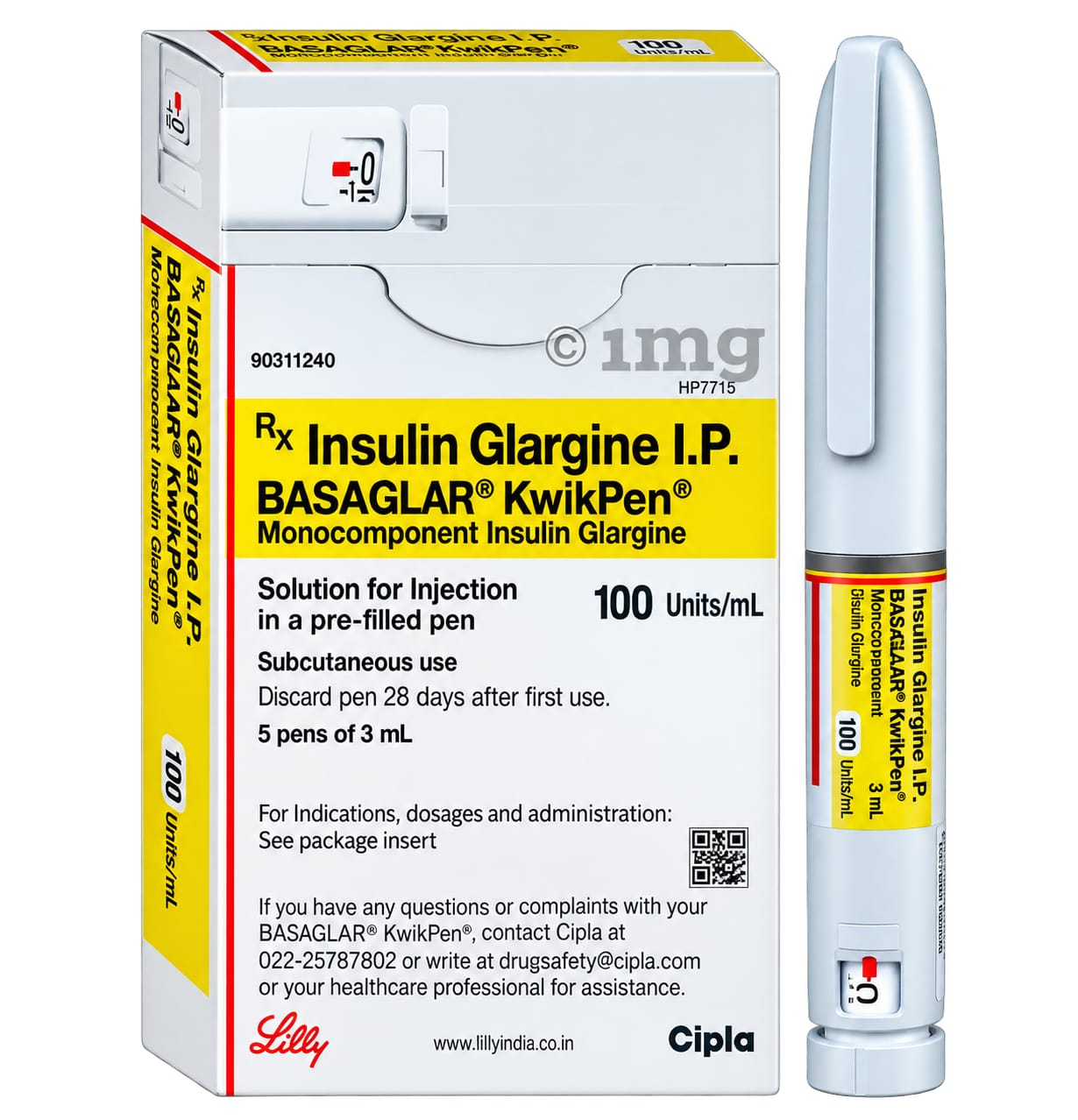
| Forms | Solution for injection, 100 units/mL, Cartridge, 3 mL (for use with reusable insulin pens), KwikPen, 3 mL prefilled disposable pen |
Quick overview
Basaglar Injection (insulin glargine) is a long-acting recombinant human insulin analogue used to help manage blood sugar in people with diabetes. It starts working several hours after injection and keeps working evenly for 24 hours, allowing once-daily dosing. It is used in adults with type 1 or type 2 diabetes and in children at least 6 years old with type 1 diabetes.
What is Basaglar Injection
Basaglar is a long-acting insulin that starts working several hours after injection and keeps working evenly for 24 hours. It is used to help manage blood sugar in people with diabetes.
Basaglar Injection uses
- Improves blood sugar control in adults with type 1 or type 2 diabetes
- Used in children at least 6 years old with type 1 diabetes (not approved for type 2 diabetes in children)
- For type 1 diabetes, used together with a short-acting insulin given before meals
Benefits of Basaglar Injection
- Provides steady, long-acting blood sugar control over 24 hours with no pronounced peak
- Allows once-daily dosing to meet basal insulin needs
- Helps reduce the risk of long-term complications from uncontrolled blood sugar when used as part of a full diabetes care plan
How Basaglar Injection works
Basaglar works like the insulin your body normally makes. It helps your body absorb sugar from the blood into cells for energy and stops the liver from releasing more sugar, which lowers blood sugar levels.
Basaglar Injection dosage
Use exactly as prescribed; do not use in larger or smaller amounts or for longer than recommended. Basaglar is injected under the skin (subcutaneously) in the stomach area, thighs, buttocks, or upper arms, usually once per day at the same time each day. It can be given at any time of day, as long as it is at the same time every day. Rotate injection sites so the same spot is not used more than about once a month.
Do not inject into skin that is damaged, tender, bruised, pitted, thickened, scaly, scarred, or has a hard lump. Basaglar must not be mixed with other insulins or diluted with any other solution, and must not be given with an insulin pump or injected into a vein or muscle. Use only the injection pen or reusable pens approved for Basaglar; do not transfer insulin into a syringe. Attach a new needle before each use and never reuse or share needles or pens.
Allow the insulin to reach room temperature before injecting to reduce irritation. Do not use if the solution looks cloudy, colored, or has particles in it. For children, a parent or caregiver should monitor blood sugar as directed by the doctor.
| Age group | Dose |
|---|---|
| Under 6 years | Not established; doctor-directed |
| 6–17 years | Individualized; usually once daily |
| 18–64 years | Type 2 diabetes: 0.2 units/kg or up to 10 units once daily |
| 65+ years | Individualized; usually lower starting dose |
Available forms and strengths
- Solution for injection, 100 units/mL
- Cartridge, 3 mL (for use with reusable insulin pens)
- KwikPen, 3 mL prefilled disposable pen
Side effects of Basaglar Injection
Common
- Low blood sugar (hypoglycemia)
- Swelling and weight gain
- Allergic reaction, itching, rash
- Thickening or hollowing of the skin where you injected the medicine
- Injection site reactions such as pain, itching, swelling, or irritation
- Swelling in the feet or lower legs due to fluid buildup
- Common cold symptoms such as a runny nose
Serious
- Rapid weight gain, swelling in feet or ankles, shortness of breath (signs of heart problems)
- Low blood potassium: leg cramps, constipation, irregular heartbeats, fluttering in the chest, increased thirst or urination, numbness or tingling, muscle weakness
- Severe allergic reaction: redness or swelling at injection site, itchy rash over the entire body, trouble breathing, fast heartbeat, feeling like passing out, swelling of tongue or throat
- Severe hypoglycemia: blurred vision, slurred speech, confusion, seizures, loss of consciousness, coma
- Diabetic ketoacidosis if insulin is skipped or dose is too low
Warnings and precautions
- Never share a Basaglar pen, even if the needle has been changed, as this can spread infections between people.
- Do not use Basaglar if you are having an episode of low blood sugar or if you are in diabetic ketoacidosis; call your doctor for treatment in these situations.
- Basaglar must not be mixed with other insulins or given through an insulin pump, vein, or muscle, as this can change how it works and increase risks.
- Taking certain other diabetes medicines (like pioglitazone or rosiglitazone) together with insulin may increase the risk of serious heart problems such as heart failure.
- Uncorrected low or high blood sugar can cause loss of consciousness, coma, or death.
- Any change in the type, brand, or dose of insulin should only be made under medical supervision.
- Tell your doctor if you are pregnant or planning to become pregnant. Good blood sugar control is very important during pregnancy, and your dose needs may change.
- It isn't known for sure if insulin glargine passes into breast milk in meaningful amounts. Tell your doctor if you are breastfeeding, as your insulin dose or diet may need adjustment.
- People with kidney problems may need closer blood sugar monitoring and dose adjustments, since insulin needs may be lower with reduced kidney function.
- People with liver problems may need closer blood sugar monitoring and dose adjustments, since insulin needs may be lower with reduced liver function.
- Drinking alcohol may make blood sugar harder to control and can increase the risk of low blood sugar. Talk to your doctor about how much alcohol, if any, is safe for you.
- Avoid driving or operating machinery until you know how this medicine affects you, since low or high blood sugar can affect your concentration and reactions.
Storage
- Keep Basaglar in its original container protected from heat and light
- Do not freeze insulin or store it near the cooling element in a refrigerator; throw away any insulin that has been frozen
- Unopened (not in use): refrigerate and use until the expiration date, or if stored at room temperature (below 86 degrees Fahrenheit), use within 28 days
- Opened (in use): store at room temperature, not refrigerated, and use within 28 days
- Do not use the medicine if it looks cloudy, has changed colors, or has any particles in it
- Do not store an injection pen with the needle attached
- Dispose of used needles in a puncture-proof sharps container following state or local laws
- Keep out of the reach of children and pets
When to see a doctor
- Get emergency help right away if you have signs of a severe allergic reaction, such as swelling at the injection site, a widespread itchy rash, trouble breathing, a fast heartbeat, feeling faint, or swelling of the tongue or throat.
- Call your doctor right away if you have rapid weight gain, swelling in your feet or ankles, or shortness of breath.
- Call your doctor if you have signs of low blood potassium, such as leg cramps, constipation, irregular heartbeats, fluttering in your chest, increased thirst or urination, numbness or tingling, or muscle weakness.
- Seek emergency medical help right away if you think you have taken too much insulin, even if you have no symptoms yet, as overdose can cause severe low blood sugar.
- Contact your doctor if you develop a skin rash, especially if it is severe or doesn't go away, since this could be a sign of an allergic reaction.
Alternatives
- Lantus
- Rezvoglar
- Tresiba (insulin degludec)
Watch the video
FAQs
What is Basaglar Injection used for?
Basaglar helps improve blood sugar control in adults with type 1 or type 2 diabetes and in children at least 6 years old with type 1 diabetes. In type 1 diabetes, it is used together with a short-acting insulin given before meals.
How often is Basaglar injected?
Basaglar is injected under the skin once per day at the same time each day, in the stomach area, thighs, buttocks, or upper arms, with injection sites rotated so the same spot isn't used more than about once a month.
Can Basaglar be mixed with other insulins or used in an insulin pump?
No. Basaglar must not be mixed with other insulins or diluted with any other solution, and must not be given with an insulin pump or injected into a vein or muscle.
What are common side effects of Basaglar?
Common side effects include low blood sugar, swelling and weight gain, allergic reaction, itching or rash, injection site reactions, thickening or hollowing of the skin at the injection site, swelling in the feet or lower legs, and cold-like symptoms.
How should Basaglar be stored?
Keep it in its original container away from heat and light, and never freeze it. Unopened pens can be refrigerated until the expiration date or kept at room temperature (below 86°F) for up to 28 days; once opened, store at room temperature and use within 28 days.
General information, not medical advice
Your prescriber and the leaflet in your pack know your situation. This page does not.
- Follow your prescriber and the leaflet
- Don't start, stop, or change a dose on your own
- Doses and warnings differ by country and product
Sources
Video
Related medicines

Injectafer Injection: Uses, Dosage, Side Effects, Precautions and Alternates
Iron products
Injectafer (ferric carboxymaltose) treats iron deficiency anemia and heart failure-related iron deficiency via IV. Learn uses, dosage, side effects, and

Gliclazide Tablet: Uses, Dosage, Side Effects, Precautions and Alternates
Sulfonylurea (hypoglycemic/antidiabetic agent)
Gliclazide Tablet is a sulfonylurea for type 2 diabetes that boosts insulin release. Learn about dosage, side effects, warnings, and precautions.