
Safety
General information, not medical advice
Your prescriber and the leaflet in your pack know your situation. This page does not.
- Follow your prescriber and the leaflet
- Don't start, stop, or change a dose on your own
- Doses and warnings differ by country and product
Baxdela Tablet: Uses, Dosage, Side Effects, Precautions and Alternates
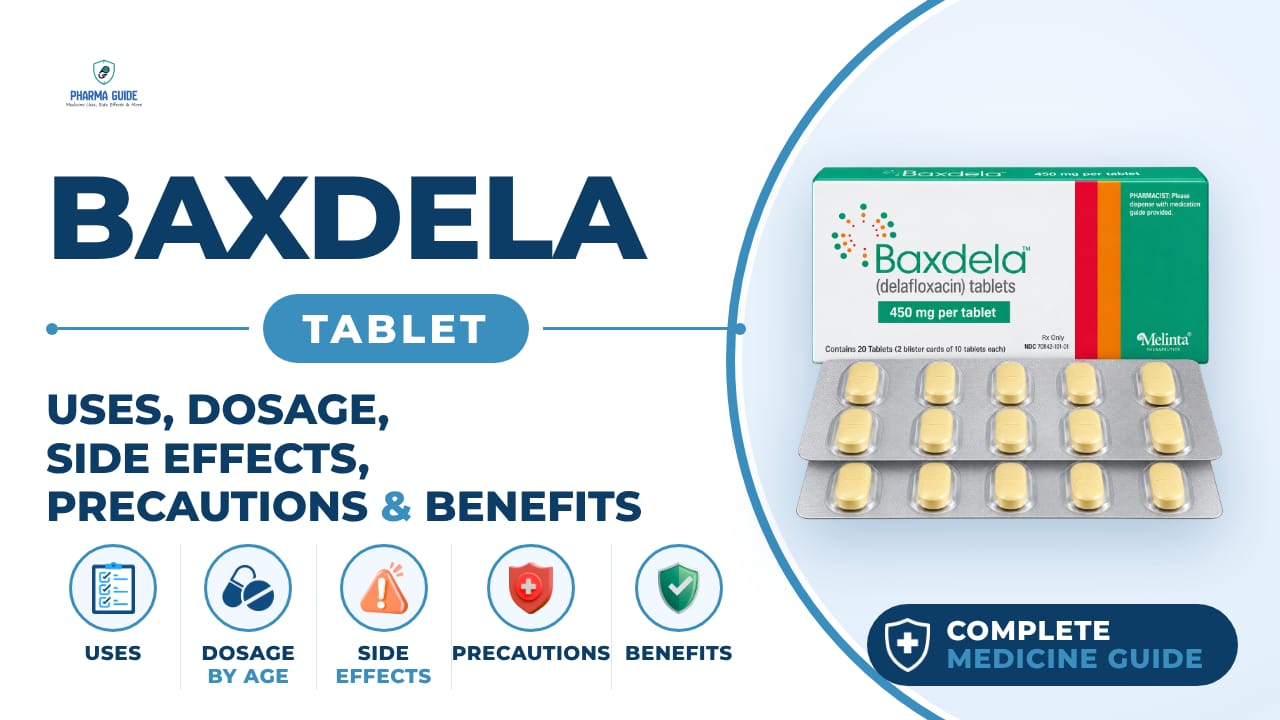
| Generic name | Delafloxacin |
|---|---|
| Drug class | Fluoroquinolone antibacterial |
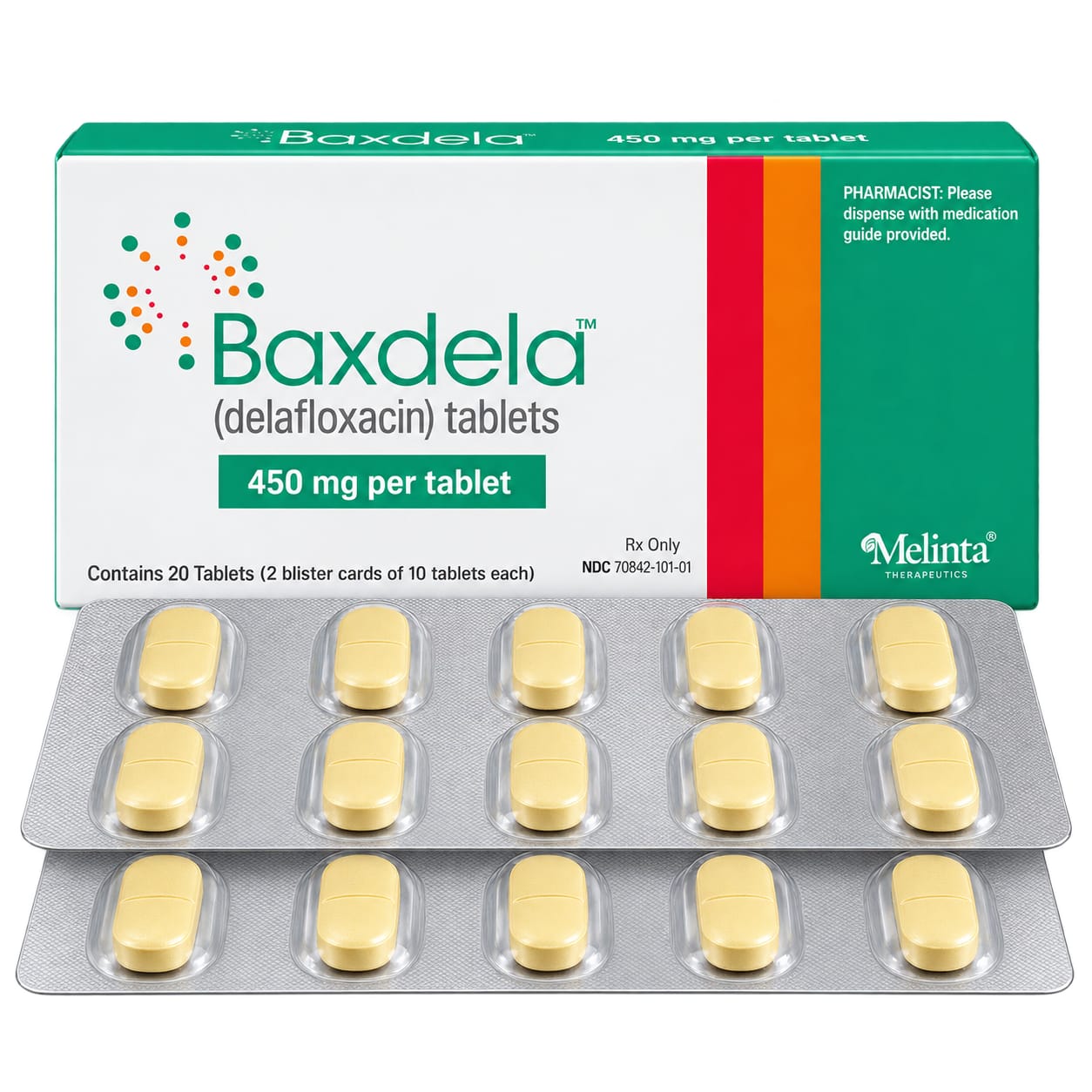
| Forms | Tablets, 450 mg delafloxacin (as delafloxacin meglumine), Oral, Powder for solution, 300 mg delafloxacin (as delafloxacin meglumine) per vial, Intravenous |
Quick overview
Baxdela Tablet, known generically as delafloxacin, is a prescription fluoroquinolone antibacterial. It is used to treat acute bacterial skin and skin structure infections and community-acquired bacterial pneumonia in adults caused by certain susceptible bacteria. It comes as a tablet taken by mouth or as a powder mixed into a solution and given into a vein, and it only treats bacterial infections, not viral illnesses. As with other fluoroquinolones, it carries a number of important warnings and possible side effects.
What is Baxdela Tablet
Baxdela is a prescription antibiotic belonging to the fluoroquinolone class. It comes as a tablet taken by mouth or as a powder that is mixed into a solution and given into a vein. It only treats infections caused by bacteria, not viral infections like the common cold.
Baxdela Tablet uses
- Treatment of acute bacterial skin and skin structure infections (ABSSSI) in adults caused by certain susceptible bacteria
- Treatment of community-acquired bacterial pneumonia (CABP) in adults caused by certain susceptible bacteria
Benefits of Baxdela Tablet
- Effective against a wide range of gram-positive bacteria including MRSA and MSSA strains of Staphylococcus aureus
- Effective against several gram-negative bacteria including E. coli and Pseudomonas aeruginosa
- Can be given as a tablet or as an IV infusion, allowing switching between forms during treatment
- Can be taken with or without food, with no dietary restrictions
How Baxdela Tablet works
Baxdela is an antibacterial medicine that blocks certain enzymes bacteria need to copy and repair their own DNA. Without these enzymes working properly, the bacteria cannot grow or survive, which helps clear the infection.
Baxdela Tablet dosage
Take BAXDELA exactly as your healthcare professional tells you to. You can take BAXDELA tablets with or without food. Swallow tablets whole with water. Follow all instructions given to you by your healthcare professional. Continue taking BAXDELA exactly as directed even if you start to feel better early in treatment. Do not skip doses, share your medicine, or stop early, as this can lead to bacteria that resist the medicine.
Take BAXDELA tablets at least 2 hours before or 6 hours after antacids containing aluminum or magnesium, sucralfate, iron, multivitamins containing zinc or iron, or certain didanosine products, since these can lower the amount of medicine absorbed by your body.
| Age group | Dose |
|---|---|
| Under 18 years | Safety and effectiveness have not been established |
| 18–64 years | 450 mg orally every 12 hours |
| 65–74 years | Usually 450 mg every 12 hours, with individualized monitoring |
Available forms and strengths
- Tablets, 450 mg delafloxacin (as delafloxacin meglumine), Oral
- Powder for solution, 300 mg delafloxacin (as delafloxacin meglumine) per vial, Intravenous
Side effects of Baxdela Tablet
Common
- Nausea
- Vomiting
- Diarrhea
- Headache
- Changes in liver enzyme blood test values
- Low level of potassium in the blood
Serious
- Tendon inflammation or tendon rupture (shoulder, hand, Achilles)
- Peripheral neuropathy (nerve damage causing pain, burning, tingling, numbness, or weakness)
- Central nervous system effects: seizures, increased pressure inside the brain, dizziness, tremors
- Worsening of myasthenia gravis (muscle weakness)
- Serious allergic/anaphylactic reactions including swelling of face, tongue, or throat, difficulty breathing, hives
- Clostridium difficile-associated disease (CDAD), an intestinal infection causing severe diarrhea or colitis
- Psychiatric effects: hallucinations, paranoia, depression, suicidal thoughts, anxiety, confusion, insomnia, memory problems
- High or low blood sugar levels, including severe hypoglycemia that can cause coma or death
- Aortic aneurysm and aortic dissection, with sudden severe abdominal, chest, or back pain
- Skin reactions from sun or UV light exposure
- Liver problems including jaundice or hepatitis
- Low blood cell counts (anemia, low platelets, low white blood cells)
- Kidney problems
Warnings and precautions
- This medicine can cause serious and sometimes permanent side effects including tendon inflammation and tendon tears, nerve damage, and brain or spinal cord problems such as seizures. Stop taking it immediately if any of these happen, and avoid it if you've had these reactions with similar medicines before.
- The chance of developing tendon problems is higher for people over 60, those taking corticosteroid medicines, and those who have had a kidney, heart, or lung transplant.
- This medicine may worsen muscle weakness in people with myasthenia gravis, so it should be avoided in anyone with a history of this condition.
- Serious allergic reactions, sometimes after just one dose, have occurred with this type of medicine.
- A serious intestinal infection called Clostridium difficile-associated disease can occur with this medicine and other antibiotics, ranging from mild diarrhea to life-threatening colitis.
- This medicine may increase the risk of seizures, increased pressure in the brain, dizziness, and tremors, so caution is needed in people with known or suspected brain or nervous system disorders.
- There is an increased risk of tears or bulges in the body's main artery (the aorta), especially in older patients, so people with risk factors for this condition should only use this medicine after careful consideration of other options.
- This medicine can make skin more sensitive to sunlight or UV light, so excessive sun or UV exposure should be avoided.
- People with a genetic condition called glucose-6-phosphate dehydrogenase deficiency may be prone to red blood cell breakdown and should be monitored if they take this medicine.
- It is not known if Baxdela will harm an unborn baby. Women who can become pregnant should use effective birth control while taking this medicine.
- It isn't known whether Baxdela passes into human breast milk or how it might affect a nursing baby. Talk with your healthcare provider about whether to take this medicine or breastfeed.
- People with reduced kidney function may need a lower dose of the IV form, and the medicine is not recommended in patients with very severe kidney disease or those on dialysis. Kidney function should be monitored during treatment with the IV form.
- No dose change is needed for people with liver problems.
- This medicine can cause tiredness, weakness, vision changes, dizziness, or seizures that may affect your ability to concentrate and react. Do not drive or use machinery if you experience these symptoms, and tell your healthcare provider if you get ongoing headaches with or without blurred vision.
Storage
- Store at 15°C-30°C.
- Keep out of reach and sight of children.
- The reconstituted powder may be stored for up to 24 hours under refrigerated (2°C to 8°C) or controlled room temperature (20°C to 25°C) and then further diluted for intravenous infusion. Do not freeze.
- The reconstituted solution in the infusion bag may be stored under refrigerated (2°C to 8°C) or controlled room temperature conditions (20°C to 25°C) for up to 24 hours. Do not freeze.
When to see a doctor
- Stop the medicine and get medical help immediately for pain, swelling, or tearing of a tendon.
- Stop the medicine and get medical help immediately for pain, burning, tingling, numbness, or weakness in the hands or feet, which could be signs of nerve damage.
- Stop the medicine and get medical help immediately for swelling of the face, tongue or throat, difficulty breathing, rapid heartbeat, hives, or severe skin reactions, which could be signs of a serious allergic reaction.
- Stop the medicine and get medical help immediately if you develop severe or watery diarrhea, stomach cramping, or blood in the stool, which could signal a serious intestinal infection.
- Stop the medicine and get medical help immediately for seizures, hallucinations, confusion, suicidal thoughts, severe mood changes, or other mental health symptoms.
- Get emergency medical help right away for sudden severe pain in the abdomen, chest, or back, which could indicate a tear or bulge in a major blood vessel.
- Stop the medicine and get immediate medical help if you have signs of low blood sugar, since severe cases have caused coma or death.
- Talk to an eye specialist immediately if you develop a vision disorder while taking this medicine.
- If you think you have taken too much of this medicine, contact a healthcare professional, hospital emergency department, or your local poison control center right away, even if you have no symptoms.
Alternatives
- Linezolid
- Doxycycline
- Clindamycin
Watch the video
FAQs
What is Baxdela Tablet used for?
Baxdela is used to treat acute bacterial skin and skin structure infections and community-acquired bacterial pneumonia in adults caused by certain susceptible bacteria.
How should Baxdela Tablet be taken?
Baxdela tablets should be swallowed whole with water, with or without food, exactly as directed. Avoid taking it within 2 hours before or 6 hours after antacids, sucralfate, iron, zinc-containing multivitamins, or certain didanosine products, as these can lower absorption.
What is the dosage of Baxdela Tablet for adults?
Adults aged 18 to 64 typically take 450 mg orally every 12 hours. Those aged 65 to 74 usually take the same dose with individualized monitoring. Safety in those under 18 has not been established.
What are the serious side effects of Baxdela Tablet?
Serious side effects include tendon inflammation or rupture, peripheral neuropathy, seizures, worsening myasthenia gravis, severe allergic reactions, intestinal infection (CDAD), psychiatric effects, blood sugar changes, aortic aneurysm or dissection, and liver or kidney problems.
What precautions should be taken with Baxdela Tablet?
Avoid Baxdela if you have a history of tendon problems, myasthenia gravis, or allergic reactions to similar medicines. Use caution with sun exposure, and people with kidney disease, G6PD deficiency, or risk factors for aortic aneurysm should discuss these risks with their doctor.
General information, not medical advice
Your prescriber and the leaflet in your pack know your situation. This page does not.
- Follow your prescriber and the leaflet
- Don't start, stop, or change a dose on your own
- Doses and warnings differ by country and product
Sources
Video
Related medicines

Injectafer Injection: Uses, Dosage, Side Effects, Precautions and Alternates
Iron products
Injectafer (ferric carboxymaltose) treats iron deficiency anemia and heart failure-related iron deficiency via IV. Learn uses, dosage, side effects, and

Gliclazide Tablet: Uses, Dosage, Side Effects, Precautions and Alternates
Sulfonylurea (hypoglycemic/antidiabetic agent)
Gliclazide Tablet is a sulfonylurea for type 2 diabetes that boosts insulin release. Learn about dosage, side effects, warnings, and precautions.