
Safety
General information, not medical advice
Your prescriber and the leaflet in your pack know your situation. This page does not.
- Follow your prescriber and the leaflet
- Don't start, stop, or change a dose on your own
- Doses and warnings differ by country and product
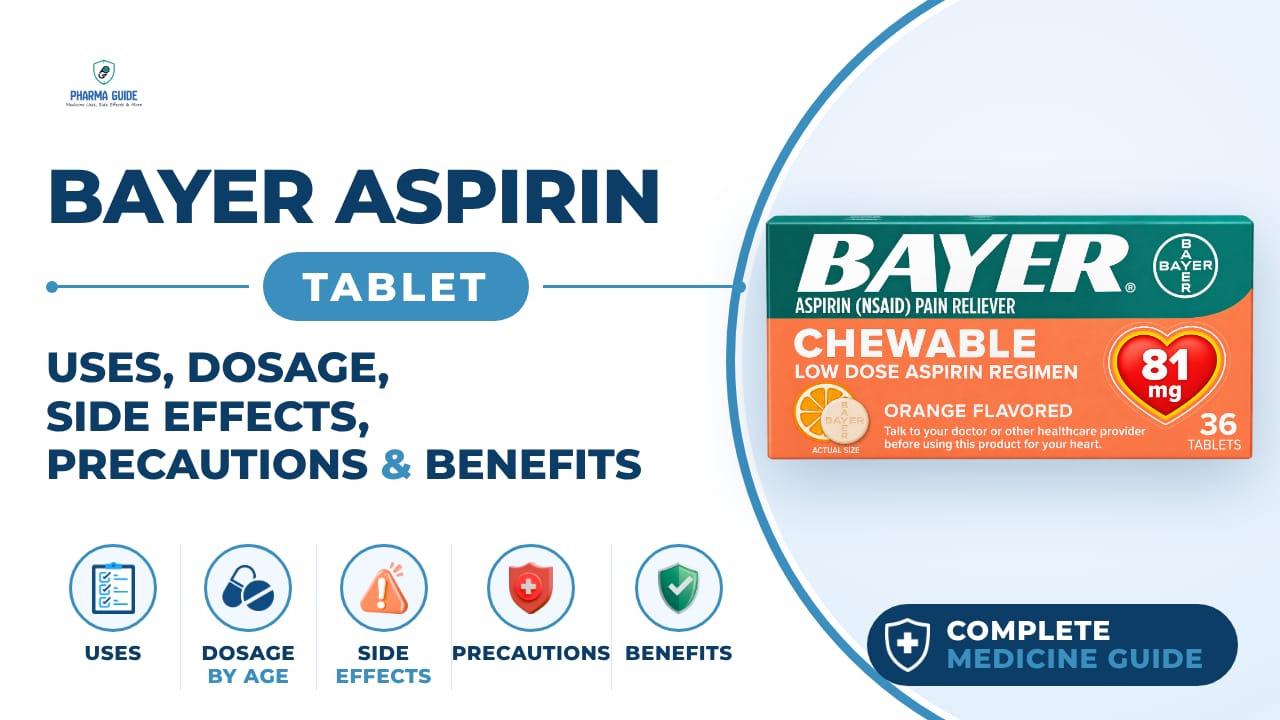
Bayer Aspirin Tablet: Uses, Dosage, Side Effects, Precautions and Alternates
| Generic name | aspirin (acetylsalicylic acid) |
|---|---|
| Drug class | Nonsteroidal anti-inflammatory drug (NSAID) / salicylate |
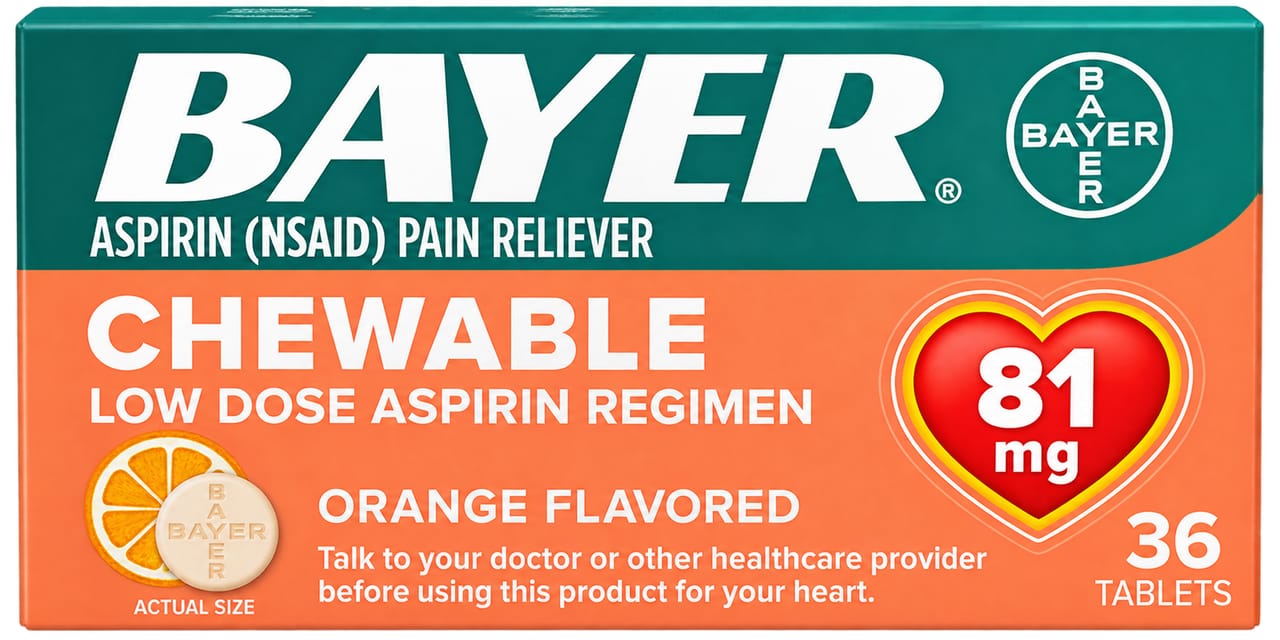
| Forms | Enteric coated tablets, Coated tablets, Chewable tablets, Suppositories, Film-coated tablets |
Quick overview
Bayer Aspirin Tablet contains aspirin (acetylsalicylic acid), an NSAID and salicylate used as a pain reliever and fever reducer. Low-dose enteric-coated forms are also used to help prevent heart attacks and strokes. It is used for conditions such as headache, muscle pain, toothache, and minor arthritis pain, as well as for reducing cardiovascular risk in certain people. Common side effects include stomach upset and drowsiness, while serious risks include stomach bleeding and allergic reactions.
What is Bayer Aspirin Tablet
Bayer Aspirin is a pain reliever and fever reducer that contains aspirin, also called acetylsalicylic acid. It belongs to a group of medicines called NSAIDs (nonsteroidal anti-inflammatory drugs). Low-dose enteric-coated forms are also used to help prevent heart attacks and strokes.
Bayer Aspirin Tablet uses
- Headache
- Muscle pain
- Toothache
- Menstrual pain
- Pain and fever of colds
- Minor pain of arthritis
- Reducing the risk of heart attack in people with unstable angina or a previous heart attack
- Reducing the risk of repeat mini-strokes (transient ischaemic attacks) or stroke
- Reducing the risk of blood vessel blockage after bypass surgery
- Reducing the risk of heart problems in people at increased cardiovascular risk
Benefits of Bayer Aspirin Tablet
- Relieves mild to moderate pain
- Reduces fever
- Reduces inflammation and swelling
- Helps prevent blood clots, lowering the risk of heart attack and stroke in people who need this protection
How Bayer Aspirin Tablet works
Aspirin blocks a substance in the body involved in clotting and in causing pain, fever, and swelling. In platelets (tiny blood cells involved in clotting), this blocking effect is long-lasting, which is why low-dose aspirin can help prevent blood clots.
Bayer Aspirin Tablet dosage
Drink a full glass of water with each dose. For low-dose enteric-coated tablets, take them at least 30 minutes before meals, with plenty of water. Do not crush, break, or chew enteric-coated tablets, so the coating is not destroyed and the medicine is released properly in the intestine; swallow them whole. Taking regular-strength aspirin with food or milk may help if it upsets your stomach. Do not lie down for at least 10 minutes after taking this medicine. For low-dose heart protection tablets, try to take the dose at the same time each day.
Children under 12 years should not take this medicine unless a doctor says so. Safety and effectiveness of the low-dose cardiovascular tablets have not been established in people under 18 years old. Do not take this medicine for pain for longer than 10 days, or for fever longer than 3 days, unless a doctor tells you to.
If you miss a dose of a regularly scheduled aspirin, take it as soon as you remember; if it is almost time for the next dose, skip the missed dose and do not double up.
| Age group | Dose |
|---|---|
| Under 18 years | Not recommended |
| 18–60 years | 81 mg, once/day |
| 60+ years | 81 mg, once/day |
Available forms and strengths
- Enteric coated tablets
- Coated tablets
- Chewable tablets
- Suppositories
- Film-coated tablets
- 81 mg strength
Side effects of Bayer Aspirin Tablet
Common
- Rash
- Upset stomach
- Heartburn
- Drowsiness
- Headache
- Stomach cramps
- Nausea
- Gastritis
- Stomach pain
- Gastrointestinal bleeding (mild)
- Easy bruising
- Nosebleeds
- Gum bleeding
- Ringing in the ears (tinnitus)
- Dizziness
Serious
- Severe allergic reaction (hives, facial swelling, wheezing, shock)
- Stomach or intestinal bleeding or ulcers, including black or bloody stools, vomiting blood
- Stomach or intestinal perforation
- Serious skin reactions such as exfoliative dermatitis, Stevens-Johnson syndrome, and toxic epidermal necrolysis
- Bronchospasm or asthma attacks, especially in people with asthma, hay fever, or nasal polyps
- Kidney impairment or acute kidney failure
- Liver problems
- Haemolytic anaemia, especially in people with G6PD deficiency
- Reye's syndrome in children and teenagers with viral illness
- Bleeding in the brain (intracranial haemorrhage)
- Severe allergic/anaphylactic reactions including anaphylactic shock
Warnings and precautions
- Aspirin is not recommended in the first and second trimester of pregnancy, and must not be used in the last three months of pregnancy unless a doctor specifically tells you to, because it can harm the unborn baby or cause problems during delivery.
- Small amounts of aspirin pass into breast milk. If you need to take aspirin regularly, you should not breastfeed. Ask your doctor before use if you are breastfeeding.
- People with severe kidney problems should not use this medicine, and it should be used with caution in people with milder kidney impairment because it can further increase the risk of kidney damage or kidney failure.
- People with severe liver failure should not use this medicine. It should be used with extra caution in people with liver problems.
- Drinking alcohol while taking aspirin increases the risk of stomach bleeding. If you have 3 or more alcoholic drinks a day, ask your doctor before using this medicine.
- This medicine does not usually affect your ability to drive or use machines, but it can cause dizziness in some people, so check how you react before driving or operating machinery.
- Children and teenagers who have or are recovering from chicken pox or flu-like symptoms should not take this medicine, because of the risk of a rare but serious illness called Reye's syndrome. If behavior changes with nausea and vomiting occur, see a doctor right away.
- Aspirin can cause a severe allergic reaction, which may include hives, facial swelling, wheezing (asthma-like breathing problems), or shock.
- This medicine can cause severe stomach bleeding. The risk is higher if you are 60 or older, have had ulcers or bleeding problems, take blood thinners or steroids, take other pain relievers with similar ingredients, drink 3 or more alcoholic drinks a day, or take more than directed or for longer than directed.
- Do not take this medicine if you are allergic to aspirin or any other pain reliever/fever reducer.
- Taking this medicine with other NSAIDs like ibuprofen or naproxen can weaken aspirin's protective effect on the heart, so talk to your doctor if you are on a regular aspirin regimen and plan to take these for pain.
- This medicine can increase bleeding during and after surgery, including minor procedures like tooth extractions, because its effect on blood clotting lasts for several days.
Storage
- Store at or below 30°C
- Keep out of reach of children
- Store at room temperature
- Store at room temperature away from moisture and light
- Do not store in the bathroom
- Do not use any aspirin product that has a strong vinegar-like smell
- Properly discard this product when it is expired or no longer needed; ask your pharmacist or local waste disposal company how to dispose of it
When to see a doctor
- Get medical help right away if you have signs of an allergic reaction.
- Stop use and see a doctor if you feel faint, vomit blood, have bloody or black stools, or have stomach pain that does not improve — these can be signs of stomach bleeding.
- Stop use and see a doctor if your pain gets worse or lasts more than 10 days, if there is redness or swelling, if fever lasts more than 3 days, if new symptoms appear, or if you get ringing in the ears or hearing loss.
- In case of overdose, get medical help right away or contact your local poison control center.
- If you are pregnant or breastfeeding, ask a health professional before use, especially because using aspirin in the last three months of pregnancy may cause problems for the baby or complications during delivery.
Alternatives
- Diclofenac
- Naproxen
- Ketoprofen
Watch the video
FAQs
What is Bayer Aspirin Tablet used for?
It is used for headache, muscle pain, toothache, menstrual pain, colds, minor arthritis pain, and to reduce the risk of heart attack, stroke, and blood vessel blockage after bypass surgery in certain people.
How should low-dose enteric-coated aspirin be taken?
Take it at least 30 minutes before meals with plenty of water, swallow it whole without crushing, breaking, or chewing, and try to take it at the same time each day.
Can children take Bayer Aspirin Tablet?
Children under 12 should not take it unless a doctor says so, and children or teenagers recovering from chicken pox or flu-like symptoms should avoid it due to the risk of Reye's syndrome.
What are the serious side effects of Bayer Aspirin Tablet?
Serious side effects include stomach or intestinal bleeding or ulcers, severe allergic reactions, kidney or liver problems, serious skin reactions, bronchospasm, and bleeding in the brain.
Can I drink alcohol while taking Bayer Aspirin Tablet?
Drinking alcohol increases the risk of stomach bleeding, and if you have 3 or more alcoholic drinks a day you should ask your doctor before using this medicine.
General information, not medical advice
Your prescriber and the leaflet in your pack know your situation. This page does not.
- Follow your prescriber and the leaflet
- Don't start, stop, or change a dose on your own
- Doses and warnings differ by country and product
Sources
Video
Related medicines

Injectafer Injection: Uses, Dosage, Side Effects, Precautions and Alternates
Iron products
Injectafer (ferric carboxymaltose) treats iron deficiency anemia and heart failure-related iron deficiency via IV. Learn uses, dosage, side effects, and

Gliclazide Tablet: Uses, Dosage, Side Effects, Precautions and Alternates
Sulfonylurea (hypoglycemic/antidiabetic agent)
Gliclazide Tablet is a sulfonylurea for type 2 diabetes that boosts insulin release. Learn about dosage, side effects, warnings, and precautions.