
Safety
General information, not medical advice
Your prescriber and the leaflet in your pack know your situation. This page does not.
- Follow your prescriber and the leaflet
- Don't start, stop, or change a dose on your own
- Doses and warnings differ by country and product
BCG Vaccine Injection: Uses, Dosage, Side Effects, Precautions and Alternates
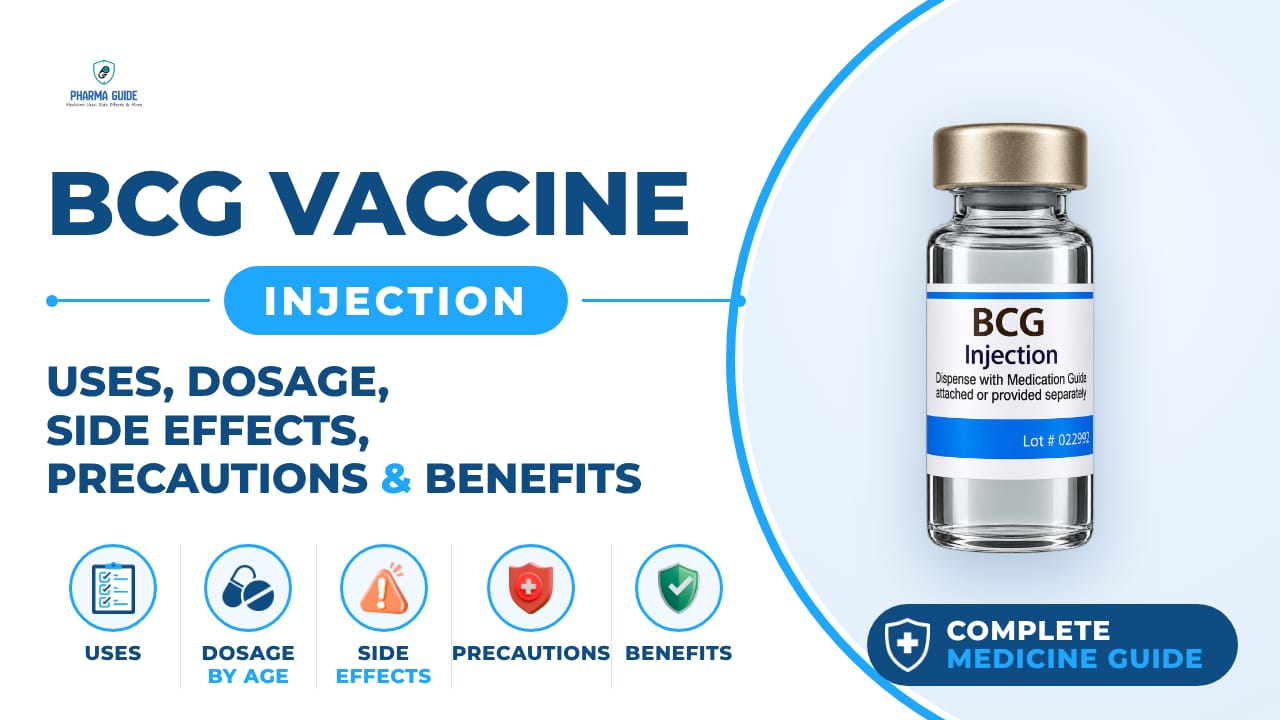
| Generic name | Bacillus Calmette-Guérin vaccine |
|---|---|
| Drug class | Live attenuated bacterial vaccine |
| Forms | Powder mixed with water for injection into the skin, injection |
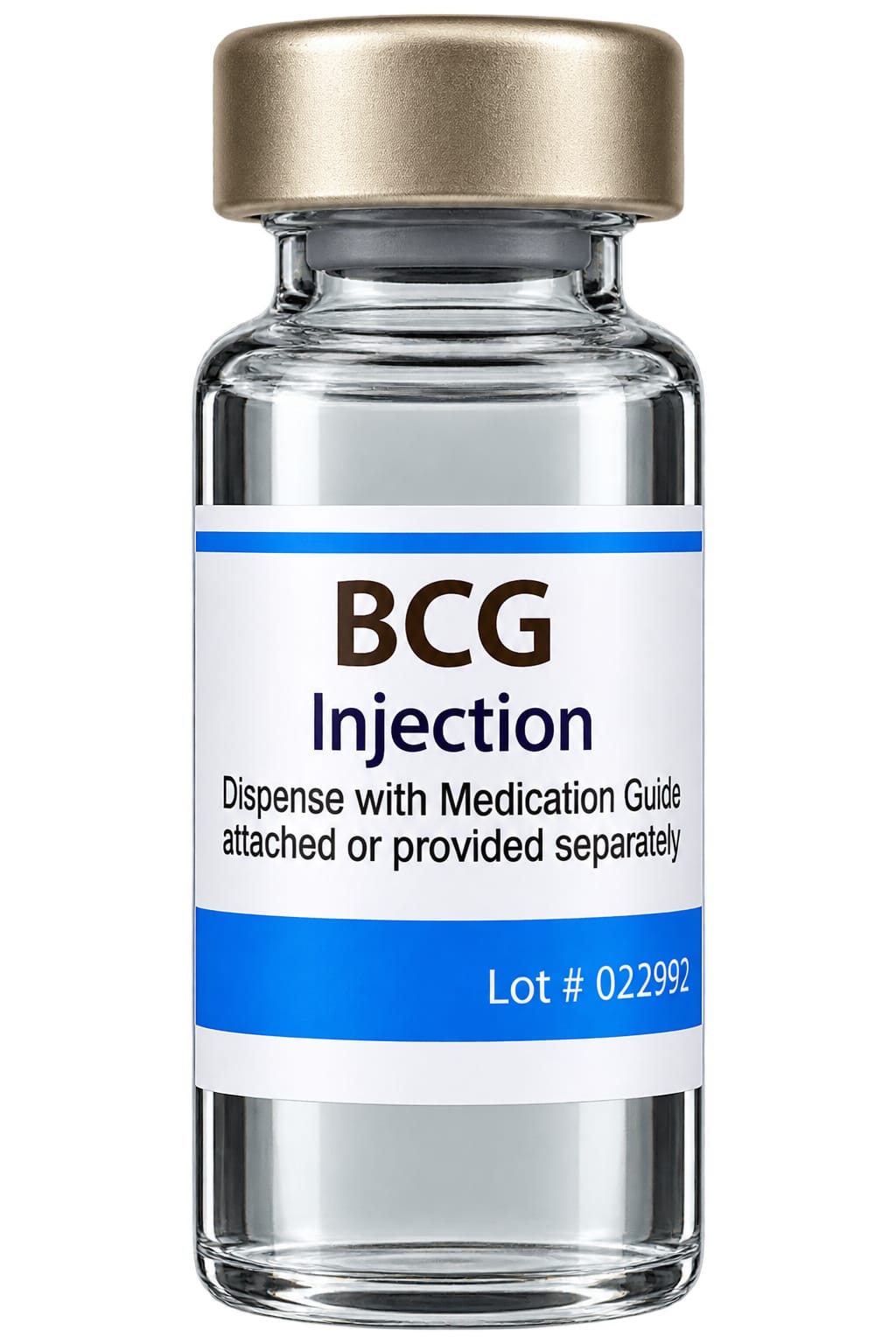
Quick overview
BCG Vaccine Injection (Bacillus Calmette-Guérin vaccine) is a live attenuated bacterial vaccine used to help protect people at high risk of exposure to the bacteria that cause tuberculosis (TB). It is given as a single injection into the skin by a healthcare provider. The vaccine works by training the immune system to recognize and fight TB bacteria using a weakened, live strain.
What is BCG Vaccine Injection
BCG vaccine contains a weakened, live strain of Mycobacterium bovis bacteria. It is used to help protect people who are at high risk of exposure to the bacteria that cause tuberculosis (TB).
BCG Vaccine Injection uses
- Prevents tuberculosis (TB) in people at high risk of exposure to Mycobacterium tuberculosis
Benefits of BCG Vaccine Injection
- Can help stop severe forms of TB, such as TB meningitis, in young children and infants
How BCG Vaccine Injection works
The vaccine contains a live but weakened form of the TB bacteria. Because it is weakened, it does not cause disease, but it still trains your immune system to recognize and fight the real bacteria if you are exposed later.
BCG Vaccine Injection dosage
BCG vaccine is given as a single injection into the skin by a healthcare provider. Keep the injection area dry and loosely covered for 24 hours afterward. It may be given again if a TB skin test later shows no immunity.
| Age group | Dose |
|---|---|
| Newborns (Birth–1 Year) | 0.05 mL injection (usually given at birth or during infancy) |
| Children Above 1 Year | 0.1 mL injection (as recommended) |
| Adolescents & Adults | Usually not routinely given; based on specific medical or public health recommendations |
Available forms and strengths
- Powder mixed with water for injection into the skin
- Injection
Side effects of BCG Vaccine Injection
Common
- Swollen lymph nodes
- Irritation, bumps, or ulcers at the site of vaccination
Serious
- Fever, loss of appetite, sore muscles, or pain
- Inflammation of the bone, usually in the leg, with pain, swelling, or difficulty walking
- Fainting after the injection, with dizziness, vision changes, or ringing in the ears
Warnings and precautions
- Tell your vaccine provider if you have had an allergic reaction to this vaccine, any part of it, any other vaccine, or any drug, food, or substance.
- Tell your provider if you have HIV infection, an immune disorder or family history of one, cancer, or take medicines that suppress the immune system or antibiotics.
- Tell your provider if you recently had another vaccine or a positive reaction to a TB skin test, since your provider may decide to delay vaccination.
- The vaccine can cause complications in people with weakened immune systems, including a widespread infection, which is especially a concern for HIV-positive people or infants who should not receive it.
- This vaccine is not recommended during pregnancy. Talk with your provider about the best timing for vaccination.
- This vaccine is generally not recommended while breastfeeding.
- Inform your healthcare provider about severe immune system problems before vaccination.
- Tell your doctor if there is a history of severe allergic reaction to vaccine components.
- Delay vaccination during serious illness until recovery if advised.
- Do not apply creams, bandages, or medicines to the vaccination site unless instructed.
When to see a doctor
- Get medical help right away if you have fever, loss of appetite, sore muscles, or pain after vaccination.
- Call your doctor right away if you have pain, swelling, or difficulty walking, which could be a sign of bone inflammation.
- Tell your provider right away if you feel dizzy or have vision changes or ringing in the ears, since fainting can happen after vaccination.
Alternatives
- No direct alternative vaccine for BCG protection
- TB preventive medicines (for specific high-risk cases, as advised by doctors)
Watch the video
FAQs
What is BCG Vaccine Injection used for?
It is used to help prevent tuberculosis (TB) in people at high risk of exposure to Mycobacterium tuberculosis.
How is BCG Vaccine Injection given?
It is given as a single injection into the skin by a healthcare provider. The injection area should be kept dry and loosely covered for 24 hours afterward.
What is the dosage of BCG Vaccine Injection for children?
Newborns receive a 0.05 mL injection, while children above 1 year receive a 0.1 mL injection, as recommended by a healthcare provider.
What are the common side effects of BCG Vaccine Injection?
Common side effects include swollen lymph nodes and irritation, bumps, or ulcers at the site of vaccination.
Is BCG Vaccine Injection safe during pregnancy?
This vaccine is not recommended during pregnancy, and you should talk with your provider about the best timing for vaccination.
General information, not medical advice
Your prescriber and the leaflet in your pack know your situation. This page does not.
- Follow your prescriber and the leaflet
- Don't start, stop, or change a dose on your own
- Doses and warnings differ by country and product
Sources
Video
Related medicines

Injectafer Injection: Uses, Dosage, Side Effects, Precautions and Alternates
Iron products
Injectafer (ferric carboxymaltose) treats iron deficiency anemia and heart failure-related iron deficiency via IV. Learn uses, dosage, side effects, and

Gliclazide Tablet: Uses, Dosage, Side Effects, Precautions and Alternates
Sulfonylurea (hypoglycemic/antidiabetic agent)
Gliclazide Tablet is a sulfonylurea for type 2 diabetes that boosts insulin release. Learn about dosage, side effects, warnings, and precautions.