
Safety
General information, not medical advice
Your prescriber and the leaflet in your pack know your situation. This page does not.
- Follow your prescriber and the leaflet
- Don't start, stop, or change a dose on your own
- Doses and warnings differ by country and product
Beclomethasone Nasal Spray: Uses, Dosage, Side Effects, Precautions and Alternates
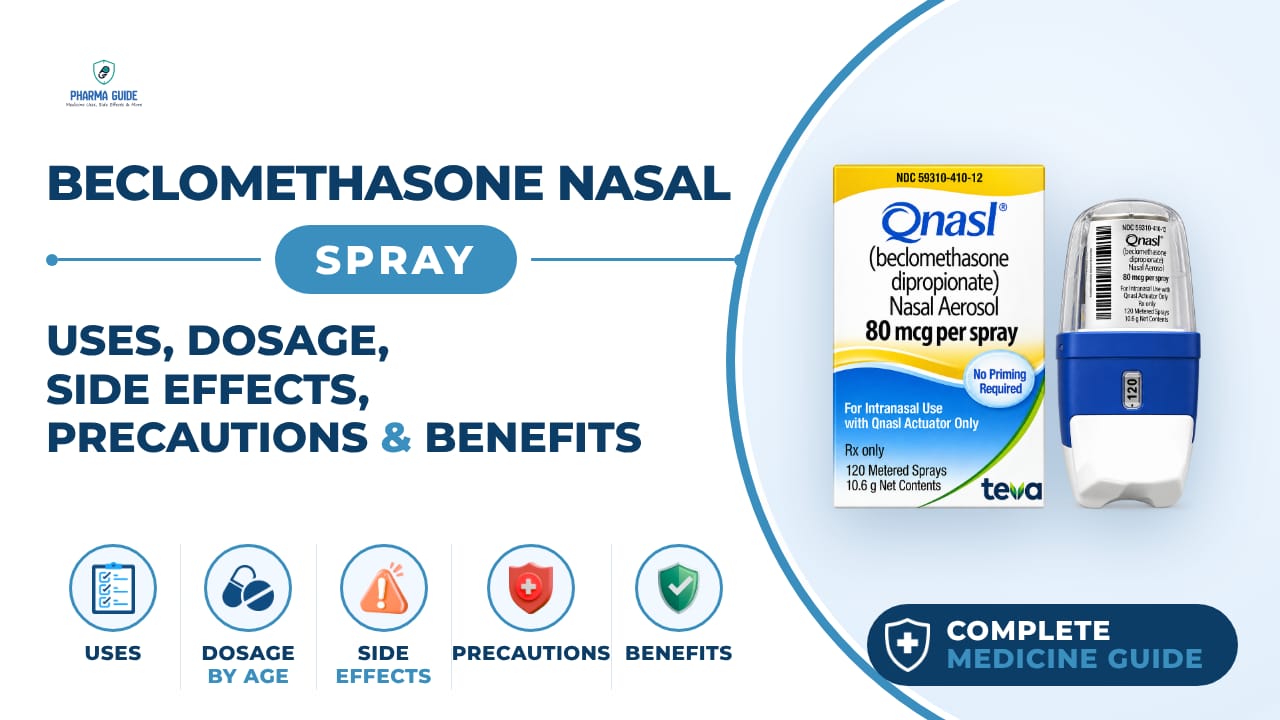
| Generic name | Beclomethasone dipropionate |
|---|---|
| Drug class | Corticosteroid (nasal steroid) |
| Forms | Nasal spray (aqueous suspension) |
Quick overview
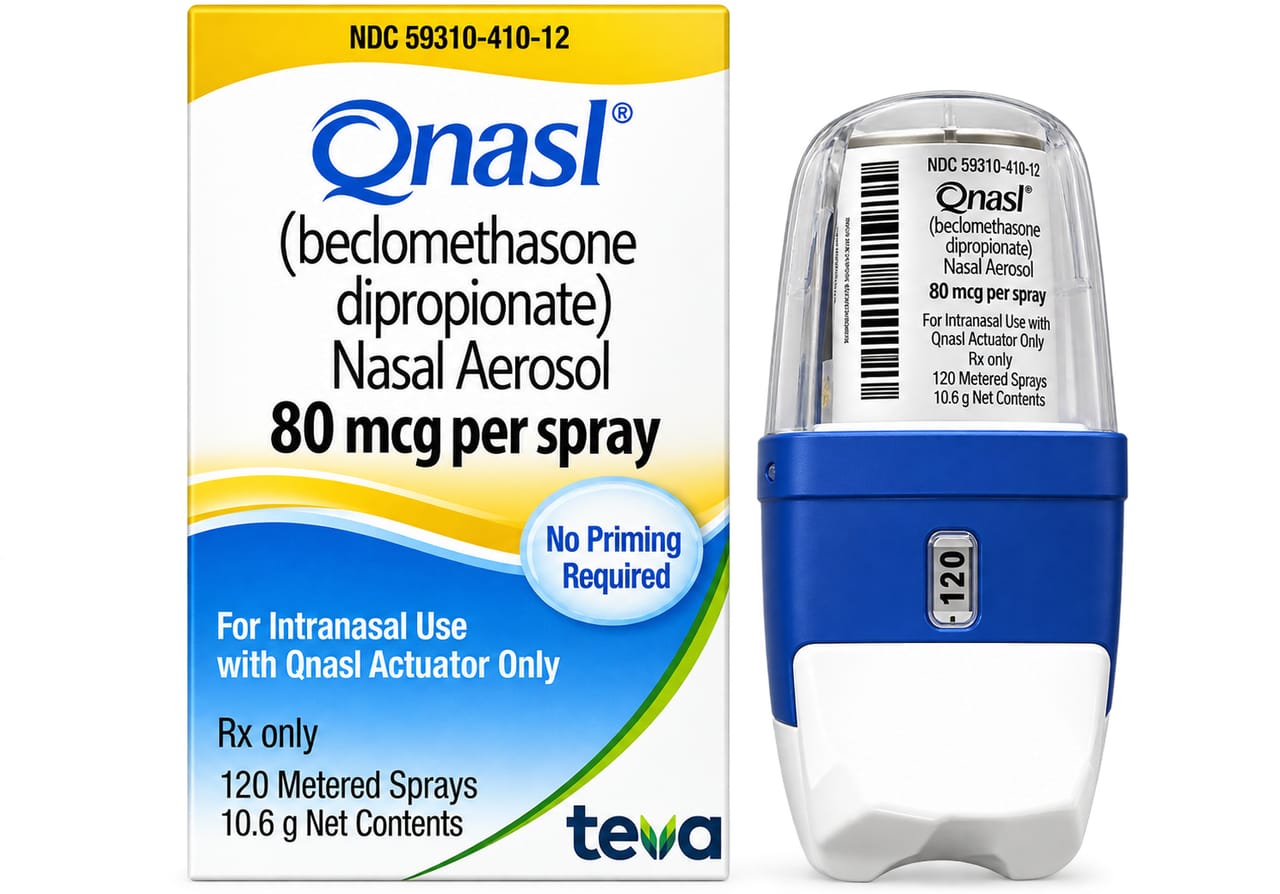
Beclomethasone Nasal Spray contains beclomethasone dipropionate, a corticosteroid used in the nose. It is used to relieve symptoms of seasonal and year-round allergic rhinitis and nonallergic rhinitis, and to help prevent nasal polyps from returning or growing after surgery. It works by reducing inflammation directly in the nose. It should be used regularly, exactly as prescribed, and not stopped suddenly without talking to a doctor.
What is Beclomethasone Nasal Spray
This medicine is a nasal spray containing a corticosteroid called beclomethasone dipropionate. It is sprayed into the nose to reduce swelling and inflammation caused by allergies.
Beclomethasone Nasal Spray uses
- Relief of symptoms of seasonal or year-round (perennial) allergic rhinitis, such as sneezing, runny nose, stuffy nose, and itching
- Relief of nonallergic (vasomotor) rhinitis symptoms
- Prevention of nasal polyps from coming back after surgical removal
- Prevention of nasal polyps from increasing in size
Benefits of Beclomethasone Nasal Spray
- Reduces inflammation in the nose, which can relieve stuffy nose, runny nose, itching, and sneezing
- Can significantly delay the recurrence of nasal polyps after polyp removal surgery
- Provides local anti-inflammatory action in the nose
- Helps control multiple nasal allergy symptoms
- Can provide sustained allergy control with regular use
How Beclomethasone Nasal Spray works
The medicine works directly inside the nose to calm down swelling and inflammation. This can help reduce the natural substances in the body that cause allergy symptoms like sneezing, itching, and a runny or stuffy nose.
Beclomethasone Nasal Spray dosage
This medicine is for use in the nose only — do not swallow it or spray it in your mouth or eyes. Shake the bottle well before each use. Prime the pump before using it for the first time, or if it hasn't been used for about a week, by spraying it into the air until a fine mist appears.
Gently blow your nose first to clear your nostrils. Close one nostril, tilt your head forward slightly, and insert the applicator into the other nostril while keeping the bottle upright. Breathe in gently through the nose while pressing down on the pump, then breathe out through your mouth.
Use the spray regularly and at evenly spaced times each day, not just when you feel you need it, since it works best with consistent use. It may take a few days to notice improvement, and up to one to two weeks for full benefit, so do not increase the dose if you don't feel relief right away.
Children younger than 6 years of age should not use this medicine, and an adult should help children younger than 12 years old use the spray. Do not stop using it suddenly without talking to your doctor, especially if you are switching from an oral or injected steroid. Each bottle should be used by only one person to avoid spreading germs. Do not use more sprays than the labeled number the bottle provides, even if liquid remains, because the correct dose cannot be guaranteed after that.
| Age group | Dose |
|---|---|
| Under 4 years | Safety and effectiveness are not established for QNASL |
| 4–11 years | QNASL 40 mcg: 1 spray in each nostril once daily = 80 mcg/day |
| 12–17 years | QNASL 80 mcg: 2 sprays in each nostril once daily = 320 mcg/day |
| 18–64 years | QNASL 80 mcg: 2 sprays in each nostril once daily = 320 mcg/day |
Available forms and strengths
- Nasal spray (aqueous suspension)
- QNASL 40 mcg
- QNASL 80 mcg
Side effects of Beclomethasone Nasal Spray
Common
- Headache
- Nasal irritation, stuffiness, or dryness
- Sneezing
- Nosebleed
- Joint or muscle pain
- Nausea
- Lightheadedness or dizziness
- Unpleasant taste or smell
- Muscle weakness
- Bruising easily
- Menstrual period changes
- Acne
- Sore throat
- Cough
- Stomach pain
Serious
- Wheezing, difficulty breathing or swallowing (possible bronchospasm)
- Hives, rash, itching, or swelling of the face, lips, tongue, throat, legs, or ankles (allergic reaction/angioedema)
- Vision changes, eye pain, or symptoms of glaucoma or cataracts
- White patches in the throat, mouth, or nose (possible yeast infection)
- Signs of low adrenal function such as severe tiredness, weakness, nausea, vomiting, or low blood pressure
- Frequent or severe nosebleeds, nasal sores, or crusting around a possible nasal septum perforation
- Whistling sound when breathing through the nose
Warnings and precautions
- If you are being switched from a steroid taken by mouth or injection to this nasal spray, your doctor must manage the change carefully, as going too fast can cause serious withdrawal problems or make existing conditions like asthma worse.
- People using this type of medicine are more likely to get infections, and conditions like chickenpox or measles can become serious or even life-threatening. Avoid contact with people who have these illnesses if you haven't had them or been vaccinated.
- Do not spray this medicine into your eyes.
- This medicine should not be used by people with active or past tuberculosis of the respiratory tract or untreated fungal, bacterial, or viral infections.
- If you have recently had nasal surgery, an injury to your nose, or nasal ulcers, you should not use this nasal spray until the area has healed, because steroids can slow down wound healing.
- This medicine may slow down growth in children and teenagers. Doctors should monitor a child's growth regularly during treatment.
- Using more than the recommended dose can cause serious whole-body steroid effects such as adrenal gland suppression or symptoms of excess steroid in the body.
- This medicine should only be used during pregnancy if your doctor decides the benefit is greater than the possible risk to the baby. Tell your doctor if you are pregnant or planning to become pregnant.
- It is not known if this medicine passes into breast milk, but other similar steroids do, so caution is advised if you are breastfeeding. Your doctor will weigh the benefits against possible risks to the infant.
- No routine renal dose adjustment is generally required.
- There may be stronger effects of this medicine in people with liver problems (cirrhosis), so tell your doctor if you have liver disease.
- No major direct interaction with alcohol is established.
- This medicine usually does not impair driving.
Storage
- Store between 15° and 30°C (59° and 86°F)
- Do not refrigerate (one product label)
- Protect from light (one product label)
- Keep the medication in the container it came in, tightly closed, and out of reach of children
- Store at room temperature and away from excess heat and moisture (not in the bathroom)
- Throw away the bottle after the labeled number of sprays has been used, or after the expiration date, whichever comes first
- Dispose of unneeded medication through a medicine take-back program; do not flush down the toilet unless instructed
When to see a doctor
- Get emergency medical help right away if you have signs of a serious allergic reaction, such as swelling of the face, mouth, tongue, or throat, severe itching, hives, rash, or stomach pain.
- Call your doctor or stop use and seek care if you have wheezing, hives, rash, itching, trouble breathing or swallowing, or swelling of the face, lower legs, or ankles.
- Tell your doctor right away if you notice changes in your vision, eye pain, or signs of increased eye pressure, cataracts, or glaucoma.
- Seek medical help if you have signs of a weak adrenal gland, such as severe nausea or vomiting, severe dizziness or fainting, muscle weakness, extreme tiredness, mood changes, or loss of appetite.
- Contact your doctor if you notice signs of infection such as fever, chills, severe sore throat, ear or sinus pain, cough, or a wound that will not heal.
- Tell your doctor about repeated nosebleeds, crusting around a hole in the nose, or a whistling sound when breathing, as these can be signs of damage to the nasal septum.
- Call your doctor if your symptoms do not improve, your condition worsens, or if sneezing or nasal irritation occurs.
- If you think you have used too much of this medicine, contact your healthcare professional, hospital emergency department, or your local poison control center right away, even if you have no symptoms.
Alternatives
- Fluticasone nasal spray
- Mometasone nasal spray
- Budesonide nasal spray
- Triamcinolone nasal spray
Watch the video
FAQs
What is Beclomethasone Nasal Spray used for?
It is used to relieve symptoms of seasonal and year-round allergic rhinitis and nonallergic rhinitis, and to help prevent nasal polyps from returning or growing after surgery.
How long does it take for Beclomethasone Nasal Spray to work?
It may take a few days to notice improvement, and up to one to two weeks for full benefit, so you should not increase the dose if relief is not felt right away.
Can children use Beclomethasone Nasal Spray?
Children younger than 6 years of age should not use this medicine, and an adult should help children younger than 12 years old use the spray.
What are the common side effects of Beclomethasone Nasal Spray?
Common side effects include headache, nasal irritation, stuffiness or dryness, sneezing, nosebleed, joint or muscle pain, nausea, lightheadedness, and unpleasant taste or smell.
Can I stop using Beclomethasone Nasal Spray suddenly?
No, you should not stop using it suddenly without talking to your doctor, especially if you are switching from an oral or injected steroid.
General information, not medical advice
Your prescriber and the leaflet in your pack know your situation. This page does not.
- Follow your prescriber and the leaflet
- Don't start, stop, or change a dose on your own
- Doses and warnings differ by country and product
Sources
Video
Related medicines
Nasacort Nasal Spray: Uses, Dosage, Side Effects, Precautions and Alternates
corticosteroid (nasal steroid)
Nasacort Nasal Spray (triamcinolone acetonide) relieves sneezing, congestion, and runny nose from allergic rhinitis. Learn dosage, side effects, and
Omnaris Nasal Spray: Uses, Dosage, Side Effects, Precautions and Alternates
Corticosteroid (nasal steroid)
Omnaris Nasal Spray (ciclesonide) treats nasal allergy symptoms like congestion, sneezing, and runny nose. Learn dosage, side effects, and precautions.