
Safety
General information, not medical advice
Your prescriber and the leaflet in your pack know your situation. This page does not.
- Follow your prescriber and the leaflet
- Don't start, stop, or change a dose on your own
- Doses and warnings differ by country and product
Omnaris Nasal Spray: Uses, Dosage, Side Effects, Precautions and Alternates
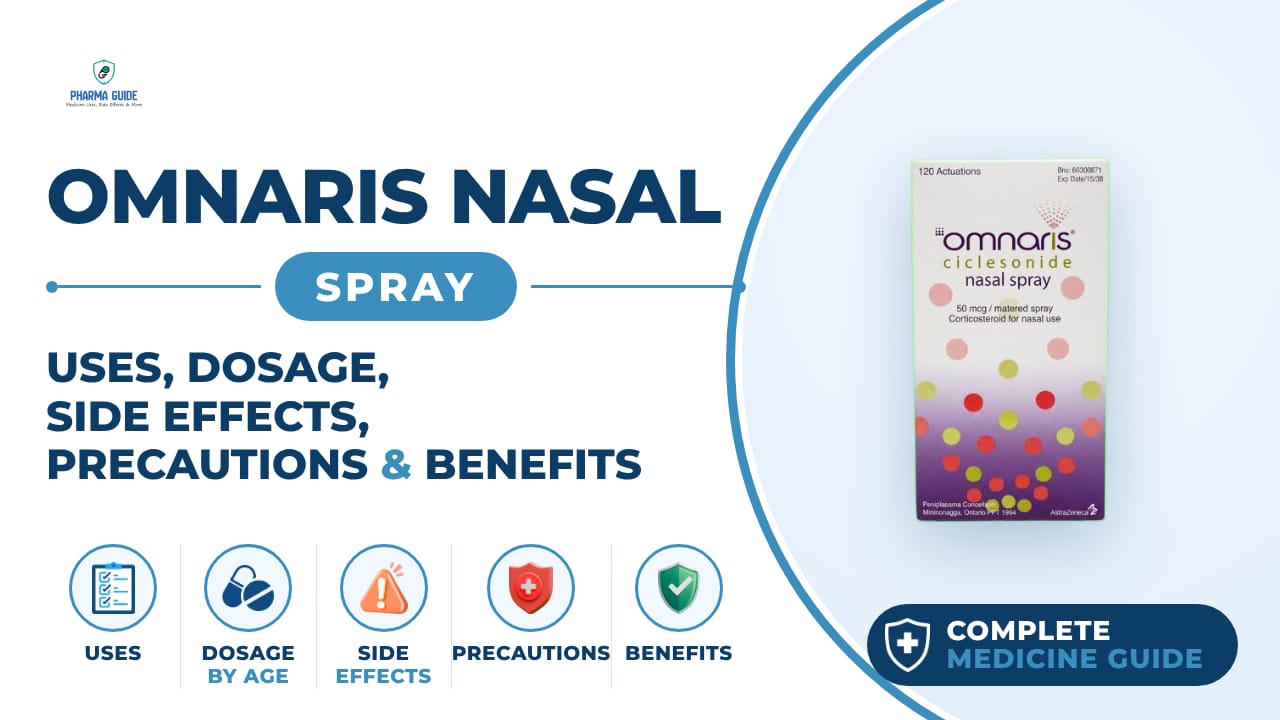
| Generic name | ciclesonide |
|---|---|
| Drug class | Corticosteroid (nasal steroid) |
| Forms | Nasal Spray |
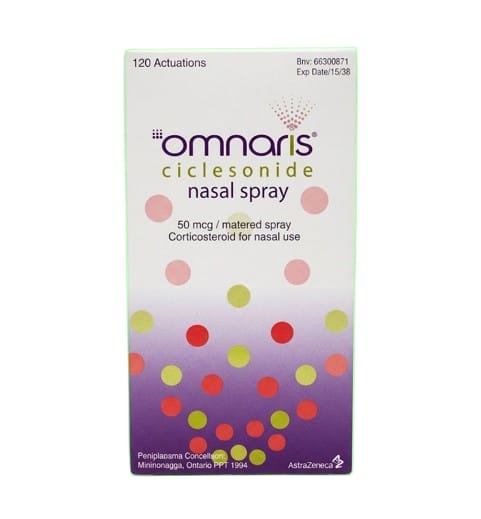
Quick overview
Omnaris Nasal Spray contains ciclesonide, a corticosteroid sprayed into the nose to treat nasal allergy symptoms such as congestion, sneezing, and a runny or itchy nose. It is used for seasonal and year-round allergic rhinitis, including allergies to pollen, dust mites, and pets. The usual dose for adults is 200 mcg once a day, and it is not recommended for those under 18. As with other nasal steroids, it carries possible nasal, eye, and other side effects that should be discussed with a doctor.
What is Omnaris Nasal Spray
Omnaris Nasal Spray contains ciclesonide, a synthetic corticosteroid (a substance that reduces inflammation). It is sprayed into the nose to treat nasal allergy symptoms.
Omnaris Nasal Spray uses
- Seasonal allergic rhinitis
- Year-round allergic rhinitis
- Pollen allergies
- Dust-mite allergies
- Pet-related nasal allergies
Benefits of Omnaris Nasal Spray
- Reduces nasal inflammation
- Helps relieve nasal congestion
- Reduces sneezing
- Helps relieve an itchy nose
- Reduces a runny nose
How Omnaris Nasal Spray works
Ciclesonide is changed by the body into an active form after it is sprayed in the nose. This active form reduces swelling and irritation in the nasal passages by acting on many of the cells and substances involved in allergic inflammation, which helps ease allergy symptoms.
Omnaris Nasal Spray dosage
This medicine is for use in the nose only — do not spray it in the eyes or mouth. Shake the bottle gently before each use. Prime the pump before using it for the first time, and reprime it if it has not been used for 4 or more days. Blow your nose to clear your nostrils before using, if needed.
Tilt your head forward slightly, keep the bottle upright, and breathe in through your nose as you spray. Avoid spraying directly onto the nasal septum (the wall between the two nostrils).
Use at regular intervals since effectiveness depends on regular, daily use. Allergy symptoms may take one to five weeks to improve; contact your doctor if symptoms do not improve or get worse. Do not stop using other steroid medicines suddenly when starting this nasal spray without talking to your doctor first. Elderly patients generally use the same dose as other adults, but dose selection should be cautious.
| Age group | Dose |
|---|---|
| Under 18 years | Not recommended |
| 18–64 years | 200 mcg, once/day |
| 65+ years | 200 mcg, once/day |
Available forms and strengths
- Nasal Spray
Side effects of Omnaris Nasal Spray
Common
- Headache
- Nosebleeds (epistaxis)
- Nasopharyngitis (cold-like symptoms, infection in nose/throat)
- Ear pain
- Sore/painful throat (pharyngolaryngeal pain)
- Dizziness
- Stuffy nose
Serious
- Nasal problems: nosebleeds, crusting, sores/ulcers in the nose, hole in the nasal septum (whistling sound when breathing)
- Thrush (candida) fungal infection in the nose and throat — redness or white patches
- Slow wound healing in the nose
- Eye problems, including glaucoma and cataracts — blurred vision, eye pain or redness, seeing halos around lights
- Serious allergic reactions: rash, hives, swelling of face/mouth/tongue, breathing problems, low blood pressure
- Weakened immune system and increased risk of infections, including worsening of tuberculosis, herpes eye infections, and fungal/bacterial/viral/parasitic infections
- Reduced adrenal gland function (adrenal insufficiency): tiredness, weakness, nausea, vomiting, low blood pressure
- Increased stress hormone levels (hypercorticism) with long-term use: acne, easy bruising, increased hair growth, rounded face, weight gain, stretch marks
- Slowed growth in children
Warnings and precautions
- This medicine can cause nasal side effects such as nosebleeds, infections with a fungus called Candida, a hole in the wall between the nostrils, and slowed healing of nasal wounds. Avoid spraying it directly onto the nasal septum, and do not use it if you have recent nasal sores, surgery, or injury until healed.
- This medicine may lead to glaucoma or cataracts. People with vision changes or a history of these eye conditions should be watched closely.
- This medicine can make existing infections worse, including tuberculosis and fungal, bacterial, viral, or parasitic infections, or eye herpes infections. Chickenpox or measles can become more serious or even fatal in people using this type of medicine.
- At high doses, or in sensitive people even at normal doses, this medicine can cause excess steroid hormone levels and suppress the adrenal glands. If this happens, the medicine should be stopped gradually, not suddenly.
- This medicine may slow growth in children. Children using it should have their growth checked regularly.
- It is not known if this medicine can harm an unborn baby. Tell your doctor if you are pregnant or plan to become pregnant.
- It is not known whether this medicine passes into breast milk or if it could harm a nursing baby. Ask your doctor if it is safe to breastfeed while using this medicine.
- Dose adjustment is not needed in people with liver impairment, though drug levels may be somewhat higher.
- It isn't known if alcohol affects this medicine, but drinking alcohol may increase the risk of feeling dizzy.
- Be careful before driving or using machines or tools until you know how this medicine affects you.
Storage
- Store at 25°C (77°F); brief exposure to 15–30°C (59–86°F) is permitted
- Do not freeze
- Shake gently before use
- Keep out of reach of children
- Keep the bottle clean and dry at all times
- Keep the spray in its foil pouch until ready to use
- Discard the bottle after 120 sprays (following initial priming) or 4 months after removing it from the foil pouch, whichever comes first
When to see a doctor
- Get emergency medical help right away for signs of a serious allergic reaction, such as hives, trouble breathing, or swelling of the face, lips, tongue, or throat
- Call your doctor right away if you notice signs of infection, such as fever, chills, sore throat, mouth sores, unusual bleeding or bruising, or chest discomfort and wheezing
- Call your doctor if you notice nosebleeds, crusting inside the nose, a whistling sound when breathing, or nasal ulcers
- Call your doctor at once if you have blurred vision, eye pain or redness, or see halos around lights
- Call your doctor if you have signs of thrush, a fungal infection, such as sores or white patches in your mouth or throat, or trouble swallowing
- Call your doctor if you have signs of decreased adrenal gland hormones, such as nausea, vomiting, stomach pain, loss of appetite, feeling tired or light-headed, muscle or joint pain, or craving salty foods
- If you think you or someone else used too much of this medicine, seek emergency medical help or contact a poison control center right away
Alternatives
- Rhinocort
- Flonase
- Nasonex
Watch the video
FAQs
What is Omnaris Nasal Spray used for?
It is used to treat nasal allergy symptoms such as congestion, sneezing, and a runny or itchy nose caused by seasonal or year-round allergic rhinitis, including allergies to pollen, dust mites, and pets.
What is the usual dose of Omnaris Nasal Spray?
The usual dose for adults aged 18 and older, including those 65 and older, is 200 mcg once a day. It is not recommended for those under 18.
How long does it take for Omnaris Nasal Spray to work?
Allergy symptoms may take one to five weeks to improve. Contact your doctor if symptoms do not improve or get worse.
What are the common side effects of Omnaris Nasal Spray?
Common side effects include headache, nosebleeds, nasopharyngitis, ear pain, sore throat, dizziness, and stuffy nose.
How should Omnaris Nasal Spray be stored?
Store at 25°C (77°F), avoid freezing, keep the bottle clean and dry, keep it in its foil pouch until ready to use, and discard it after 120 sprays or 4 months after removing it from the pouch, whichever comes first.
General information, not medical advice
Your prescriber and the leaflet in your pack know your situation. This page does not.
- Follow your prescriber and the leaflet
- Don't start, stop, or change a dose on your own
- Doses and warnings differ by country and product
Sources
Video
Related medicines
Beclomethasone Nasal Spray: Uses, Dosage, Side Effects, Precautions and Alternates
Corticosteroid (nasal steroid)
Beclomethasone Nasal Spray relieves allergic and nonallergic rhinitis symptoms and helps prevent nasal polyps from returning. Learn uses, dosage, and side
Nasacort Nasal Spray: Uses, Dosage, Side Effects, Precautions and Alternates
corticosteroid (nasal steroid)
Nasacort Nasal Spray (triamcinolone acetonide) relieves sneezing, congestion, and runny nose from allergic rhinitis. Learn dosage, side effects, and