
Safety
General information, not medical advice
Your prescriber and the leaflet in your pack know your situation. This page does not.
- Follow your prescriber and the leaflet
- Don't start, stop, or change a dose on your own
- Doses and warnings differ by country and product
Nasacort Nasal Spray: Uses, Dosage, Side Effects, Precautions and Alternates
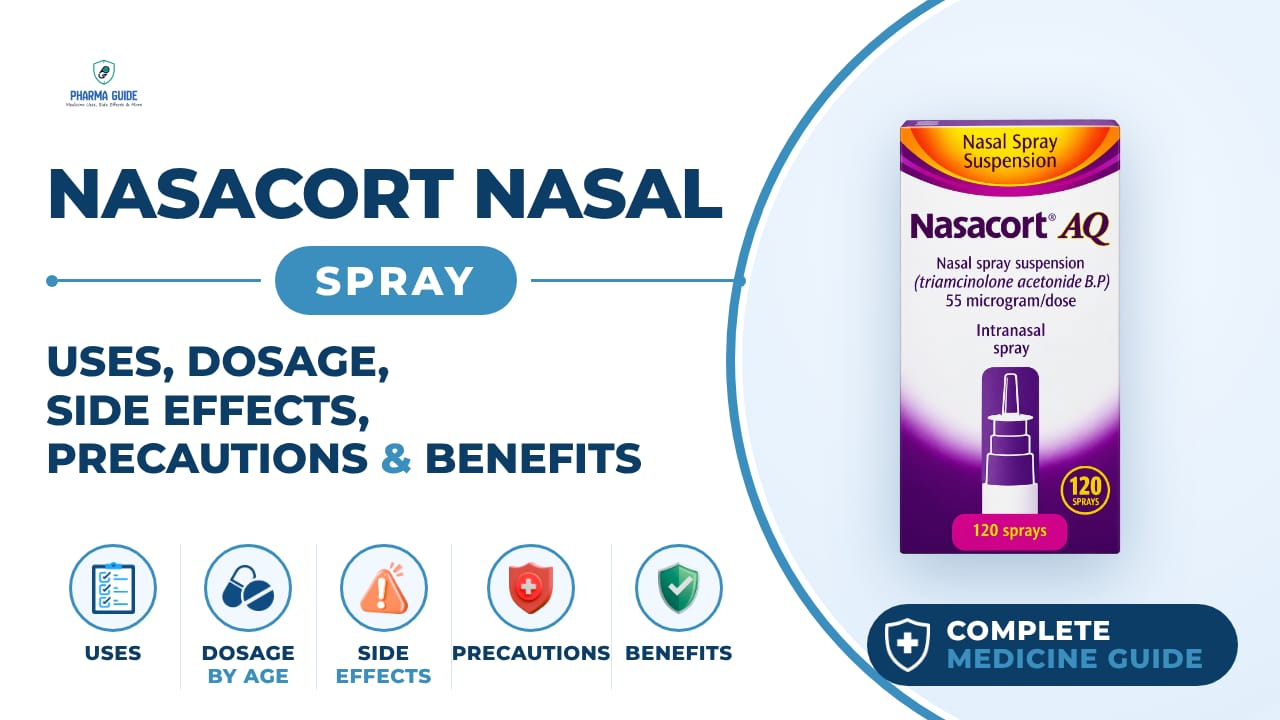
| Generic name | triamcinolone acetonide |
|---|---|
| Drug class | corticosteroid (nasal steroid) |
| Forms | Nasal spray (metered-dose pump) |
Quick overview
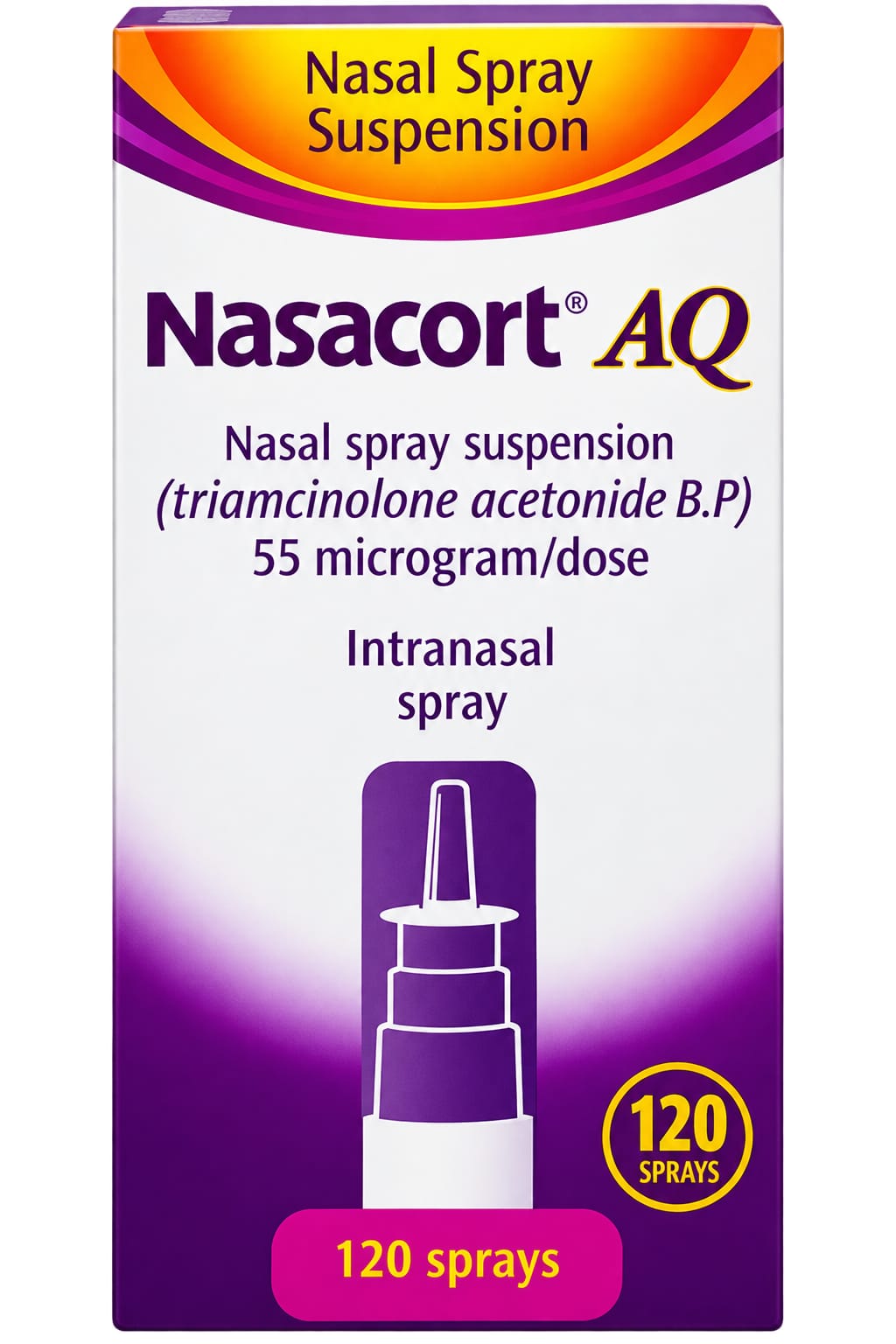
Nasacort Nasal Spray contains triamcinolone acetonide, a corticosteroid used as a nasal steroid. It is sprayed into the nose to treat nasal symptoms of seasonal and perennial allergic rhinitis, including sneezing, stuffiness, runny nose, and itching, in both adults and children.
What is Nasacort Nasal Spray
Nasacort is a nasal spray medicine containing triamcinolone acetonide, a type of steroid. It is sprayed into the nose to treat nasal allergy symptoms in adults and children.
Nasacort Nasal Spray uses
- Treats nasal symptoms of seasonal and perennial allergic rhinitis, including sneezing, stuffiness, runny nose, and itching
- Relieves hay fever and other allergy symptoms
Benefits of Nasacort Nasal Spray
- Provides relief from nasal congestion, sneezing, itching, and runny nose
- Can start helping some people within the first day of use
- Designed to stay where it is sprayed in the nose due to its special gel-like formula
How Nasacort Nasal Spray works
Nasacort works by calming down the immune system in the nose, which reduces swelling and irritation that cause allergy symptoms.
Nasacort Nasal Spray dosage
Shake the bottle well before each use. Before first use, or if not used for more than 2 weeks, the spray pump must be primed with several sprays until a fine mist appears. Blow your nose gently to clear your nostrils before spraying, if needed. Close one nostril with your finger, point the tip toward the back of the nose, and sniff gently while pressing the spray. Avoid blowing your nose for about 15 minutes after using the spray.
Use the spray at regular, consistent times since it works best with regular daily use. Do not spray into the eyes or mouth. Do not share this medicine with others. It may help some people within the first day, but for most people it can take about a week (or 3 to 4 days per some sources) to feel full relief. Contact your doctor if symptoms do not improve after about three weeks or if they get worse. Children should be helped by an adult when using this spray.
| Age group | Dose |
|---|---|
| Under 2 years | Not recommended |
| 2–11 years | 1 spray/nostril, once/day |
| 12–60 years | 2 sprays/nostril, once/day |
| 60+ years | 2 sprays/nostril, once/day |
Available forms and strengths
- Nasal spray (metered-dose pump)
Side effects of Nasacort Nasal Spray
Common
- Sore throat
- Nosebleed
- Cough
- Headache or flu-like symptoms (especially in children)
- Upset stomach or stomach pain
- Runny nose
- Change in sense of smell or taste
- Irritation inside the nose or throat
- Problems with teeth
- Heartburn or indigestion
Serious
- Severe allergic reaction: rash, hives, itching, swelling of face, lips, mouth, tongue, or throat, trouble breathing or swallowing
- Signs of infection, especially after contact with chickenpox, measles, or tuberculosis
- Vision changes such as blurred vision, difficulty reading, or eye pain
- Frequent or severe nosebleeds that are hard to stop
- Crusting or sores inside the nose
- Whistling sound through the nostrils that does not go away
- Signs of low adrenal gland function: nausea, vomiting, loss of appetite, unusual weakness, fatigue, dizziness
- Thrush (white patches) in the nose and mouth
Warnings and precautions
- Switching from a steroid taken by mouth or injection to this nasal spray can sometimes cause withdrawal symptoms like joint or muscle pain, tiredness, and depression, or signs of low adrenal function. People who used oral steroids for a long time should be watched carefully.
- Children using steroid medicines are more likely to get infections. Diseases like chickenpox and measles can be more serious or even deadly in these children, so it's important to avoid exposure to these illnesses.
- This medicine should not be used for the common cold.
- This medicine may slow growth in some children. Talk to your doctor if your child needs to use the spray for more than two months a year.
- Use with caution if you have an untreated infection of the nose or throat, recent nose surgery or injury, or a nasal ulcer, since healing may be affected.
- Using too much of this medicine over time can cause body-wide steroid effects. If this happens, stop the medicine gradually and under medical guidance rather than suddenly.
- Pregnancy: It is not known if this medicine can harm an unborn baby. Tell your doctor if you are or plan to become pregnant so they can advise you.
- Breastfeeding: It is not known if this medicine passes into breast milk. Tell your doctor if you are breastfeeding so they can advise you.
- Alcohol: It is not known whether drinking alcohol affects this medicine.
- Driving: This medicine is not expected to affect your ability to drive or use machines.
Storage
- Store at Controlled Room Temperature, 20 to 25°C (68 to 77°F)
- Keep out of reach of children
- Discard the bottle after the labeled number of sprays has been used, even if it is not completely empty
- Do not transfer any remaining liquid to another bottle
- Get rid of any unused medication after the expiration date through a medication take-back program, or ask your pharmacist how to safely dispose of it
When to see a doctor
- Stop using this medicine and get medical help right away if you have signs of a serious allergic reaction, such as breathing problems, swelling of the face, lips, mouth, tongue, or throat, hives, trouble swallowing, dizziness, or fainting.
- Stop using the spray and tell your doctor if you come into contact with someone who has chickenpox, measles, or tuberculosis, or if you develop a fever or other signs of infection.
- Stop using the spray and tell your doctor if you notice changes in your vision, such as blurred vision or eye pain.
- Stop using the spray and tell your doctor if you have frequent or hard-to-stop nosebleeds.
- Contact your doctor if your symptoms do not improve after about three weeks of treatment, or if your condition gets worse.
- If you think you or someone else has used too much of this medicine, get medical help right away, such as by contacting a poison control center or going to an emergency room.
Alternatives
- Beclomethasone Nasal Spray
- Astepro Nasal Spray
- Flonase Nasal Spray
Watch the video
FAQs
What is Nasacort Nasal Spray used for?
It treats nasal symptoms of seasonal and perennial allergic rhinitis, including sneezing, stuffiness, runny nose, and itching, in both adults and children.
How does Nasacort Nasal Spray work?
It works by calming down the immune system in the nose, which reduces swelling and irritation that cause allergy symptoms.
How long does it take for Nasacort Nasal Spray to work?
It may help some people within the first day, but for most people it can take about a week (or 3 to 4 days per some sources) to feel full relief.
What is the dosage of Nasacort Nasal Spray for children?
Children aged 2 to 11 years use 1 spray per nostril once a day, while it is not recommended for children under 2 years.
What are the serious side effects of Nasacort Nasal Spray?
Serious side effects include severe allergic reactions, signs of infection after exposure to chickenpox, measles, or tuberculosis, vision changes, frequent or severe nosebleeds, crusting or sores inside the nose, and signs of low adrenal gland function.
General information, not medical advice
Your prescriber and the leaflet in your pack know your situation. This page does not.
- Follow your prescriber and the leaflet
- Don't start, stop, or change a dose on your own
- Doses and warnings differ by country and product
Sources
Video
Related medicines
Beclomethasone Nasal Spray: Uses, Dosage, Side Effects, Precautions and Alternates
Corticosteroid (nasal steroid)
Beclomethasone Nasal Spray relieves allergic and nonallergic rhinitis symptoms and helps prevent nasal polyps from returning. Learn uses, dosage, and side
Omnaris Nasal Spray: Uses, Dosage, Side Effects, Precautions and Alternates
Corticosteroid (nasal steroid)
Omnaris Nasal Spray (ciclesonide) treats nasal allergy symptoms like congestion, sneezing, and runny nose. Learn dosage, side effects, and precautions.