
Safety
General information, not medical advice
Your prescriber and the leaflet in your pack know your situation. This page does not.
- Follow your prescriber and the leaflet
- Don't start, stop, or change a dose on your own
- Doses and warnings differ by country and product
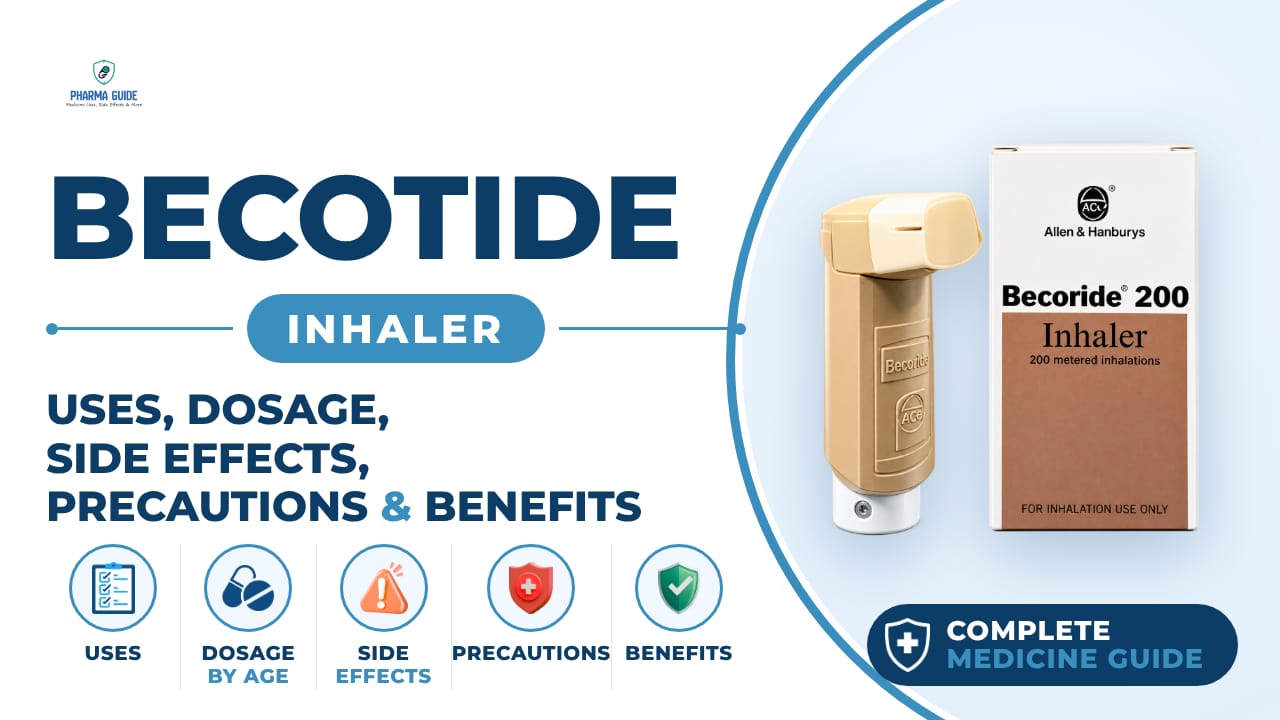
Becotide Inhaler: Uses, Dosage, Side Effects, Precautions and Alternates
| Generic name | Beclometasone dipropionate |
|---|---|
| Drug class | Corticosteroid (inhaled steroid) |
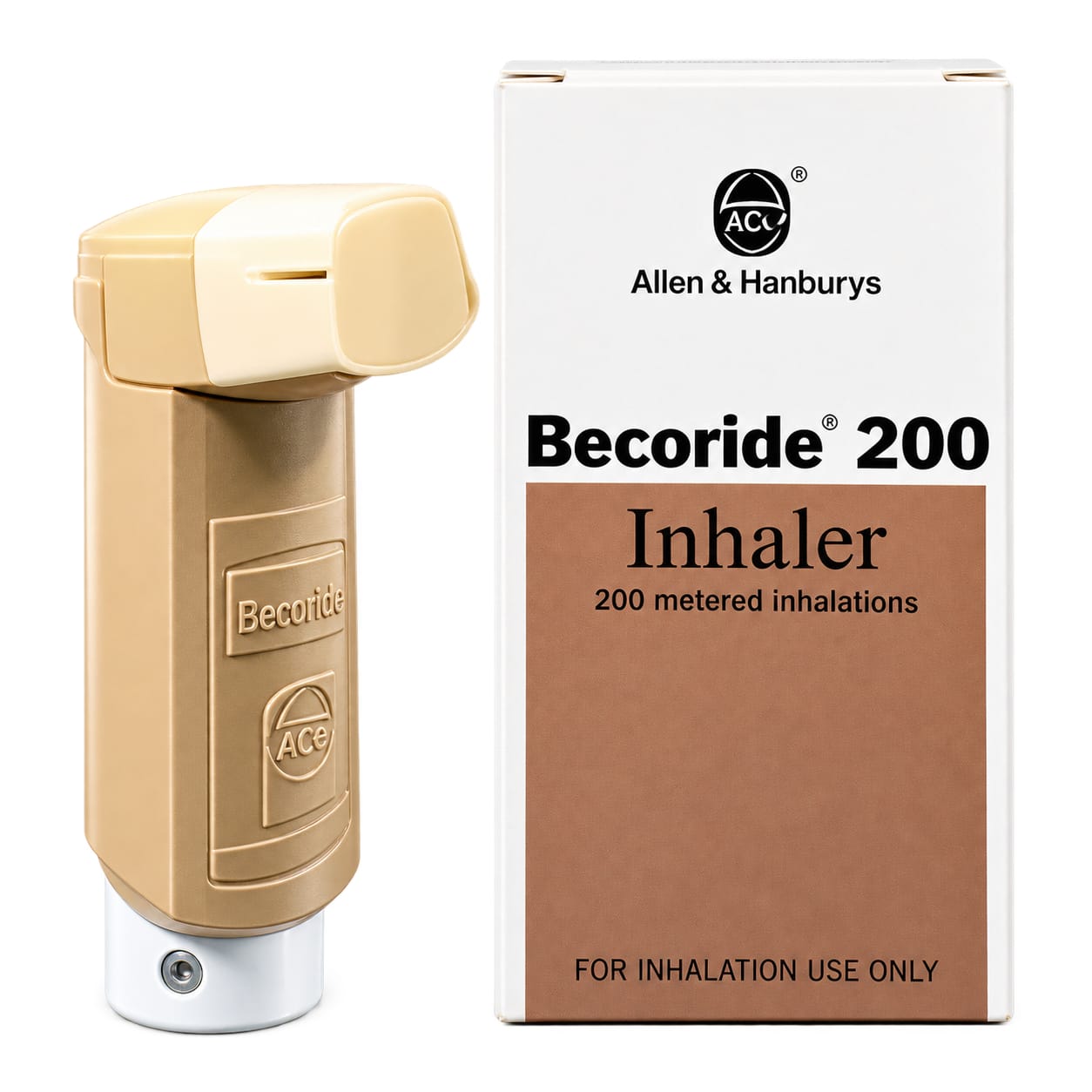
| Forms | Pressurised inhalation solution (metered-dose inhaler) |
Quick overview
Becotide Inhaler contains beclometasone dipropionate, a corticosteroid used as an inhaled steroid. It is a 'preventer' medicine used regularly every day to prevent asthma attacks, and it does not treat sudden asthma attacks. It works by reducing inflammation in the airways and is available as a pressurised metered-dose inhaler.
What is Becotide Inhaler
Becotide is an inhaled steroid medicine that helps prevent asthma attacks. It is sometimes called a 'preventer' because it must be used regularly every day to keep asthma under control. It does not treat sudden asthma attacks.
Becotide Inhaler uses
- Prevents asthma attacks in people who need regular treatment
- Used for asthma that does not respond well to bronchodilators alone or with sodium cromoglycate
- Used for severe asthma that depends on steroid tablets or ACTH
- Prevents asthma symptoms
- Reduces airway inflammation
Benefits of Becotide Inhaler
- Reduces chronic inflammation, mucus production, and irritation in the airways to prevent asthma attacks
- Improves overall breathing and decreases the need for frequent rescue inhalers when used consistently every day
- Provides regular anti-inflammatory asthma control
- Can reduce asthma symptom frequency
- May reduce the need for rescue medication
How Becotide Inhaler works
Becotide works by reducing swelling and irritation in the lungs, giving an anti-inflammatory effect. Because it is inhaled directly into the lungs, only a very small dose of steroid is needed.
Becotide Inhaler dosage
Becotide is for inhalation by mouth only. You can use it at any time of day, with or without food. It takes a few days to start working, so use it regularly even if you feel well. Do not stop using it even if you feel better unless your doctor tells you to. Do not use more than you are told.
Do not use this medicine for a sudden attack of breathlessness - use a quick-acting reliever inhaler instead. Shake the inhaler well before use. Breathe in slowly and steadily as you press the canister, then hold your breath for a few seconds. Wait about half a minute between puffs if you need more than one. Replace the mouthpiece cover immediately after use.
If you forget a dose, take it when it is due - do not double up to make up for a missed dose. A spacer device may help if you or your child find it hard to use the inhaler properly. Clean the inhaler at least once a week to stop it blocking up.
| Age group | Dose |
|---|---|
| Under 5 years | No standard established dose |
| 5–11 years | 100 micrograms twice daily |
| 12–17 years | 100–200 micrograms twice daily, depending on asthma control |
| 18–64 years | Usually 200 micrograms twice daily |
Available forms and strengths
- Pressurised inhalation solution (metered-dose inhaler)
Side effects of Becotide Inhaler
Common
- Thrush in the mouth and throat
- Sore throat
- Hoarseness of voice
- Cough or throat irritation
- Headache
Serious
- Allergic reactions such as skin rash, redness, itching or hives
- Severe allergic reactions with swelling of the face, lips, mouth, tongue or throat, causing difficulty swallowing or breathing, itchy rash, feeling faint, and collapse
- Worsening breathing or wheezing straight after using the inhaler
- Sudden, severe tightening of the airways right after inhaling (paradoxical bronchospasm)
- Sleeping problems, feeling worried, restless, nervous, over-excited or irritable, more likely in children
- Depression or aggression, more likely in children
- Blurred vision or other visual disturbances
- Slower growth in children and young people with long-term high doses
- Cushing's syndrome, with thinning of bones and eye problems such as cataracts and glaucoma, from long-term high-dose use
- Signs of adrenal suppression such as fatigue, dizziness, or vomiting
- Weakened bones or increased risk of fractures over prolonged use
Warnings and precautions
- Do not use Becotide if you are allergic to beclometasone dipropionate or any other ingredient.
- Tell your doctor before using Becotide if you have ever been treated for tuberculosis, have had thrush in your mouth, or are using or have just finished steroid tablets or injections.
- If your breathing or wheezing gets worse right after using the inhaler, stop and tell your doctor immediately.
- Contact your doctor if you have blurred vision or other visual changes.
- Some medicines, including certain HIV medicines (ritonavir, cobicistat), can increase the effects of Becotide, so your doctor may want to monitor you more closely.
- Speak with your doctor before using Becotide if you are taking metronidazole or disulfiram.
- If you are pregnant, think you may be pregnant, or are planning to have a baby, ask your doctor or pharmacist for advice before using this medicine.
- If you are breast-feeding, ask your doctor or pharmacist for advice before using this medicine.
- There is no need to adjust the dose in patients with kidney problems.
- There is no need to adjust the dose in patients with liver problems.
- Becotide contains a small amount of alcohol (less than 100mg per dose), but this amount is usually too small to cause problems.
- Becotide is not likely to affect your ability to drive or use tools or machines.
Storage
- Keep this medicine out of the sight and reach of children
- Straight after use, replace the mouthpiece cover firmly and click into position. Do not use excessive force
- Do not refrigerate or freeze
- Protect from frost and direct sunlight
- If the inhaler gets very cold, take the metal canister out of the plastic case and warm it in your hands for a few minutes before use. Never use anything else to warm it up
- Do not store above 30°C
- The metal canister contains a pressurised liquid. Do not expose to temperatures higher than 50°C. Do not puncture, break or burn it even if you think it is empty
- Do not use after the expiry date shown on the carton and label
- Do not throw away medicines via wastewater or household waste - ask your pharmacist how to dispose of medicines you no longer use
When to see a doctor
- Stop using Becotide and talk to your doctor straight away if you notice signs of an allergic reaction such as skin rash, itching, or hives.
- Get urgent medical help for signs of a severe allergic reaction, such as swelling of the face, lips, mouth, tongue or throat, difficulty swallowing or breathing, feeling faint, or collapse.
- Stop using the inhaler and tell your doctor right away if your breathing or wheezing gets worse immediately after using it.
- Talk to your doctor as soon as possible if your shortness of breath or wheezing has not improved, or has gotten worse, after 7 days of using Becotide.
- If you use more Becotide than you should, talk to your doctor as soon as possible.
Alternatives
- Beclometasone inhaler
- Budesonide inhaler
- Fluticasone inhaler
- Mometasone inhaler
Watch the video
FAQs
What is Becotide Inhaler used for?
Becotide is an inhaled steroid 'preventer' medicine used regularly every day to prevent asthma attacks by reducing airway inflammation. It does not treat sudden asthma attacks.
How does Becotide Inhaler work?
It works by reducing swelling and irritation in the lungs, giving an anti-inflammatory effect. Because it is inhaled directly into the lungs, only a very small dose of steroid is needed.
What is the dosage of Becotide Inhaler?
Dosage varies by age: 5-11 years take 100 micrograms twice daily, 12-17 years take 100-200 micrograms twice daily, and 18-64 years usually take 200 micrograms twice daily. There is no standard established dose for under 5 years.
What are the common side effects of Becotide Inhaler?
Common side effects include thrush in the mouth and throat, sore throat, hoarseness of voice, cough or throat irritation, and headache.
Can I use Becotide Inhaler for a sudden asthma attack?
No, Becotide should not be used for a sudden attack of breathlessness. A quick-acting reliever inhaler should be used instead.
General information, not medical advice
Your prescriber and the leaflet in your pack know your situation. This page does not.
- Follow your prescriber and the leaflet
- Don't start, stop, or change a dose on your own
- Doses and warnings differ by country and product
Sources
Video
Related medicines

Injectafer Injection: Uses, Dosage, Side Effects, Precautions and Alternates
Iron products
Injectafer (ferric carboxymaltose) treats iron deficiency anemia and heart failure-related iron deficiency via IV. Learn uses, dosage, side effects, and

Gliclazide Tablet: Uses, Dosage, Side Effects, Precautions and Alternates
Sulfonylurea (hypoglycemic/antidiabetic agent)
Gliclazide Tablet is a sulfonylurea for type 2 diabetes that boosts insulin release. Learn about dosage, side effects, warnings, and precautions.