
Safety
General information, not medical advice
Your prescriber and the leaflet in your pack know your situation. This page does not.
- Follow your prescriber and the leaflet
- Don't start, stop, or change a dose on your own
- Doses and warnings differ by country and product
Bedaquiline Tablet: Uses, Dosage, Side Effects, Precautions and Alternates
| Generic name | Bedaquiline |
|---|---|
| Drug class | Diarylquinoline antimycobacterial |
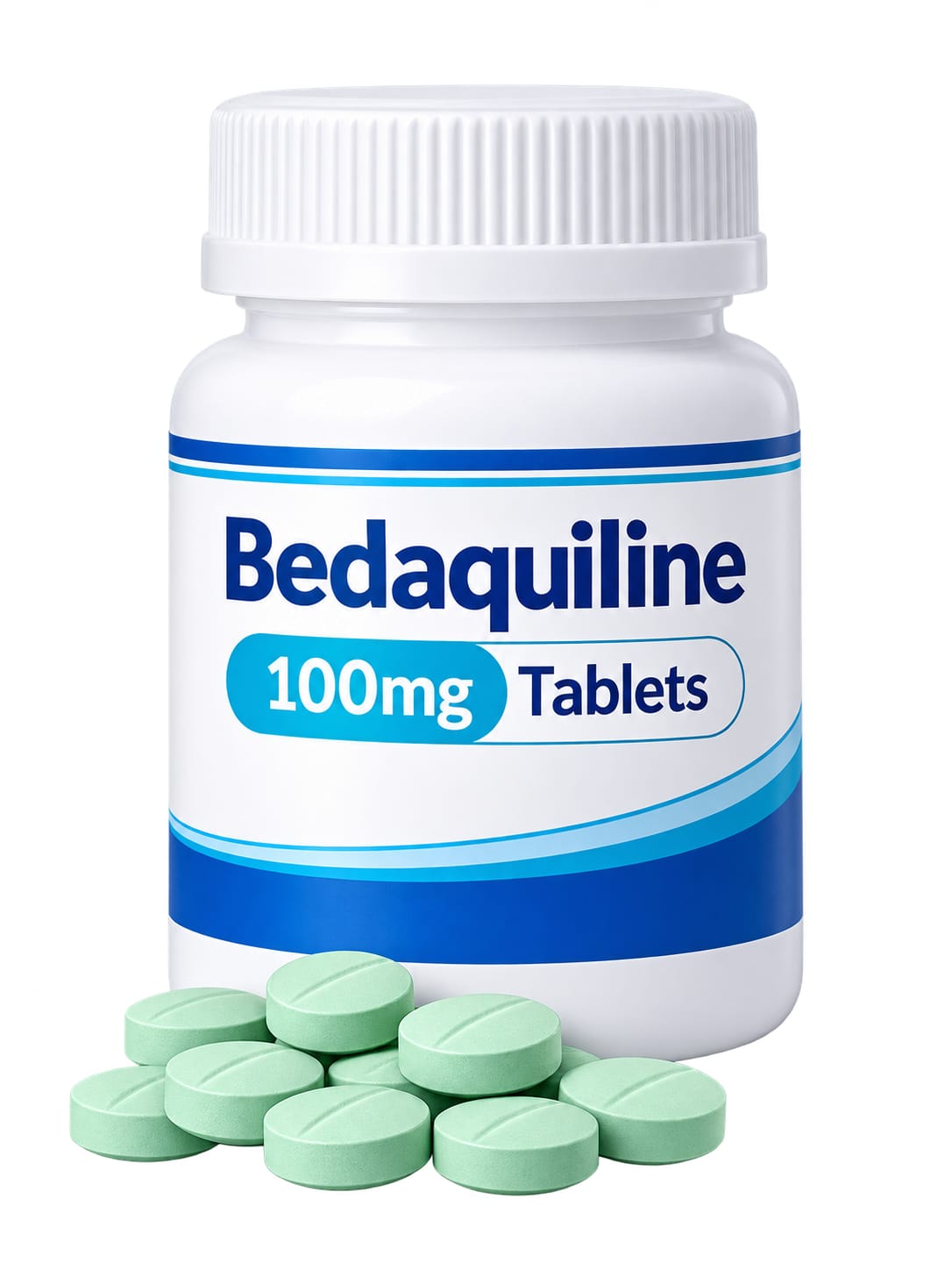
| Forms | 20 mg tablet, 100 mg tablet |
Quick overview
Bedaquiline Tablet (generic name: bedaquiline) is an antibiotic belonging to the diarylquinoline class, used to treat multidrug-resistant pulmonary tuberculosis in adults and children 5 years and older weighing at least 15 kg (33 pounds). It is always used together with other tuberculosis medicines, never alone. It works by blocking an enzyme TB bacteria need to produce energy, helping clear the bacteria from the body. Treatment requires monitoring for heart rhythm and liver effects, and must be taken exactly as directed for the full course.
What is Bedaquiline Tablet
Bedaquiline Tablet (brand name Sirturo) is an antibiotic medicine that contains the active substance bedaquiline. Antibiotics are medicines that kill bacteria that cause disease. It belongs to a group of medicines called diarylquinolines.
Bedaquiline Tablet uses
- Treats tuberculosis (TB) of the lungs that has become resistant to other TB antibiotics (multidrug-resistant pulmonary tuberculosis)
- Used in adults and children 5 years and older who weigh at least 15 kg (33 pounds)
- Always used together with other medicines for treating tuberculosis, never alone
Benefits of Bedaquiline Tablet
- Helps clear tuberculosis bacteria from sputum faster than background therapy alone
- Improves the chances of successful treatment response in multidrug-resistant TB when combined with other TB medicines
- Treats certain forms of drug-resistant pulmonary tuberculosis
- Active against Mycobacterium tuberculosis
- Helps improve bacterial clearance when combined with an effective multidrug regimen
- Provides an important treatment option when resistance limits standard TB medicines
How Bedaquiline Tablet works
Bedaquiline blocks an enzyme that mycobacteria need to produce energy, which kills the TB bacteria, including bacteria that are not actively multiplying.
Bedaquiline Tablet dosage
Always take this medicine together with other tuberculosis medicines as directed by your doctor. Always take with food, since food helps your body absorb more of the medicine.
If you can swallow tablets whole, swallow with water; the 20 mg tablet can also be split in half along the score line. If you cannot swallow tablets, the 20 mg tablet can be dispersed in water and mixed with a drink or soft food, or crushed and mixed with soft food, and should be swallowed right away after mixing. The 20 mg tablet can also be given through certain feeding tubes if your healthcare provider instructs you how. The 100 mg tablet should always be swallowed whole with water and not dispersed, crushed, or chewed.
Take the medicine for a full course of 24 weeks; do not stop early or skip doses, since this can make the treatment less effective and allow the bacteria to become resistant. During the first 2 weeks, take your dose once a day; from week 3 onward, take your dose only 3 days a week, spaced at least 48 hours apart. Do not drink alcohol while taking this medicine.
| Age group | Dose |
|---|---|
| Under 2 years or <8 kg | Safety, effectiveness, and dosage not established |
| 2–17 years, 8 to <10 kg | 80 mg once daily for Weeks 1–2, then 40 mg 3 times weekly for Weeks 3–24 |
| 2–17 years, 10 to <15 kg | 120 mg once daily for Weeks 1–2, then 60 mg 3 times weekly for Weeks 3–24 |
Available forms and strengths
- 20 mg tablet
- 100 mg tablet
Side effects of Bedaquiline Tablet
Common
- Nausea and vomiting
- Joint pain (arthralgia)
- Headache
- Dizziness
- Diarrhea
- Increased liver enzymes (shown in blood tests)
- Muscle aches not caused by exercise
- Abnormal heart tracing called QT prolongation
Serious
- Serious heart rhythm problems (QT prolongation), which can cause an abnormal, fast, or irregular heartbeat, or fainting
- Liver problems (hepatotoxicity), which can show as loss of appetite, nausea, stomach pain, fever, weakness, itching, unusual tiredness, light-colored stools, dark urine, or yellowing of the skin or eyes
- Increased risk of death was seen in some clinical trials in people taking this medicine compared to those who did not
- Coughing up blood
- Chest pain
Warnings and precautions
- This medicine can cause a heart rhythm problem called QT prolongation, which in rare cases can lead to dangerous irregular heartbeats. Your doctor will check your heart with an ECG before you start and regularly during treatment, and will check your blood salts (potassium, calcium, magnesium).
- Taking other medicines that also affect heart rhythm at the same time as this medicine may increase the risk of serious heart problems.
- Treatment should be stopped if you develop a serious abnormal heart rhythm or if heart monitoring shows a significantly prolonged QT reading.
- This medicine can cause liver problems. Your doctor will monitor your liver with blood tests before and regularly during treatment, and may stop the medicine if your liver tests become too abnormal.
- In one clinical trial, more deaths occurred in people taking this medicine compared with those on placebo, although the reason for this difference is not understood.
- This medicine should only be used as part of a proper combination regimen for drug-resistant TB, following official guidelines, to reduce the chance that the TB bacteria become resistant to this medicine too.
- Taking certain other medicines together with this one can change how much of the medicine is in your body, which may make it less effective or increase side effects. Tell your doctor about all medicines you take.
- If you are pregnant, think you may be pregnant, or are planning a pregnancy, tell your doctor before taking this medicine. This medicine should only be used during pregnancy if your doctor decides the benefit outweighs the risk.
- It is not known for certain whether this medicine passes into human breast milk, but studies suggest it may build up in breast milk. Breastfeeding is not recommended during treatment and for several months after the last dose, unless infant formula is not available. If a baby is exposed through breast milk, watch for signs of liver problems, such as yellowing of the eyes or changes in stool or urine color.
- No dose change is needed for mild or moderate kidney problems. If you have severe kidney problems or are on dialysis, your doctor will use this medicine with caution because levels of the medicine in your body may increase.
- No dose change is needed for mild liver problems, and this medicine should be used with caution in moderate liver problems. It has not been studied in people with severe liver disease and is not recommended for them unless your doctor decides the benefit outweighs the risk.
- Do not drink alcohol while taking this medicine, as it can increase the risk of liver damage.
- This medicine can cause dizziness in some people. If you feel dizzy, do not drive or use machinery.
Storage
- Store in the original container and keep the container tightly closed to protect from light and moisture
- Do not remove the desiccant (drying agent) from the 20 mg tablet bottle
- For the 100 mg tablet, store in the original container or package to protect from light
- Keep out of the sight and reach of children
- This medicine may pose a risk to the environment; do not throw away unused medicine via wastewater or household waste; ask your pharmacist how to dispose of medicines you no longer use
When to see a doctor
- Get medical help right away if you faint, or if you notice your heartbeat is fast, fluttering, or irregular.
- Contact your doctor immediately if you notice signs of liver problems such as nausea, vomiting, stomach pain, fever, weakness, itching, unusual tiredness, loss of appetite, pale stools, dark urine, or yellowing of your skin or eyes.
- If you think you have taken more of this medicine than you should have, contact a doctor immediately and bring the medicine pack with you.
- Seek medical advice if you have any side effect, even ones not listed in the leaflet.
Alternatives
- Delamanid
- Linezolid
- Levofloxacin
Watch the video
FAQs
What is Bedaquiline Tablet used for?
Bedaquiline Tablet is used to treat multidrug-resistant pulmonary tuberculosis in adults and children 5 years and older weighing at least 15 kg. It is always used together with other tuberculosis medicines, never alone.
How does Bedaquiline Tablet work?
Bedaquiline blocks an enzyme that mycobacteria need to produce energy, which kills the TB bacteria, including bacteria that are not actively multiplying.
How long is the course of treatment with Bedaquiline Tablet?
The full course is 24 weeks. During the first 2 weeks, the dose is taken once a day; from week 3 onward, it is taken only 3 days a week, spaced at least 48 hours apart. Doses should not be stopped early or skipped, as this can make treatment less effective and allow bacteria to become resistant.
What are the serious side effects of Bedaquiline Tablet?
Serious side effects include heart rhythm problems (QT prolongation) that can cause an abnormal, fast, or irregular heartbeat or fainting, liver problems (hepatotoxicity), increased risk of death seen in some clinical trials, coughing up blood, and chest pain.
Can I drink alcohol while taking Bedaquiline Tablet?
No, alcohol should be avoided while taking this medicine, as it can increase the risk of liver damage.
General information, not medical advice
Your prescriber and the leaflet in your pack know your situation. This page does not.
- Follow your prescriber and the leaflet
- Don't start, stop, or change a dose on your own
- Doses and warnings differ by country and product
Sources
Video
Related medicines

Injectafer Injection: Uses, Dosage, Side Effects, Precautions and Alternates
Iron products
Injectafer (ferric carboxymaltose) treats iron deficiency anemia and heart failure-related iron deficiency via IV. Learn uses, dosage, side effects, and

Gliclazide Tablet: Uses, Dosage, Side Effects, Precautions and Alternates
Sulfonylurea (hypoglycemic/antidiabetic agent)
Gliclazide Tablet is a sulfonylurea for type 2 diabetes that boosts insulin release. Learn about dosage, side effects, warnings, and precautions.