
Safety
General information, not medical advice
Your prescriber and the leaflet in your pack know your situation. This page does not.
- Follow your prescriber and the leaflet
- Don't start, stop, or change a dose on your own
- Doses and warnings differ by country and product
Beglan Inhaler: Uses, Dosage, Side Effects, Precautions and Alternates
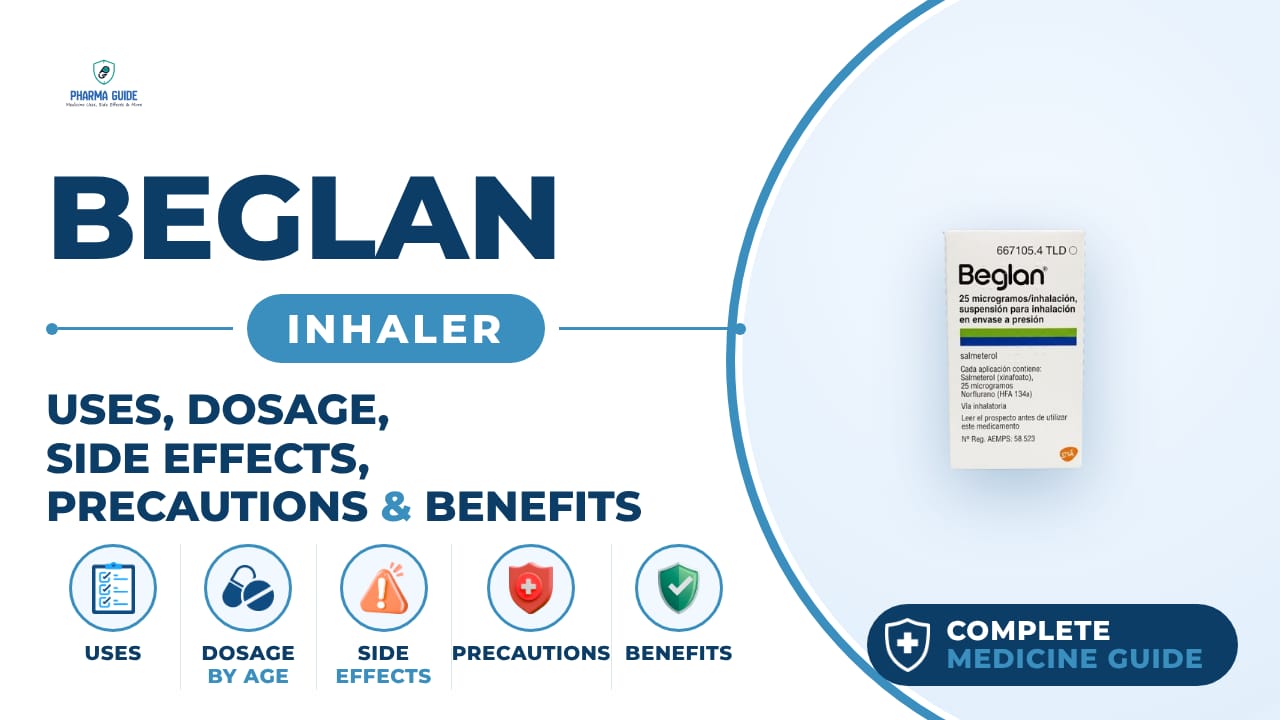
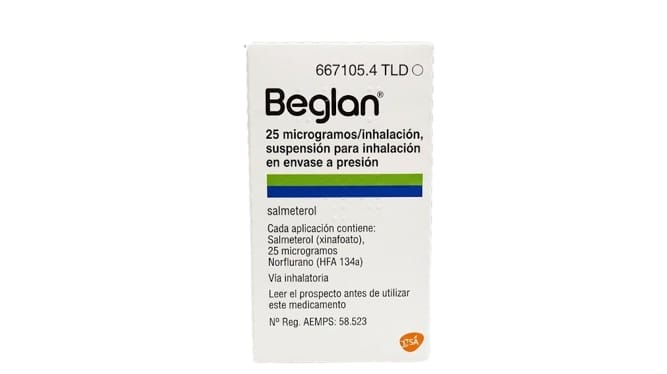
| Generic name | salmeterol |
|---|---|
| Drug class | bronchodilator |
| Forms | Inhaler |
Quick overview
Beglan Inhaler contains salmeterol, a bronchodilator used for the long-term treatment of asthma and chronic bronchitis (COPD). It works by relaxing the muscles around the airways to keep them open, making breathing easier. It is used regularly every day and is not intended for sudden asthma attacks. Dosing varies by age group, with specific recommendations for adults and no recommended use in those under 18.
What is Beglan Inhaler
Beglan is an inhaled medicine that contains salmeterol. It belongs to a group of medicines called bronchodilators, which help open up the airways in your lungs.
Beglan Inhaler uses
- Long-term treatment of reversible airway obstruction caused by asthma
- Long-term treatment of chronic bronchitis (COPD)
- In asthma, used together with long-term anti-inflammatory treatment such as inhaled or oral corticosteroids
- Helps prevent exercise-induced or chronic bronchospasm
Benefits of Beglan Inhaler
- Keeps airways open over an extended period, making breathing easier
- Reduces the frequency of wheezing and shortness of breath
- Helps keep you free of symptoms throughout the day and night when used regularly
- Provides long-acting bronchodilation
- Helps keep airways open
- Improves airflow
- Helps control nighttime and exercise-related asthma symptoms
- Provides approximately 12-hour bronchodilator action
How Beglan Inhaler works
Beglan relaxes the muscles around the airways in the lungs, which helps keep the airways open and makes breathing easier.
Beglan Inhaler dosage
Use the inhaler regularly every day, as prescribed, even if you feel better. Do not stop treatment before your doctor tells you to. This medicine is not for use in children under 4 years of age. Keep using any other asthma medicine you take, such as an inhaled corticosteroid or tablets, unless your doctor tells you otherwise.
Before first use or if the inhaler has not been used for a week or more, shake it well and release two test sprays into the air. Shake the inhaler well before each use. Breathe out fully before using the inhaler, then start breathing in slowly just before pressing the canister. Hold your breath for as long as you comfortably can after inhaling. If taking a second puff, wait about half a minute before repeating the steps.
Older children or people with weak hands may use both hands to operate the inhaler. Young children may need a parent to help operate the inhaler, and a spacer device may be used if coordination is difficult.
Clean the inhaler at least once a week by wiping the mouthpiece and casing with a dry cloth; do not put the metal canister in water. This is not a rescue inhaler and should not be used to treat a sudden, acute asthma attack.
If you miss a dose, take it when you remember and continue as before; do not double up to make up for a missed dose.
| Age group | Dose |
|---|---|
| Under 18 years | Not recommended |
| 18–64 years | 50 mcg, twice/day |
| 65+ years | 50 mcg, twice/day |
Available forms and strengths
Inhaler
Side effects of Beglan Inhaler
Common
- Tremors and shakiness
- Headache
- Palpitations (fast or irregular heartbeat)
- Muscle cramps
- Throat irritation or dry/sore throat
Serious
- Hypersensitivity reactions with skin rash
- Nervousness
- Fast heartbeat (tachycardia)
- Low potassium levels in the blood (hypokalemia)
- Insomnia
- Dizziness
- Swelling (edema) and angioedema (skin reaction with redness, swelling, itching, and difficulty breathing)
- Sudden tightening of the airways (bronchospasm) causing difficulty breathing
- Severe allergic reaction (anaphylactic shock)
- High blood sugar levels (hyperglycemia)
- Heart rhythm disorders, including atrial fibrillation, supraventricular tachycardia, and extra heartbeats
- Irritation of the throat or pharynx
- Nausea
- Joint pain (arthralgia)
- Unspecific chest pain
Warnings and precautions
Tell your doctor before using Beglan if you have ever had to stop another medicine for your condition because of allergy or other problems, if you are being treated for thyroid problems, high blood pressure, heart problems, diabetes, or low blood potassium, or if you are taking the antifungal medicine ketoconazole.
If your asthma gets worse, you have more trouble breathing, you notice more wheezing, you feel short of breath more often, or you need to use your rescue inhaler more often, see your doctor right away. Do not use more puffs of Beglan to try to fix this, as it could make your breathing problems worse.
This medicine is not a rescue inhaler and should not be used to treat a sudden, severe asthma attack.
In rare cases this medicine can suddenly make wheezing worse right after you use it (paradoxical bronchospasm). If this happens, use your fast-acting rescue inhaler right away.
This medicine may interact with beta-blockers, diuretics (water pills), or other inhaled medicines.
This medicine contains salmeterol, which can cause a positive result in doping tests for athletes.
If you are pregnant or think you might be pregnant, ask your doctor or pharmacist for advice before using this medicine. If you are breastfeeding, ask your doctor or pharmacist for advice before using this medicine.
No routine renal dose adjustment is generally required. Significant liver impairment should be discussed with the prescriber.
It is best to avoid alcohol while using this medicine, as it may increase the risk of side effects.
This medicine usually does not affect driving, but avoid driving if tremor or dizziness occurs.
Storage
- Do not store above 30°C. Do not freeze.
- Keep in the original packaging to protect from direct sunlight.
- If the inhaler is very cold, remove the cartridge and warm it in your hand for a few minutes before use. Do not use any other method to warm it up.
- The cartridge contains a pressurized liquid. Do not expose to temperatures above 50°C. Do not pierce, break, or burn the cartridge even if it is empty.
- Do not use this medicine after the expiry date which is stated on the container after EXP.
- Medicines should not be disposed of via wastewater or household waste. Ask your pharmacist how to dispose of medicines no longer required.
- Keep this medicine out of the sight and reach of children.
When to see a doctor
Stop using Beglan and tell your doctor immediately if you have sudden wheezing or chest tightness, swelling of the eyelids, face, or lips, or a skin rash or hives anywhere on your body soon after using the inhaler.
If you use too much Beglan and notice a fast heartbeat, headache, tremors, high blood pressure, low blood potassium, agitation, or dizziness, contact your doctor, pharmacist, or a poison control service right away. If the dose was very high, go to a hospital emergency department immediately and take the package leaflet or the medicine with you.
Alternatives
- Serevent
- Formoterol
- Olodaterol
Watch the video
FAQs
What is Beglan Inhaler used for?
Beglan Inhaler is used for the long-term treatment of asthma and chronic bronchitis (COPD). It helps prevent exercise-induced or chronic bronchospasm and is used alongside anti-inflammatory treatments like corticosteroids in asthma.
Is Beglan Inhaler a rescue inhaler?
No, Beglan Inhaler is not a rescue inhaler and should not be used to treat a sudden, acute asthma attack. It is intended for regular daily use to provide long-term control of symptoms.
What is the dosage of Beglan Inhaler for adults?
For adults aged 18-64 and those 65 and older, the recommended dose is 50 mcg, twice a day. It is not recommended for use in people under 18 years of age.
What are the common side effects of Beglan Inhaler?
Common side effects include tremors and shakiness, headache, palpitations, muscle cramps, and throat irritation or dryness.
What should I do if my asthma symptoms worsen while using Beglan Inhaler?
If your asthma gets worse, you notice more wheezing, feel more short of breath, or need your rescue inhaler more often, see your doctor right away. Do not use more puffs of Beglan to try to fix this.
General information, not medical advice
Your prescriber and the leaflet in your pack know your situation. This page does not.
- Follow your prescriber and the leaflet
- Don't start, stop, or change a dose on your own
- Doses and warnings differ by country and product
Sources
Video
Related medicines

Injectafer Injection: Uses, Dosage, Side Effects, Precautions and Alternates
Iron products
Injectafer (ferric carboxymaltose) treats iron deficiency anemia and heart failure-related iron deficiency via IV. Learn uses, dosage, side effects, and

Gliclazide Tablet: Uses, Dosage, Side Effects, Precautions and Alternates
Sulfonylurea (hypoglycemic/antidiabetic agent)
Gliclazide Tablet is a sulfonylurea for type 2 diabetes that boosts insulin release. Learn about dosage, side effects, warnings, and precautions.