
Safety
General information, not medical advice
Your prescriber and the leaflet in your pack know your situation. This page does not.
- Follow your prescriber and the leaflet
- Don't start, stop, or change a dose on your own
- Doses and warnings differ by country and product
Belsomra Tablet: Uses, Dosage, Side Effects, Precautions and Alternates
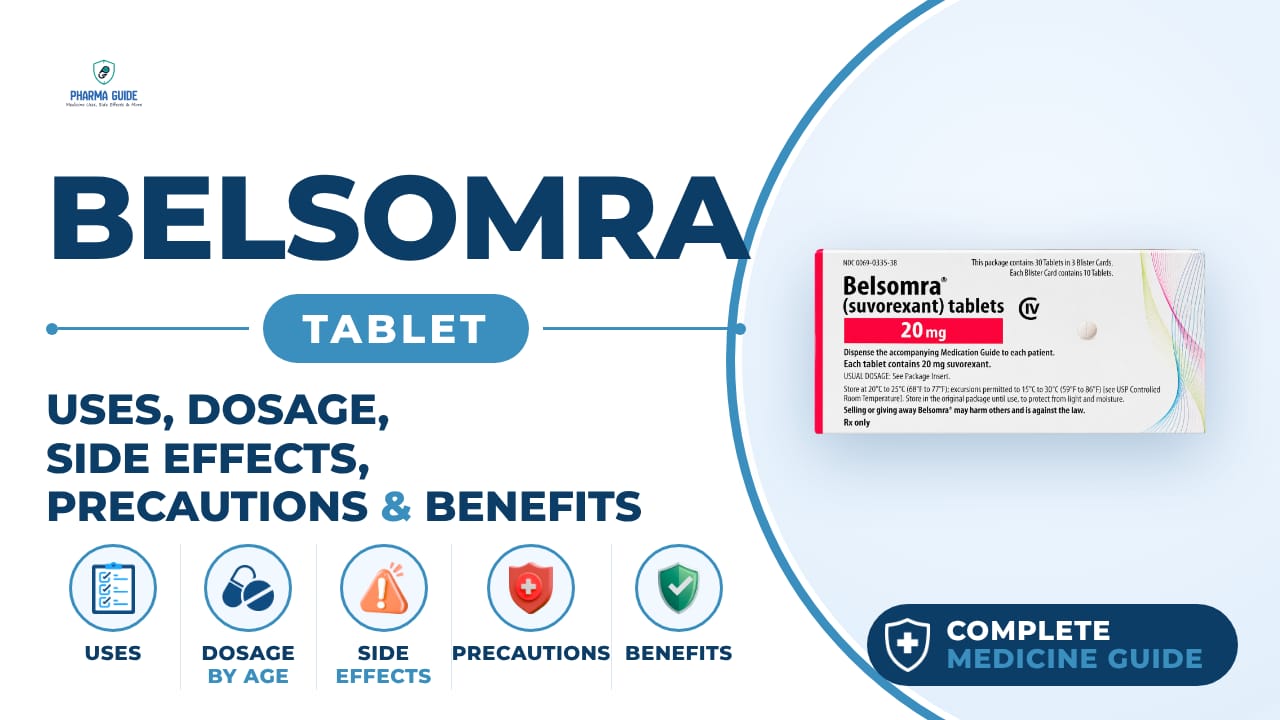
| Generic name | Suvorexant |
|---|---|
| Drug class | Orexin receptor antagonist (dual orexin receptor antagonist) |
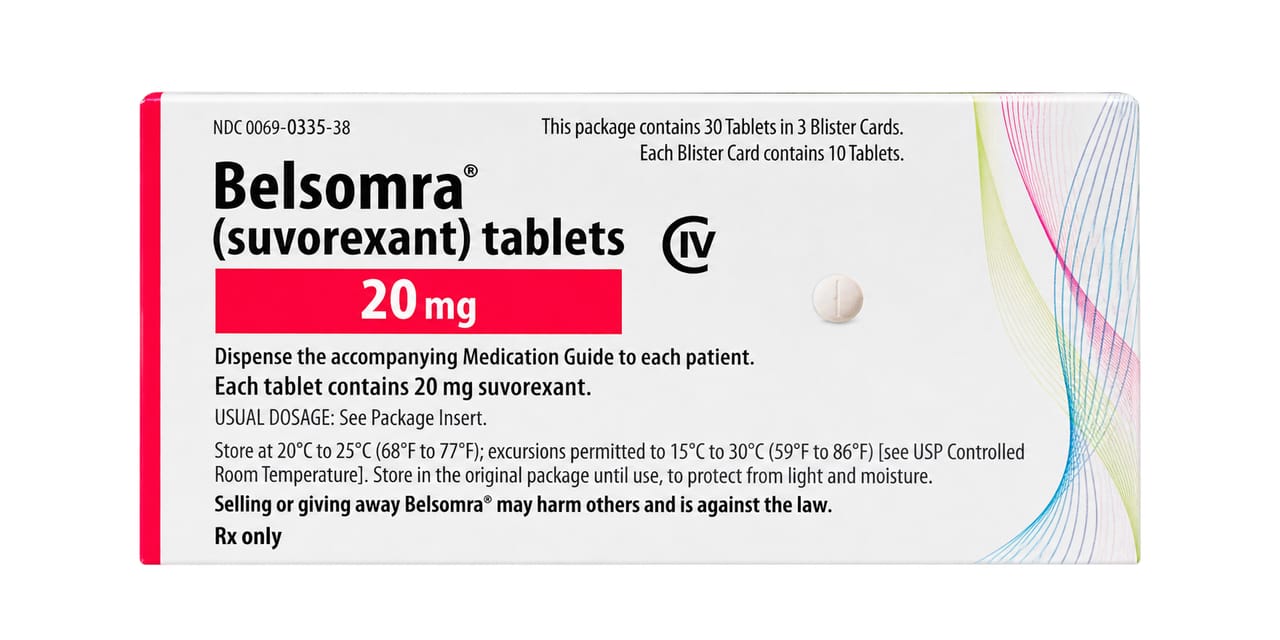
| Forms | Oral tablet (5 mg, 10 mg, 15 mg, 20 mg) |
Quick overview
Belsomra Tablet (generic name suvorexant) is a prescription medicine belonging to the orexin receptor antagonist class. It is used by adults who have trouble falling asleep or staying asleep, also known as insomnia. Belsomra works by blocking a brain chemical called orexin that helps keep you awake, allowing you to fall asleep and stay asleep. It is taken once per night and comes in several tablet strengths.
What is Belsomra Tablet
Belsomra is a prescription tablet used to help adults who have trouble falling asleep or staying asleep (insomnia).
Belsomra Tablet uses
- Treating insomnia with difficulty falling asleep
- Treating insomnia with difficulty staying asleep (sleep maintenance)
Benefits of Belsomra Tablet
- Insomnia Support: Used to help people fall asleep and stay asleep.
- Sleep Maintenance: May reduce nighttime awakenings.
- Sleep Onset Support: Can help shorten the time needed to fall asleep.
- Orexin Control: Reduces wake-promoting orexin signaling in the brain.
How Belsomra Tablet works
Belsomra blocks a brain chemical called orexin that helps keep you awake. By blocking this chemical, your brain doesn't get the signal to stay awake, which allows you to fall asleep and stay asleep.
Belsomra Tablet dosage
Take only once per night, within 30 minutes of going to bed. Only take it if you can stay in bed for a full night of at least 7 hours before you need to be active again. It may be taken with or without food, but taking it with or right after a meal may delay how quickly it works. Swallow the tablet whole with a full glass of water; do not crush, split, or chew it. You do not need to take it every night; it is often used only as needed. If your sleep problems do not improve within 7 to 10 days, contact your doctor, since this could mean another condition is causing the problem. Older adults are usually given a lower dose than younger adults.
| Age group | Dose |
|---|---|
| Under 18 years | Not recommended |
| 18–64 years | 10 mg, once/day |
| 65+ years | 10 mg, once/day |
Available forms and strengths
- Oral tablet (5 mg, 10 mg, 15 mg, 20 mg)
Side effects of Belsomra Tablet
Common
- Daytime sleepiness or drowsiness
- Headache
- Unusual or vivid dreams
- Dry mouth
- Cough
- Upper respiratory infection like a common cold
- Dizziness
- Diarrhea
- Nausea
- Vomiting
- Feeling abnormal
- Anxiety
- Fast or irregular heartbeat
- Itching
Serious
- Abnormal thoughts and behavior, including more aggressive behavior, confusion, agitation, or hallucinations
- Worsening depression or suicidal thoughts or actions
- Temporary inability to move or talk (sleep paralysis) when falling asleep or waking up
- Temporary leg or muscle weakness lasting seconds to minutes
- Memory loss
- Doing activities while not fully awake, such as sleepwalking, eating, making phone calls, having sex, or driving a car, with no memory of it afterward
- Allergic reaction, including rash, itching, swelling of the face/lips/tongue/throat, or difficulty breathing
Warnings and precautions
- Do not use Belsomra if you have narcolepsy, as it can make this condition worse.
- Belsomra can cause problems with alertness and coordination the next day, even if you feel fine, and this can affect driving ability.
- People taking Belsomra have gotten out of bed and done activities like sleepwalking, eating, making phone calls, having sex, or driving while not fully awake, often without remembering it afterward.
- Belsomra may worsen depression or cause new or worsening suicidal thoughts, especially at higher doses.
- People with breathing or lung problems should be cautious, as the effect of Belsomra on breathing should be considered.
- Belsomra can cause sleep paralysis, vivid hallucinations when falling asleep or waking up, and brief episodes of muscle weakness similar to cataplexy, especially at higher doses.
- Belsomra is a controlled substance because it can be misused or lead to dependence.
- It is not known if Belsomra can harm an unborn baby. Talk to your doctor before taking it if you are pregnant or planning to become pregnant.
- It is not known if Belsomra is safe during breastfeeding. Talk to your doctor if you are breastfeeding or plan to.
- No dose adjustment is needed for people with kidney problems.
- People with mild to moderate liver problems do not need a dose change, but Belsomra has not been studied in people with severe liver problems and is not recommended for them.
- Do not drink alcohol while taking Belsomra, and do not take a dose if you have been drinking that evening, since this raises the risk of serious side effects.
- You may still feel drowsy the next day. Do not drive or do other activities that require full alertness until you know how the medicine affects you, and avoid driving for at least 8 hours after taking a dose.
Storage
- Store at room temperature between 68°F to 77°F (20°C to 25°C)
- Store in the original package until use to protect from light and moisture
- Keep tablets in the blister pack until it is time to take them
- Store in a cool dry place away from moisture, heat, or sunlight; do not store in the bathroom, near a sink, in the car, or on window sills
- Keep out of reach of children
- If you no longer need the medicine or it is out of date, take it to a pharmacy for safe disposal
When to see a doctor
- Call your doctor right away if you find out you have done activities like eating, talking, having sex, or driving while not fully awake after taking this medicine.
- Tell your doctor immediately if you notice new or worsening depression or suicidal thoughts.
- Get medical help right away if you think you've taken too much Belsomra.
- Call your doctor if your insomnia gets worse or does not improve within 7 to 10 days of starting treatment, since this may mean another condition is causing your sleep problem.
- Seek emergency care for signs of a severe allergic reaction, such as swelling of the face, lips, tongue, or throat, or difficulty breathing.
Alternatives
- Lemborexant
- Daridorexant
Watch the video
FAQs
What is Belsomra Tablet used for?
Belsomra is a prescription medicine used by adults who have trouble falling asleep or staying asleep, known as insomnia.
How does Belsomra work?
Belsomra blocks a brain chemical called orexin that helps keep you awake. By blocking this chemical, your brain doesn't get the signal to stay awake, allowing you to fall asleep and stay asleep.
How should I take Belsomra Tablet?
Take it only once per night, within 30 minutes of going to bed, and only if you can stay in bed for a full night of at least 7 hours. Swallow the tablet whole with water; do not crush, split, or chew it. It may be taken with or without food, though taking it with or right after a meal may delay how quickly it works.
What are the common side effects of Belsomra?
Common side effects include daytime sleepiness, headache, unusual or vivid dreams, dry mouth, cough, upper respiratory infection, dizziness, diarrhea, nausea, vomiting, feeling abnormal, anxiety, fast or irregular heartbeat, and itching.
Can I drink alcohol while taking Belsomra?
No, you should not drink alcohol while taking Belsomra, and you should not take a dose if you have been drinking that evening, since this raises the risk of serious side effects.
General information, not medical advice
Your prescriber and the leaflet in your pack know your situation. This page does not.
- Follow your prescriber and the leaflet
- Don't start, stop, or change a dose on your own
- Doses and warnings differ by country and product
Sources
Video
Related medicines

Injectafer Injection: Uses, Dosage, Side Effects, Precautions and Alternates
Iron products
Injectafer (ferric carboxymaltose) treats iron deficiency anemia and heart failure-related iron deficiency via IV. Learn uses, dosage, side effects, and

Gliclazide Tablet: Uses, Dosage, Side Effects, Precautions and Alternates
Sulfonylurea (hypoglycemic/antidiabetic agent)
Gliclazide Tablet is a sulfonylurea for type 2 diabetes that boosts insulin release. Learn about dosage, side effects, warnings, and precautions.