
Safety
General information, not medical advice
Your prescriber and the leaflet in your pack know your situation. This page does not.
- Follow your prescriber and the leaflet
- Don't start, stop, or change a dose on your own
- Doses and warnings differ by country and product
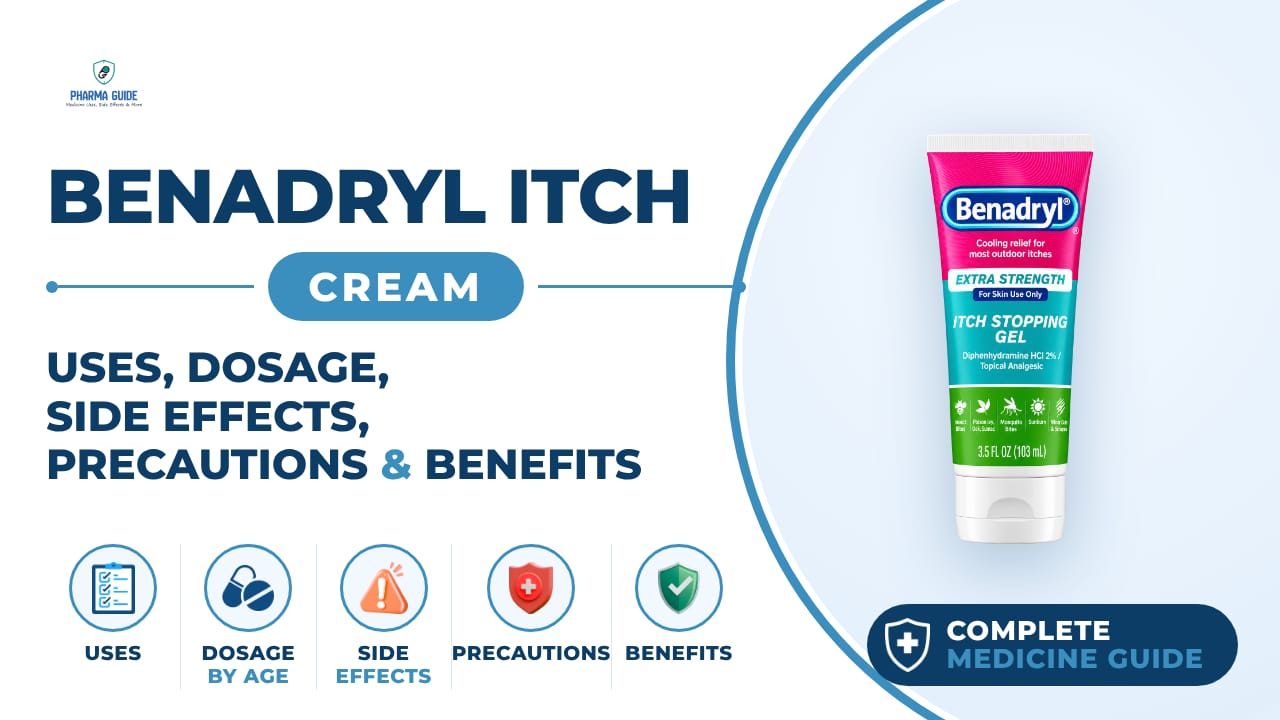
Benadryl Itch Cream: Uses, Dosage, Side Effects, Precautions and Alternates
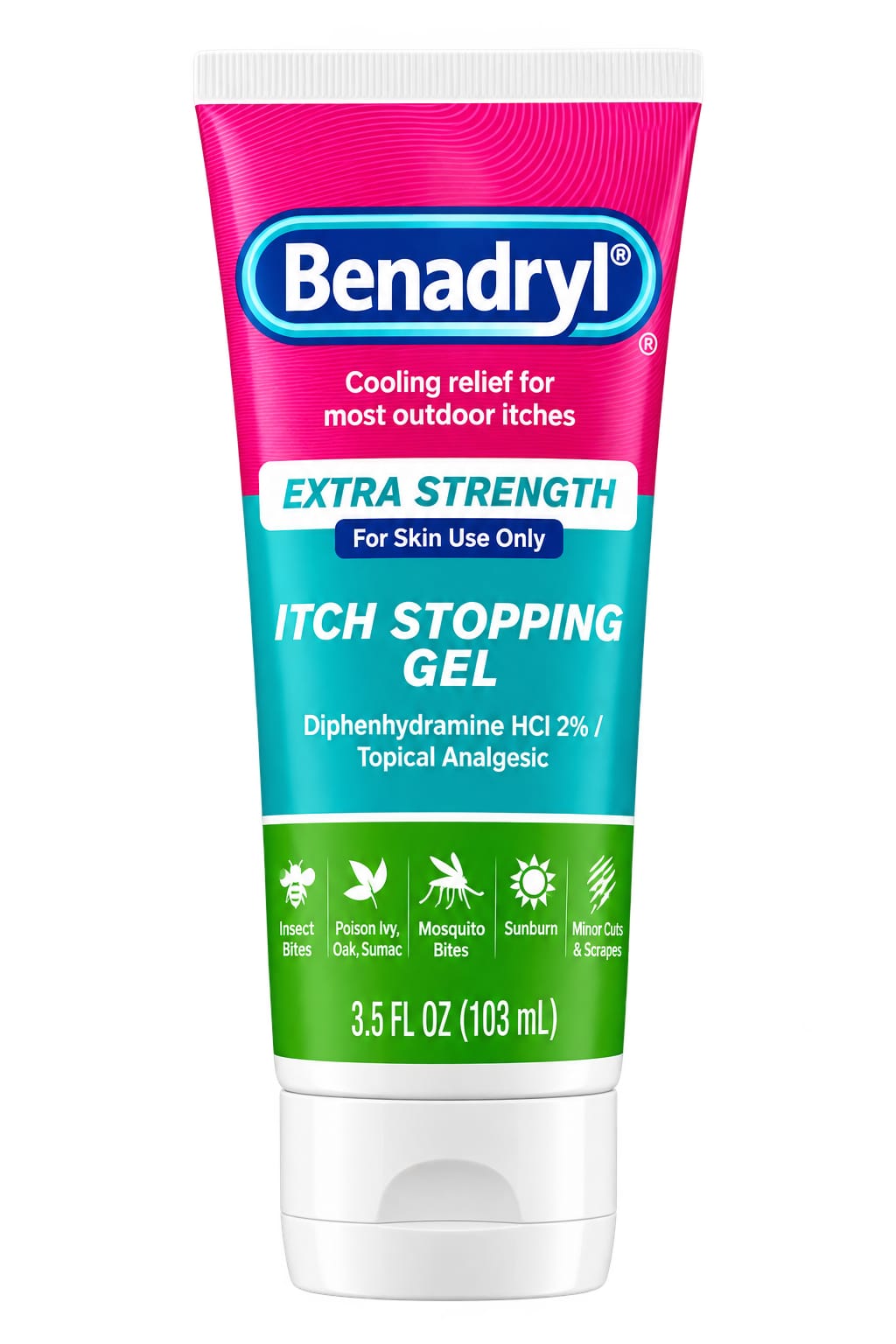
| Generic name | diphenhydramine / zinc acetate |
|---|---|
| Drug class | Antihistamine / skin protectant |
| Forms | Cream |
Quick overview
Benadryl Itch Cream combines diphenhydramine, an antihistamine, with zinc acetate, a skin protectant. It is applied directly to the skin to relieve pain and itching from insect bites, minor burns, sunburn, minor skin irritations, cuts, and scrapes, and to dry the oozing and weeping associated with poison ivy, poison oak, and poison sumac. It works by blocking a chemical in the skin that causes redness, swelling, itching, and pain, while zinc acetate soothes the skin and supports repair. It is available as a cream for topical use.
What is Benadryl Itch Cream
Benadryl Itch Stopping Cream is a topical medication you apply directly to your skin to relieve pain and itching. It combines an antihistamine (diphenhydramine) with a skin protectant (zinc acetate).
Benadryl Itch Cream uses
- Insect bites
- Minor burns
- Sunburn
- Minor skin irritations
- Minor cuts
- Scrapes
- Rashes and oozing due to poison ivy, poison oak, and poison sumac
Benefits of Benadryl Itch Cream
- Temporarily relieves pain and itching from bites, burns, sunburn, cuts, scrapes, and minor skin irritations
- Dries the oozing and weeping of poison ivy, poison oak, and poison sumac
- Helps lock in moisture and protect skin from irritants
- Provides topical itch relief
- Helps relieve minor skin discomfort
- Zinc acetate provides skin-protectant activity
How Benadryl Itch Cream works
Diphenhydramine blocks a chemical in the skin that causes redness, swelling, itching, and pain. Zinc acetate soothes the skin, eases inflammation, and helps with wound repair.
Benadryl Itch Cream dosage
Apply to the affected area of skin as directed on the label. Do not use more than directed, and do not use on large areas of the body. Keep away from your eyes and mouth. Do not use together with other diphenhydramine products, including oral Benadryl or other topical itch products. If you are already taking diphenhydramine by mouth for another reason, check with your provider before using this cream. Check with your health care provider before using on skin affected by chickenpox or measles. Stop using if your symptoms get worse, last seven days or more, or clear up and come back again within a few days.
| Age group | Dose |
|---|---|
| Under 2 years | No standard mg dose established |
| 2–5 years | Apply a thin layer to the affected area up to 3–4 times daily |
| 6–64 years | Apply a thin layer up to 3–4 times daily |
Available forms and strengths
- Cream
Side effects of Benadryl Itch Cream
Common
- Mild stinging or burning at the application site
- Skin irritation, redness, or a new rash/hives
- Increased sensitivity of the skin to sunlight
- Dryness or flaking where applied
- Burning, itching, crusting, or peeling of treated skin
Serious
- Allergic reactions - skin rash, itching, hives, swelling of the face, lips, tongue, or throat
- Drowsiness or sedation if absorbed into the bloodstream
- Dizziness or lightheadedness
- Excitability, nervousness, or irritability (more common in children)
- Enlarged pupils, flushing, or confusion in rare or high-absorption cases
Warnings and precautions
- This product is for use on the skin only. If someone swallows it, serious side effects can occur. Get medical help right away or contact a poison control center if this happens.
- Do not use on large areas of the body, and avoid getting the medicine in your eyes.
- Children younger than 2 years old should not use this product because the amount of active medicine is too strong for them and could lead to a dangerous overdose.
- Check with your health care provider before using this product on skin affected by chickenpox or measles.
- Do not use other diphenhydramine products, such as oral Benadryl pills or other topical itch creams, at the same time, since this can lead to an overdose.
- Pregnancy: Use only when needed and preferably after medical advice, especially if applying to large areas or broken skin.
- Breastfeeding: Use cautiously. Do not apply on or near the breast/nipple where an infant could ingest or contact the medicine.
- Kidney: Topical use usually results in low systemic absorption, so kidney problems are generally less important; avoid excessive or widespread application.
- Liver: Significant liver disease usually does not require a specific topical dose adjustment, but extensive use should be discussed with a clinician.
- Alcohol: No major direct interaction is expected from normal topical use. However, avoid alcohol if the cream causes unusual drowsiness or dizziness.
- Driving: Normal topical use is unlikely to affect driving, but avoid driving if you develop drowsiness, dizziness, or blurred vision.
Storage
Store the cream at room temperature away from light and heat.
When to see a doctor
- Stop using the cream and see a doctor if your skin symptoms get worse, last seven days or more, or clear up and then come back again within a few days, since these could be signs of a more serious problem.
- Stop taking the medicine and get medical attention right away if you notice signs of an allergic reaction, such as breathing problems or wheezing, a racing heart, fever, swollen lymph nodes, swelling of the face, lips, mouth, tongue, or throat, trouble swallowing, throat tightness, itching, skin rash, hives, nausea, vomiting, dizziness, lightheadedness, fainting, stomach cramps, or joint pain.
- If this product is accidentally swallowed, get medical help right away or contact a poison control center.
Alternatives
- Hydrocortisone cream
- Calamine lotion
- Pramoxine cream
- Colloidal oatmeal lotion
Watch the video
FAQs
What is Benadryl Itch Cream used for
It is used to relieve pain and itching from insect bites, minor burns, sunburn, minor skin irritations, cuts, and scrapes, and to dry the oozing and weeping associated with poison ivy, poison oak, and poison sumac.
How does Benadryl Itch Cream work
Diphenhydramine blocks a chemical in the skin that causes redness, swelling, itching, and pain, while zinc acetate soothes the skin, eases inflammation, and helps with wound repair.
Can children use Benadryl Itch Cream
Children younger than 2 years old should not use this product because the amount of active medicine is too strong for them and could lead to a dangerous overdose. Children 2-5 years can apply a thin layer up to 3-4 times daily.
What are the side effects of Benadryl Itch Cream
Common side effects include mild stinging or burning at the application site, skin irritation, redness, increased sun sensitivity, and dryness or flaking. Serious effects can include allergic reactions, drowsiness, dizziness, and excitability, especially in children.
Can I use Benadryl Itch Cream with oral Benadryl
No, you should not use other diphenhydramine products, such as oral Benadryl pills or other topical itch creams, at the same time, since this can lead to an overdose.
General information, not medical advice
Your prescriber and the leaflet in your pack know your situation. This page does not.
- Follow your prescriber and the leaflet
- Don't start, stop, or change a dose on your own
- Doses and warnings differ by country and product
Sources
Video
Related medicines

Injectafer Injection: Uses, Dosage, Side Effects, Precautions and Alternates
Iron products
Injectafer (ferric carboxymaltose) treats iron deficiency anemia and heart failure-related iron deficiency via IV. Learn uses, dosage, side effects, and

Gliclazide Tablet: Uses, Dosage, Side Effects, Precautions and Alternates
Sulfonylurea (hypoglycemic/antidiabetic agent)
Gliclazide Tablet is a sulfonylurea for type 2 diabetes that boosts insulin release. Learn about dosage, side effects, warnings, and precautions.