
Safety
General information, not medical advice
Your prescriber and the leaflet in your pack know your situation. This page does not.
- Follow your prescriber and the leaflet
- Don't start, stop, or change a dose on your own
- Doses and warnings differ by country and product
Benazepril Tablet: Uses, Dosage, Side Effects, Precautions and Alternates
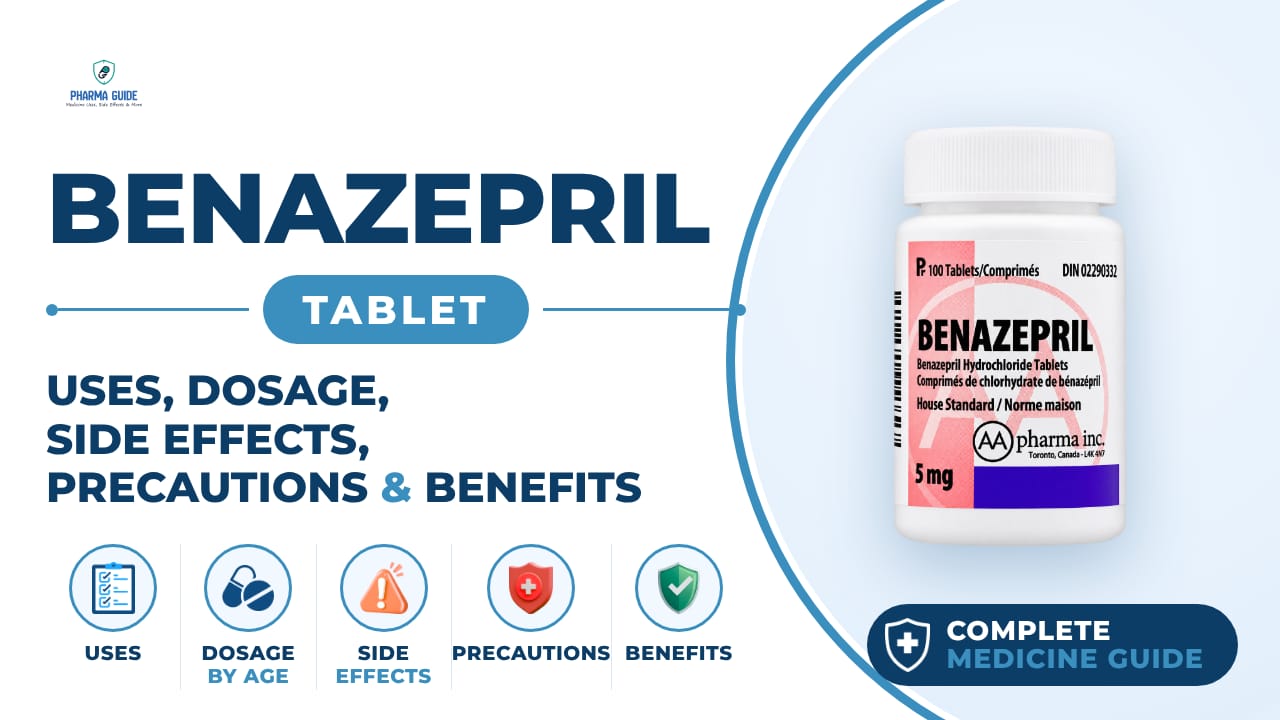
| Generic name | Benazepril Hydrochloride |
|---|---|
| Drug class | Angiotensin Converting Enzyme (ACE) Inhibitor |
| Forms | Tablets: 5 mg, 10 mg, 20 mg, and 40 mg |
Quick overview
Benazepril Tablet (Benazepril Hydrochloride) is a prescription ACE inhibitor used to treat high blood pressure in adults. It works by relaxing and widening blood vessels, which lowers blood pressure and eases strain on the heart. It can be used alone or together with a thiazide diuretic. As with all medicines, it carries certain risks and precautions that should be discussed with your doctor.
What is Benazepril Tablet
Benazepril is a prescription tablet medicine used to treat high blood pressure. It belongs to a group of medicines called ACE inhibitors, which help relax and widen blood vessels.
Benazepril Tablet uses
- Treatment of high blood pressure (hypertension) in adults
- Can be used alone or together with thiazide diuretics (water pills)
Benefits of Benazepril Tablet
- Lowers high blood pressure
- Reduces strain on the heart and blood vessels
- Helps reduce the risk of complications from uncontrolled hypertension
- May help protect kidney function in selected patients
- Can be used alone or with other blood-pressure medicines
How Benazepril Tablet works
Benazepril blocks an enzyme called ACE, which stops the body from making a substance that tightens blood vessels. This helps blood vessels relax and widen, making it easier for the heart to pump blood and lowering blood pressure.
Benazepril Tablet dosage
Take this medicine exactly as directed by your healthcare professional. Take your dose at about the same time every day. Swallow the tablet with a glass of water. Food does not affect how much of the medicine your body absorbs, though it may slow how quickly it is absorbed. Never change your dose unless told to do so by your healthcare professional. If you miss a dose, take it as soon as you remember; if it is almost time for your next dose, skip the missed dose and continue your regular schedule—do not take two doses at once.
| Age group | Dose |
|---|---|
| 6–17 years | Usually 0.2 mg/kg once daily initially; dose adjusted by clinician |
| 18–64 years | Commonly 10 mg once daily initially; may be adjusted based on blood pressure |
Available forms and strengths
Tablets: 5 mg, 10 mg, 20 mg, and 40 mg
Side effects of Benazepril Tablet
Common
- Headache
- Dizziness
- Fatigue
- Drowsiness (somnolence)
- Postural dizziness (dizziness when standing up)
- Cough (dry, non-productive, mainly at night)
- Nausea
- Sore throat and throat irritation
- Flushing
- Numbness or tingling in hands, feet, or lips
- Ringing in the ears
- Loss or change of taste
- Erectile dysfunction
- Decreased sex drive
- Musculoskeletal pain (back pain, joint pain, muscle pain)
- Common cold symptoms, runny nose
- Feeling nervous
- Urinary tract infection
- Sweating
- Hair loss
Serious
- Angioedema (swelling of face, lips, tongue, throat, hands, or feet, or difficulty breathing)
- Severe low blood pressure (symptomatic hypotension), which may cause fainting
- Kidney problems or worsening kidney function
- Liver problems, including jaundice or liver failure
- High potassium levels (hyperkalemia)
- Blood disorders (low white blood cells, low platelets, anemia)
- Severe skin reactions, including Stevens-Johnson syndrome
- Pancreatitis
- Stroke
- Heart attack
- Severe allergic (anaphylactoid) reactions, especially during dialysis or allergy desensitization treatments
- Small bowel (intestinal) angioedema
Warnings and precautions
- Do not take this medicine if you are pregnant or planning to become pregnant, as it can cause serious injury or death to your unborn baby. Stop taking it right away if you become pregnant and tell your doctor.
- Do not take benazepril with medicines called neprilysin inhibitors (such as sacubitril), and wait at least 36 hours between switching from one to the other, because of an increased risk of angioedema (serious swelling).
- Do not take benazepril together with aliskiren if you have diabetes, because this combination is not allowed in that situation.
- This medicine can cause serious swelling of the face, lips, tongue, or throat (angioedema), which can be life-threatening if it affects breathing.
- This medicine can cause a serious drop in blood pressure, especially in people with certain heart or kidney conditions, or those who are dehydrated.
- Benazepril can seriously harm or even cause death to an unborn baby. If you become pregnant while taking this medicine, stop taking it and tell your healthcare professional right away.
- This medicine is not recommended while breastfeeding because small amounts pass into breast milk.
- Your doctor will monitor your kidney function regularly while you take this medicine, since it can sometimes cause kidney problems, especially in people with existing kidney disease.
- Tell your doctor if you have liver problems. Rarely, ACE inhibitors like benazepril have caused serious liver injury, including liver failure and death.
- This medicine can cause dizziness, lightheadedness, and fainting, especially when you first start taking it. Be careful driving or using machines until you know how it affects you.
Storage
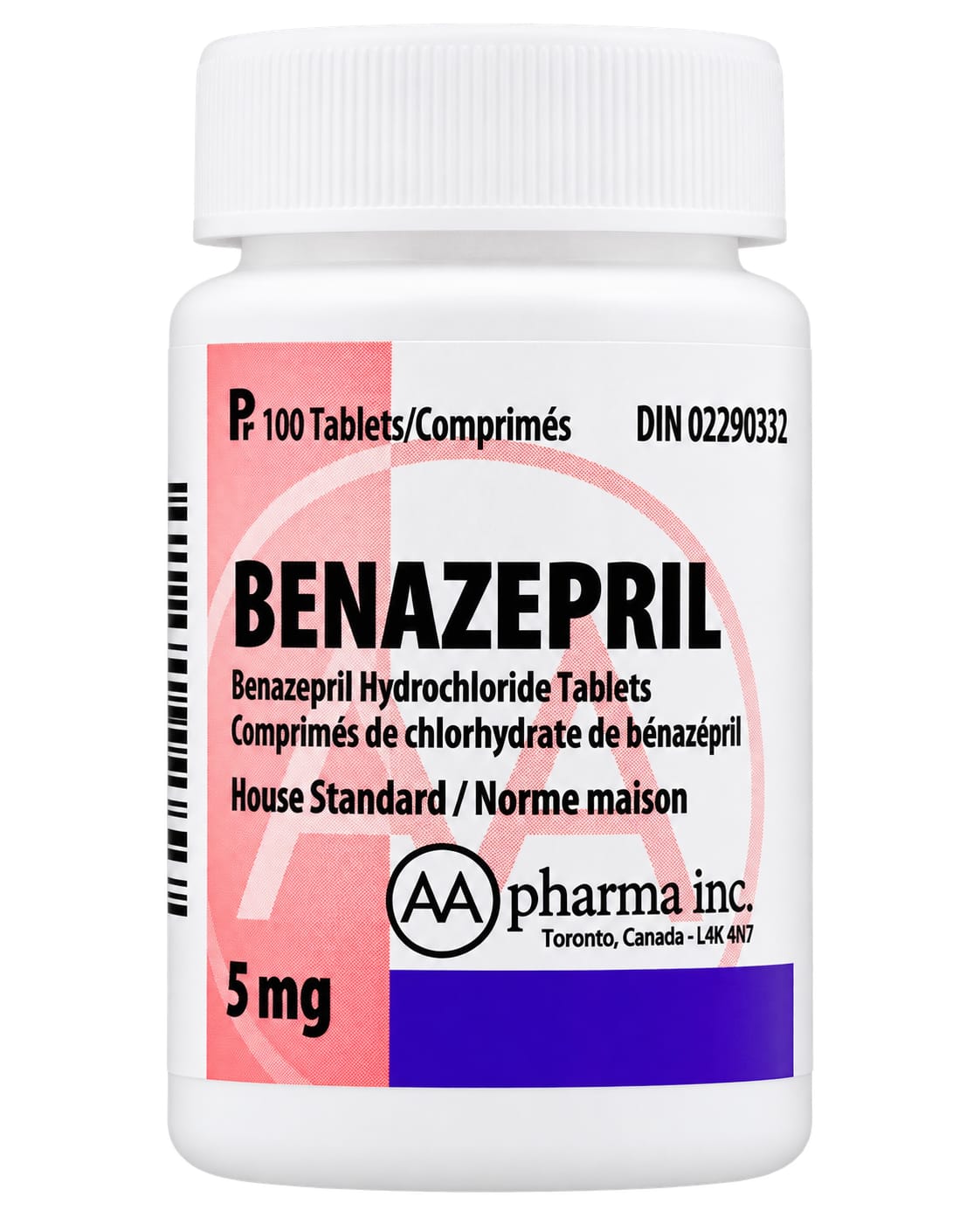
- Store BENAZEPRIL in the original package at room temperature (15°C to 30°C)
- Store at 20-25°C (68-77°F) and protect from moisture
- Keep somewhere dry and out of direct light
- Keep out of reach and sight of children
- Dispense in a tight container
- Do not use after the expiry date printed on the package; return any leftover medicine to your pharmacist if treatment is stopped or it has expired
When to see a doctor
- Get emergency help right away if you have swelling of the face, lips, tongue, or throat, or trouble breathing — these can be signs of a serious allergic reaction (angioedema).
- Tell your healthcare professional right away if you feel lightheaded, especially in the first few days of treatment. If you actually faint, stop the medicine and contact your doctor.
- Seek medical help if you notice yellowing of your skin or eyes, dark urine, severe tiredness, or stomach pain, as these can be signs of liver problems.
- If you think you or someone you are caring for has taken too much of this medicine, contact a healthcare professional, hospital emergency department, or your regional poison control center right away, even if there are no symptoms.
- Tell your doctor right away if you notice signs of low blood sugar (if you are diabetic), such as shakiness, sweating, or confusion, especially during the first month of combining this medicine with insulin or diabetes pills.
Alternatives
- Lisinopril
- Enalapril
- Losartan
- Valsartan
Watch the video
FAQs
What is Benazepril Tablet used for?
Benazepril Tablet is used to treat high blood pressure (hypertension) in adults. It can be used alone or together with a thiazide diuretic (water pill).
How does Benazepril Tablet work?
Benazepril blocks an enzyme called ACE, which stops the body from making a substance that tightens blood vessels. This helps blood vessels relax and widen, making it easier for the heart to pump blood and lowering blood pressure.
What is the common dosage of Benazepril Tablet for adults?
For adults aged 18-64, the common starting dose is 10 mg once daily, which may be adjusted based on blood pressure response.
What are the common side effects of Benazepril Tablet?
Common side effects include headache, dizziness, fatigue, drowsiness, dry cough, nausea, sore throat, flushing, numbness or tingling, ringing in the ears, and musculoskeletal pain.
Can I take Benazepril Tablet during pregnancy?
No, you should not take Benazepril if you are pregnant or planning to become pregnant, as it can cause serious injury or death to an unborn baby. Stop taking it and tell your doctor right away if you become pregnant.
General information, not medical advice
Your prescriber and the leaflet in your pack know your situation. This page does not.
- Follow your prescriber and the leaflet
- Don't start, stop, or change a dose on your own
- Doses and warnings differ by country and product
Sources
- Solco Healthcare U.S., LLC. BENAZEPRIL HYDROCHLORIDE Tablet Prescribing Information, Revised 6/2024 (DailyMed)
- AA Pharma Inc. BENAZEPRIL Product Monograph, Date of Authorization 2025-06-24 (Health Canada)
- DIRECT RX. BENAZEPRIL HYDROCHLORIDE Tablet Label, Revised 1/2025 (DailyMed)
Video
Related medicines
Perindopril Tablet: Uses, Dosage, Side Effects, Precautions and Alternates
Angiotensin-converting enzyme (ACE) inhibitor
Perindopril Tablet is an ACE inhibitor used for high blood pressure, heart failure, and cardiac risk reduction. Learn dosage, side effects, and precautions.
Captopril Tablet: Uses, Dosage, Side Effects, Precautions and Alternates
Angiotensin Converting Enzyme (ACE) Inhibitor
Captopril Tablet is an ACE inhibitor used for high blood pressure, heart failure, and diabetic kidney disease. Learn dosage, side effects, and precautions.