
Safety
General information, not medical advice
Your prescriber and the leaflet in your pack know your situation. This page does not.
- Follow your prescriber and the leaflet
- Don't start, stop, or change a dose on your own
- Doses and warnings differ by country and product
Captopril Tablet: Uses, Dosage, Side Effects, Precautions and Alternates
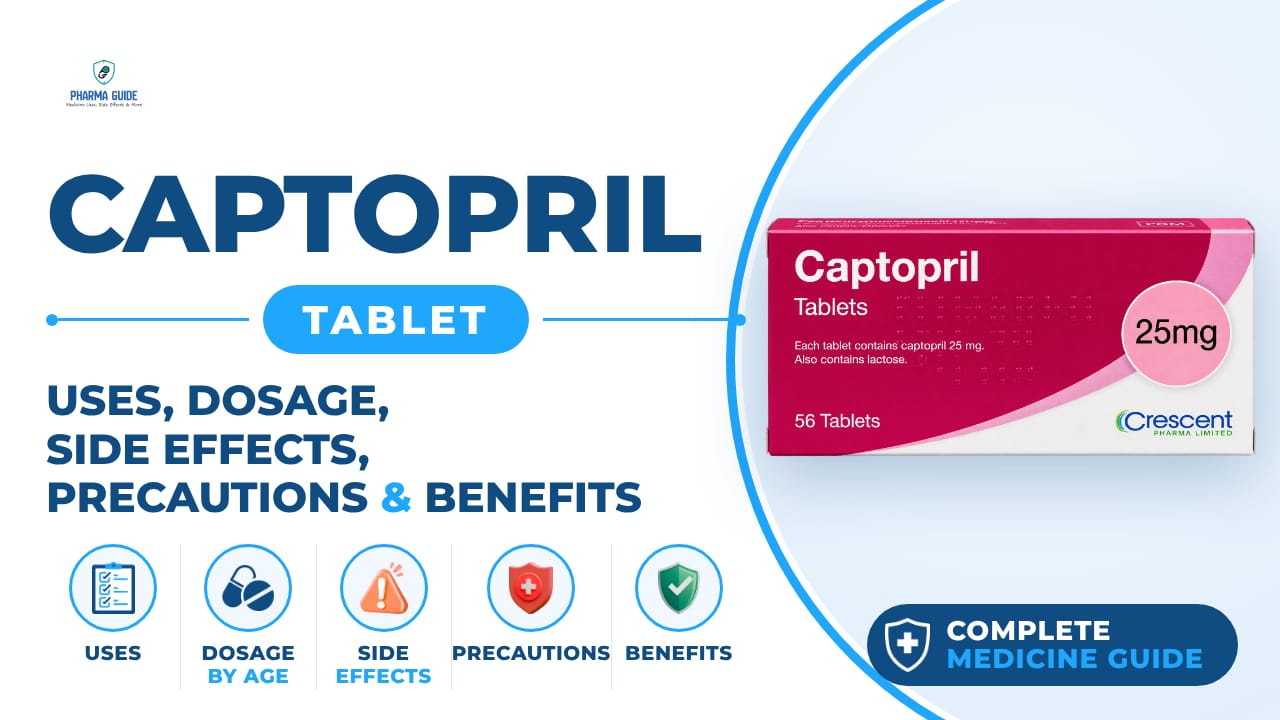
| Generic name | Captopril |
|---|---|
| Drug class | Angiotensin Converting Enzyme (ACE) Inhibitor |
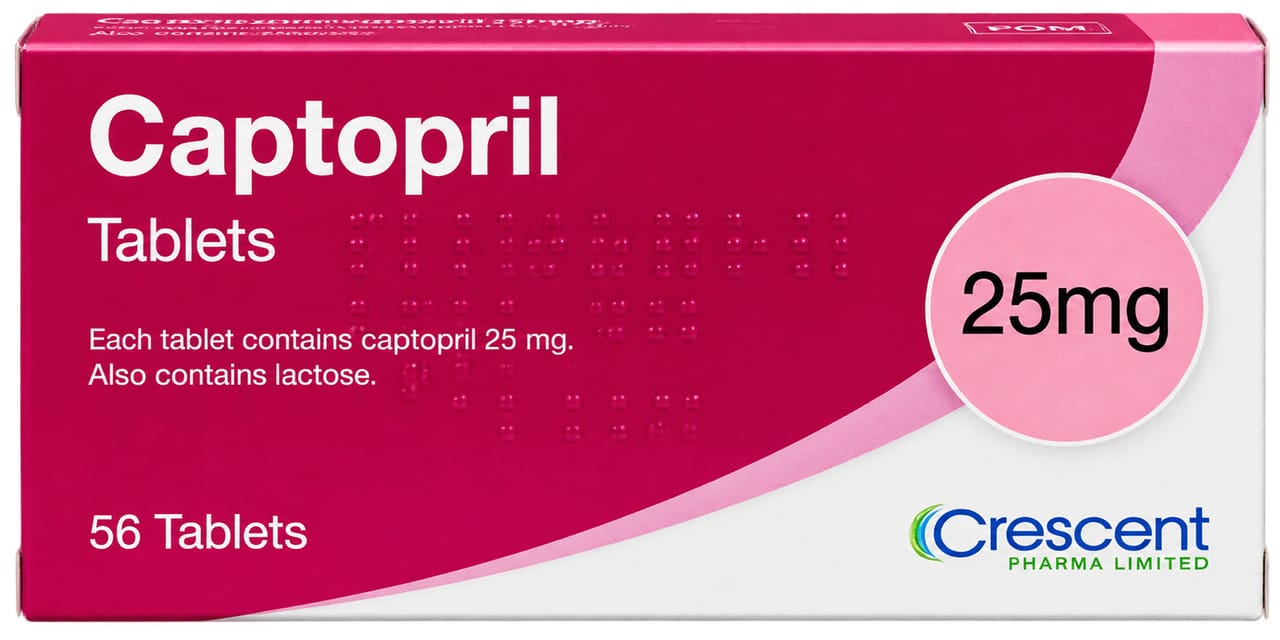
| Forms | Oral tablet (12.5 mg, 25 mg, 50 mg, 100 mg), Oral solution |
Quick overview
Captopril Tablet (generic name: captopril) is a prescription ACE inhibitor used to treat high blood pressure, heart failure, and certain kidney problems. It works by relaxing and widening blood vessels so blood flows more easily and the heart doesn't have to work as hard. It is available as tablets in several strengths and as an oral solution, and should be used exactly as prescribed by a doctor.
What is Captopril Tablet
Captopril is a prescription medicine belonging to a class of medicines called ACE inhibitors. It is used to treat high blood pressure, heart failure, and certain kidney problems.
Captopril Tablet uses
- High blood pressure (hypertension), alone or with other medications
- Congestive heart failure
- Improving survival and reducing the risk of heart failure after a heart attack in patients with left ventricular dysfunction
- Kidney disease (nephropathy) caused by diabetes in patients with type 1 diabetes and eye disease (retinopathy)
Benefits of Captopril Tablet
- Helps lower blood pressure to normal levels
- Helps the heart pump blood more efficiently
- Can improve survival after a heart attack in people with reduced heart pumping function
- Can slow the progression of kidney damage caused by diabetes
How Captopril Tablet works
Captopril blocks an enzyme that normally narrows blood vessels. This lets blood vessels relax and widen, so blood flows more easily and the heart doesn't have to work as hard.
Captopril Tablet dosage
Take Captopril Tablet on an empty stomach, at least 1 hour before a meal. Take it around the same time(s) every day, and take it exactly as prescribed; do not take more or less than directed or more often than prescribed.
Continue taking this medicine even if you feel well, since high blood pressure often has no symptoms. Do not stop taking this medicine suddenly without talking to your doctor.
If you miss a dose, take it as soon as you remember, but skip it if it is almost time for your next dose; do not double up doses. For the oral solution, your doctor or pharmacist will show you how to measure and give the dose using the provided dosing syringe or cup.
| Age group | Dose |
|---|---|
| Under 1 month | Doctor/specialist supervision required |
| 1 month–17 years | 0.3 mg/kg per dose, 3 times daily — specialist-directed |
| 18 years & older | 12.5–25 mg, 2–3 times daily initially |
| Adults | 25 mg, 2–3 times daily; may be adjusted by doctor |
| Older adults | Lower starting dose may be required, especially with kidney impairment |
Available forms and strengths
- Oral tablet (12.5 mg, 25 mg, 50 mg, 100 mg)
- Oral solution
Side effects of Captopril Tablet
Common
- Cough
- Low blood pressure
- Flushing (sudden warmth, redness, or tingly feeling)
- Low blood cell counts
- Decreased sense of taste
- Mild skin itching or rash
- Dizziness or lightheadedness
- Salty or metallic taste
- Fast heartbeat
- Excessive tiredness
- Dry mouth
- Feeling sick (nausea)
- Diarrhoea or constipation
- Stomach pains
- Sleep disorders
- Hair loss
- Muscle cramps
Serious
- Signs of an allergic reaction: severe stomach pain, hives, difficulty breathing, swelling of face, lips, tongue, or throat
- Chest pain, fast, slow, or uneven heart rate
- Light-headed feeling like you might pass out
- Heart problems: swelling, rapid weight gain, feeling short of breath
- Kidney problems: swelling, urinating less, feeling tired or short of breath
- Signs of infection: fever, chills, sore throat, body aches, unusual tiredness, loss of appetite, bruising or bleeding
- High blood potassium: nausea, weakness, tingly feeling, chest pain, irregular heartbeats, loss of movement
- Low blood sodium: headache, confusion, problems with thinking or memory, weakness, feeling unsteady
- Low white blood cell counts: fever, mouth sores, skin sores, sore throat, cough
- Liver problems: loss of appetite, stomach pain (upper right side), tiredness, dark urine, jaundice (yellowing of the skin or eyes)
- Fainting
- Skin and/or eyes turning yellow
- Not urinating as much as usual
- Stevens-Johnson syndrome: ulcers, blistering and skin rashes or burning, red, peeling skin on the lips, tongue and genitals, sometimes spreading to the eyes, face and body
Warnings and precautions
- Do not use this medicine if you are pregnant or think you may be pregnant.
- If you become pregnant while taking it, contact your doctor immediately, as it can cause serious harm to the unborn baby.
- Talk to your doctor if you are breastfeeding, as this medicine is generally not recommended while breastfeeding.
- Tell your doctor if you have kidney disease, a single kidney, or are on dialysis, since this medicine can affect kidney function.
- Tell your doctor if you have liver disease now or in the past.
- Tell your doctor if you drink alcohol, since alcohol may make dizziness or light-headedness worse.
- Be careful before driving or using machines until you know how this medicine affects you, as it can cause dizziness or light-headedness, especially after the first dose.
- Do not take this medicine if you have diabetes and are also using a blood pressure medicine containing aliskiren.
- Do not take this medicine within 36 hours before or after taking a medicine containing sacubitril, due to increased risk of a serious swelling reaction.
- This medicine can cause serious swelling of the face, lips, tongue, or throat (angioedema) that can occur at any time during treatment and may be an emergency.
- Do not stop taking this medicine suddenly without talking to your doctor.
- Vomiting, diarrhea, sweating heavily, or not drinking enough fluids can cause dehydration, leading to very low blood pressure, electrolyte imbalance, or kidney failure.
Storage
- Store tightly closed at room temperature, away from moisture and heat
- Keep this medication in the container it came in, tightly closed, and out of reach of children
- Store away from excess heat and moisture (not in the bathroom)
- Keep the oral solution below 25°C and discard 21 days after first opening
- Do not flush medication down the toilet; use a medicine take-back program to dispose of unneeded medication
- Keep out of the sight and reach of children, ideally in a locked cupboard at least one-and-a-half metres above the ground
When to see a doctor
Get emergency help right away if you have signs of a severe allergic reaction, such as severe stomach pain, hives, difficulty breathing, or swelling of the face, lips, tongue, or throat.
Call your doctor right away if you have chest pain, an irregular heartbeat, feel like you might faint, swelling with rapid weight gain, shortness of breath, urinating less, or signs of infection like fever or sore throat.
Stop taking this medicine and get urgent medical help or go to the hospital if you have swelling of the face, lips, mouth, tongue, throat, hands, or feet; fainting or yellowing of the skin or eyes; sore throat and fever; chest pain; severe dizziness; difficulty breathing or swallowing; a rash; or reduced urination.
If you think you have taken too much of this medicine, seek urgent medical attention or contact a poison control center right away, even if you feel fine.
Alternatives
- Benazepril
- Fosinopril
- Enalapril
- Lisinopril
- Moexipril
- Perindopril
- Quinapril
- Ramipril
- Trandolapril
- Valsartan
Watch the video
FAQs
What is Captopril Tablet used for?
It is used to treat high blood pressure, congestive heart failure, to improve survival after a heart attack in patients with reduced heart pumping function, and to treat diabetic kidney disease in patients with type 1 diabetes and eye disease.
How does Captopril Tablet work?
It blocks an enzyme that normally narrows blood vessels, allowing blood vessels to relax and widen so blood flows more easily and the heart doesn't have to work as hard.
How should I take Captopril Tablet?
Take it on an empty stomach, at least 1 hour before a meal, around the same time(s) every day, exactly as prescribed. Continue taking it even if you feel well, and do not stop suddenly without talking to your doctor.
What are the common side effects of Captopril Tablet?
Common side effects include cough, low blood pressure, flushing, decreased sense of taste, dizziness, fast heartbeat, tiredness, dry mouth, nausea, diarrhoea or constipation, stomach pains, sleep disorders, hair loss, and muscle cramps.
Can I take Captopril Tablet while pregnant?
No, you should not use this medicine if you are pregnant or think you may be pregnant, as it can cause serious harm to the unborn baby. Contact your doctor immediately if you become pregnant while taking it.
General information, not medical advice
Your prescriber and the leaflet in your pack know your situation. This page does not.
- Follow your prescriber and the leaflet
- Don't start, stop, or change a dose on your own
- Doses and warnings differ by country and product
Sources
- https://www.ncbi.nlm.nih.gov/books/NBK535386/
- https://www.drugs.com/captopril.html
- CAPTOPRIL-REACH Consumer Medicine Information, V 3.0, February 2026
Video
Related medicines
Benazepril Tablet: Uses, Dosage, Side Effects, Precautions and Alternates
Angiotensin Converting Enzyme (ACE) Inhibitor
Benazepril Tablet is an ACE inhibitor used to treat high blood pressure in adults. Learn its uses, dosage, side effects, and warnings here.
Perindopril Tablet: Uses, Dosage, Side Effects, Precautions and Alternates
Angiotensin-converting enzyme (ACE) inhibitor
Perindopril Tablet is an ACE inhibitor used for high blood pressure, heart failure, and cardiac risk reduction. Learn dosage, side effects, and precautions.