
Safety
General information, not medical advice
Your prescriber and the leaflet in your pack know your situation. This page does not.
- Follow your prescriber and the leaflet
- Don't start, stop, or change a dose on your own
- Doses and warnings differ by country and product
Benlysta Injection: Uses, Dosage, Side Effects, Precautions and Alternates
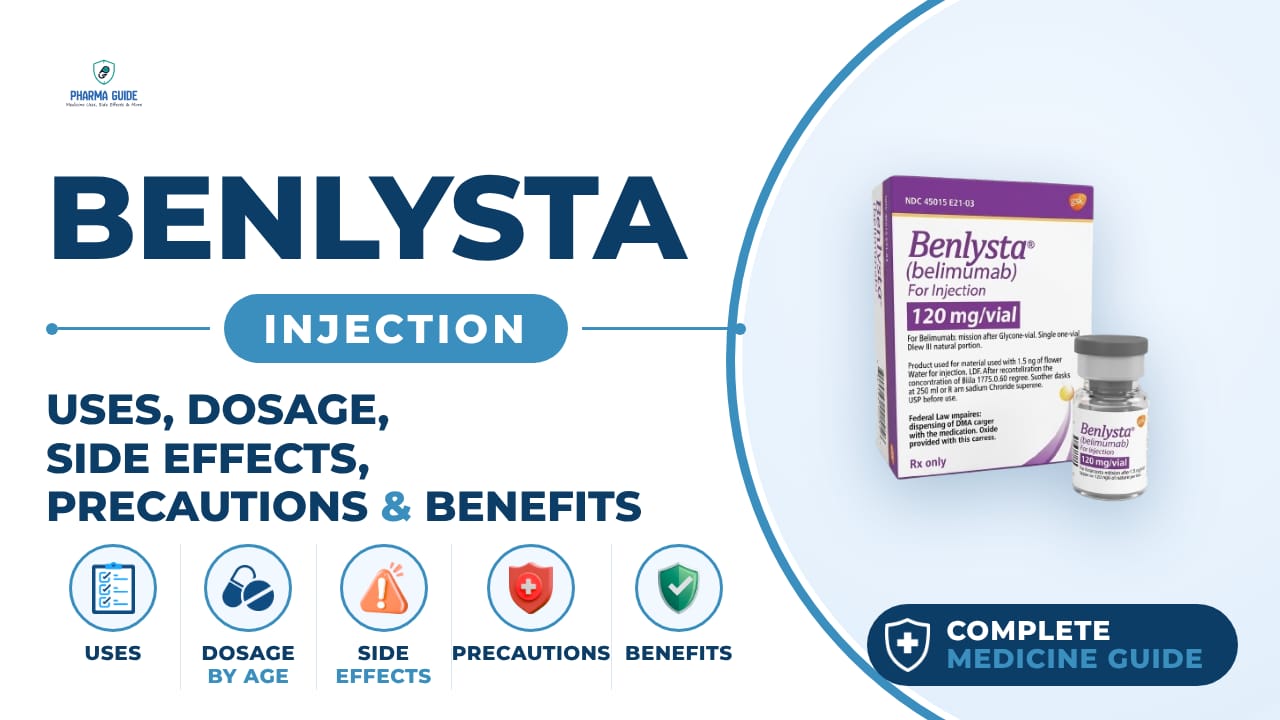
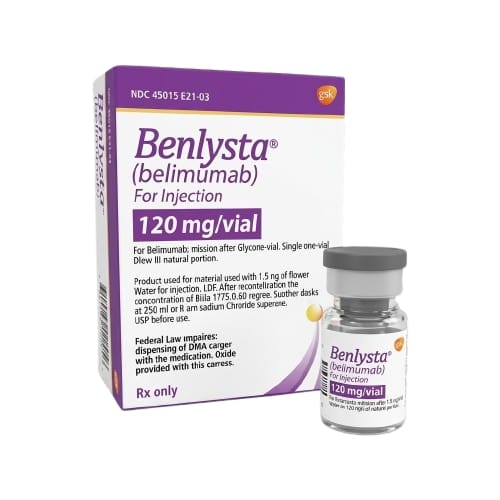
| Generic name | belimumab |
|---|---|
| Drug class | B-lymphocyte stimulator (BLyS)-specific inhibitor (a type of selective immunosuppressant, monoclonal antibody) |
| Forms | Injection |
Quick overview
Benlysta Injection (belimumab) is a prescription biologic medicine given by IV infusion or injection under the skin. It belongs to a class of medicines called B-lymphocyte stimulator (BLyS)-specific inhibitors, a type of selective immunosuppressant monoclonal antibody. It is used along with other lupus medicines to treat lupus in adults and children age 5 and older, including active systemic lupus erythematosus and active lupus nephritis.
What is Benlysta Injection
Benlysta is a prescription biologic medicine given by IV infusion or injection under the skin. It is used along with other lupus medicines to treat lupus in adults and children age 5 and older.
Benlysta Injection uses
- Active systemic lupus erythematosus (SLE) in adults and children 5 years and older who are already taking standard lupus medicines
- Active lupus nephritis (kidney inflammation caused by lupus) in adults and children 5 years and older who are already taking standard treatment
- Not recommended for people with severe active central nervous system lupus, since it hasn't been studied in this group
Benefits of Benlysta Injection
- May reduce lupus disease activity when added to standard lupus medicines
- May help lower the chance of severe lupus flares
- May help reduce fatigue related to lupus
- May allow some people to lower their steroid dose over time
How Benlysta Injection works
Benlysta blocks a protein called BLyS (B-lymphocyte stimulator) that helps certain immune cells called B cells survive. In lupus, some B cells become overactive and attack the body's own tissues. By blocking BLyS, Benlysta reduces the number of these abnormal B cells, which can help calm inflammation and prevent flares.
Benlysta Injection dosage
Benlysta can be given as an IV infusion into a vein, or as an injection under the skin (subcutaneous) using a prefilled syringe or autoinjector. IV infusions are given at a doctor's office, clinic, infusion center, or hospital and take about an hour to complete. Subcutaneous injections are given in the abdomen or thigh; rotate the injection site each week and avoid areas that are red, bruised, or tender.
Subcutaneous injections should be given on the same day each week (or same day every 2 weeks, depending on your prescribed schedule). Your first subcutaneous dose is usually given at a doctor's office or clinic to watch for reactions; after that you or a caregiver may be trained to give injections at home. For children under 10 years of age, a healthcare professional or trained caregiver must give the subcutaneous injection.
If you miss a subcutaneous dose, give it as soon as you remember, then continue on your regular schedule or restart a new schedule from the day of the missed dose; never give two doses on the same day to make up for a missed one. If you miss an IV infusion appointment, contact your doctor right away to reschedule as soon as possible.
Before each subcutaneous injection, let the prefilled syringe or autoinjector sit at room temperature for about 30 minutes; do not warm it any other way, and do not shake it. Do not use if the solution looks cloudy, discolored, or has particles, or if the device was dropped on a hard surface. Your doctor may give you other medicines before an IV infusion to help lower the chance of a reaction.
| Age group | Dose |
|---|---|
| Under 18 years | Not recommended |
| 18–64 years | 200 mg, once/week |
| 65+ years | 200 mg, once/week |
Available forms and strengths
- Injection
Side effects of Benlysta Injection
Common
- Nausea
- Diarrhea
- Fever
- Stuffy or runny nose and sore throat (nasopharyngitis)
- Persistent cough (bronchitis)
- Trouble sleeping (insomnia)
- Pain in arms or legs
- Depression
- Headache (migraine)
- Sore throat (pharyngitis)
- Pain, redness, itching, or swelling at the injection site (subcutaneous form)
Serious
- Serious infections, which can lead to hospitalization or death
- Progressive multifocal leukoencephalopathy (PML), a serious and life-threatening brain infection
- Serious allergic reactions (hypersensitivity), including anaphylaxis, which can cause death
- Severe skin reactions, including Stevens-Johnson syndrome and toxic epidermal necrolysis
- Depression, suicidal thoughts, or suicidal behavior
- Increased risk of certain cancers
- Rare reports of hair loss (alopecia areata)
Warnings and precautions
- Benlysta can weaken your immune system and increase your risk of serious, sometimes fatal infections. Tell your doctor right away if you have signs of infection such as fever, chills, burning or frequent urination, coughing up mucus, or red, warm, or painful skin sores.
- Serious allergic reactions, including life-threatening anaphylaxis, can happen on the day of or in the days after receiving Benlysta.
- Severe skin reactions such as Stevens-Johnson syndrome and toxic epidermal necrolysis can occur, sometimes starting with fever and flu-like symptoms, and can be life threatening.
- Benlysta can cause a rare but serious and life-threatening brain infection called progressive multifocal leukoencephalopathy (PML), which can result in death or severe disability.
- Mental health problems, including new or worsening depression and suicidal thoughts or behavior, can occur during treatment.
- Benlysta may increase the risk of certain cancers because it affects the immune system.
- You should not receive live vaccines within 30 days before starting Benlysta or while using it, because it may make the vaccines less effective or cause you to get sick from them.
- Using Benlysta together with the biologic drug rituximab (Rituxan) is not recommended, as it was linked to more serious infections and reactions in a clinical trial.
- Do not use Benlysta if you are allergic to belimumab or any of its ingredients, or if you have had a serious allergic reaction (anaphylaxis) or a severe skin reaction (Stevens-Johnson syndrome or toxic epidermal necrolysis) to belimumab in the past.
- It isn't known if Benlysta is safe to use during pregnancy. Animal studies did not show harm to the fetus but did show temporary immune system effects in offspring.
- If you become pregnant while using Benlysta, your doctor may suggest enrolling in a pregnancy registry that tracks outcomes.
- It isn't known whether Benlysta is safe to use while breastfeeding. In animal studies, the drug did pass into milk. Talk with your doctor before starting Benlysta if you are breastfeeding.
- No dose adjustment is recommended for people with kidney impairment.
- No dose adjustment is recommended for people with liver impairment, though formal studies on this were not done.
- There are no known interactions between Benlysta itself and alcohol, but other lupus medicines you take with it may interact with alcohol, so ask your doctor how much, if any, is safe for you.
Storage
- Refrigerate vials, prefilled syringes, and autoinjectors at 36°F to 46°F (2°C to 8°C)
- Do not freeze
- Keep in the original carton to protect from light until time of use
- Do not shake
- Avoid exposure to heat
- Subcutaneous forms may be stored outside the refrigerator up to 86°F (30°C) for up to 12 hours if protected from sunlight; do not use and do not put back in the refrigerator if left out more than 12 hours
- Safely throw away medicine that is out of date or no longer needed
- Keep out of the reach of children
- Dispose of used syringes and autoinjectors right away in an FDA-cleared sharps disposal container; do not throw loose needles and syringes in household trash
When to see a doctor
- Get emergency help right away for signs of a severe allergic reaction, such as swelling of the face, lips, mouth, tongue, or throat, trouble breathing, dizziness or fainting, or a severe skin rash.
- Call your doctor right away if you have signs of an infection, such as fever, chills, burning or frequent urination, coughing up mucus, or red, warm, or painful skin sores.
- Tell your doctor right away if you notice new or worsening problems such as memory loss, trouble thinking, dizziness or loss of balance, difficulty talking or walking, or loss of vision, which could be signs of a serious brain infection (PML).
- Contact your doctor right away if you have thoughts of suicide or dying, attempt to harm yourself, or notice new or worsening depression, anxiety, or unusual changes in your mood or behavior.
- Stop using Benlysta and tell your healthcare provider right away if you develop a painful rash with target-like or circular patches, widespread skin peeling or blistering, or ulcers in the eyes, nose, mouth, throat, or genitals, as these may be signs of a severe skin reaction.
Alternatives
- Enspryng
- Uplizna
- Saphnelo
Watch the video
FAQs
What is Benlysta Injection used for?
Benlysta is used along with other lupus medicines to treat active systemic lupus erythematosus and active lupus nephritis in adults and children age 5 and older who are already on standard lupus treatment.
How is Benlysta given?
Benlysta can be given as an IV infusion into a vein at a doctor's office or clinic, taking about an hour, or as a subcutaneous injection under the skin in the abdomen or thigh using a prefilled syringe or autoinjector.
What should I do if I miss a Benlysta dose?
If you miss a subcutaneous dose, give it as soon as you remember and then continue your regular schedule or restart a new schedule from that day, without giving two doses in one day. If you miss an IV infusion, contact your doctor right away to reschedule.
What are the serious side effects of Benlysta?
Serious side effects include serious infections, progressive multifocal leukoencephalopathy (PML), serious allergic reactions including anaphylaxis, severe skin reactions like Stevens-Johnson syndrome, depression or suicidal thoughts, and an increased risk of certain cancers.
Can I receive vaccines while using Benlysta?
You should not receive live vaccines within 30 days before starting Benlysta or while using it, since it may make the vaccines less effective or cause you to get sick from them.
General information, not medical advice
Your prescriber and the leaflet in your pack know your situation. This page does not.
- Follow your prescriber and the leaflet
- Don't start, stop, or change a dose on your own
- Doses and warnings differ by country and product
Sources
Video
Related medicines

Injectafer Injection: Uses, Dosage, Side Effects, Precautions and Alternates
Iron products
Injectafer (ferric carboxymaltose) treats iron deficiency anemia and heart failure-related iron deficiency via IV. Learn uses, dosage, side effects, and

Gliclazide Tablet: Uses, Dosage, Side Effects, Precautions and Alternates
Sulfonylurea (hypoglycemic/antidiabetic agent)
Gliclazide Tablet is a sulfonylurea for type 2 diabetes that boosts insulin release. Learn about dosage, side effects, warnings, and precautions.